How Esports Training Works: Build Skills Like a Pro Gamer
Deliberate Practice in Esports Training

Content
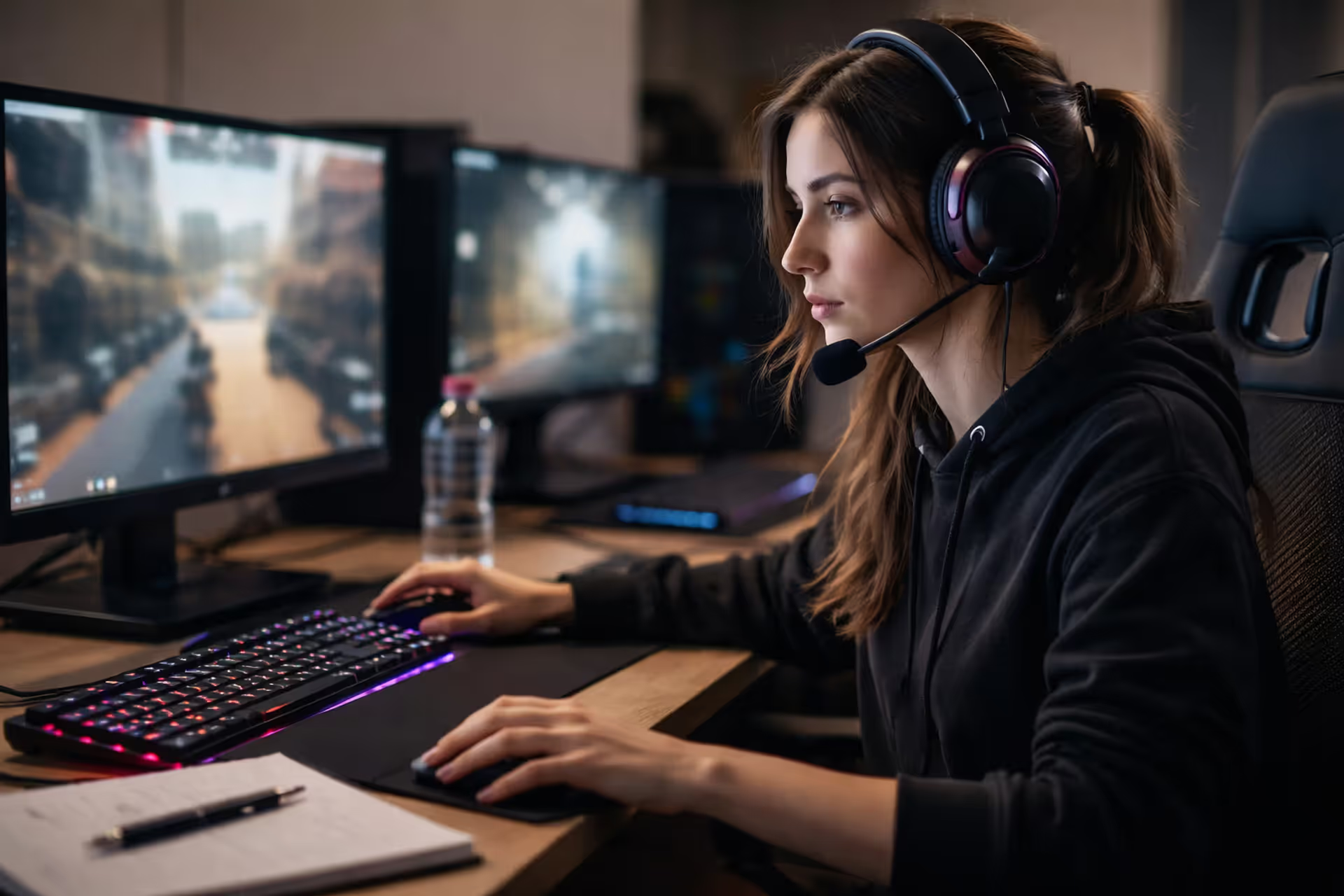
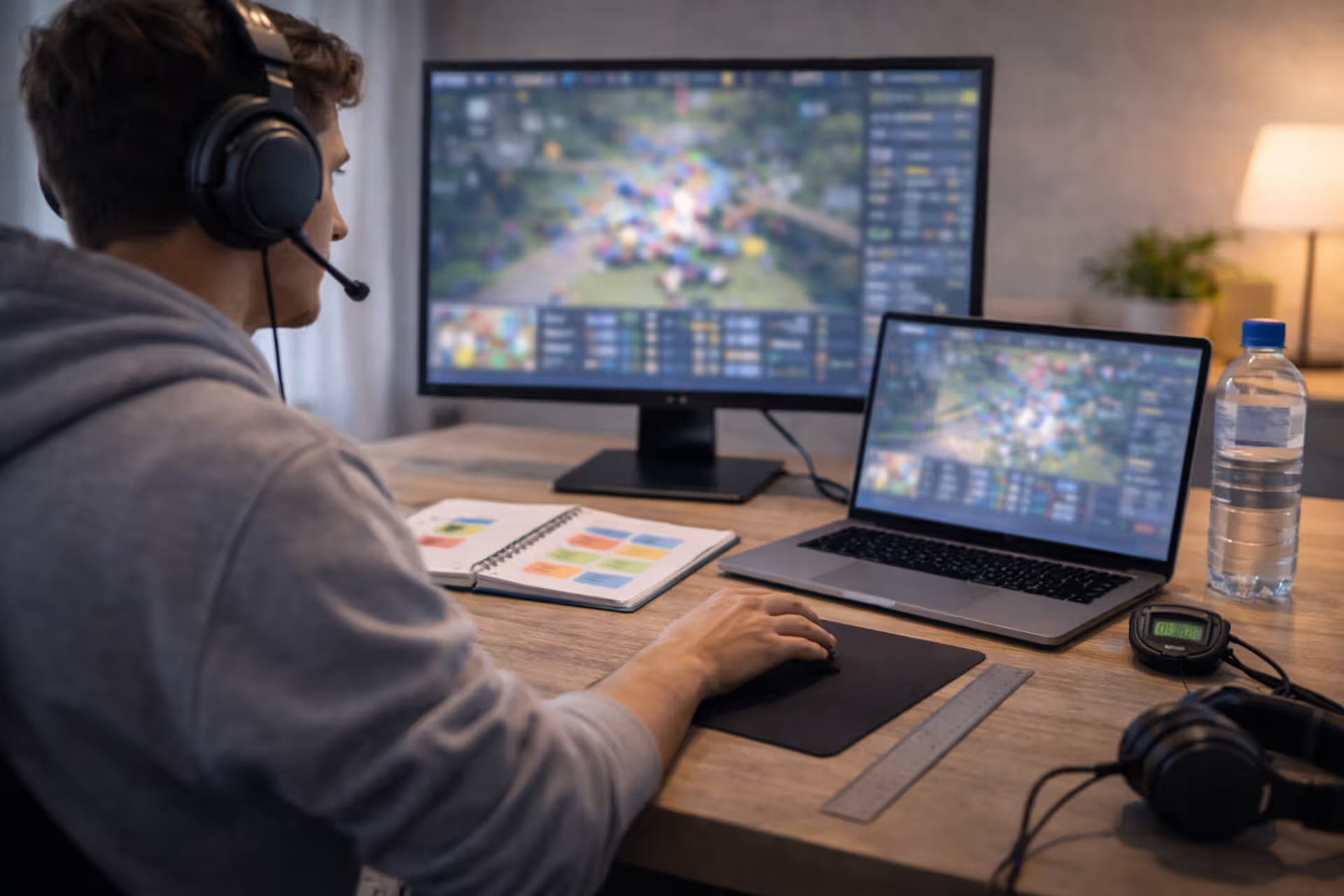
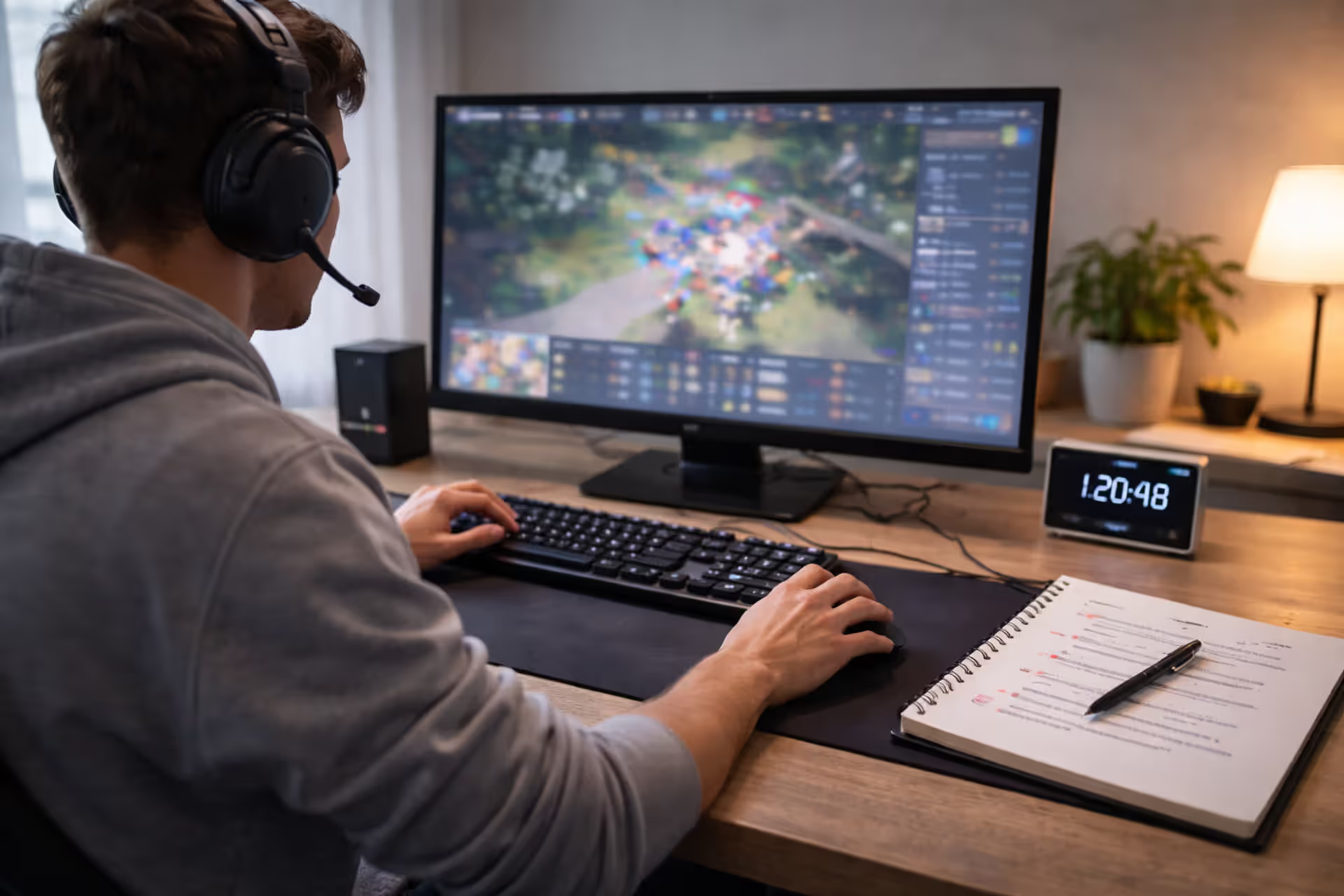
Grinding ranked matches for eight hours doesn't make you better—it makes you tired. The gap between casual players and professionals isn't just talent or hardware. It's method. While most gamers repeat the same mistakes in match after match, top competitors follow structured routines that isolate weaknesses, build muscle memory, and track measurable gains.
Competitive gaming demands the same rigor as traditional sports. A basketball player doesn't just scrimmage; they drill free throws, practice footwork, and study game film. Esports athletes follow similar principles, breaking down complex in-game scenarios into trainable components. The difference between climbing ranks and staying stuck often comes down to whether you're practicing with intention or just playing on autopilot.
Why Deliberate Practice Beats Casual Gaming for Skill Development
Your brain learns what you repeat. Jump into ranked matches without warming up, and you're reinforcing sloppy crosshair placement, panic decisions, and inconsistent movement. You might win games through luck or matchmaking variance, but your skill ceiling stays flat.
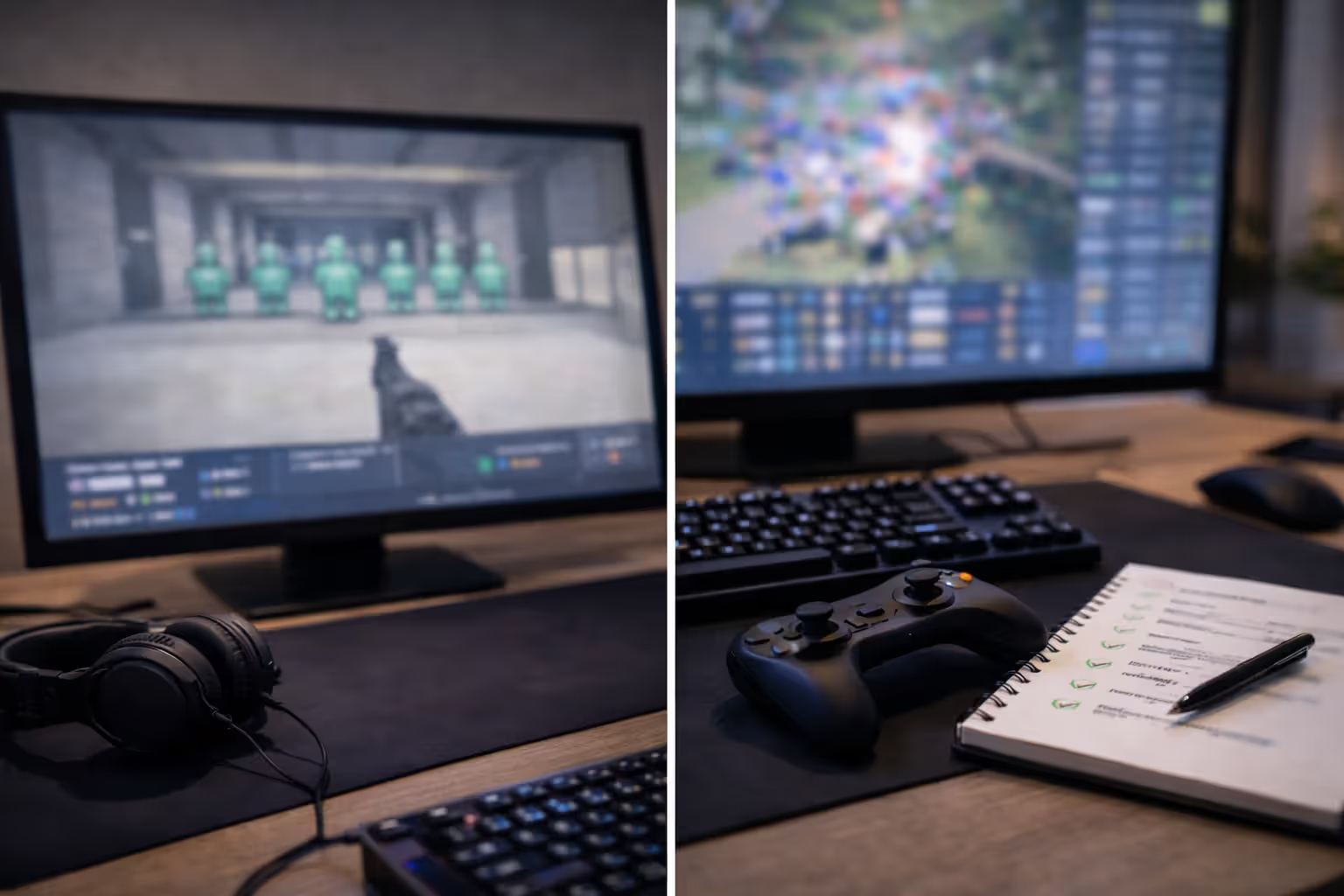
Deliberate practice—a concept from performance psychology—means working on specific weaknesses with immediate feedback. Instead of queuing another match after a loss, a structured approach asks: Did I lose duels because my flicks were off? Did I miss audio cues? Was my positioning predictable?
The science backs this up. Motor learning research shows that random, variable practice (like ranked matches) helps retention, but blocked, focused practice (like drills) accelerates initial skill acquisition. For esports training, this means spending time in aim trainers, custom lobbies, and replay analysis before jumping into competitive queues. You build the foundation first, then stress-test it in real matches.
Author: Megan Lewis;
Source: quantumcatanimation.com
Performance improvement gaming isn't about playing more—it's about practicing smarter. A player who spends 30 minutes on targeted drills plus two hours of ranked will outpace someone who grinds four hours of back-to-back matches. The former identifies gaps and fixes them; the latter hopes improvement happens by accident.
Core Components of an Effective Esports Training Routine
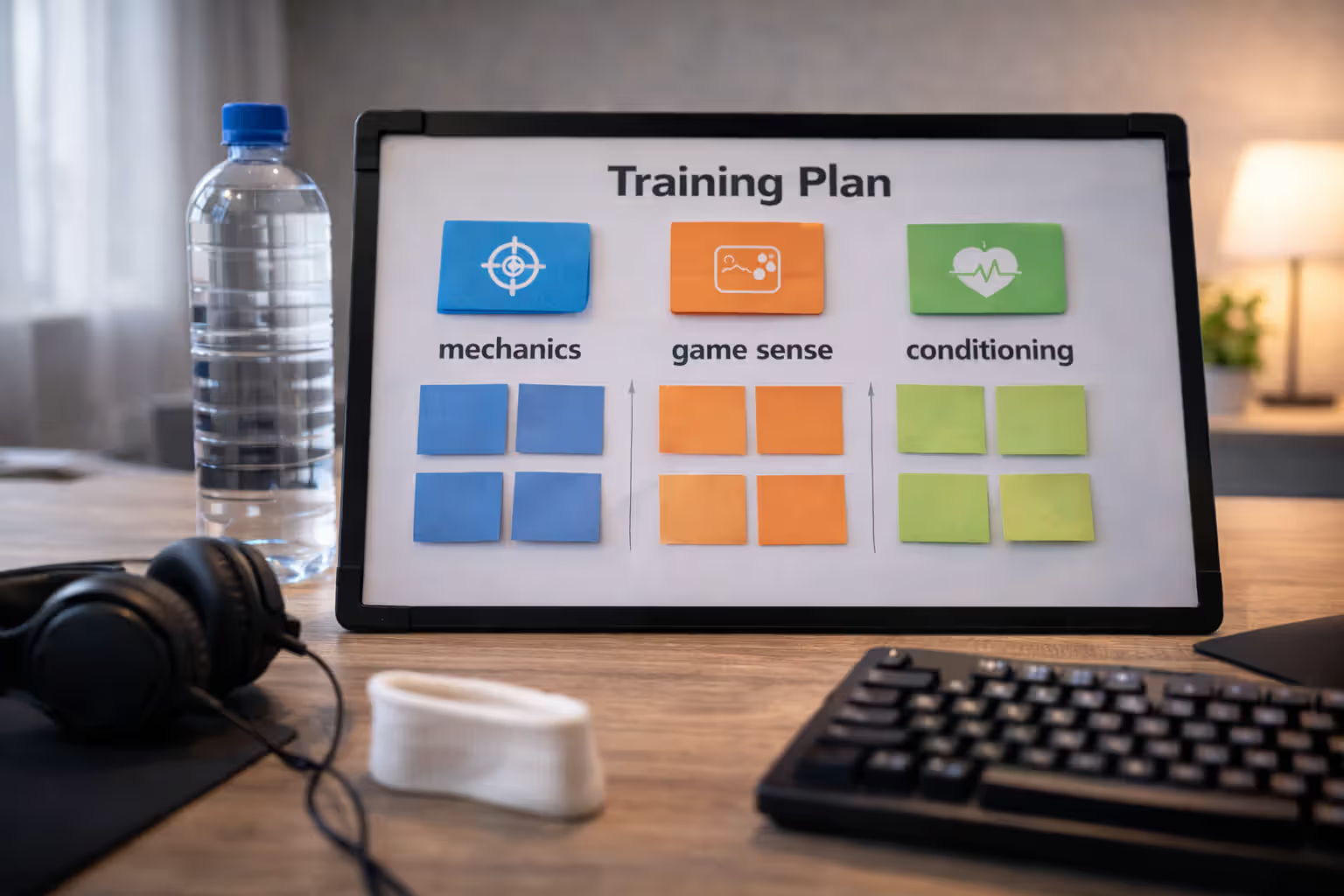
Breaking down esports training into categories prevents you from overloading one area while neglecting others. Most players obsess over mechanical skill but ignore game sense, or they grind matches without addressing physical stamina. Balance across three pillars creates consistent improvement.
Mechanical Skill Development
This covers aim, movement, ability execution, and input precision. In first-person shooters, mechanical skill means tracking moving targets, flicking to heads, and controlling recoil. In MOBAs, it's landing skillshots, managing camera movement, and executing combos under pressure. Fighting games demand frame-perfect inputs and reaction blocks.
Mechanical training isolates these movements. Aim trainers like Kovaak's or Aimlabs let you repeat specific scenarios—tracking, clicking, switching targets—without the chaos of a full match. Custom games in Valorant or CS2 let you practice utility lineups or spray patterns on empty maps. The goal is repetition without distraction until the movement becomes automatic.
Author: Megan Lewis;
Source: quantumcatanimation.com
Game Sense and Decision-Making
Mechanics get you into fights; game sense wins them. This pillar includes positioning, timing, resource management, and reading opponent behavior. You develop game sense by studying replays, watching professional matches, and analyzing why certain plays worked or failed.
VOD review—watching recordings of your matches—reveals patterns you miss in real-time. You notice you always peek the same angle, or you burn important abilities too early, or you rotate late. Watching pro players shows you optimal positioning, when to take risks, and how to adapt strategies mid-match.
Game sense training is less about drills and more about deliberate observation. Pause a pro player's stream and predict their next move. Review your own deaths and identify what information you missed. This cognitive work translates directly to better in-game decisions.
Mental and Physical Conditioning
Sitting for hours strains your back, wrists, and eyes. Mental fatigue kills reaction time and decision-making. Professional players treat their bodies like athletes because physical health directly impacts performance.
Conditioning includes wrist stretches, posture checks, eye exercises, and cardiovascular fitness. Mental training covers stress management, focus techniques, and avoiding tilt. A player who can maintain peak focus for three hours will outperform someone who burns out after one.
Short breaks between practice blocks, proper hydration, and sleep schedules aren't optional—they're part of the training regimen. Ignore them, and your mechanics will plateau no matter how many hours you log.
| Training Type | Primary Benefit | Time Investment | Tools/Resources Needed | Skill Level |
| Aim Training | Raw mechanical precision, mouse control | 20-45 min/day | Kovaak's, Aimlabs, aim trainers | Beginner to Advanced |
| Reaction Drills | Faster response to visual/audio cues | 15-30 min/day | Reaction time sites, custom maps | All levels |
| VOD Review | Game sense, decision-making awareness | 30-60 min/session | Recording software, pro match VODs | Intermediate to Pro |
| Scrimmages | Team coordination, strategy execution | 2-4 hours/session | Team, scrim partners, voice comms | Advanced to Pro |
| 1v1 Practice | Isolated dueling, specific matchup knowledge | 30-90 min/session | Practice partner, custom lobby | Intermediate to Advanced |
| Warm-up Routines | Consistency, pre-match readiness | 15-30 min/session | Deathmatch, aim trainer, movement maps | All levels |
Aim Training Methods That Actually Transfer to Competitive Play
Aim trainers work, but only if you use them correctly. Spending an hour clicking static dots won't help if your game requires tracking moving targets. The scenarios you practice must mirror the movements you need in actual matches.
For tactical shooters like Valorant or CS2, focus on clicking precision and small adjustments. Scenarios like "1wall6targets" or "Microshot" train the flicks and corrections you make when holding angles. For tracking-heavy games like Apex Legends or Overwatch, scenarios like "Thin Gauntlet" or "Smoothbot" build the smooth mouse control needed to stay on moving enemies.
Time investment matters. Thirty minutes of focused aim training esports drills beats two hours of mindless clicking. Warm up with dynamic scenarios, then isolate your weakest area—if you lose long-range duels, practice precision scenarios; if you struggle in close combat, drill tracking and target switching.
Common mistakes kill progress. Players crank sensitivity too high chasing flashy flicks, but consistency comes from finding a sensitivity you can control. Others practice scenarios far above their skill level, building bad habits instead of clean technique. Start with slower scenarios and gradually increase difficulty as your accuracy improves.
Aim training transfers best when you immediately apply it. After 20 minutes in an aim trainer, jump into deathmatch or unranked matches. Your brain connects the drill to the real context, cementing the neural pathways.
Gaming Reaction Training: Drills to Sharpen Your Response Time
Reaction time and aim are related but distinct. Aim is about precision and control; reaction time is about how fast you respond to stimuli. A player with godlike aim but slow reactions will lose to someone who shoots first.
Baseline human reaction time sits around 200-250 milliseconds for visual stimuli. Training can shave off 20-50 milliseconds by improving recognition patterns and reducing decision paralysis. You're not making your neurons fire faster—you're eliminating hesitation.
Gaming reaction training drills focus on stimulus-response speed. Websites like Human Benchmark offer simple tests where you click when a color changes. In-game, you can use custom maps with pop-up targets or audio cue drills. Osu! and rhythm games train hand-eye coordination and pattern recognition, which translates to faster in-game responses.
Realistic expectations: You won't drop from 250ms to 150ms. But you can train yourself to recognize threats faster—spotting an enemy peeking before your conscious brain registers it, or reacting to footsteps without thinking. This "trained instinct" comes from repetition and pattern exposure.
Differentiate reaction drills from aim training. Aim drills focus on precision and control; reaction drills emphasize speed and recognition. Both matter, but they require separate practice blocks. Mixing them in one session dilutes focus.
How Professional Players Structure Their Daily Practice Sessions
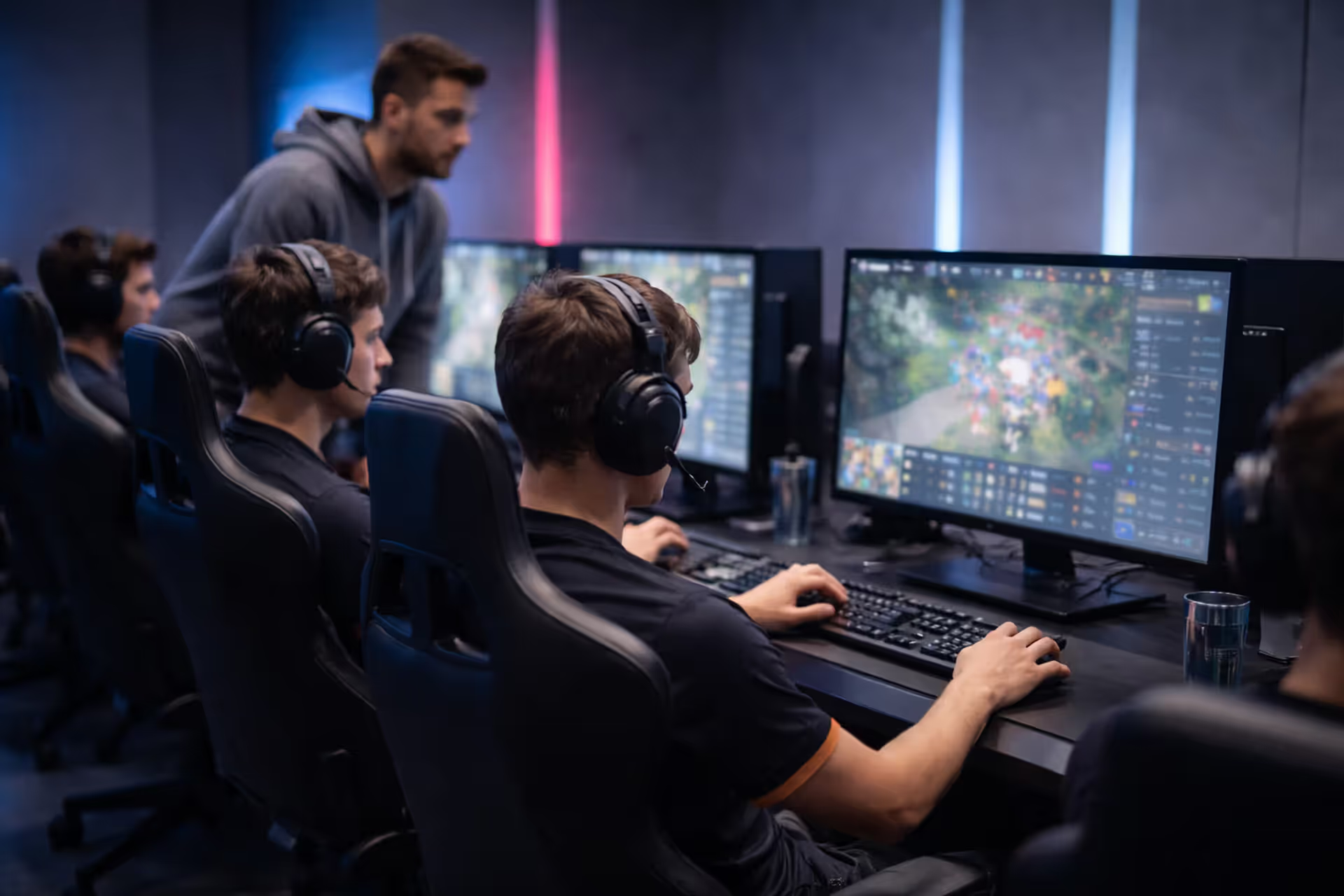
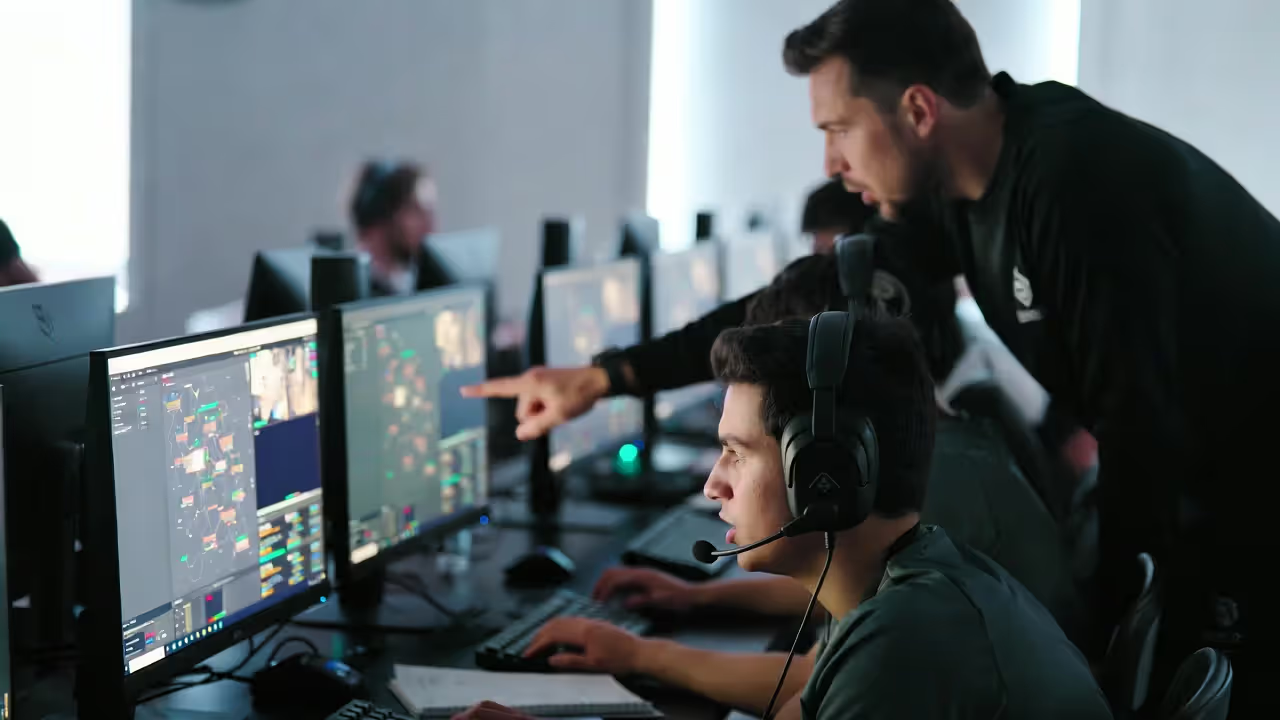
Professional esports schedules reveal a pattern: variety, focus, and recovery. Top players don't grind ranked for eight straight hours. They segment their day into blocks, each with a specific purpose.
Author: Megan Lewis;
Source: quantumcatanimation.com
A typical pro practice day might look like this:
Morning block (1-2 hours): Warm-up routine—15 minutes aim training, 15 minutes movement drills, 30-60 minutes deathmatch or unranked. The goal is consistency, not intensity. Get the hands ready, shake off rust.
Midday block (2-3 hours): Team scrimmages or coordinated practice. This is where strategies get tested, communication improves, and team synergy builds. High intensity, with breaks between maps to discuss adjustments.
Afternoon block (1-2 hours): Individual skill work. Focus on one weak area—if you're missing flicks, drill flick scenarios; if your utility usage is sloppy, practice lineups and timings. Narrow focus beats scattered effort.
Evening block (1-2 hours): VOD review or ranked matches. Watch recordings from scrims, identify mistakes, discuss with coaches. If playing ranked, treat it as testing ground for specific skills practiced earlier.
Recovery: Stretching, exercise, mental breaks between blocks. Pros know burnout kills careers.
The difference between a good player and a great one isn't the hours—it's the structure. You can practice 12 hours a day and get worse if you're just repeating mistakes. We focus on deliberate, measurable improvement in every session.
— Jordan "n0thing" Gilbert, former professional CS:GO player and coach
Notice the variety. Aim drills, team practice, individual focus, review, and testing all appear in one day. This prevents burnout and ensures balanced development across all skill areas. The pro practice methods that work aren't about grinding harder—they're about training smarter.
Measuring Progress: Tracking Metrics That Matter in Esports Training
You can't improve what you don't measure. Gut feelings lie. Players think they're getting better because they won a few matches, ignoring that matchmaking variance handed them weaker opponents. Real progress shows up in data.
For aim training, track accuracy percentage, time to complete scenarios, and consistency across sessions. If your "1wall6targets" score improves from 85% to 92% over two weeks, your clicking precision is measurably better. If your times stay flat, adjust your practice method.
In-game stats vary by title, but focus on metrics you control. K/D ratio fluctuates with matchmaking luck, but headshot percentage, average damage per round, or ability accuracy reflect your individual performance. Track these over 20-30 matches to spot trends.
Reaction time sites give you baseline measurements. Test weekly and watch for improvements. If you're stuck at 240ms for a month, your current drills aren't working—change the stimulus or add pattern recognition exercises.
Set realistic benchmarks. Improving aim accuracy by 5% in a month is solid progress. Shaving 20ms off reaction time in six weeks is excellent. Don't compare yourself to pros who've trained for years; compare yourself to last month's performance.
Tools for tracking: Most aim trainers have built-in stat tracking. Use spreadsheets to log in-game stats after every session. Replay software like Insights.gg or game-specific trackers (Tracker Network, Leetify) provide detailed breakdowns. Review these weekly to identify which areas need more focus.
Performance improvement gaming depends on feedback loops. Practice, measure, adjust, repeat. Skip the measurement step, and you're flying blind.

Author: Megan Lewis;
Source: quantumcatanimation.com
Common Training Mistakes That Keep Players Hardstuck
Overtraining without rest breaks down performance. Your brain needs recovery to consolidate new skills. Grinding eight hours straight means the last three hours are low-quality, ingraining sloppy habits. Schedule breaks, get sleep, and respect recovery.
Neglecting fundamentals for flashy plays is another trap. Players drill montage-worthy flicks but can't hold a basic crosshair position. Master the boring basics—crosshair placement, pre-aiming common angles, consistent movement—before chasing highlight reels. Fundamentals win more fights than trick shots.
Lack of focus areas means scattered progress. Trying to improve aim, game sense, communication, and positioning all at once spreads your attention too thin. Pick one or two weaknesses per week and drill them relentlessly. Rotate focus areas, but don't try fixing everything simultaneously.
Autopilot grinding is the biggest killer. Queuing match after match without reviewing mistakes means you repeat the same errors forever. After every session, ask: What specific mistake cost me rounds? What will I practice tomorrow to fix it? If you can't answer, you're not training—you're just playing.
Ignoring mental state compounds mistakes. Playing tilted, tired, or distracted builds bad habits. If you're frustrated, take a break. If you're exhausted, log off. Quality practice in a focused mental state beats twice the time spent distracted.
Frequently Asked Questions About Esports Training
Structured esports training separates competitors from casual players. The methods aren't secret—pros use aim trainers, drill weak areas, review replays, and measure progress. What sets them apart is consistency and focus. They don't hope improvement happens; they engineer it through deliberate, measurable practice.
Start small. Add 20 minutes of aim training before your ranked sessions. Review one replay per week. Track one stat over 20 matches. These habits compound. In three months, you'll look back at your old gameplay and barely recognize it. The gap between where you are and where you want to be isn't talent—it's method. Build the right training routine, and the results follow.