
How to Become an Esports Player: Your Roadmap from Amateur to Pro
How to Become a Pro Gamer in Esports?

Content
So you want to get paid to play video games? Here's what nobody tells you upfront: being cracked at your favorite title won't cut it. You'll need a game plan that covers everything from picking which game to dedicate your life to, all the way through signing contracts that won't screw you over. Most people wash out because they treat competitive gaming like an extended hobby instead of what it actually is—a brutal, low-odds career path that rewards obsessive preparation.
Let's break down how players actually make this transition, including the uncomfortable parts most guides skip.
What Does It Actually Take to Go Pro in Esports?
Forget the fantasy where you quit your job, grind ranked for six months, and suddenly Twitch chat is spamming "SIGN HIM." That happens to maybe three people per year, and they already had connections you don't.
Here's the real timeline: expect two to four years bouncing between amateur teams, barely covering your rent, before you sniff a legitimate contract. An esports career path isn't a sprint—it's surviving longer than everyone else who gives up.
Sure, natural talent helps. But the kid who can barely hit Immortal rank will destroy the mechanical prodigy if that kid studies replays for two hours daily while the prodigy just queues matches mindlessly. The jump from "really good" to "organization wants to pay me" happens when you stop relying on reflexes and start making better decisions than opponents who are just as fast as you.
Here's something most guides won't mention: your age creates different timelines depending on genre. Fighting game players regularly compete into their thirties (SonicFox, Punk, Problem X all prove this). MOBAs and tac shooters? Teams start eyeing you suspiciously once you hit 24. It's not fair, but reaction time research backs it up—your peak is roughly 18-23 for games requiring sub-200ms reactions. Starting at 27? You've got maybe 18 months to prove yourself before teams assume you're declining.

Author: Tyler Brooks;
Source: quantumcatanimation.com
Money-wise, brace yourself for disappointment. Bottom-tier teams might throw you $800 monthly if you're lucky—not even minimum wage in most states. Mid-tier contracts run $2,500-$6,000 monthly. Only the top 50-100 players per game worldwide crack $10,000+ monthly salary before we even count prize pools. Translation: you're probably working part-time at Best Buy while trying to scrim 30 hours weekly.
And that pro gamer training schedule everyone romanticizes? It's ten-hour days watching replays until your eyes burn, drilling the same combo 500 times, arguing with teammates over Discord, dealing with wrist tendonitis, and wondering if you're wasting your twenties. Players who don't figure out meal prep, exercise, and actual sleep schedules burn out within two years.
Choosing Your Game and Role: Where You'll Compete
Picking your game matters more than your mechanics. Choose wrong and you'll master a dying title with no opportunities. Choose right and you'll have clear stepping stones from amateur to paid.
Run this filter: Do I still enjoy this game after 800 hours? Does it have active tournaments below the top level? Are organizations currently hiring players? If you answered no to any of those, pick something else.
Author: Tyler Brooks;
Source: quantumcatanimation.com
Let's talk genres. Fighting games give you individual glory and let you compete until your forties, but you'll travel constantly for events with $2,000 prize pools. League of Legends and Dota 2 offer the fattest salaries ($5,000-$30,000 monthly for academy to main roster players) and structured leagues, but you're stuck practicing with four other humans who might tilt if you breathe wrong. Valorant and CS2 balance individual pop-off potential with team coordination. Battle royales like Apex? High variance means you can outplay 19 teams and still place 5th because zone RNG screwed you.
Do this research before you commit: check Liquipedia for how many tier-2 and tier-3 tournaments ran in the past six months. If it's just one major league and nothing below it, you have nowhere to develop. League of Legends has Challengers, Proving Grounds, and academy systems. Valorant added Challengers leagues across every region. Those ladders matter more than the flashy championship you see on Twitch.
Most Viable Games for New Pro Players
League stays king for infrastructure—academy teams feed into LCS/LEC, there's actual developmental support, and you won't starve on an amateur squad. Valorant's ecosystem is exploding fast; orgs are desperate for talent and the game's only four years old, meaning less entrenched competition. CS2 offers opportunities if you can crack into the European scene (NA is rougher). Rocket League has accessible entry through RLCS Open Qualifiers, and you don't need four teammates to start. Apex Legends and Fortnite throw massive prize pools at tournaments, but rosters change every three months and teams implode constantly.
Red flag: games where Twitch viewership dropped 40% year-over-year, or where major orgs like TSM and Cloud9 just pulled out. Overwatch 2 struggled here post-OWL collapse. Halo Infinite never built sustainable tier-2 infrastructure. Don't tie your career to a sinking ship.
Specialist vs. Flex Player: Which Path Fits You?
Specialists one-trick their way to the top. Think of a Raze-only demon in Valorant or that Zac jungle OTP who somehow made academy. Teams sign you because you're the best in the world at one specific thing. Risk? Meta shifts, and suddenly your champion sucks for six months. Your career goes on hold.
Flex players stay decent at four-five roles. You're not the star, but you're the reliable teammate who fills gaps. Lower ceiling, higher floor. More opportunities to get signed, fewer superstar contracts.
Most pros start hyper-specialized (top 50 globally on one agent/champion), get noticed, then expand once they've got financial security. Don't try flexing before you've proven mastery of at least two characters at a level where opponents ban them against you.
Building Your Foundation: Essential Skills Beyond Mechanical Ability
Aim, reaction time, combo execution—that stuff gets you to Radiant or Grandmaster. Esports skills that separate try-hards from professionals operate completely differently.
Game sense is predicting decisions before they happen. You know their jungler is topside because bot lane is suddenly playing like they've got backup. You anticipate the lurk because that player always rotates C-site after losing pistol. This doesn't develop from playing more—it develops from watching your own VODs and asking "what information did I have that I ignored?" 500 times until pattern recognition becomes automatic.
Comms under pressure win championships. Can you IGL when you're down 2-10? Can you take criticism about whiffing without mental booming? Can you disagree with a strat call without the team imploding? I've seen Radiant mechanical gods get cut because they tilted every scrim. Meanwhile, the Immortal 3 player with clean comms gets promoted to main roster.
Mental resilience matters more than anyone admits until they're in the scene. You'll lose to packet loss. Refs will make garbage calls. You'll get cut from rosters via two-sentence Discord messages. Your champion will get nerfed into irrelevance. Players who maintain 90% of their performance through all that garbage stick around. Players who mental boom after one bad tournament are gone by next season.
Here's what nobody discusses: physical fitness directly impacts your in-game performance. Cardio improves focus endurance—there's published research showing VO2 max correlates with sustained attention. Strength training prevents the repetitive stress injuries that ended careers for players like Hai and Uzi. Sleep quality affects reaction time by 10-20ms. You're competing against people who treat their bodies like athletes do. Stop eating Hot Pockets at 3 AM.
Structuring Your Daily Practice Like a Professional
Most stuck amateurs make this mistake: they queue ranked for nine hours and call it training. That's not practice. That's just playing.
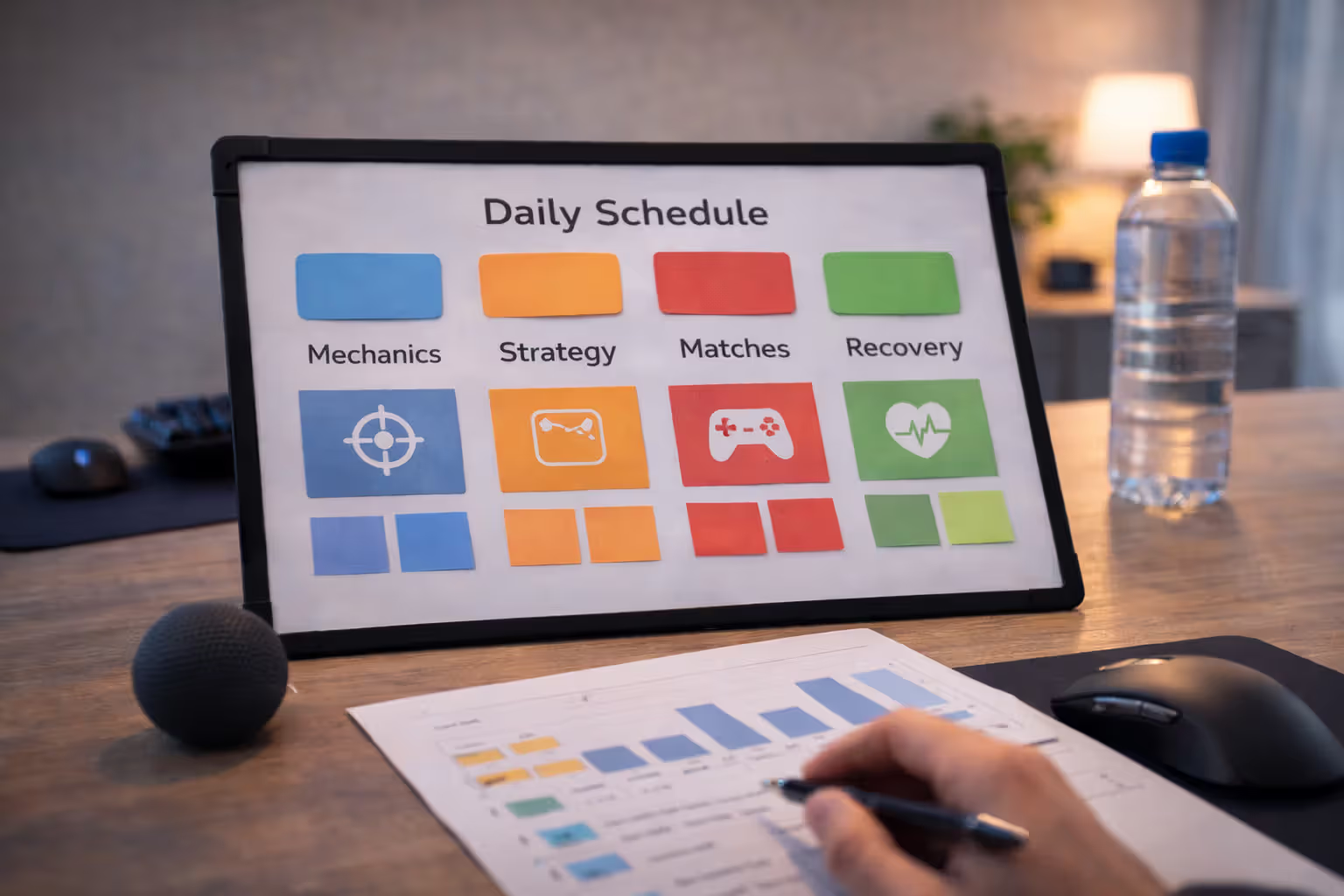
Professionals chunk their training into four distinct blocks: mechanical drilling, strategic study, competitive matches, and recovery. Each serves a different purpose.
Author: Tyler Brooks;
Source: quantumcatanimation.com
Mechanical drilling means isolated skill work. Aim labs. Combo practice mode. Custom games where you drill wave management for 20 minutes. One focused 30-minute drill session beats four hours of autopilot ranked where you're half-watching Netflix.
Strategic study means VOD review with specific questions you're trying to answer. Don't just rewatch your games—pause every death and narrate what information you had, what decision you made, what you should have done instead. Watch pro matches asking: why did they execute at 1:15 instead of 1:30? How did they know to stack that site? Take actual notes. I'm serious—open Google Docs and write this down.
Competitive play splits between solo queue (maintaining rank, practicing mechanics against random opponents) and team scrims (drilling coordination and testing set plays). Solo queue teaches you to 1v9 carry. Scrims teach structured play. You need both. Too much solo queue and you'll develop selfish habits. Too many scrims against weak opponents and you'll plateau.
Recovery isn't optional—it's when improvement actually happens. Schedule full days off. Walk around outside between sessions. Text your friends about something besides gaming. Players who grind 14 hours daily burn out within 18 months. Players who protect recovery time last five years.
Track concrete metrics, not feelings. Shooters: headshot percentage, deaths per round, first blood percentage. MOBAs: CS per minute, damage per gold, vision score. Fighting games: punish consistency, dropped combos per set. Spreadsheet this stuff weekly. You'll see improvement even when your rank stagnates.
Weekly Practice Breakdown for Serious Competitors
| Training Type | Mon | Tue | Wed | Thu | Fri | Sat | Sun | Weekly Hours |
| Aim/Mechanics Drills | 1h | 1h | 1h | 1h | 1h | 1h | — | 6h |
| Ranked Solo Queue | 3h | 3h | 2h | 3h | 3h | 2h | — | 16h |
| Team Practice Blocks | 3h | 3h | 3h | 3h | 3h | 4h | — | 19h |
| Replay Analysis | 1.5h | 1.5h | 1.5h | 1.5h | 1.5h | 2h | — | 9.5h |
| Gym/Physical Training | 1h | — | 1h | — | 1h | 1h | — | 4h |
| Tournament Competition | — | — | — | — | — | 4h | 6h | 10h |
| Total Hours | 9.5h | 8.5h | 8.5h | 8.5h | 9.5h | 14h | 6h | 64.5h |
This assumes full-time dedication. Got a day job? Keep these same ratios but cut total hours to 25-30 weekly. Four hours of focused training destroys eight hours of distracted grinding every single time.
Breaking Into the Scene: Tournaments, Teams, and Networking
High rank is necessary but insufficient. Organizations need proof you perform under pressure, function in teams, and won't embarrass their brand on social media.
Start grinding open qualifiers and amateur cups immediately. Every major esport runs monthly or weekly online tournaments with zero entry fees. You don't need to win—consistent top 8 finishes prove reliability. Scouts notice the player who places 5th-8th in twelve consecutive monthly cups more than the one-time winner who never qualifies again.
For team games, join or build a roster now. Use Discord communities, game-specific subreddits (r/VALORANT_LFG, r/LeagueConnect), and Challengermode. Vet teammates carefully—play five casual matches before committing. You need compatible communication styles and similar commitment levels, not just five warm bodies.
Build social presence strategically. Post highlight clips on Twitter/X and TikTok using trending sounds and game-specific hashtags (#VALORANT #VALORANTClips #VCT). Stream your ranked sessions on Twitch, even if four people are watching. Organizations check your socials before signing—avoid anything toxic, controversial, or unprofessional. That edgy joke might cost you a contract.
Cut a highlight reel once you've got tournament footage. Keep it under 2:30 minutes. Show clutches, smart rotations, and teamwork—not just aim montages. Include your peak rank, recent tournament placements, and contact info in the description. Update this every three months with fresh clips.
Network like your career depends on it (because it does). Engage authentically with other players in your region. Join team Discords even if you're not competing with them. Attend local LANs or meetups if your city has them. Help upcoming players improve—the community's smaller than you think, and today's Gold player might work for an org in two years.
When tryout invitations come, act professional. Show up early. Communicate clearly. Accept coaching without making excuses. Teams regularly choose the slightly worse player who's coachable over the mechanical god who argues every critique.
The Business Side: Contracts, Salaries, and Sustaining Your Career
Your first contract will probably feel insulting. Tier-3 orgs offer $600-$1,200 monthly plus "exposure." That's not livable in any decent-sized city, but it's your foot in the door.

Author: Tyler Brooks;
Source: quantumcatanimation.com
Negotiate even when you have zero leverage. Push for performance bonuses (extra $500 if team places top 4 in regional), flexible content creation rights (can you stream during off-hours?), and short contract lengths (6-10 months max). Short contracts let you jump to better teams faster.
Read every word before signing anything. Predatory contracts absolutely exist in tier-2 esports. Red flags: orgs taking more than 15-20% of stream revenue, contracts longer than 18 months with no performance outs, restrictions on playing other games casually, or you covering your own travel to team events. Have an experienced player or lawyer review anything you don't understand 100%.
Earnings by tier realistically: Tier-3 teams pay $8,000-$20,000 annually total compensation. Tier-2 teams pay $30,000-$65,000 annually. Tier-1 main rosters pay $150,000-$700,000+ annually. These numbers include salary plus average prize winnings, but exclude streaming income and personal sponsorships. Only the top 30-50 players per major esport reach that tier-1 bracket.
Start streaming now as career insurance. Even mid-tier pros pull $800-$2,500 monthly from Twitch if they stream consistently (4-5 times weekly, 3-4 hours per session). Build your channel while competing—if your playing career stalls, streaming becomes your primary income. It also keeps you relevant during off-seasons and between rosters.
Competitive careers average 3-5 years before players retire, transition to content creation, or leave gaming. Build your exit strategy before you need it desperately. Save aggressively during peak earning years (aim for 40-50% if possible). Decide whether you want to coach, create content full-time, or pivot to a non-gaming career. The discipline and pressure management you develop transfers to regular jobs, but you need to articulate it properly in interviews.
Diversify income: salary + prize winnings + streaming + personal sponsorships + coaching + content. Players dependent on only their team salary are one roster cut away from financial disaster.
Common Mistakes That Keep Players Stuck in Amateur Ranks
Playing more instead of practicing correctly traps thousands of players. They queue ranked for eleven hours daily without reviewing mistakes or drilling specific weaknesses. They plateau hard because they're reinforcing bad habits on autopilot. Fix this: reduce playing time 30% and redirect those hours to replay review and focused drilling.
Ego prevents more improvement than mechanics. Players blame teammates, ping, patches, anything except their own decisions. They ignore coaches because they "already know this stuff." They refuse to play support roles their team needs because they want to frag out. Organizations avoid these players regardless of skill level. Fix this: record yourself explaining why you died—you'll catch yourself making excuses in real-time and can correct the pattern.
Ignoring physical health creates early burnouts. Players develop carpal tunnel that ends careers (Hai, Uzi), gain 40 pounds and lose stamina (affects focus duration), or struggle with anxiety that tanks tournament performance. Gaming culture mocks self-care, but professionals treat their bodies like essential equipment. Fix this: schedule gym time like scrims, sleep 7-8 hours minimum, see a therapist if you're struggling mentally.
Toxic team dynamics destroy promising rosters constantly. Teams where players communicate passive-aggressively, criticize mistakes publicly, or prioritize KDA over wins implode within months. Even if you're the best player mechanically, you'll get blamed for poisoning the environment. Fix this: address conflicts privately and directly, praise teammates in public spaces, leave situations that won't improve after one honest conversation.
Impatience creates terrible decisions. Players switch games every six months chasing trends, abandon teams after one bad weekend, or quit entirely after fourteen months. Building a competitive career takes years minimum. Fix this: commit to one game for at least 18 months unless it's clearly dying (check Twitch metrics). Give rosters at least three months unless they're abusive or not paying what's contractually owed.
Ignoring business fundamentals leaves money everywhere. Players sign predatory contracts, don't negotiate basic terms, or fail to build their personal brand. They treat esports as pure competition when it's also entertainment and business. Fix this: learn what revenue share, buyout clauses, and performance bonuses mean. Study how successful players market themselves on social. Treat your career as a business from match one.
The difference between a good player and a professional isn't mechanics—it's consistency. Anyone can have a great game. Professionals have great games when it matters, even when they're exhausted, stressed, or playing poorly. That mental edge comes from thousands of hours of deliberate practice, not just playing.
— Danny "Shiphtur" Le, former LCS mid-laner and full-time streamer
Frequently Asked Questions About Starting an Esports Career
The path to becoming an esports player combines athletic discipline, business savvy, and genuine obsession with competitive gaming. Success demands years of structured training, smart career moves, and surviving setbacks that would make most people quit.
Most aspiring pros never reach tier-1 salaries—but plenty build sustainable careers in tier-2 competition, content creation, coaching, or industry roles. The skills you develop (performing under pressure, team coordination, analytical thinking) transfer to regular careers if gaming doesn't work out.
Start by choosing a game matching your natural strengths that has healthy competitive infrastructure below the top level. Build fundamentals that matter more than mechanics—game sense, clean communication, mental resilience. Structure your training professionally from day one: focused drills, strategic study, competitive play, and protected recovery time. Break into the scene through consistent tournament performance, team play, and authentic networking.
Understand the business realities upfront: expect years earning below minimum wage before potential breakthroughs. Read every contract word carefully. Diversify income streams. Avoid common mistakes like unfocused grinding, ego-driven decisions, and neglecting your physical health.
Your esports career path won't match anyone else's exactly. Some players break through in 18 months. Others grind five years. Some reach the top. Others build sustainable mid-tier careers. Define success on your own terms, maintain backup plans, and treat the journey as a multi-year commitment instead of a lottery ticket.
The players who last love the daily grind, not just the championship moments.