What Are Esports Teams in Competitive Gaming Today
What Are Esports Teams?

Content
Remember when "professional gamer" sounded like an oxymoron? Those days are gone. Esports teams have transformed competitive gaming into a billion-dollar machine, and these aren't just Discord groups with matching avatars—we're talking legitimate businesses with offices, lawyers, and balance sheets.
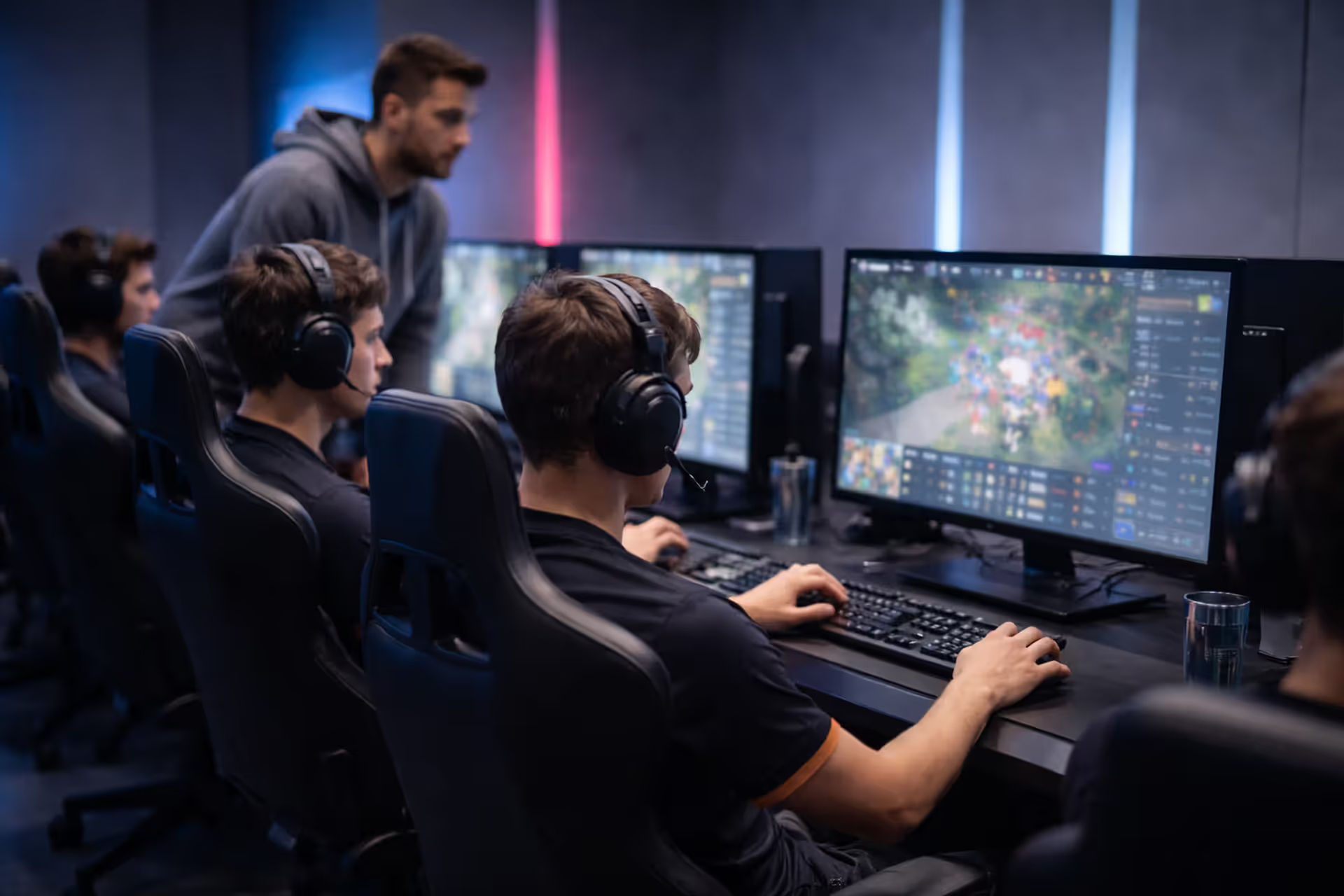
Real esports organizations sign legal contracts, pay actual salaries, and build training centers. Take Team Liquid's Alienware Training Facility in Los Angeles—it's got 20,000 square feet of space, dedicated streaming rooms, and a chef who prepares meals for players. These setups make college athletic programs look modest.
The money's real too. The International (Dota 2's world championship) handed out $40 million in 2021. League of Legends teams pay mid-tier players $200,000+ annually just to show up. Organizations like FaZe Clan employ over 100 people across content creation, player management, and business operations.
But here's what most people miss: tournament prizes are just the tip. The actual business runs on sponsorships, merchandise drops, YouTube revenue, and media rights. Teams that focus only on winning tournaments usually go broke. The ones printing money? They've figured out they're entertainment companies that happen to compete in video games.
Let's break down how this whole ecosystem actually works—from org charts to revenue streams to why some teams thrive while others burn through investor cash.
How Professional Gaming Teams Are Structured
Walk into any top-tier esports facility and you'll find something closer to a tech startup than a gaming house. Organizational charts have gotten complicated fast. Cloud9's operations team alone has 15+ people handling everything from visa paperwork to equipment shipping.

Author: Brandon Hayes;
Source: quantumcatanimation.com
Player Rosters and Role Assignments
Your typical competitive roster fields five to six starters—League needs five, CS2 needs five, Valorant needs five. But that's just the visible part. Behind them sit substitute players (getting paid to warm benches), academy prospects (the farm system), and content creators who technically count as roster members.
Contracts run one to three years typically. Payment structures vary wildly. A rookie on a tier-two team might pull $2,000 monthly plus housing. Star players in franchised leagues? We're talking $30,000-$50,000 per month, sometimes more. Faker (T1's legendary mid-laner) reportedly makes over $4 million yearly when you factor in salary, streaming revenue cuts, and appearance fees.
Role specialization gets intense. In League, you've got top laners, junglers, mid laners, ADCs, and supports—each requiring completely different skill sets. CS2 teams designate entry fraggers (first ones through doors), AWPers (sniper specialists), in-game leaders (calling strategies mid-round), and support players. You can't just swap people around like chess pieces.
Academy systems changed everything around 2018. Now organizations sign 16-year-old prospects to development deals, house them in gaming facilities, and run them through daily scrimmages against professional opponents. TSM Academy, Cloud9 Academy, 100 Thieves Next—these feeders produce half the new talent entering top leagues. It's cheaper than paying million-dollar transfer fees for proven players.
Coaching Staff and Analysts
Head coaches in franchised leagues pull $100,000-$250,000 annually depending on the organization's budget. That's not ceremonial money—these people work 60+ hour weeks during competition seasons. They're drafting strategies, reviewing footage, managing personalities, and making real-time tactical calls during matches.
Then you've got specialized assistant coaches. Some focus purely on mechanical skill development—aim training, movement patterns, ability combos. Others analyze opponents full-time, building databases of tendencies. "Team X runs this specific strategy 73% of the time when they're on defense at this map location"—that level of detail.
The data operation gets ridiculous. Analysts use software like Grid, Mobalytics, and proprietary tools to break down every millisecond of gameplay. They're tracking first blood percentages, economy management efficiency, ultimate ability usage timing—hundreds of variables per match. One analyst might spend an entire week just studying how an opponent's jungler paths during the first four minutes of games.
Sports psychologists became mandatory around 2019-2020 after several high-profile player burnout cases. Turns out having millions of people watching your every mistake while Twitter roasts you creates mental health challenges. Who knew? Organizations that ignored this lost players to depression, anxiety disorders, and stress-related performance collapse. The smart teams now budget $80,000-$120,000 annually for mental health support.
Management and Operations Personnel
General managers run roster construction like they're playing franchise mode on expert difficulty—except with real money and careers. They're balancing salary caps (in franchised leagues), negotiating buy-out clauses, timing contract extensions, and deciding whether to rebuild or run it back with current rosters.
Content teams have become massive revenue drivers. A good social media manager who understands Gen Z humor generates more value than another analyst. 100 Thieves' content operation produces daily YouTube videos, TikToks, and Twitter engagement that pulls 5-10 million views weekly. That content revenue sometimes exceeds tournament winnings for the entire year.
Operations people handle the unglamorous essentials. When your Valorant team needs to fly from Los Angeles to São Paulo with 12 checked bags of equipment, compete for two weeks, then fly to Berlin for the next event—someone's coordinating all that. Visa applications for international players take months. Equipment failures need instant backups. Housing arrangements, dietary restrictions, travel insurance—it adds up to full-time positions.
The Business Behind Esports Organizations: Revenue and Sponsorships
Let's talk actual money because tournament prizes fool everyone. Sure, winning The International drops $15+ million on your organization. Sounds incredible until you realize teams split 60-70% with players (it's in their contracts), and only one team wins. Meanwhile, there's 200+ professional organizations trying to stay solvent.
Sponsorships carry the industry. Companies like Red Bull, Monster Energy, Logitech, Secretlab, and HyperX pay $500,000-$3 million annually just to put their logo on jerseys and get mentioned in content. Non-endemic sponsors (State Farm, Mastercard, U.S. Army—yes, really) started flooding in around 2019 when they realized 18-34 year-old males watch esports more than traditional sports.
The sponsorship pitch evolved too. Teams don't sell "we'll win tournaments"—they sell guaranteed impressions. "Our content reaches 50 million people monthly across YouTube, TikTok, Twitter, and Twitch" sounds better to marketers than "we might make playoffs." FaZe Clan built their entire model on this: mediocre competitive results, incredible content reach and brand value.
What gets measured gets managed.
— Peter Drucker
Prize money looks sexy in headlines but barely covers costs. The median competitive team earns maybe $200,000-$350,000 yearly from tournament placements across all their rosters. That's before player splits. After dividing it up, organizations keep $60,000-$120,000—which doesn't cover a single top-tier player's salary for a year.
Merchandise surprised everyone by actually working. When 100 Thieves drops a new apparel collection, items sell out in 4-6 hours. Limited quantities, hype culture, and genuine design quality created a streetwear brand that happens to have esports teams attached. Profit margins hit 30-50% after manufacturing costs, making merch more reliable than tournament results.
Content revenue scales beautifully. Organizations with strong YouTube presences (Team Liquid, FaZe, G2 Esports) generate $400,000-$800,000 annually from ad revenue alone. Add in Twitch subscriptions, sponsorship integrations in videos, and TikTok Creator Fund payments—suddenly you've built sustainable income that doesn't depend on playoff runs.
Franchised leagues changed the game fundamentally. Buying into the League of Legends Championship Series cost organizations $10 million in 2018. Overwatch League slots went for $20-$35 million depending on city. Those seem insane until you factor in revenue sharing: broadcast rights, sponsorships, and in-game cosmetic sales get distributed to all teams. LCS teams receive roughly $300,000+ annually just for existing in the league, win or lose.
| Revenue Stream | % of Total Revenue | Annual Range (Mid-Tier Org) | Reality Check |
| Sponsorships | 40-50% | $800K-$2M | Both endemic (gaming) and non-endemic brands |
| Content Creation | 15-25% | $300K-$600K | YouTube, Twitch, TikTok combined—needs consistent output |
| Merchandise | 10-20% | $200K-$500K | Requires existing brand loyalty; limited drops work best |
| Prize Winnings | 5-15% | $100K-$400K | After player splits; only one team wins each tournament |
| Franchise Revenue Share | 10-15% | $200K-$400K | Only applies to teams in franchised leagues |

Author: Brandon Hayes;
Source: quantumcatanimation.com
Top 10 Esports Organizations Leading the Industry
Some organizations just hit different. They've got championship pedigree, massive fan bases, and enough funding to weather the industry's inevitable ups and downs. These aren't flavor-of-the-month squads—they've built sustainable operations.
Team Liquid might be the closest thing to "doing everything right." They compete in 15+ games simultaneously, from League to CS2 to Dota 2 to Valorant. Their Brazilian CS2 roster dominated 2023-2024. The organization prints content daily and has built genuine brand loyalty across regions. When people think "professional esports organization," Liquid's usually the mental template.
FaZe Clan started as Call of Duty trickshot kids on YouTube and transformed into a lifestyle empire. Their competitive results are... mixed. But their influencer network and content machine make them bigger than pure esports organizations. The SPAC merger valued them at $400+ million before the crash back to reality. They've proven you can build massive value without winning championships constantly.
Cloud9 pioneered multi-game expansion done intelligently. They've won championships across League (multiple LCS titles), CS:GO (2018 Major), and Valorant (Red Bull Homeground). Their player development pipeline produced dozens of pros who went on to other organizations—essentially monetizing talent development itself.
TSM (Team SoloMid) built an empire on League of Legends dominance in North America, then expanded into Valorant and Apex Legends. Their FTX naming rights deal ($210 million valuation) looked genius until it wasn't—crypto crash complications. They've since pivoted back to core esports operations with more conservative sponsorship strategies.
G2 Esports represents European excellence with personality. Their social media team trolls rivals constantly (and hilariously). Carlos "ocelote" Rodríguez built G2 into a multi-game powerhouse with championship rosters in League, CS2, Valorant, and Rainbow Six. The organization's willingness to take social media risks generated engagement traditional teams couldn't match—until Carlos himself became the liability and departed.
100 Thieves proved the lifestyle brand model works. Matthew "Nadeshot" Haag founded the org in 2017 and immediately focused on apparel, content, and brand building alongside competition. Their clothing drops rival Supreme in hype culture. The competitive rosters (League, Valorant) perform respectably, but the brand value exceeds their trophy case.
Gen.G operates in both Asia and North America, giving them access to gaming's largest markets. Their League team won the 2024 World Championship (finally), validating years of investment in Korean infrastructure. They also field competitive Valorant and Overwatch rosters. The bi-continental strategy costs more but diversifies market risk.
Fnatic claims old-school royalty status—they've been around since 2004. That longevity in an industry where organizations die constantly demonstrates something's working. They've won championships in CS, League, Dota 2, and Rainbow Six across two decades. Current operations span multiple games with consistent tier-one results.
LOUD burst onto the global scene from Brazil by winning Valorant's 2022 World Championship. They proved regional organizations can compete with multi-million dollar international orgs through focused excellence. Their fan base in Brazil creates arena atmosphere that rivals European football. Single-game focus lets them pour all resources into being the absolute best at one thing.
T1 houses Lee "Faker" Sang-hyeok, arguably the greatest League player ever. They've won multiple world championships and maintain Korea's most prestigious LoL infrastructure. SK Telecom's backing provides financial stability most esports orgs dream about. Their talent pipeline remains unmatched—T1 Academy players become starting pros on other teams regularly.
The days of relying on tournament winnings are over. Successful esports organizations today are media companies that happen to compete in games. Our sponsorship revenue increased 340% between 2019 and 2023 because we focused on content output and audience engagement metrics that brands actually care about.
— Steve Arhancet, Co-CEO at Team Liquid
How Teams Build and Maintain Competitive Rosters
Scouting starts where you'd expect: ranked leaderboards. Talent scouts literally monitor the top 500 players in each region's competitive ladder, looking for consistent performers. But mechanical skill alone doesn't cut it—they're watching for game sense, adaptability, and whether someone tilts after bad plays.
Amateur tournaments provide alternative discovery paths. Open qualifiers let unknown players prove themselves against established pros. Organizations station scouts at tier-two events specifically hunting for diamonds. Some of the best finds came from random bracket runs where a 17-year-old nobody destroyed established players.
Academy systems formalized youth development after League franchising in 2018. Teams now sign 16-18 year-olds to contracts paying $1,500-$3,000 monthly plus housing and coaching. These prospects scrim against the main roster daily, compete in secondary leagues, and get promoted when ready (or traded for profit). Cloud9 Academy became famous for producing talent they'd later sell to other teams for six-figure transfer fees.
Contract negotiations got professional fast. Agents now represent most players, negotiating salary, performance bonuses, streaming revenue splits, and image usage rights. Buy-out clauses determine what other teams must pay to acquire contracted players mid-contract—these range from $50,000 for developing players to $1+ million for proven stars. When Perkz moved from G2 to Cloud9 in 2020, the transfer fee reportedly hit $5 million.
Trades happen less than traditional sports because there's no structured trade windows or salary caps forcing movement in most leagues. Instead, teams negotiate buy-outs year-round or simply wait for contracts to expire. Free agency creates bidding wars when top players hit the market—salaries can jump 30-50% in a single contract cycle.
Roster stability matters more than people realize. Teams that change three or more players between seasons typically struggle initially regardless of individual talent. Communication patterns, strategic preferences, and personal chemistry take months to develop. The best rosters keep 3-4 core players together across multiple years—look at any championship team's history.
Performance metrics guide decisions, but not just obvious stats. Sure, organizations track K/D ratios and damage per round. But they're also evaluating communication quality (reviewing voice comms from matches), adaptability to meta changes, and performance under pressure. Some players dominate scrimmages but freeze on stage. Others elevate when it matters most. Analytics try capturing these intangibles through situational performance splits.

Author: Brandon Hayes;
Source: quantumcatanimation.com
Common Mistakes Organizations Make When Managing Teams
Over-expansion kills more esports orgs than anything else. The temptation to field rosters in eight or ten games simultaneously spreads resources impossibly thin. You end up with mediocre teams across multiple titles instead of championship-caliber squads in 2-3 focused games. OpTic Gaming and Immortals both learned this lesson expensively—they're either defunct or dramatically scaled back now.
Treating players poorly creates reputation damage that lasts years. The esports community shares information instantly through Twitter, Reddit, and Discord. Organizations that delay salary payments, provide trash housing, or ignore mental health concerns get exposed within days. Then top prospects refuse to sign. Echo Fox imploded in 2019 partly because word got out about unpaid salaries and broken promises.
Sponsorship misalignment blows up spectacularly when it happens. Taking money from brands that conflict with your audience's values triggers immediate backlash. Esports fans skew young and socially conscious—they'll absolutely cancel their favorite team over a problematic sponsor. Due diligence matters. FaZe partnering with crypto scams damaged credibility. Teams need to vet sponsors beyond the check amount.
Ignoring content creation during competitive off-seasons wastes opportunities. Casual fans tune out between tournaments if you're only posting match results. Organizations that maintain consistent content output—player spotlights, behind-the-scenes footage, humor content—keep audiences engaged year-round. That sustained engagement becomes valuable when pitching sponsors or launching merchandise.
Contract mistakes cost millions. Failing to include proper buy-out clauses means you can't recoup investment when star players leave. Missing streaming revenue provisions means players keep 100% of Twitch income while using your brand for clout. Weak behavior clauses mean you can't discipline misconduct without breaching contract. Legal review isn't optional anymore—one bad contract can sink an organization.
Cultural tone-deafness in international expansion wastes resources predictably. Operating in South Korea requires completely different infrastructure, business relationships, and cultural understanding than North America. Teams that apply identical strategies globally usually fail. Some regions require local partnerships, others need on-the-ground presence, and all demand cultural fluency that can't be faked from headquarters.
Author: Brandon Hayes;
Source: quantumcatanimation.com
How to Follow and Support Your Favorite Esports Team
Watching matches is obvious but actually matters economically. Viewership numbers determine broadcast rights values, which fund prize pools and league operations. Platforms like Twitch, YouTube Gaming, and league-specific apps stream everything live. Co-streaming (watching through a player or content creator's stream) counts toward viewership metrics while adding entertainment value.
Buying official merchandise directly funds operations while letting you rep your team. Jerseys typically run $60-$80, hoodies $50-$70, and accessories $20-$40. Profit margins after manufacturing and fulfillment hit 30-50%, making merch one of the healthier revenue streams. Limited drops from orgs like 100 Thieves and FaZe sell out in hours, creating secondary markets where items resell at 2-3x retail.
Social media engagement increases marketing value to sponsors measurably. Organizations with 1+ million engaged followers charge premium sponsorship rates because they deliver guaranteed audience reach. Liking, commenting, and sharing actually impacts the business side—brands track engagement metrics when evaluating sponsorship ROI. Your Twitter reply might seem meaningless, but aggregated engagement determines whether sponsors renew contracts.
Subscribing to team-affiliated streamers supports both player and org. Most pro players stream on Twitch during off-days, and subscriptions ($5-$25 monthly depending on tier) split between platform and creator. Organizations typically take 10-20% of player streaming revenue per contract terms. It's a rare win-win where fans get exclusive content while directly funding their favorite players.
Attending live events creates unforgettable experiences while supporting the ecosystem. Major tournaments like League Worlds, The International, and Valorant Champions sell out 15,000+ seat arenas. Ticket prices range from $50 for early rounds to $500+ for finals. The atmosphere rivals traditional sports championships—fans bring signs, coordinate chants, and create energy that translates through broadcasts.
Using creator codes and engaging with sponsored content helps teams prove ROI to sponsors. When brands see measurable engagement from esports partnerships—clicks, conversions, social mentions—they renew contracts and increase investment. Seems minor, but sponsors track everything. Your interaction with sponsored content literally impacts whether that brand continues supporting esports.
Frequently Asked Questions About Esports Teams
Esports organizations have matured into legitimate businesses that blend competitive performance with media production, brand building, and audience engagement. The teams winning long-term understand they're running entertainment properties that happen to compete in video games, not gaming teams dabbling in business.
For fans, following these orgs means connecting with competitive narratives spanning years—watching rosters develop, players mature, and storylines unfold across seasons. For aspiring pros, understanding organizational structures reveals pathways from ranked grind to championship stages and six-figure salaries.
The industry's growth depends on continued professionalization without losing the authentic passion that built these communities initially. That balance isn't easy. Too corporate and you lose what made esports special. Too casual and you can't sustain operations financially. The organizations navigating that tension successfully will define the industry's next decade.
Whether you're considering launching an organization, grinding for a professional contract, or just trying to understand the business behind your favorite team's Twitter banter—recognizing the complexity of modern esports operations matters. These are multi-million dollar businesses operating in entertainment's fastest-growing sector, not basement LAN parties with jerseys.