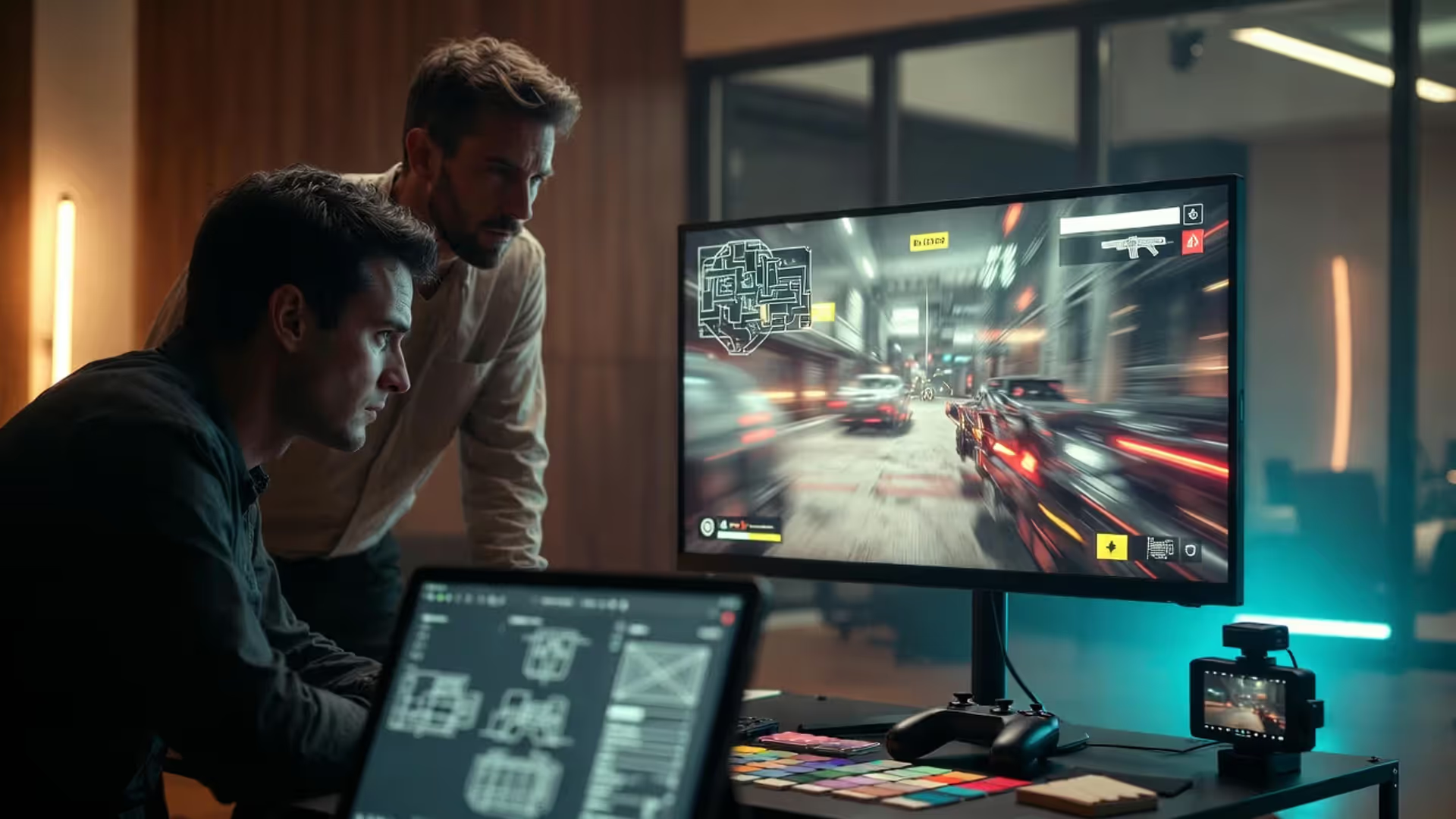
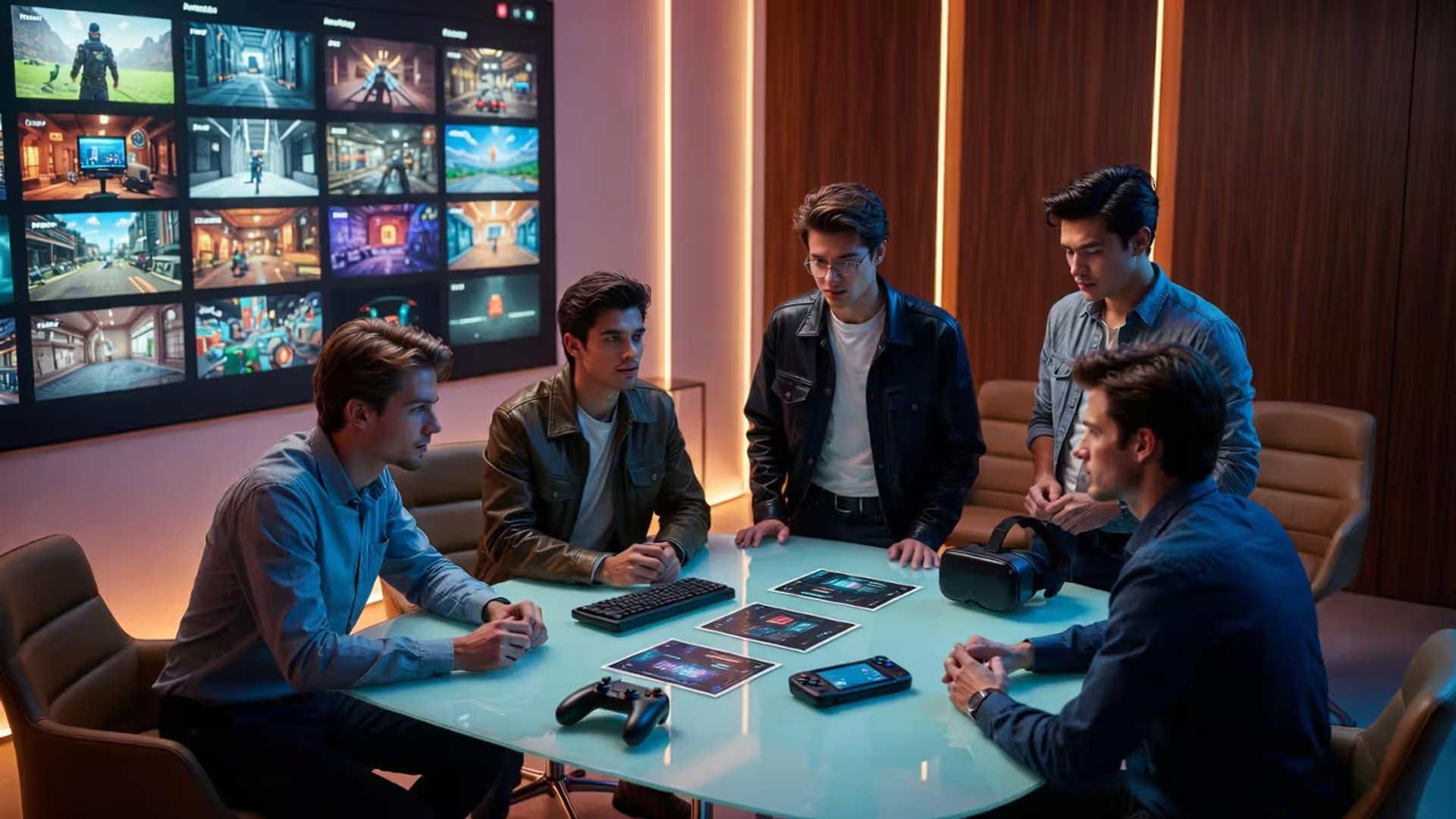
Mechanics are the language players speak.
Game Mechanics Guide

Content
Game mechanics are the rules and systems that define what players can do and how those actions produce outcomes. In Super Mario Bros., jumping on an enemy defeats it—that's a mechanic. In Civilization, researching technologies unlocks new units—another mechanic. These aren't just features; they're the interactive grammar that lets players express themselves within a game's boundaries.
Many people confuse mechanics with graphics, story, or theme. A first-person perspective isn't a mechanic—it's presentation. The ability to aim down sights, reload weapons, or vault over cover? Those are mechanics. The Last of Us and Uncharted share similar narratives and aesthetics, but their mechanics differ significantly: one emphasizes resource scarcity and stealth, the other focuses on acrobatic traversal and continuous action.
Why do mechanics matter so much? They determine whether players feel clever, frustrated, powerful, or bored. A well-designed mechanic creates what designers call "interesting decisions"—moments where multiple valid options exist, each with different risks and rewards. When XCOM forces you to choose between taking a risky shot or hunkering down in cover, that tension emerges directly from the game's accuracy and action-point mechanics working together.
Poor mechanics kill engagement faster than mediocre graphics ever will. Players tolerate visual simplicity in games like Minecraft or Among Us because the mechanics deliver satisfying interactions. Conversely, beautiful games with clunky, unresponsive, or confusing mechanics rarely retain audiences beyond the initial visual wow factor.
Types of Game Mechanics Across Different Genres
Not all mechanics carry equal weight. Core mechanics are the actions players perform most frequently—the foundation of moment-to-moment gameplay. Secondary mechanics add variety and depth but don't define the experience. In Dark Souls, melee combat with stamina management is core; upgrading equipment at bonfires is secondary but important.
Different genres prioritize different mechanical structures. Fighting games live or die by frame-perfect timing and combo systems. Strategy games need resource management and tactical positioning. Narrative adventures might have minimal mechanics, focusing instead on dialogue choices and environmental interaction.
| Genre | Primary Mechanics | Example Games | Player Goal |
| First-Person Shooter | Aiming, movement, weapon switching, reloading | Counter-Strike, Doom Eternal | Eliminate enemies while managing positioning and resources |
| Role-Playing Game | Character progression, inventory management, ability selection | Baldur's Gate 3, Persona 5 | Build powerful characters through strategic choices |
| Puzzle | Pattern recognition, spatial manipulation, logical deduction | Portal, The Witness | Solve increasingly complex challenges using established rules |
| Platformer | Jumping, running, timing-based movement | Celeste, Hollow Knight | Navigate environments through precise physical control |
| Strategy | Resource gathering, unit production, tactical positioning | StarCraft II, Into the Breach | Outmaneuver opponents through planning and adaptation |
| Roguelike | Procedural navigation, permanent death, run-based progression | Hades, Slay the Spire | Master systems through repeated attempts and accumulated knowledge |
| Survival | Crafting, hunger/thirst management, environmental hazards | Subnautica, Don't Starve | Balance multiple resource needs while exploring |
| Card Game | Deck building, hand management, tactical card play | Magic: The Gathering Arena, Balatro | Construct synergistic strategies within resource constraints |
Genre conventions exist for good reasons—they match player expectations. Someone launching a platformer expects responsive jumping. But the best games often subvert or combine genre mechanics in unexpected ways. Undertale takes RPG combat mechanics and adds bullet-hell dodging. Slay the Spire merges roguelike structure with deck-building card mechanics.
Secondary mechanics often distinguish games within the same genre. Both Call of Duty and Valorant are shooters with aiming and movement, but Valorant adds character-specific abilities that create tactical depth beyond pure gunplay. These secondary systems transform the experience without changing the core mechanical identity.
Core Mechanics Design: Building Your Foundation
Designing mechanics starts with identifying player verbs—the actions that will fill most gameplay time. You're not designing "a space game" or "a game about Vikings." You're designing systems where players will constantly jump, shoot, sneak, persuade, or build. These verbs become the raw materials for every challenge and success state.
Strong core mechanics share common traits: they're simple to explain but difficult to master, they feel responsive to player input, and they create natural skill progression. Rocket League exemplifies this perfectly. The core verb is "hit ball with car," which a five-year-old understands. Yet professional players spend thousands of hours mastering aerial control, rotation timing, and boost management—all emergent complexity from that simple foundation.

Author: Tyler Brooks;
Source: quantumcatanimation.com
Prototyping mechanics means testing them in isolation before adding context. Create a gray-box level with placeholder art. Does moving and jumping feel good on its own? If navigating empty space feels tedious, no amount of enemies or level design will fix that fundamental problem. Destiny famously spent years perfecting how guns felt before finalizing any other systems—that mechanical foundation became the franchise's signature strength.
Common mistakes plague novice designers. The first is adding mechanics because they seem cool rather than because they serve player goals. If your platformer includes a grappling hook, crafting system, dialogue trees, and rhythm-game elements, you probably haven't identified your core experience. Each mechanic demands tutorial time, UI space, and mental overhead. More isn't better; cohesive is better.
Another mistake: designing mechanics that sound interesting in a design document but feel terrible in practice. On paper, "realistic gun jamming" adds tension. In practice, it removes player agency at random moments, creating frustration rather than challenge. Always test with players who haven't read your design rationale—they'll experience mechanics as they actually function, not as you imagine they should.
The "two-minute loop" test reveals whether core mechanics have staying power. Can players engage with your primary verbs for two minutes and want to continue? If those initial minutes feel like a tutorial obligation rather than an enjoyable activity, the mechanics need fundamental revision. Polish comes later; the core interaction must work first.
Players don’t fall in love with graphics or stories first — they fall in love with what they can do. Great mechanics turn simple actions into meaningful experiences that players want to repeat again and again.
— Raph Koster, game designer and author of A Theory of Fun for Game Design
The Relationship Between Mechanics and Player Agency
Player agency—the feeling that your choices matter—emerges from mechanical design more than narrative branching. When Breath of the Wild lets you approach any problem with climbing, fire, bombs, or magnetism, you feel creative because the mechanics genuinely support multiple solutions. The game isn't scripting your cleverness; the systems allow it.
False agency is worse than no agency. Presenting three dialogue options that lead to identical outcomes teaches players their choices don't matter. Similarly, mechanics that appear to offer options but have one dominant strategy create the illusion of depth. If a game includes melee and ranged combat but ranged is always safer and more effective, the melee mechanic provides no real choice—just a trap for uninformed players.

Author: Tyler Brooks;
Source: quantumcatanimation.com
Meaningful agency requires mechanics with different strengths in different contexts. Into the Breach gives each mech distinct abilities, but map layouts and enemy positions constantly shift which abilities prove most valuable. The mechanics stay consistent, but the optimal approach changes, forcing genuine decision-making rather than rote repetition.
How Gameplay Systems Connect and Reinforce Each Other
Author: Tyler Brooks;
Source: quantumcatanimation.com
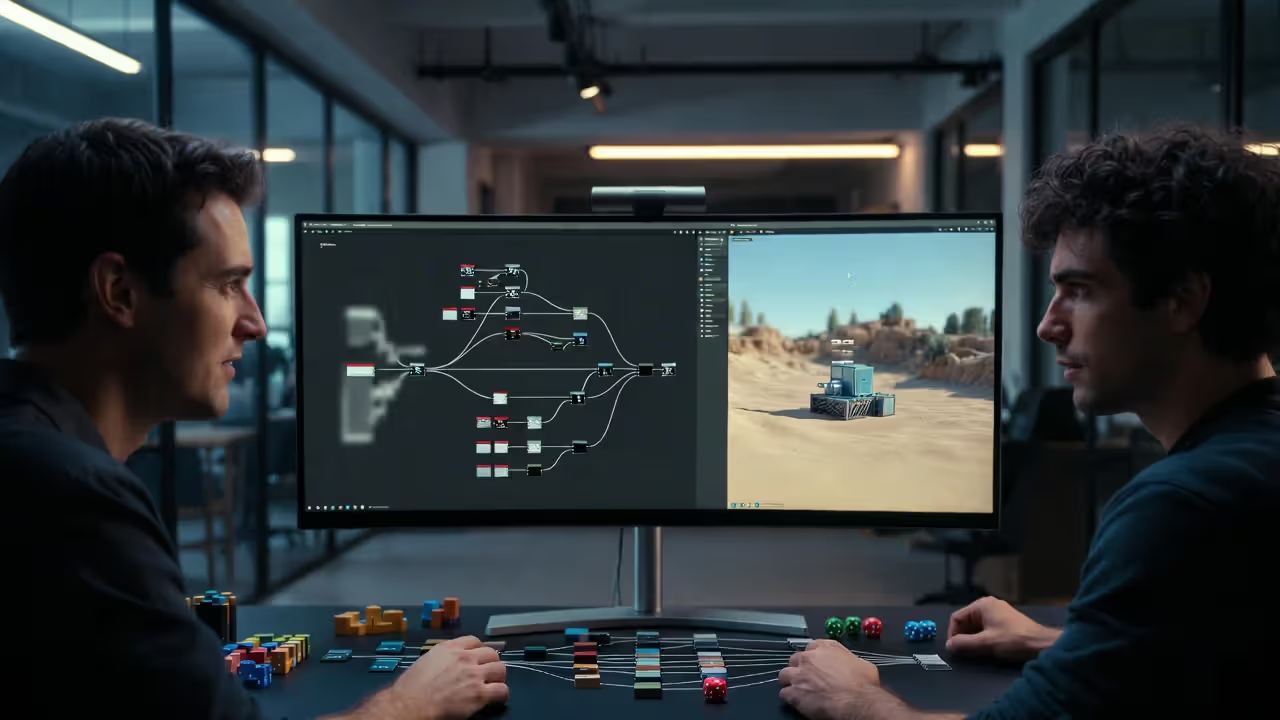
Individual mechanics gain depth through interaction. Dishonored has stealth mechanics, combat mechanics, and supernatural powers. Each works independently, but the magic becomes apparent when they combine: you can teleport to create new stealth routes, possess enemies to bypass combat, or use time-stop during fights to reposition. The systems multiply rather than simply add.
This multiplicative depth is called emergent gameplay—outcomes that designers didn't explicitly script but that arise naturally from system interactions. Minecraft doesn't have a "build a piston door" mechanic, but redstone, pistons, and blocks interact in ways that let players create functional doors, traps, and computers. The designers provided the mechanical vocabulary; players wrote the sentences.
Elegant system design means mechanics reinforce the same core experience from different angles. Hades wants you to feel like an unstoppable warrior-god fighting through hell. The dash mechanic provides mobility. Boons from gods add power. The death-and-resurrection loop removes failure punishment. The relationship system rewards repeated attempts. Every system points toward the same emotional goal: relentless forward momentum.
Contrast this with games where systems work against each other. If your survival game has elaborate base-building mechanics but also forces constant relocation, those systems conflict. Players invest time in construction only to abandon it, creating frustration. Either the building needs to be portable, or the relocation pressure should ease—the systems must cooperate.
As game designer Sid Meier observed: "A game is a series of interesting choices." Those choices become interesting when systems interact to create trade-offs. In Civilization, building a wonder provides benefits but consumes production that could create military units. The mechanics of construction, warfare, and city development intersect to create tension. Remove any system, and the choice becomes obvious rather than interesting.
Case study: Prey (2017) layers mechanics masterfully. The Gloo Cannon creates platforms, blocks hazards, and immobilizes enemies. The Mimic ability lets you transform into objects. Suddenly you can mimic a coffee cup, roll through a small gap, transform back, and use Gloo to create an escape route. Neither mechanic explicitly supports this sequence, but their interaction creates memorable problem-solving moments.
The danger in system layering is overwhelming players. Each new mechanic adds cognitive load. The solution isn't fewer mechanics but clearer introduction pacing. Portal teaches one concept per chamber, letting players internalize each principle before combining them. By the final puzzles, you're juggling momentum, portals, lasers, and cubes simultaneously—but you learned each element in isolation first.
Mechanics Balancing: Testing and Tuning for Fair Play

Author: Tyler Brooks;
Source: quantumcatanimation.com
Balancing means ensuring no single strategy dominates all others so completely that alternatives become pointless. Perfect balance is impossible and arguably undesirable—slight imbalances create evolving metagames where players discover new strategies. The goal is preventing any option from being so powerful or weak that it warps the entire experience.
Identifying imbalance starts with data and observation. If 80% of players choose the same weapon, character, or strategy, something's wrong. Either that option is overpowered, or alternatives are underpowered, or—often—the dominant choice is simply easier to understand. League of Legends constantly adjusts champion win rates, but they also consider pick rates and player satisfaction. A champion with a 45% win rate might still be healthy if only experts play them and find the experience rewarding.
Data tells you what's happening; playtesting reveals why. Numbers show that a weapon kills too quickly, but watching players reveals whether that's due to damage values, fire rate, or ease of aiming. Sometimes the "problem" weapon isn't actually overpowered—it just feels unfair to die against, which is a different issue requiring different solutions.
Balancing approaches fall on a spectrum between pure data analysis and designer intuition. Multiplayer games like Valorant or Hearthstone lean heavily on statistics—they have millions of matches generating performance data. Single-player games rely more on qualitative feedback: does this boss feel fair? Is this ability satisfying to use? Both approaches have merit; the key is matching your method to your game type and available resources.
Different player skill levels experience balance differently. A fighting game move might be overpowered at beginner levels where players can't counter it but balanced at high-level play where the counter is second nature. Do you balance for beginners and risk boring experts, or balance for experts and frustrate newcomers? Many games implement skill-based matchmaking to sidestep this dilemma, but single-player games must choose their target audience.
Post-launch balancing creates unique challenges. Players have invested time mastering current systems. Major changes can feel like betrayal, even when necessary for game health. Destiny 2 faces this constantly—nerfing a popular weapon generates community backlash, but leaving it dominant makes other options irrelevant. Transparent communication about balancing philosophy helps, though it never eliminates controversy.
The "buff weak options instead of nerfing strong ones" philosophy sounds player-friendly but creates power creep—the overall power level escalates until the game's challenge structure collapses. Sometimes nerfs are necessary. The art is identifying whether something is strong because it's well-designed or because it's broken. Strong and satisfying should stay; broken must change.
Interaction Design Gaming Principles That Make Mechanics Feel Good
Author: Tyler Brooks;
Source: quantumcatanimation.com
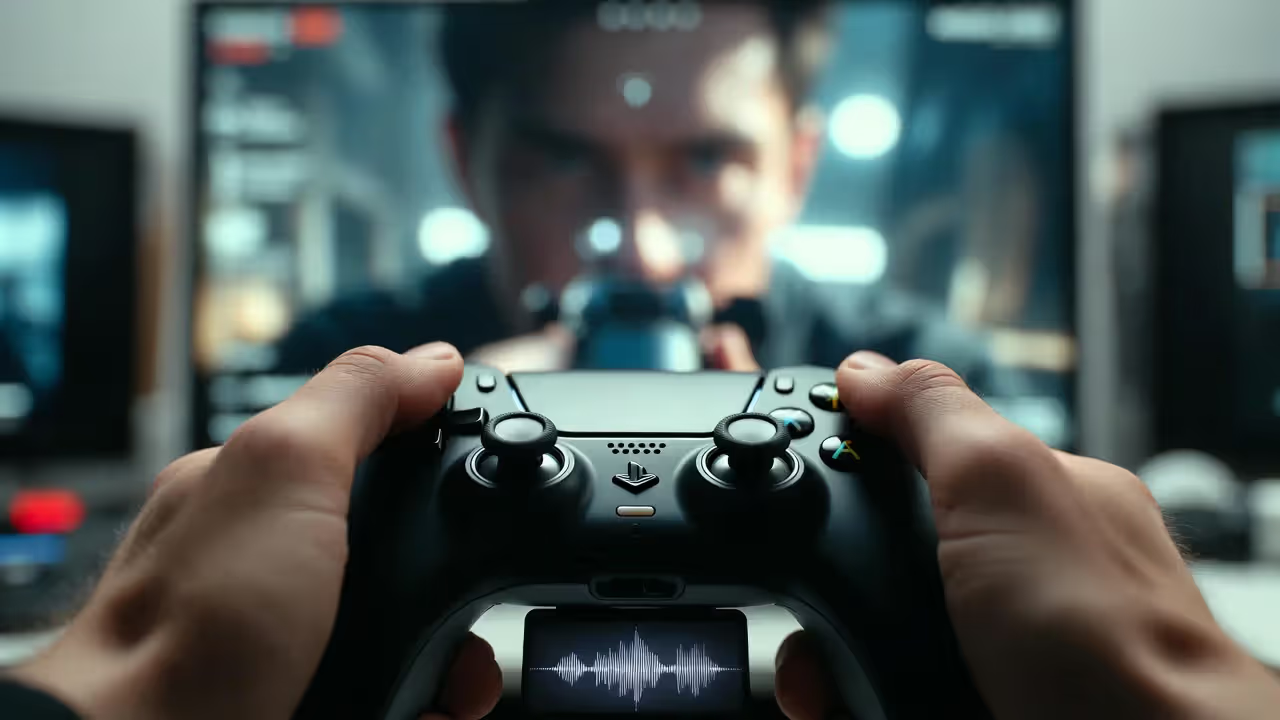
A mechanic can be perfectly balanced and strategically sound but still feel terrible to use. "Game feel"—the tactile quality of interaction—emerges from feedback loops that confirm player actions and their consequences. When you fire a gun in Doom Eternal, the screen shakes, the controller rumbles, the audio punches, the enemy reacts, and the ammo counter updates. Remove any element and the action feels weaker.
Input responsiveness matters more than visual fidelity. A game that looks stunning but has three frames of input lag between button press and character action will feel sluggish and imprecise. Celeste uses pixel art graphics but responds to inputs within a single frame—that immediacy makes the challenging platforming feel fair rather than frustrating. Players blame themselves for mistakes in responsive games; they blame the game when input lag introduces uncertainty.
Visual feedback should be clear without being cluttered. When you hit an enemy, you need confirmation: damage numbers, health bars, hit-stop (brief pause), or visual effects. But too much feedback becomes noise. Devil May Cry bombards you with style rankings, combo counters, and particle effects, which works because the game's identity is stylish excess. A horror game using the same approach would destroy tension through visual chaos.
Audio design shapes mechanical perception profoundly. The Half-Life crowbar's metallic clang makes it feel heavier than its damage numbers suggest. Resident Evil 4's attaché case makes a satisfying click when items slot into place, turning inventory management into a pleasurable activity. Weak or absent audio makes mechanics feel weightless and inconsequential.
Haptic feedback adds a physical dimension to digital actions. The PlayStation 5's adaptive triggers create resistance when drawing a bow or pressing a brake pedal, making these mechanics tangible. Not every game needs this level of feedback, but some form of tactile response—even simple controller rumble—helps players feel connected to their actions.
Accessibility considerations in mechanical design expand your audience without compromising vision. Difficulty options, remappable controls, and adjustable timing windows let more players engage with your mechanics meaningfully. The Last of Us Part II includes options for players with limited vision, hearing, or mobility—not by simplifying mechanics but by providing alternative ways to receive information and execute actions.
Reward timing creates psychological hooks. Immediate rewards (points, sounds, visual effects) provide moment-to-moment satisfaction. Medium-term rewards (level-ups, unlocks) create session goals. Long-term rewards (achievements, mastery) encourage sustained engagement. Effective games layer all three. Diablo showers you with loot (immediate), which enables new builds (medium), while working toward character perfection (long-term).
The "juice" philosophy advocates for exaggerated feedback. When Peggle completes a level, it doesn't just show "victory"—it plays Beethoven's "Ode to Joy," explodes fireworks, and shows a slow-motion replay. This celebration feels disproportionate to the simple task of clearing pegs, but that excess makes the mechanical success more memorable and satisfying.
FAQ: Common Questions About Game Mechanics
Game mechanics form the interactive language between designer and player. They determine whether players feel empowered or frustrated, whether challenges feel fair or arbitrary, and whether a game remains engaging for minutes or years. Strong mechanical design starts with clear core verbs, builds systems that interact meaningfully, and refines through relentless testing and iteration.
The difference between adequate and exceptional mechanics often comes down to details: input responsiveness measured in frames, audio feedback that confirms actions, balancing that provides viable alternatives rather than dominant strategies. These elements require time, expertise, and willingness to rebuild when something isn't working.
As the industry evolves, mechanical innovation continues to drive memorable experiences. New input methods, emerging technologies, and creative system combinations offer endless possibilities. But the fundamentals remain constant: identify what players will do most often, make those actions feel satisfying, and create interesting decisions through mechanical interaction. Master these principles, and you'll build gameplay experiences that resonate long after players put down the controller.