
Interactive storytelling starts with player action
Video Game Storytelling Guide

Content
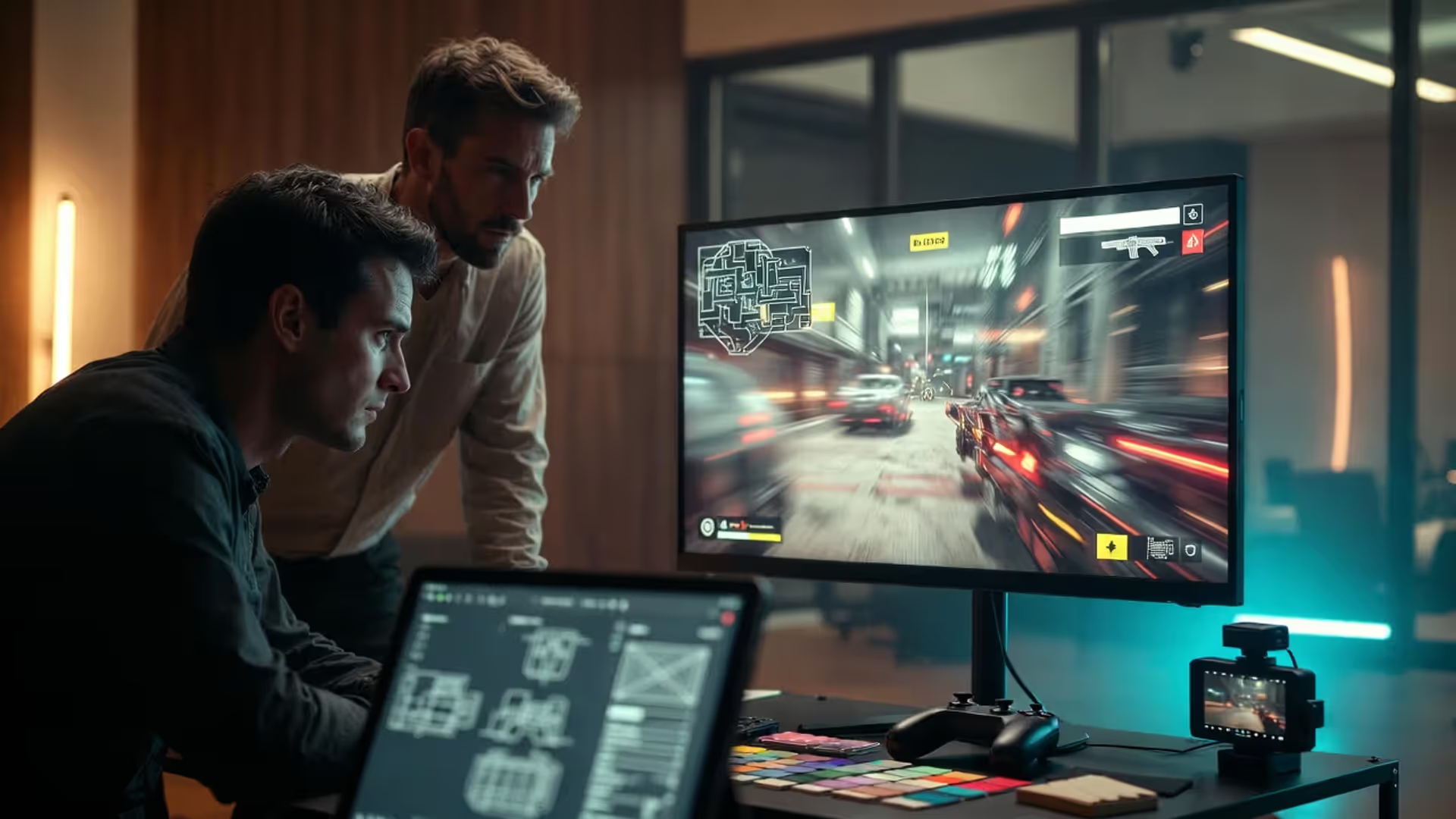
Video games demand something no other medium does: your participation. You can't sit back and watch—the story literally stops until you move, choose, fight, or solve. This transforms storytelling from a spectator sport into something you actively build.
The connection between what you do and what the story tells you makes or breaks a game. When these pieces fit together, you'll remember moments from games more vividly than most movies you've watched. When they don't match up, even a $200 million budget can't save the experience.
Looking at how developers actually build these narratives reveals why some games stick with you for years while others feel forgettable within hours of finishing them.
What Makes Video Game Narratives Different from Traditional Storytelling
Books and movies lock you into one path. The creator decides everything—when you learn information, whose perspective you see, how events unfold. Games toss that rulebook out immediately.
You control the pacing. Some players mainline story missions in 15 hours. Others spend 100 hours picking up every side quest and reading every journal entry. Both experiences need to feel complete, which creates headaches for writers.
Instead of explaining everything through dialogue, games hide their best stories in the environment itself. That teddy bear sitting on a makeshift grave in The Last of Us tells you about loss without a single word. Dark Souls built an entire reputation around players decoding lore from item descriptions and architectural choices. You piece the story together like an archaeologist instead of having someone narrate it to you.
Non-linear storytelling means accepting that maybe 60% of players will miss your carefully crafted side quest. That NPC with the tragic backstory? Half your audience ran right past them. This reality forces different design thinking—critical information gets reinforced through multiple channels while optional content rewards curious players without punishing those who skip it.
The real difference shows up in emotional investment. When Mass Effect forces you to choose which squad member dies, it hurts because you built those relationships through dozens of conversations and combat encounters. You did this. That weight doesn't exist when you're just watching characters on screen.
Core Techniques Developers Use to Build Compelling Game Stories
Developers have gotten creative about integrating narrative without constantly interrupting what you're actually doing. These methods range from subtle background details to complex systems that track hundreds of variables.
Environmental Storytelling and Show-Don't-Tell Methods
The smartest game stories never announce themselves. You walk into an abandoned house and notice family photos ripped off walls, packed suitcases by the door, food rotting on the table. You construct what happened here without anyone explaining it.

Author: Tyler Brooks;
Source: quantumcatanimation.com
Bioshock's underwater city Rapture might be the masterclass here. Sure, you can collect audio diaries that spell everything out. But just walking through the spaces tells you everything—the art deco excess, the leaking ceilings, the New Year's decorations from a party decades old, bodies frozen mid-panic. Level designers, artists, and writers collaborated so tightly that every room contains micro-stories if you pay attention.
This approach treats players like intelligent adults. It also keeps the action flowing. No five-minute exposition dump explaining the fall of Rapture when the environment already screams "utopian dream gone catastrophically wrong."
Implementing this requires ridiculous coordination. A single apartment might contain a locked safe (suggesting valuables worth protecting), claw marks on the walls (something attacked here), children's drawings (families lived here), and a half-written letter (someone's last words). Each detail contributes without overwhelming.
Dialogue Systems and Character Development
How games handle conversations shapes whether you care about virtual people or see them as quest dispensers. Linear dialogue gets information across efficiently but feels stiff. Branching systems create engagement but multiply writing and voice acting costs exponentially.
Mass Effect's dialogue wheel changed industry standards when it launched in 2007. Instead of reading full response lines, you pick emotional tones—aggressive, diplomatic, casual. This keeps conversations moving while letting you shape Commander Shepard's personality. The three-option structure prevents overwhelming players while maintaining meaningful choice.

Author: Tyler Brooks;
Source: quantumcatanimation.com
Characters need to feel consistent but also grow. If an NPC says the exact same thing in hour 2 and hour 40, they're furniture, not people. Companions should reference previous conversations ("Remember when you said..."), react to your choices, and change based on shared experiences.
Disco Elysium threw out the rulebook entirely. Every conversation becomes gameplay—skill checks unlock dialogue options, your internal thoughts argue about what to say, character stats determine how you can respond. The game proves dialogue doesn't need to interrupt gameplay when conversation is the gameplay.
Cutscenes vs. In-Game Narrative Integration
The cutscene debate gets heated. Some developers swear by them for major story beats. Others view every cutscene as admitting they couldn't figure out how to tell the story through gameplay.
Cutscenes guarantee everyone sees important moments from the right angle with proper dramatic timing. Uncharted built its brand on blurring cutscenes and gameplay so smoothly you can't spot the transitions. When Nathan Drake jumps from that crumbling building, you're hitting buttons right up until the camera shifts for impact.
Half-Life 2 went the opposite direction—never once taking camera control away. Every story moment happens in real-time while you retain full movement. Gordon Freeman never speaks, so NPCs talk at you while you're free to wander or stare at them. It strengthens immersion but means you can miss things by looking the wrong direction.
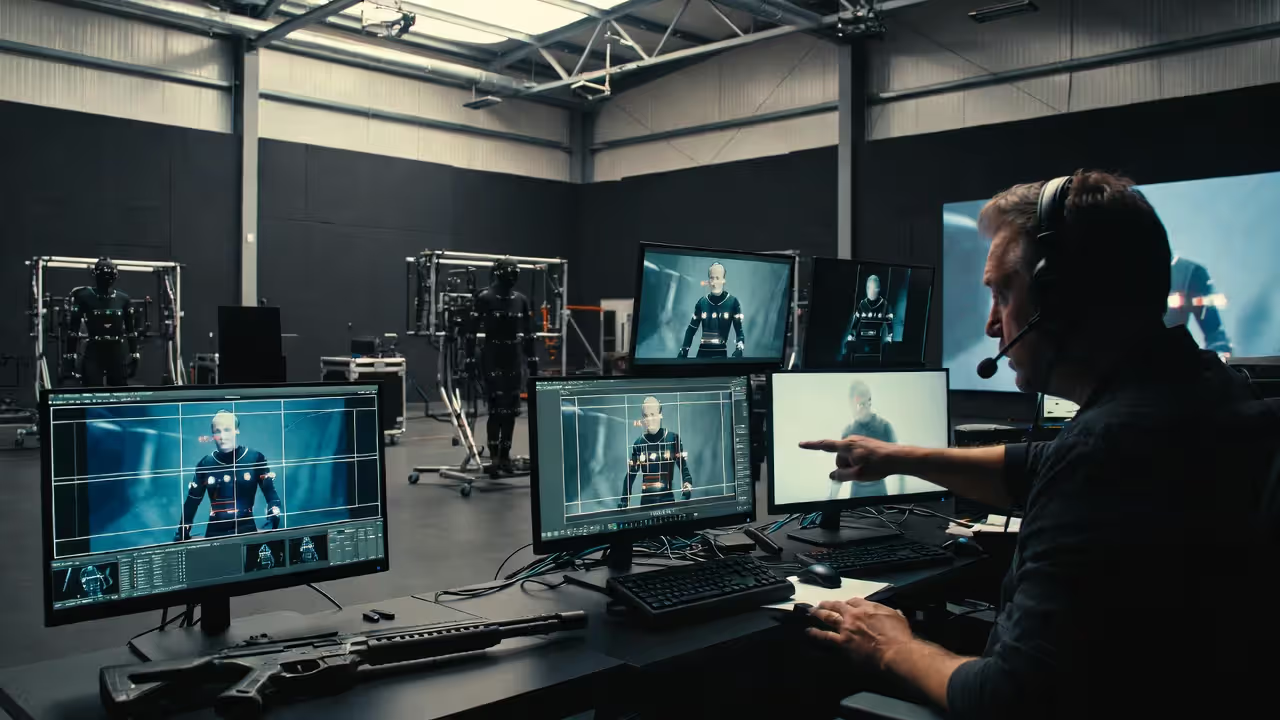
Most games split the difference. God of War (2018) uses its famous one-shot camera trick—seamlessly flowing between gameplay and scripted moments without loading screens or cuts. Save full cutscenes for truly climactic moments; handle routine narrative in real-time.
Author: Tyler Brooks;
Source: quantumcatanimation.com
How Branching Narratives and Player Choice Impact Story Design
Player choice sounds great until you calculate the actual costs. Every major decision point potentially doubles required content—writing, voice acting, animation, QA testing.
True branching creates genuinely different experiences. The Witcher 2's entire second act changes based on one choice—different locations, characters, quests. This respects player agency but costs a fortune. Most studios can't justify that resource investment, especially when completion data shows many players never replay to see alternative paths.
"Illusion of choice" solves the practical problem. Players make decisions that feel meaningful in the moment but ultimately funnel toward similar outcomes. Telltale Games perfected this—your choices affected immediate reactions and character relationships while major plot points stayed locked. The famous "X will remember that" notification made choices feel consequential even when their long-term impact was limited.
Neither approach is cheating if the game sets proper expectations. Market your game as "choices determine everything," and players expect substantial differences. Focus on character-driven stories with player input, and converging paths work fine.
Detroit: Become Human tracks so many variables across three protagonists that the flowchart became a selling point. Players screenshot their unique paths to compare with friends. That complexity required years of development and massive voice acting budgets—not realistic for most teams.
Smart developers use hub-and-spoke structures. Major story beats (hubs) remain consistent while paths between them (spokes) offer variation. This maintains narrative coherence—you can actually write a satisfying arc—while providing meaningful choices. Players get agency without forcing writers to account for 847 possible story combinations.
Development challenges multiply fast. Writers track every possible combination of previous choices. Voice actors record multiple scene versions. QA tests every path—miss one broken variable and players hit story-breaking bugs 30 hours into their playthrough.

Author: Tyler Brooks;
Source: quantumcatanimation.com
Common Mistakes That Weaken Narrative Design in Gaming
Even experienced studios trip over the same narrative pitfalls. Recognizing these problems explains why some stories resonate while others feel hollow despite massive budgets.
Ludonarrative dissonance sounds academic but describes an obvious problem: gameplay contradicting story. Nathan Drake charms everyone as a lovable treasure hunter while mechanically murdering 2,000 people per game. Lara Croft's traumatic first kill in Tomb Raider (2013) gets a whole emotional scene, then she's headshotting mercenaries five minutes later without further reflection. Players notice this disconnect even if they can't name it.
Pacing disasters happen when games separate story and gameplay completely. Twenty minutes of cutscenes, then an hour of combat with zero narrative content, then another cutscene dump. Players lose track of plot threads during extended gameplay sections and grow impatient during long story sequences. Drip narrative beats throughout gameplay instead of chunking them.
False choices breed cynicism fast. If three dialogue options all trigger identical responses, why include them? Players test systems—they save, pick different options, reload. Once they realize choices don't matter, they stop engaging with decisions entirely. Respect player time by making choices actually do something or skip the illusion.
Exposition dumps murder momentum. Characters stand around explaining plot points, world history, or mechanics while you mash buttons hoping to speed through. New players need context, but veterans find this torture. Skippable dialogue and optional codex entries solve this—let players control information intake.
Forced stupidity creates the worst feeling in gaming. Cutscenes show your character making obviously terrible decisions to advance the plot while you watch helplessly. "Don't trust that guy!" you yell at the screen. Your character trusts that guy. Players stop identifying with protagonists who consistently act against common sense.
Tone whiplash between mechanics and narrative breaks immersion. A gritty, grounded story about war trauma doesn't mesh with Mario-style bouncy physics and cartoon violence. Saints Row works because everything—story, gameplay, presentation—commits fully to absurdity. Consistency matters more than realism.
Story Mechanics Across Different Game Genres: A Comparison
Author: Tyler Brooks;
Source: quantumcatanimation.com
Genres approach narrative with wildly different priorities and constraints. Understanding these differences shows how story mechanics adapt to gameplay needs.
| Genre | Narrative Approach | Player Agency Level | Typical Story Mechanics | Example Titles |
| RPG | Branching storylines focused on character arcs; choices ripple through dozens of hours | High—decisions reshape relationships and outcomes | Dialogue trees, morality systems, multiple endings, companion storylines | The Witcher 3, Baldur's Gate 3, Mass Effect 2 |
| Action-Adventure | Linear main plot with optional side content; heavy on cinematic moments | Medium—freedom in when and how you explore, limited plot flexibility | Scripted sequences, environmental clues, collectible lore items | The Last of Us Part II, God of War, Uncharted 4 |
| Walking Simulator | Story exploration becomes the primary activity; mechanics stripped to movement and interaction | Low in changing outcomes, high in controlling pacing and discovery | Environmental clues, audio logs, fragmented non-linear storytelling | What Remains of Edith Finch, Firewatch, Gone Home |
| Roguelike | Story emerges from procedural events across repeated runs; permanent death forces fresh perspectives | Minimal—narrative unfolds through patterns rather than choices | Procedural story elements, unlockable lore fragments, environmental storytelling | Hades, Dead Cells, Returnal |
| Narrative Puzzle | Story revelation tied to puzzle solving; often metaphorical or abstract | Medium—solutions unlock narrative but interpretation varies | Environmental narrative, symbolic puzzles, minimal or no dialogue | The Witness, Braid, Inside |
| Multiplayer/MMO | Background lore provides context while player interactions create emergent stories | Extremely high for personal narratives, very low for world-changing events | Quest chains, timed world events, player-generated stories through interaction | Final Fantasy XIV, Destiny 2, Sea of Thieves |
RPGs justify extensive branching because players invest 60+ hours. That timeframe makes tracking relationship variables and consequence systems worthwhile. Baldur's Gate 3 reportedly contains 17,000 variations of its ending based on accumulated choices—possible because of the genre's scope.
Action-adventure games balance narrative and mechanics more evenly. They typically maintain tighter authorial control—developers craft specific moments rather than accommodating wide variation. This enables better pacing and cinematic presentation while limiting how much you affect the plot.
Walking simulators flip traditional design by making story discovery the core loop. Without combat or complex systems, these games sink or swim based purely on writing quality and environmental design. What Remains of Edith Finch delivers gut-punch emotional moments through interactive vignettes that last minutes each.
Roguelikes face brutal narrative constraints. Permadeath and procedural generation make traditional storytelling nearly impossible. Hades cracked this brilliantly—death is canon. Each failed escape attempt unlocks new dialogue that advances character relationships and reveals plot details. Story becomes the reward for mechanical mastery.
Multiplayer games struggle most with narrative coherence. How do you tell personal stories when 10,000 players simultaneously experience content? Final Fantasy XIV solved this through instanced story missions—everyone's the hero in their private version—while world events create shared moments. Player interactions generate emergent narratives that often overshadow designed content.
Measuring Story Success: When Narrative Enhances Gameplay
Judging whether storytelling works requires looking past review scores at actual player behavior. A well-integrated narrative keeps people playing long after mechanics alone would hold their attention.
Completion statistics reveal narrative pull. Industry averages hover around 30-40% for story-driven games. The Last of Us Part II hit 58% completion despite 25+ hour length and divisive story choices—players needed resolution even when content challenged them. That's measurable proof of narrative investment.
Player retention in live-service games directly correlates with story investment. Destiny 2 launched with shallow storytelling and bled players fast. When Bungie committed to seasonal narratives featuring recurring characters and evolving plots, engagement metrics jumped. Story gave players reasons to return beyond loot treadmills.
Community discussion indicates lasting impact. Games with compelling narratives generate fan theories, artwork, video essays, and memes. This organic marketing extends cultural relevance years past release. Red Dead Redemption 2 story moments became internet touchstones—"I have a plan," Arthur's journal, that ending—keeping the game relevant far longer than pure mechanics would.
Critical reception factors in but doesn't tell the whole story. Professional reviews don't always match player sentiment. Disco Elysium won Game Awards for writing despite minimal traditional gameplay—proof that narrative alone can carry commercial and critical success. Meanwhile, mechanically solid games with weak stories (The Division, Anthem) failed despite competent shooting and looting.
As veteran game writer and narrative designer notes on effective video game storytelling:
The best game narratives aren't the ones with the most elaborate plots, but the ones that make the player feel like their actions genuinely matter. When story and mechanics speak the same language, you create moments that only games can deliver—where the player's skill, choices, and emotional investment combine into something personally meaningful.
— Emily Short
God of War (2018) demonstrates narrative's commercial impact. The franchise reimagining added emotional depth and character-driven storytelling to brutal action combat. This narrative overhaul didn't just win awards—it sold over 20 million copies, far exceeding previous entries. Story transformed a good action series into a cultural phenomenon.
Conversely, mechanically excellent games succeed in certain genres with minimal narrative. Multiplayer shooters rarely need elaborate plots. But even competitive genres increasingly recognize story's value. Apex Legends added character backstories and evolving lore, creating player attachment beyond pure mechanical skill.
Match narrative scope to genre expectations and gameplay goals. A puzzle game might need minimal story. An RPG demands substantial investment. Success means the story enhances what you're building rather than fighting against it.
Frequently Asked Questions About Interactive Storytelling
Storytelling works in games when narrative and gameplay support each other instead of fighting for attention. The medium's real power comes from participation—stories hit harder because you shaped them through actions rather than just watching events unfold.
Developers have built extensive toolkits over decades: environmental details that reward observation, dialogue systems creating character bonds, branching paths respecting agency, genre-specific mechanics aligning story with gameplay. The best implementations make these techniques invisible—seamless experiences where story and play feel like one thing.
Common failures—mechanics contradicting narrative, pacing disasters, meaningless choices—prove interactive storytelling remains difficult. Every design decision trades authorial control for player freedom, production costs for narrative scope, accessibility for complexity.
The medium keeps evolving. New technologies enable sophisticated branching, better performance capture brings nuanced acting to virtual characters, innovative indie developers discover fresh approaches to interactive narrative. The core challenge stays constant: creating stories only games can tell, where your actions, choices, and skills combine into something meaningful that belongs to you.
Understanding these storytelling techniques matters whether you're making games or playing them. Every dialogue choice, environmental detail, and branching path represents deliberate design trying to transform you from audience into participant. Games succeed when that transformation feels natural rather than forced—when you forget you're making choices and just live in the story you're creating.