
Two strategy mindsets: speed vs. calculation.
Strategy Games Guide To RTS And Turn Based Play

Content
If you've ever played chess, you already understand the basic appeal here. Strategy games strip away the need for lightning-fast reflexes and replace them with something harder to master: thinking three steps ahead while your opponent does the same. You're balancing limited resources, positioning units where they'll matter most, and revising your entire plan when the enemy does something you didn't expect.
This genre stretches from frantic military battles where every second counts to sprawling empire simulators where you might spend twenty minutes deciding which technology to research next. The style you choose depends entirely on whether you want your heart racing or your brain fully engaged in methodical planning.
What Makes a Game a Strategy Game?
Here's what separates strategy titles from other genres: your decisions create ripple effects that play out over minutes or hours. An action game tests whether you can execute a perfect combo. A strategy game asks whether you should build defenses now or gamble on offensive units—then makes you live with that choice for the rest of the match.
The genre took shape during the 1980s when developers figured out how to translate board games and military wargames into computer code. Civilization landed in 1991 and showed players they could guide a society from stone tools to space travel. Dune II arrived a year later and proved you could manage armies in real-time, clicking frantically to outmaneuver opponents. These two templates—patient empire building versus rapid-fire combat—still define how most strategy games work today.
What you'll find in virtually every strategy title:
Resource scarcity that forces tough calls. Never enough gold, minerals, or energy to fund everything simultaneously. Choosing what to build—and what to sacrifice—determines whether you'll thrive or collapse under pressure from better-prepared opponents.
Incomplete information about enemy actions. Fog of war hides enemy positions. You're making educated guesses about what your opponent is planning, which means investing in scouts and intelligence gathering instead of assuming you know everything.
Geography that changes combat outcomes. A unit on a hill hits harder and absorbs more damage. A chokepoint held by three defenders stops thirty attackers. Controlling the right positions matters as much as having the right units.
Choices made early reshape everything later. Building that extra farm in minute five compounds into significant economic advantages by minute twenty. Research a new technology now, and you sacrifice immediate military strength for devastating power in ten minutes.
These games exercise specific mental muscles. You're constantly pattern-matching against previous experiences, holding multiple objectives in working memory, and pivoting strategies when your initial approach fails. That's why one match teaches you something useful for the next hundred.
Strategy games are unique because they externalize the problem-solving process. You're not reacting to what's on screen—you're creating a mental model of possibilities and testing theories about what works. That's why they're so engaging and so frustrating in equal measure.
— Soren Johnson, Lead Designer of Civilization IV and Old World
The real magic happens when simple rules collide to create complex situations. Chess uses six piece types but generates infinite strategic possibilities. Similarly, StarCraft II gives you maybe forty different units and buildings, yet professional players spend years mastering the interactions between them.
RTS vs Turn-Based Strategy: Which Playstyle Fits You?
The genre splits down the middle into two completely different experiences. One type never stops moving—you're always under time pressure, always behind on something, always juggling multiple crises. The other type pauses after every action and waits patiently while you analyze every angle before committing.
Neither style is objectively superior. They test different skills and attract different personalities.
Real-Time Strategy (RTS) Explained
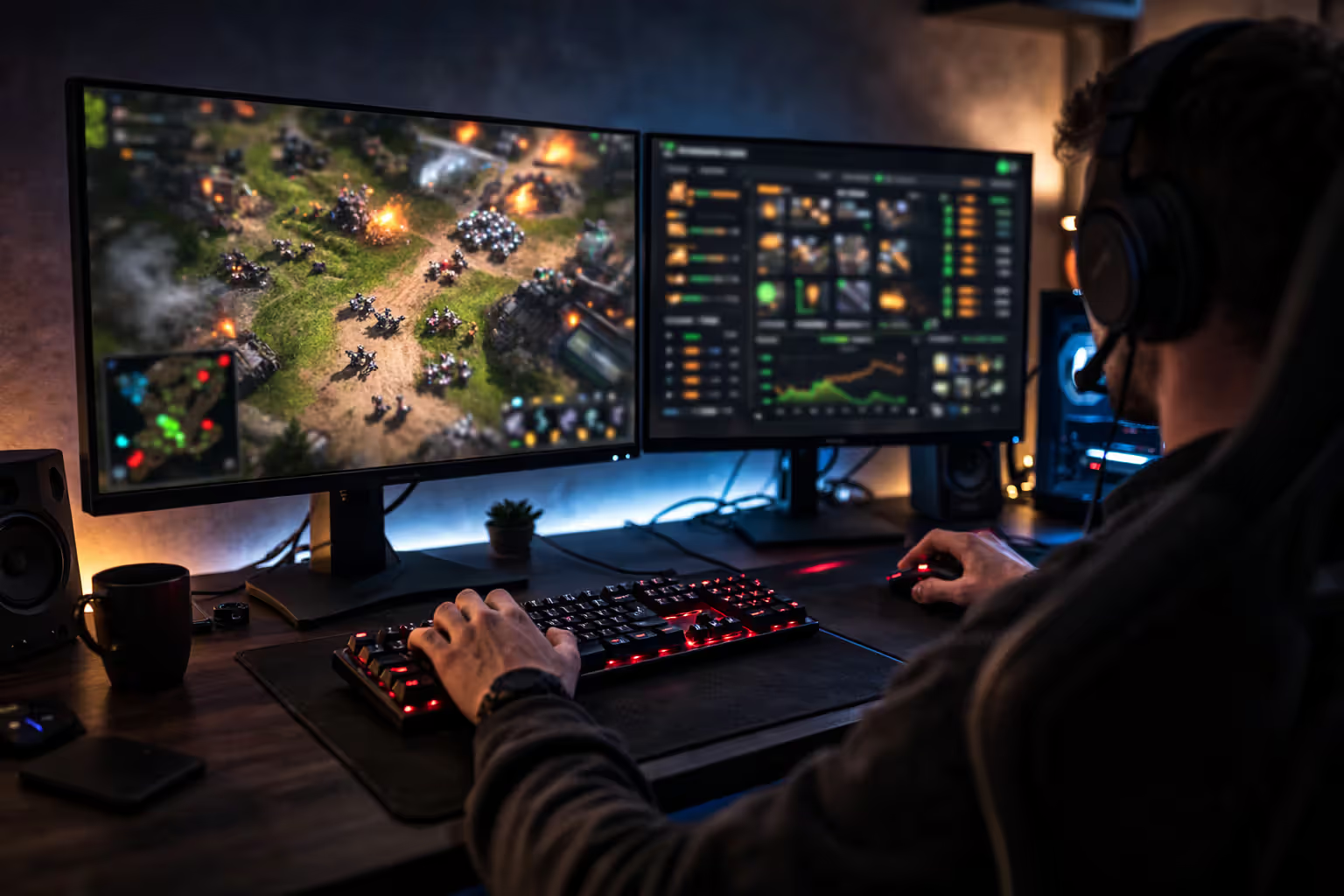
Clock's ticking. Right now, while you're reading this sentence, your imaginary opponent just built three more tanks and discovered where your base is located. RTS games punish hesitation because time keeps flowing whether you're ready or not.
StarCraft II represents the genre at its most demanding. Age of Empires IV adds historical flavor. Company of Heroes zooms in on tactical World War II combat. All of them require simultaneous management of multiple systems: economy, military production, active combat, map exploration, and technology research.
You're splitting attention constantly. Your left hand queues up worker production at your main base using hotkeys. Your right hand controls an army group attacking the enemy's expansion. Your eyes flick between minimap and battlefield, watching for threats. And you're doing all of this while deciding whether to invest in economy upgrades or save resources for a military push.
Author: Brandon Hayes;
Source: quantumcatanimation.com
The intensity creates genuine excitement. Pulling off a successful multi-pronged attack—hitting three enemy locations simultaneously while defending your own base—delivers a rush that turn-based games simply can't match.
But that same intensity overwhelms newcomers who are still figuring out which building produces which unit. Meanwhile, experienced opponents have already memorized optimal build orders and can execute them while scouting your strategy and preparing counters.
The physical mechanics matter here almost as much as strategic thinking. "Actions per minute" isn't just a stat—it's a measure of how quickly you can translate decisions into executed commands. Professionals hit 300-400 APM during intense battles, their fingers dancing across keyboards in practiced patterns.
Turn-Based Strategy Explained
Take a deep breath. You've got all the time in the world to analyze this battlefield, calculate probable outcomes, and commit to your move. The game waits. No pressure. Just pure strategic contemplation.
Civilization VI lets you build world-spanning empires one turn at a time. XCOM 2 puts you in command of tactical alien-fighting squads where one wrong move means permanent character death. Into the Breach distills tactics down to an 8x8 grid where you can see exactly what enemies will do next turn.
Some turn-based games use simultaneous resolution where both players plan actions that execute together. Others alternate, letting you complete everything before your opponent responds. A few implement time limits per turn to prevent excessive analysis paralysis.
This structure emphasizes decision quality over execution speed. Your brilliant insight about flanking that enemy position matters infinitely more than how quickly you can click buttons. Take five minutes analyzing odds if you want. Nobody's rushing you.
The deeper complexity becomes manageable here. When you have time to engage with intricate systems, developers can add layers that would overwhelm players in real-time. Tech trees with hundreds of options. Diplomatic relationships tracking dozens of variables. Combat that factors in terrain type, weather conditions, unit experience, equipment quality, and support bonuses.
The trade-off? Matches can drag. Waiting for an opponent who takes three minutes per turn tests patience. Multiplayer Civilization games might span weeks as players submit turns asynchronously. Some people find the methodical pace less thrilling than constant action.
Hybrid Models and 4X Games
Plenty of modern titles reject the binary choice entirely. The Total War series gives you a turn-based campaign map for managing your empire, then switches to real-time battles when armies clash. You spend twenty minutes positioning your empire for success, then five intense minutes watching cavalry charges and archer volleys decide the outcome.
4X games (eXplore, eXpand, eXploit, eXterminate) typically embrace turn-based systems because they're managing incredible scope. Stellaris tracks hundreds of star systems. Endless Legend generates unique fantasy civilizations with asymmetric abilities. These games operate on timescales measuring centuries, where individual battles matter less than long-term strategic positioning.
Some games split the difference with active pause systems. Pillars of Eternity runs in real-time but lets you freeze action whenever you want to issue tactical commands. You get the dynamism of continuous action with the precision of turn-based control.

Author: Brandon Hayes;
Source: quantumcatanimation.com
| Feature | Real-Time Strategy | Turn-Based Strategy |
| Tempo | Never stops; action flows continuously | Pauses between moves; proceed at your own speed |
| Stress Level | High; decisions under pressure | Minimal; analyze thoroughly before committing |
| Initial Difficulty | Brutal; demands both tactical knowledge and fast execution | Gentler; focuses on understanding systems |
| Juggling Tasks | Extreme; handle economy, combat, and scouting at once | Manageable; deal with challenges sequentially |
| Match Duration | 20-45 minutes typical | Anywhere from 45 minutes to 20+ hours per game |
| Notable Titles | StarCraft II, Age of Empires IV, Command & Conquer series | Civilization VI, XCOM 2, Fire Emblem franchise |
| Ideal For | Gamers who thrive on intensity and mechanical challenges | Thinkers who enjoy methodical planning and system mastery |
Core Gameplay Mechanics Every Strategy Player Should Master
Certain concepts appear so consistently across strategy titles that mastering them once pays dividends across dozens of games. Learn these fundamentals and you'll improve faster regardless of which specific title you're playing.
Your economy determines everything else. Weak income means slow unit production, delayed technologies, and limited strategic options. Strong economy compounds into overwhelming advantages. This isn't abstract theory—it's math. One extra worker built in the first two minutes gathers resources for the entire match. That income funds additional workers, creating exponential growth that opponents who delayed economic development can't match.
The mistake beginners make: building military units immediately while neglecting income generation. You get a small army quickly, but your opponent who invested in economy will eventually outproduce you three-to-one. Then your early advantage evaporates.
Army composition trumps army size in almost every strategy game. Ten identical tanks lose to seven tanks plus three anti-tank guns. Your forces need complementary units that cover each other's weaknesses and exploit enemy vulnerabilities.
Rock-paper-scissors dynamics appear everywhere, though they're never quite that simple. Age of Empires has infantry countering archers, cavalry stomping infantry, and spearmen stopping cavalry charges. But then you add ranged cavalry, heavy infantry, siege weapons, and unique civilization bonuses, creating layers of counter-relationships.
Watch what your opponent builds and adjust continuously. Enemy massing air units? Build anti-air or you'll get destroyed. Opponent turtling behind walls? Develop siege equipment. Sticking rigidly to your preferred unit composition regardless of circumstances guarantees losses.
Controlling key map positions wins games even before armies clash. That gold mine near the center? Whoever secures it gets 30% more income. That narrow valley between two mountains? Control it and enemy reinforcements have to take the long route, arriving late to every battle.
Vision matters just as much as position. Games hide enemy movements through fog of war, line-of-sight restrictions, or stealth mechanics. You need scouts revealing enemy positions, watchtowers providing vision radius, or reconnaissance units infiltrating behind enemy lines. Making decisions blindly gets you ambushed. Investing in intelligence gathering prevents expensive surprises.
Technology progression creates power spikes and vulnerability windows. Researching advanced technologies makes your units stronger or unlocks new capabilities, but research costs resources you're not spending on immediate military strength.
This creates timing windows you can exploit. If you spot an opponent investing heavily in expensive research, they're temporarily vulnerable to aggression. Conversely, if you're the one researching, you need enough military to survive until your technological advantage kicks in.
Tactical positioning leverages terrain advantages and formation discipline. Elevated positions provide accuracy and damage bonuses in many games—your units on a hill hit harder and absorb less damage. Forests conceal ambushes. Rivers form natural defensive barriers that channelize enemy advances.
Formation matters enormously. Archers positioned behind melee infantry stay protected while dealing damage. Flanking attacks bypass defensive bonuses and often prevent enemy units from retaliating effectively. Surrounding enemies cuts off retreat routes and typically multiplies damage output.
Strategic thinking versus tactical execution represent different decision-making scales operating simultaneously. Tactics cover immediate combat: focus-firing priority targets, retreating damaged units, exploiting flanking opportunities. Strategy encompasses broader objectives: deciding where to expand, which technologies unlock your win condition, when to attack versus consolidate defenses.
Elite players excel at both simultaneously. They execute combat tactics flawlessly while never losing sight of strategic objectives. You can win every individual battle and still lose the war if you're fighting for objectives that don't matter.

Author: Brandon Hayes;
Source: quantumcatanimation.com
Common Mistakes Beginners Make in Strategy Games
New players stumble into the same traps repeatedly. Experienced opponents recognize these patterns instantly and exploit them ruthlessly.
Overextension ranks among the deadliest beginner mistakes. Claiming territory feels productive and aggressive, but every new base or city requires resources to develop and military forces to defend. Expand faster than your economy supports, and you'll control lots of weak, vulnerable positions instead of fewer fortified strongholds.
Better approach: consolidate and strengthen what you already control before grabbing more territory. A well-defended position with strong income beats three exposed positions with weak economies.
Neglecting economic development in favor of immediate military production creates armies that seem powerful for about five minutes. Your initial military advantage lets you win early skirmishes, but your opponent who balanced military spending with economic investment will outproduce you dramatically by mid-game. Then your temporary strength collapses as they roll in with superior numbers.
The ratio varies by game, but most strategy titles reward investing roughly 60-70% of early resources into economy, reserving 30-40% for military defense and key attacks.
Building your favorite units instead of appropriate counters happens constantly with new players. You love heavy tanks, so you build heavy tanks every game regardless of what enemies are doing. Then you run into an opponent massing anti-tank weapons and wonder why your expensive armor melts.
Adapt to the situation instead of executing your preferred build blindly. Strategy games reward flexibility and counter-building over rigid adherence to favorite strategies.
Tunnel vision during combat causes catastrophic losses elsewhere. You're micromanaging one tactical battle, carefully positioning every unit to maximize efficiency. Meanwhile, an enemy strike force reached your undefended main base and started destroying everything. By the time you notice, you've lost the economic foundation supporting your entire army.
Set up defensive structures or garrison units at vulnerable locations. In RTS games especially, maintaining map awareness prevents disasters. Glance at the minimap every few seconds. Hotkey important locations so you can check them quickly without scrolling.
Skipping reconnaissance leaves you blind to incoming threats. You can't prepare for strategies you don't see developing. Maybe your opponent is preparing a massive air assault while you're building ground defenses. Perhaps they're expanding aggressively to three new bases while you assumed they were building military.
Invest in scouting. Spend resources on units that reveal enemy positions and activities. Knowledge of what's coming lets you prepare appropriate counters instead of getting blindsided.
Refusing to adapt when initial strategies fail wastes resources continuing down dead-end paths. Your early rush got deflected? Don't stubbornly throw more units into the same failed attack. Your economic strategy assumed you'd control a key resource location, but an opponent got there first? Revise your plan instead of pretending the setback didn't happen.
Flexibility separates improving players from perpetual beginners. Recognize when circumstances demand different approaches and pivot accordingly.

Author: Brandon Hayes;
Source: quantumcatanimation.com
How to Choose Your First Strategy Game
With hundreds of strategy titles available across every platform and spanning wildly different complexity levels, picking your entry point matters enormously. Start with the wrong game and you'll quit in frustration before discovering what makes the genre special.
Match time commitment to your schedule. An Age of Empires II match typically wraps up in 30-45 minutes. Perfect for squeezing in a game or two after work. Meanwhile, a single Civilization VI campaign might consume your entire weekend as you guide your civilization from 4000 BC to the space age. Mobile options like Polytopia or Clash of Clans use asynchronous multiplayer where you check in throughout the day, taking turns whenever convenient.
Be honest about how much continuous time you can dedicate to gaming sessions. Nothing kills enjoyment faster than constantly feeling rushed because you need to quit mid-game.
Start simpler than you think necessary. Strategy games reward system mastery, which means you need to understand interconnected mechanics before you can make informed decisions. Some titles teach their complete ruleset in 30-45 minutes. Others feature learning curves measuring months before you grasp intermediate concepts.
Into the Breach presents its entire tactical system within the tutorial and offers complete strategic experiences in 30-minute runs. Perfect beginner entry point. Europa Universalis IV simulates 400 years of global politics, economics, warfare, and diplomacy with literally thousands of events, mechanics, and strategic considerations. Not where you want to start.
Don't let ego push you toward complexity before you're ready. Skills learned in accessible games transfer directly to more complex titles later. Jumping straight into deep-end complexity typically leads to confusion, frustration, and quitting before you discover what makes strategy games engaging.
Theme and setting influence motivation more than you'd expect. Would you rather command medieval knights or space marines? Build modern cities or ancient civilizations? Engage in historical battles or fantasy wars?
Playing games set in worlds you find genuinely interesting maintains motivation through the learning curve. That matters enormously when you're struggling to grasp new mechanics and need reasons to persist through early losses.
Single-player modes let you learn without pressure. Campaign missions teach mechanics gradually through structured scenarios. You can pause whenever you want, experiment freely, and retry missions until you understand what works. No opponent is judging your mistakes or exploiting your inexperience.
Multiplayer offers competition against human opponents with creative, unpredictable strategies that AI can't match. But the learning curve steepens dramatically, and online communities can be unwelcoming to obvious beginners.
Most games offer both modes. Learn fundamentals in single-player, then transition to multiplayer when you're comfortable with core mechanics and ready for human opponents.
Platform choice affects available titles and control schemes. Strategy games originated on PC where mouse-and-keyboard setups provide precise control over complex interfaces managing dozens of units simultaneously. Console ports adapt interfaces for controllers with varying success. Mobile games redesign interfaces completely around touchscreens, sometimes simplifying mechanics in the process.
Consider where you prefer gaming and what platforms you own. PC still offers the widest selection and most precise control, but quality strategy games exist on every platform now.
Based on different player preferences, specific starting points:
- Crave fast-paced action? StarCraft II (free-to-play) or Age of Empires II: Definitive Edition
- Prefer methodical planning? Civilization VI or XCOM 2
- Limited gaming time? Into the Breach delivers complete experiences in 30-minute sessions
- Mobile platform? Polytopia or Clash of Clans
- Love fantasy settings? Total War: Warhammer III blends turn-based empire management with real-time battles
Frequently Asked Questions About Strategy Games
Strategy games deliver intellectual challenges and satisfying complexity that most other genres never approach. Whether you're drawn to heart-pounding real-time battles testing speed and multitasking or contemplative turn-based empire building rewarding careful analysis, you'll find titles matching your preferences.
Start with games matching your available time, tolerance for complexity, and favorite themes. Master fundamental concepts—economic development, unit composition, map control, adaptation—before worrying about advanced techniques. Accept that early defeats teach more than easy victories. Every loss reveals strategic weaknesses you can address next time.
The genre's depth means continuous learning. Even veterans with thousands of hours discover new strategies, refine decision-making patterns, and adapt to evolving competitive environments. That ongoing growth process, combined with satisfaction from executing well-crafted plans, explains why strategy communities remain active decades after games launch.
Your first strategy game starts a journey rather than providing a destination. Pick something that looks interesting, embrace the learning curve, and give yourself permission to experiment. The mental rewards and entertainment value justify the investment completely.