
What Are Casual Games and Why Millions Play Them Daily
Casual Games Guide for Beginners

Content
Here's something wild: 2.8 billion people play video games, but most aren't grinding through 100-hour RPGs or mastering competitive shooters. They're crushing candy, merging dragons, or solving word puzzles during their lunch break.
Casual games now pull in more than $100 billion every year—outearning Hollywood's entire box office by a significant margin. You won't need reflexes honed by years of practice or weekends spent memorizing complex mechanics. Instead, these games slide into the gaps of your day: waiting for the dentist, riding the subway, or pretending to listen during that meeting that should've been an email.
The appeal? You play on your terms. Traditional video games demand you carve out chunks of time and climb steep learning curves. Casual titles work around your calendar, not against it.
Defining Casual Games: Core Characteristics and Player Demographics
Think about the last time you picked up a truly casual game. Chances are you figured out the basic rules within seconds—no instruction manual, no tutorial dungeon, just immediate play.
That's deliberate design. Controls stay simple: tap here, swipe there, maybe drag and drop. Your grandmother could learn them. (Mine plays Candy Crush with alarming dedication.) If someone needs more than 30 seconds to grasp your core gameplay loop, you've probably built something more complex than casual.
Session length matters more than you'd expect. Most rounds wrap up in 3-15 minutes. Perfect for a bathroom break (we all do it), yet addictive enough that players return five or six times daily. Developers intentionally respect your time constraints—they know you've got actual responsibilities competing for attention.
Difficulty ramps up slowly. The first few levels practically play themselves, teaching mechanics through gentle introduction rather than front-loading complexity. Miss a move? No problem. Try again instantly. Unlike Dark Souls fans who treat punishment as entertainment, casual players want stress relief, not stress addition.
Author: Brandon Hayes;
Source: quantumcatanimation.com
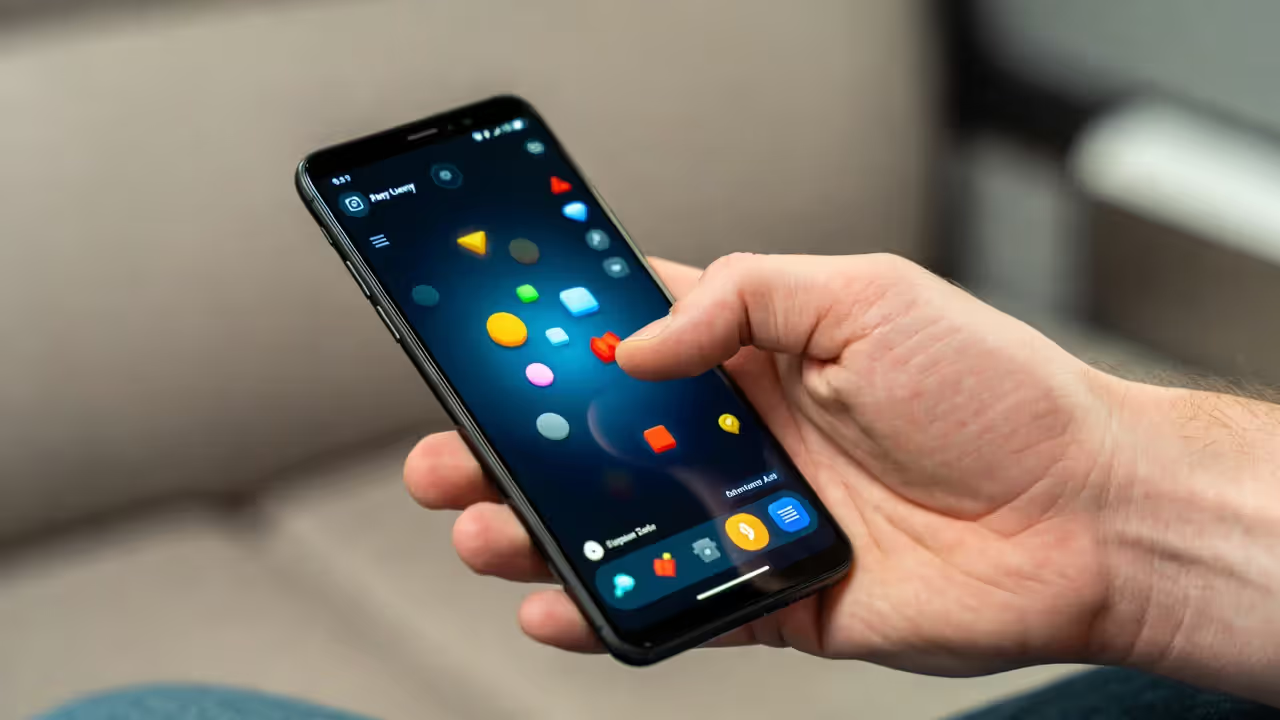
Who actually plays these games? The data destroys old stereotypes. Women make up roughly 60% of the casual gaming audience in America. The average player hits 36 years old—hardly the basement-dwelling teenager from media clichés. We're talking working parents, office managers, retirees, and pretty much anyone with a smartphone and five minutes to kill.
Mobile devices capture about 75% of casual gaming activity. Your phone accompanies you everywhere—into bed, onto the toilet, through your commute. Consoles and PCs can't compete with that convenience factor. Though plenty of office workers still sneak browser-based games onto their desktop screens between emails.
Income levels span everything from students managing tight budgets to high earners who drop $200 monthly on virtual items without blinking. The average paying player spends $20-50 per month, but industry insiders obsess over "whales"—those rare players spending thousands annually on a single game.
Most Popular Casual Game Genres
Match-3 and Puzzle Games
Line up three identical gems. They disappear. Satisfying sound effect plays. Dopamine hits.
Candy Crush Saga launched in 2012 and still ranks among top-grossing mobile games. King (the developer) basically prints money by asking players to match colorful candies. The formula works because simple rules create surprisingly deep strategy—anyone can play, but mastering it takes real skill.
Puzzle games stretch beyond matching mechanics. Remember when Wordle took over Twitter in 2022? Everyone suddenly became an amateur linguist, sharing green and yellow squares like they'd cracked the Enigma code. That game used six rows and five letters to achieve cultural phenomenon status.
Sudoku apps attract millions who prefer numbers over flashy graphics. Peak and Lumosity promise to train your brain (though scientists remain skeptical about those cognitive improvement claims). These games appeal to players who enjoy solving problems at their own pace, without timers creating artificial pressure.
Hyper-Casual and Instant Play Titles
Strip everything down to bare essentials. One-touch controls. Zero tutorials. Rounds lasting 30 seconds.
Flappy Bird demonstrated this formula's power back in 2014—tap to keep a bird airborne through pipes. Absurdly simple. Wildly addictive. The creator eventually pulled it from app stores because its success stressed him out (seriously).
These games monetize almost exclusively through ads. Play a round, watch a 20-second video, repeat. Developers profit from sheer volume—someone might complete 40 rounds in ten minutes, generating multiple ad impressions.
Current examples include Helix Jump (guide a bouncing ball down twisted towers), Run Race 3D (navigate stick figures through obstacle courses), and Mob Control (direct crowds through multiplication gates). Downloaded millions of times despite offering essentially identical experiences with different skins.
Critics call them manipulative engagement traps. Fans call them perfect time-wasters. Both perspectives hold truth—these games optimize for immediate gratification rather than meaningful depth.
Merge and Idle Games
Drag two items together. They combine into something better. Repeat 10,000 times.
Merge Dragons! and Merge Mansion exemplify this genre. You might start with tiny eggs that hatch into dragons, then merge those dragons into bigger dragons, then merge those into even bigger dragons. The progression loop satisfies our lizard brain's obsession with numbers going up.
Idle games pay you for not playing. Adventure Capitalist and AFK Arena accumulate resources while your phone sits in your pocket. Return every few hours, collect your earnings, make strategic upgrade choices, close the app again.
Both genres target completionists and collectors. They scratch the same psychological itch as organizing your closet or filling out a spreadsheet—everything in its place, numbers increasing predictably, progress visibly accumulating.
Author: Brandon Hayes;
Source: quantumcatanimation.com
Whether that counts as genuine entertainment or psychological manipulation depends on your perspective. These games definitely exploit compulsion loops that keep you checking your phone throughout the day. Then again, all entertainment manipulates psychology to some degree.
5 Casual Gaming Trends Reshaping the Industry
1. Subscription Services Challenge Free-to-Play Dominance
Apple Arcade and Netflix Games flip the traditional model. Instead of free downloads with aggressive monetization, you pay $5-10 monthly for unlimited access to curated libraries. No ads interrupting your gameplay. No purchase prompts every five minutes. No energy bars limiting your sessions.
This mirrors how streaming services replaced cable. Just as Netflix taught us to expect on-demand content without commercials, gaming subscriptions promise frustration-free experiences. Adoption remains slow, though—most players still prefer "free" games where they might spend money over guaranteed monthly fees.
2. Cross-Platform Progression Becomes Standard
Start your game on the subway using your phone. Continue at home on your tablet. Sneak in a few moves at work through the web browser. Same account, same progress, zero friction.
Cloud saves eliminate the nightmare of switching devices and losing weeks of progress. This functionality requires sophisticated backend infrastructure that smaller indie developers can't afford, but major publishers now consider it non-negotiable.
3. AI Personalization Customizes Difficulty and Content
Machine learning watches how you play. Breezing through levels? The algorithm cranks up difficulty. Stuck repeatedly? It might slip you helpful power-ups or adjust level layouts to feel slightly more manageable.
Sarah Chen, Lead Designer at Playtika, puts it bluntly: "We're moving beyond one-size-fits-all game design. AI lets us create experiences that adapt to individual players, keeping engagement high without frustrating beginners or boring veterans."
Content recommendations also leverage AI. Games suggest new challenges, levels, or purchase options based on your patterns—similar to how Netflix queues up shows matching your viewing history.
4. Social Features Transform Solo Experiences into Community Activities
Modern casual games layer social mechanics onto traditionally solitary experiences. You'll join guilds, compete on leaderboards, send lives to friends, and coordinate during limited-time events requiring community cooperation.
These features increase engagement through social pressure (your guild mates expect you to contribute) while facilitating viral growth (inviting friends earns rewards). A player who'd normally quit after two weeks keeps playing to avoid disappointing their team or losing leaderboard status.
The downside involves privacy concerns and manufactured obligation. Some players feel manipulated by mechanics designed to guilt them into daily logins or pressure them into recruiting friends.
5. Nostalgia-Driven Revivals Attract Older Demographics
Publishers resurrect classic games with modern interfaces and contemporary monetization. Tetris, Pac-Man, Solitaire, and other decades-old properties receive mobile makeovers that introduce them to new audiences while attracting players who remember the originals.
This strategy reduces risk. The core gameplay already proved successful—developers just update graphics, add progression systems, and implement current monetization models. Much safer than gambling on entirely new intellectual properties that might flop spectacularly.
How Casual Games Make Money: Monetization Models Explained
| Monetization Model | Average Cost to Player | Primary Revenue Source | Pros | Cons |
| Free-to-Play (F2P) | $0-50 monthly, optional | In-app purchases, advertising | Zero upfront barrier, test before spending | Aggressive sales pressure, potential pay-to-win mechanics |
| Premium | $3-10 one-time payment | Initial purchase price | No advertisements, complete experience from start | Can't try before buying, smaller player base |
| Ad-Supported | Free, costs time instead | Video advertisements, banner ads | Completely free experience | Constant interruptions, extensive data harvesting |
| Subscription | $5-15 monthly recurring | Monthly membership fees | Ad-free access, no purchase pressure | Ongoing commitment, limited selection |
| Battle Pass | $10-20 per season | Seasonal progression tracks | Optional purchase, clear reward expectations | Fear-of-missing-out pressure, time-limited availability |
Free-to-play dominates casual gaming by removing entry barriers. Players download risk-free, and developers monetize through optional purchases plus advertisements. This model works when purchases feel genuinely optional rather than practically mandatory.
In-app purchases range from cosmetic changes (character outfits, decorative elements) to functional advantages (extra lives, power-ups, progress acceleration). "Pay-to-win" describes games where spending money provides decisive competitive edges, frustrating players who won't or can't spend.
Advertisement-supported games interrupt you with 15-30 second video ads. Watch ads for rewards, continue after failures, or simply accept mandatory breaks between levels. This works better in hyper-casual games with short sessions—a 30-second ad feels less intrusive when rounds last 45 seconds anyway.
Premium games charge upfront ($3-10 typically) and deliver the complete experience without additional purchases or ads. This model struggles because players hesitate to pay for unfamiliar experiences. Even excellent games languish with few downloads when competing against free alternatives.
Battle passes offer tiered rewards unlocking as you complete challenges during limited periods (usually 30-90 days). Fortnite popularized this model; now it appears in casual titles like Brawl Stars and Call of Duty Mobile. Players appreciate predictable costs and transparent reward tracks, though time limitations create pressure for consistent daily play.

Author: Brandon Hayes;
Source: quantumcatanimation.com
Choosing the Right Casual Game: What to Consider Before Downloading
App stores contain hundreds of thousands of casual games. Here's how to narrow your choices without downloading and deleting fifty duds:
Time commitment expectations vary dramatically. Match-3 puzzle games respect your schedule—play one level during a coffee break or twenty during a lazy Sunday. Idle games demand regular check-ins (every 4-6 hours) to collect resources and make upgrade decisions. Multiplayer casual games create social pressure for daily participation.
Internet connectivity requirements matter more than you'd think. Many casual games function offline—perfect for flights or subway commutes through dead zones. Others require constant connection to prevent cheating, sync progress, or serve advertisements. Read app descriptions carefully before downloading if offline access matters.
Monetization aggression determines whether you'll enjoy or hate your experience. Scan recent reviews mentioning ads, purchases, or "pay-to-win" mechanics. Games constantly prompting purchases or gating progress behind payment walls frustrate players preferring free play. Some developers balance monetization respectfully; others prioritize revenue extraction over player satisfaction.
Skill progression matters if you want improvement and mastery. Puzzle games reward learning patterns and developing strategies over time. Hyper-casual games often rely more on luck than skill, providing less satisfaction for players who enjoy demonstrable improvement.
Storage space becomes relevant on older devices with limited capacity. Simple puzzle games might need 50-150MB. Graphically elaborate titles demand 1-3GB. Check file size before downloading, especially on cellular data.
Developer reputation indicates likely quality. Established studios like King (Candy Crush), Zynga (Words with Friends), and Supercell (Clash of Clans) generally deliver polished experiences. Unknown developers might produce hidden gems or shameless clones—reviews distinguish between them.
Common Mistakes Casual Gamers Make (And How to Avoid Them)
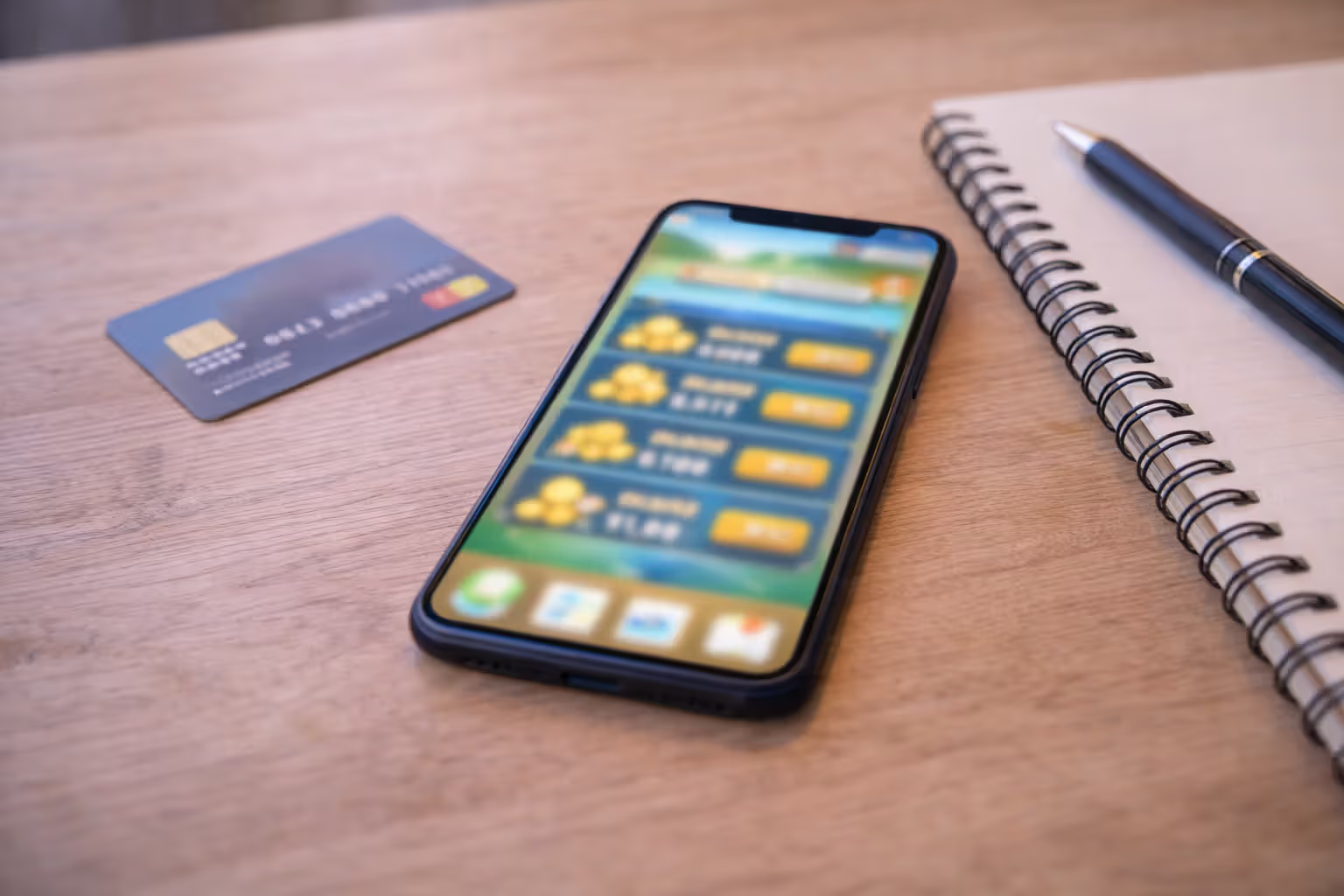
Overspending on in-app purchases represents the most financially dangerous trap. Small amounts accumulate fast: $0.99 here, $4.99 there, suddenly $60 disappeared from your account this month. Players rationalize purchases by comparing costs to coffee or movie tickets, then get shocked reviewing their monthly totals.
Beware of little expenses; a small leak will sink a great ship.
— Benjamin Franklin
Set strict budgets before you start playing. Many phones allow spending limits on app stores. If you genuinely can't afford $20 monthly for entertainment, commit to spending nothing—most casual games remain playable without purchases.
Notification overload transforms entertainment into obligation. Games blast push notifications reminding you about full energy bars, expiring events, or waiting guild members. These alerts create artificial urgency benefiting developers, not you.
Disable notifications for all casual games immediately after installing. Play when you decide, not when an algorithm determines you should check in.
Privacy concerns get ignored in excitement to play. Casual games collect extensive data: location tracking, contact lists, browsing history, detailed play patterns. They share this information with advertisers and data brokers freely.
Read privacy policies (or at least skim them). Deny unnecessary permissions. Consider using burner email addresses for game accounts. That "free" game costs your personal information.
Time management failures happen when "just one more level" becomes an unintended hour. Casual games employ psychological techniques extending sessions—cliffhanger endings, near-wins, reward schedules designed by actual behavioral psychologists.
Set phone timers before playing. When the alarm sounds, finish your current round and close the app. Treat casual games like dessert: delightful in moderation, problematic in excess.
Author: Brandon Hayes;
Source: quantumcatanimation.com
Ignoring terms of service leads to account bans and lost progress. Players who purchase discounted in-game currency from sketchy third-party websites risk permanent bans. Using automation tools or exploits violates terms of service. If you've invested money or significant time, play legitimately to protect that investment.
Neglecting security exposes accounts to hacking. Use strong, unique passwords for game accounts, especially those connected to payment methods. Enable two-factor authentication when available. Hackers target casual game accounts because they often contain valuable virtual items or stored payment information.
Frequently Asked Questions
Casual games succeeded by acknowledging that most people can't dedicate hours to entertainment. They squeeze into spaces between life's obligations—providing brief escapes without demanding commitment.
The best casual game for you depends on personal preferences, schedule constraints, and tolerance for monetization tactics. Puzzle enthusiasts might lose hours to match-3 games. Commuters prefer hyper-casual titles accommodating frequent interruptions. Some players happily spend money for convenience; others refuse all purchases on principle.
Start with highly-rated free games in genres that interest you. Play several days before making purchase decisions—initial enthusiasm often fades quickly. Disable notifications immediately to maintain control over when you play. Set time and spending limits before frustration or regret sets in.
The casual gaming industry will keep evolving with new technologies, business models, and design philosophies. Cloud gaming may eliminate device limitations entirely. Virtual reality could create surprisingly immersive casual experiences. Artificial intelligence might generate personalized content infinitely.
Whatever changes arrive, casual games will likely remain accessible, convenient, and designed around the reality that players have limited time and attention spans. That fundamental respect for players' schedules explains why millions choose casual games daily over more demanding entertainment options.