What Are Metroidvania Games and Why Do They Keep Players Hooked?
Metroidvania Games Guide

Content
Metroidvania games build entire worlds around a simple promise: the area you can't reach now will eventually open up once you've earned the right tools. Unlike linear platformers that march you from start to finish, these exploration platformers hand you a sprawling, interconnected map and ask you to remember every locked door, every unreachable ledge, every suspiciously placed gap. The genre's name comes from two franchises—Metroid and Castlevania: Symphony of the Night—that pioneered this formula of gated exploration tied to ability acquisition.
The hook lies in transformation. You begin weak and constrained, able to access maybe 20% of the map. By the endgame, you're bouncing off walls, dashing through enemies, and revisiting early areas to uncover secrets that were always visible but never reachable. That progression creates a feedback loop: exploration rewards you with new abilities, which unlock more exploration, which grants stronger upgrades. The map itself becomes a puzzle box that slowly reveals its solutions.
The DNA of Metroidvania: Core Mechanics That Define the Genre
Three pillars hold up every metroidvania game: interconnected maps, meaningful backtracking, and ability-gated progression.
Interconnected maps mean the world functions as one continuous space rather than isolated levels. Shortcuts loop back to earlier areas. Elevators connect distant zones. A well-designed metroidvania map feels like a tangled knot that gradually makes sense as you navigate it. Hollow Knight's Hallownest exemplifies this—seemingly separate regions like the Fungal Wastes and City of Tears connect through hidden passages that transform your mental model of the world's geography.
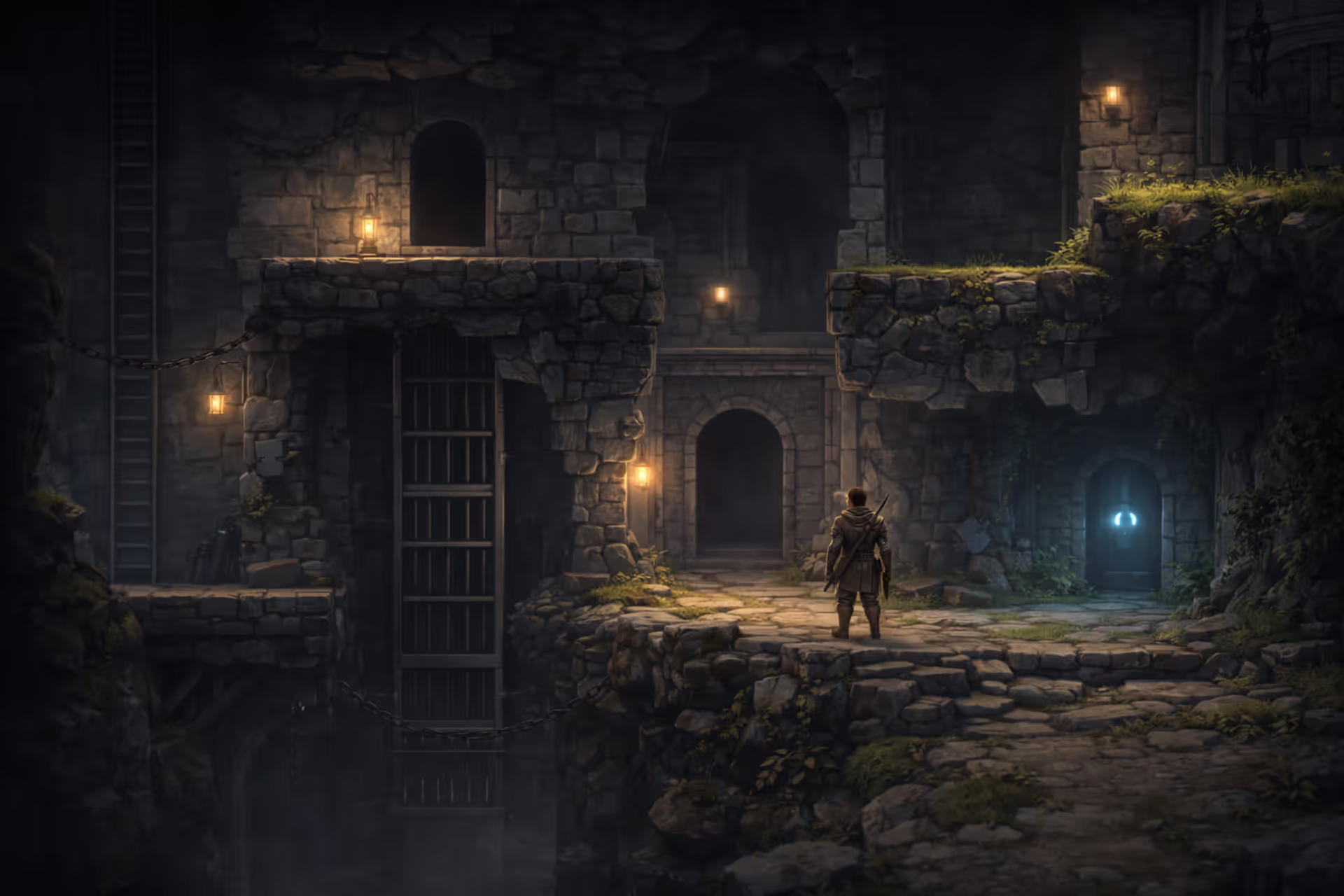
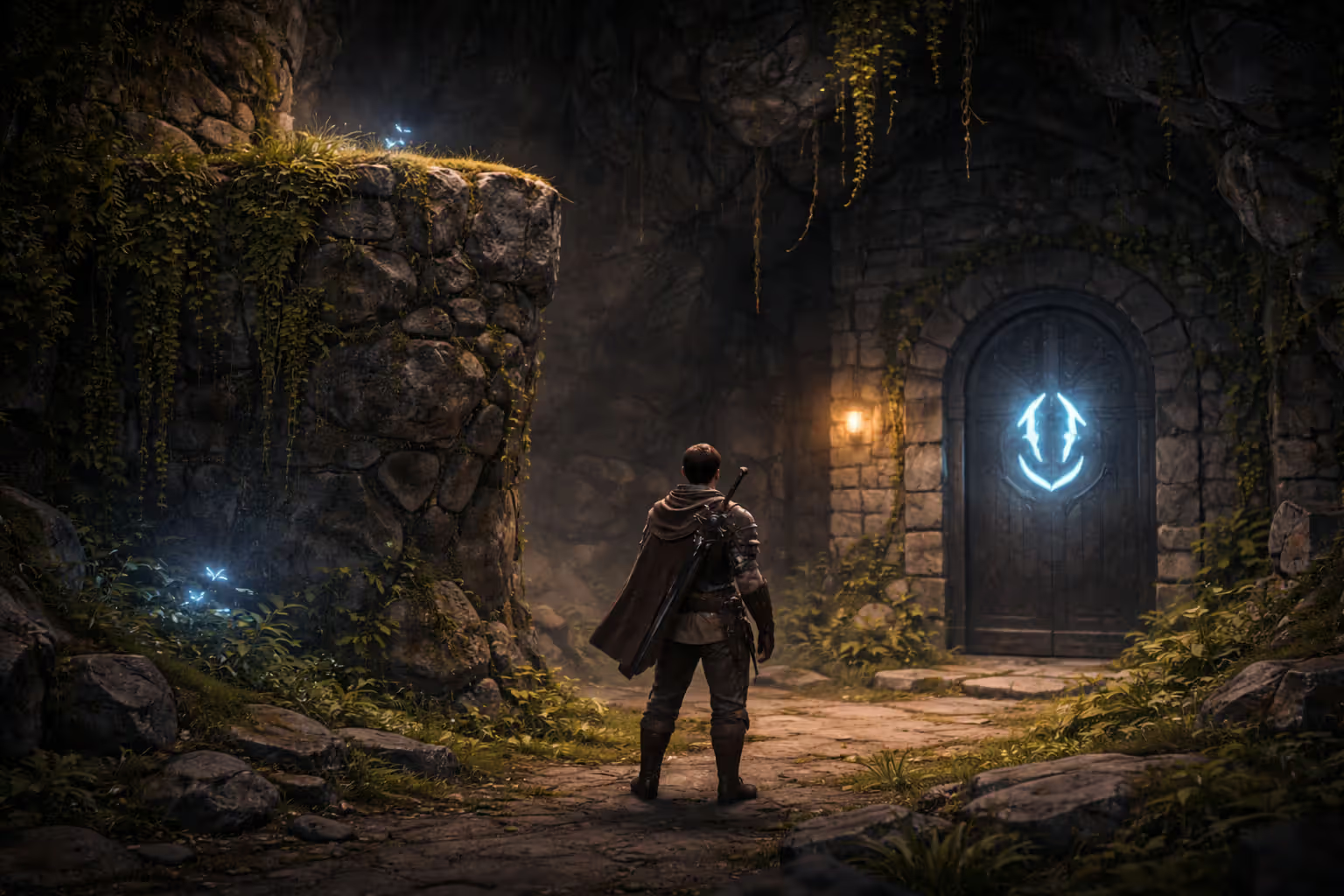
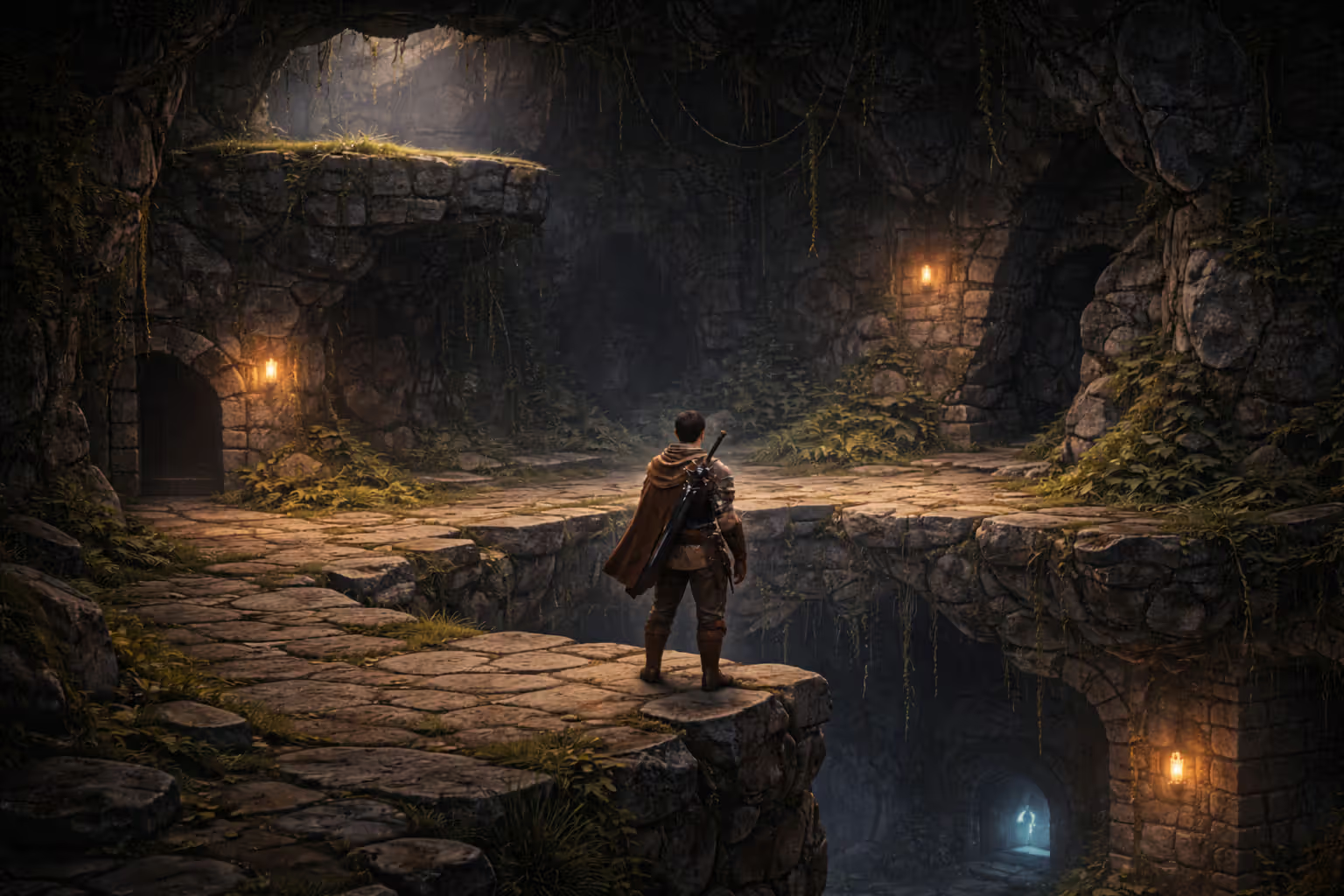
Backtracking incentives separate this genre from aimless wandering. Developers plant visual cues: a conspicuous platform just out of reach, a door sealed with organic growth, a chasm too wide to cross. These aren't dead ends—they're promises. When you return 10 hours later with a double-jump ability, that platform becomes accessible, often hiding a major upgrade or lore item. The backtracking isn't busywork; it's the payoff for spatial memory and observation.
Author: Brandon Hayes;
Source: quantumcatanimation.com
Gated progression uses abilities as keys. Unlike traditional platformers where you might unlock a fire spell for combat variety, metroidvanias make that spell the only way to melt ice barriers blocking entire regions. This creates natural pacing—you can't sequence-break into endgame areas without specific tools. Axiom Verge gates progress behind weapon types: some enemies only die to specific guns, and those corpses block passages. Progression becomes a negotiation between player skill and toolset expansion.
The map design challenge is balancing linearity with freedom. Too linear, and players feel railroaded. Too open, and they wander aimlessly. Most successful titles use "soft gates"—areas technically accessible early but punishingly difficult without upgrades—alongside hard gates that absolutely require specific abilities.
How Ability Progression Transforms Exploration in These Games
Ability progression design isn't just about getting stronger—it's about rewriting the rules of movement and perception. Each new skill fundamentally changes how you interact with the environment.
Early-Game Limitations vs. Late-Game Freedom
Author: Brandon Hayes;
Source: quantumcatanimation.com
The opening hours deliberately constrain you. Your character might walk slowly, jump a fixed height, and deal modest damage. Enemies in adjacent rooms kill you in three hits. This isn't poor balancing—it's establishing a baseline so later abilities feel transformative.
Dead Cells starts you with basic attacks and a single dodge roll. Five hours later, you're wall-running through vertical shafts, ground-slamming onto enemies from above, and chaining teleports between targets. The early limitation makes the late-game mobility feel earned rather than granted.
Contrast this with games that front-load abilities. If you start with wall-jump, double-jump, and dash, acquiring a triple-jump later feels incremental rather than revolutionary. The best exploration platformers pace abilities so each one opens roughly 15-25% more of the map, creating distinct phases of exploration.
Common Ability Types and Their Map Design Impact
Double-jump and air mobility: The most common gate-opener. Designers place platforms at precise heights—reachable with double-jump but impossible with single-jump. Ori and the Blind Forest uses triple-jump and glide combinations, turning vertical spaces into navigation puzzles where you chain abilities mid-air.
Wall-climb and wall-jump: Transforms vertical shafts from barriers into pathways. Developers often hide these shafts in plain sight—you walk past a tall chamber dozens of times before acquiring wall-climb, then realize it connects two distant map regions. Environmental Station Alpha uses wall-jump to create branching paths: skilled players can access some areas early through precise wall-jump sequences, while others remain gated behind explicit upgrades.
Author: Brandon Hayes;
Source: quantumcatanimation.com
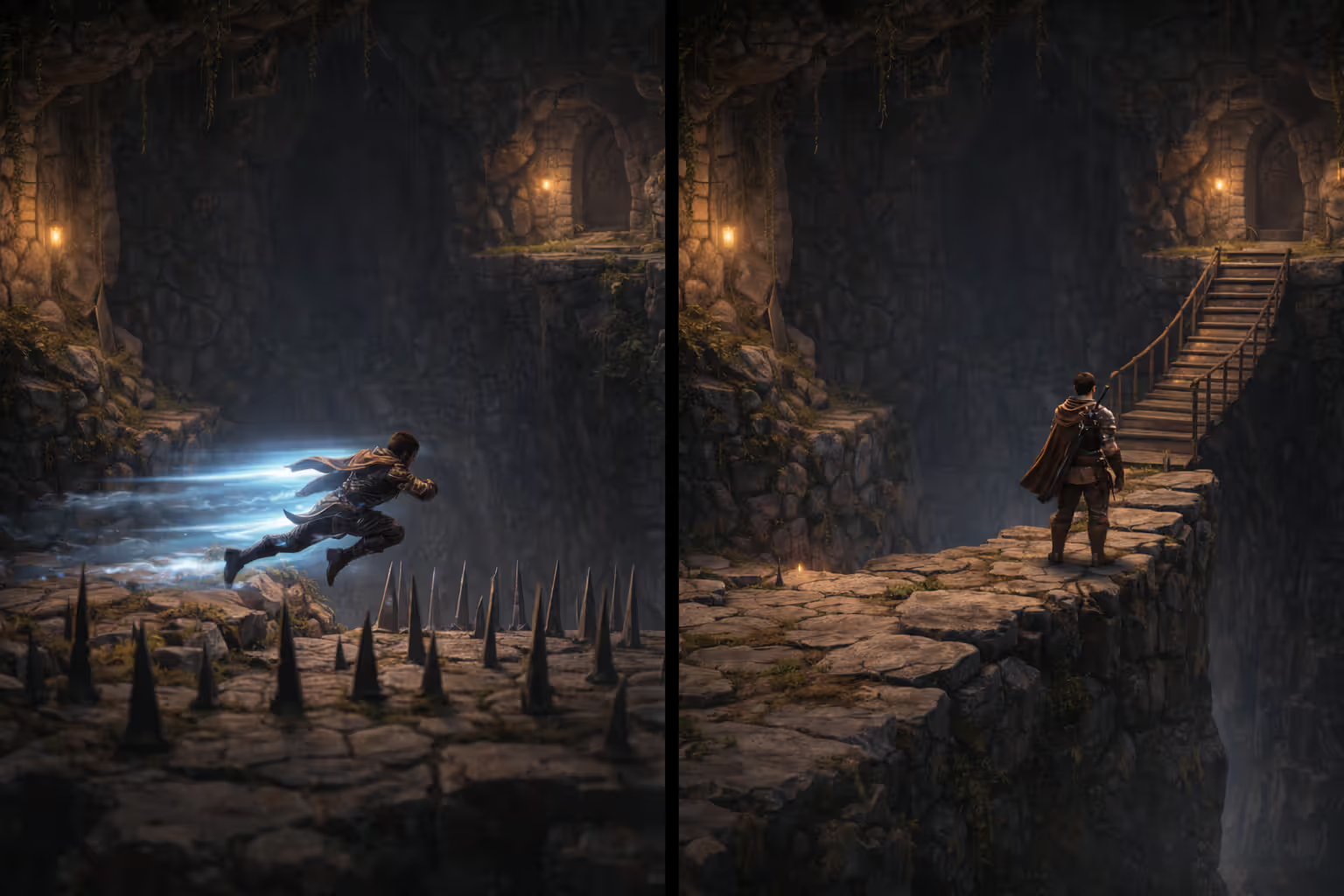
Dash mechanics: Usually breaks through specific barriers or crosses wider gaps. Celeste built an entire game around dash mechanics, but metroidvanias typically use dash as a mid-game unlock. Blasphemous gates entire cathedral sections behind a dash that lets you cross spike pits—areas you've seen from the opposite side but couldn't reach.
Environmental interaction abilities: Less about mobility, more about manipulating the world. Gato Roboto gives you a water-draining ability that lowers liquid levels, exposing new passages. These abilities often have combat applications too, creating dual-purpose upgrades that feel valuable in multiple contexts.
The map design impact is cumulative. Early areas designed around basic movement become traversal highways once you've mastered advanced techniques. Speedrunners exploit this—they route through maps using ability combinations developers anticipated but didn't mandate, finding optimal paths that skip entire intended sequences.
The metroidvania map is a conversation between designer and player. The designer places a ledge; the player remembers it. The designer grants a double-jump; the player returns to that ledge. Every ability is both an answer to a previous question and a question about where else it might apply.
— Tom Francis, developer of Gunpoint and Heat Signature
12 Essential Metroidvania Games Ranked by Design Philosophy
| Game Title | Release Year | Difficulty Level | Art Style | Progression System Type | Average Completion Time |
| Hollow Knight | 2017 | Hard | Hand-drawn gothic | Charm-based modular builds | 30-40 hours |
| Metroid Dread | 2021 | Medium-Hard | Detailed 2.5D sci-fi | Linear ability unlocks | 8-12 hours |
| Ori and the Will of the Wisps | 2020 | Medium | Painterly fantasy | Skill tree with weapon variety | 12-15 hours |
| Axiom Verge | 2015 | Medium | Pixel-art retro | Weapon-focused upgrades | 10-12 hours |
| Blasphemous | 2019 | Hard | Pixel-art religious horror | Prayer and relic system | 15-20 hours |
| Dead Cells | 2018 | Hard (roguelike) | Fluid pixel animation | Randomized ability pools | 20-30 hours (full completion) |
| Environmental Station Alpha | 2015 | Very Hard | Minimalist pixel | Sequence-break friendly | 8-10 hours |
| Gato Roboto | 2019 | Easy-Medium | Monochrome Game Boy style | Compact linear progression | 3-5 hours |
| Guacamelee! 2 | 2018 | Medium | Vibrant Mexican folklore | Combat-integrated movement | 10-12 hours |
| Bloodstained: Ritual of the Night | 2019 | Medium | Gothic anime 2.5D | Shard-based ability crafting | 15-20 hours |
| Cave Story | 2004 | Medium | Retro pixel charm | Weapon leveling system | 6-8 hours |
| Ender Lilies | 2021 | Medium-Hard | Dark watercolor fantasy | Spirit summon progression | 12-15 hours |
This table reveals design diversity within the genre. Hollow Knight prioritizes exploration density and challenge, packing 40 hours into its world. Gato Roboto condenses the formula into a tight 4-hour experience, proving metroidvanias don't require epic length. Dead Cells hybridizes the formula with roguelike elements—each run randomizes ability access, forcing adaptation rather than memorization.
The progression system column highlights philosophical splits. Charm-based systems (Hollow Knight) let players customize playstyles without permanently altering the character. Linear ability unlocks (Metroid Dread) create tightly paced experiences where developers control exactly when you access each tool. Shard-based crafting (Bloodstained) adds RPG depth, letting players experiment with ability combinations.
What Separates Great Metroidvanias from Forgettable Clones
Dozens of metroidvania games release yearly. Most disappear within months. The difference between memorable and forgettable often comes down to execution mistakes that break the core loop.
Pacing mistakes kill momentum. If players acquire three abilities in one hour then go five hours without meaningful upgrades, the progression feels uneven. Worse is when late-game abilities don't meaningfully change exploration—getting a slightly longer dash when you already have double-jump and wall-climb feels redundant. Great metroidvanias space abilities to maintain consistent discovery rhythm. Ori and the Will of the Wisps introduces a new movement option roughly every 90 minutes, each opening distinct map sections.
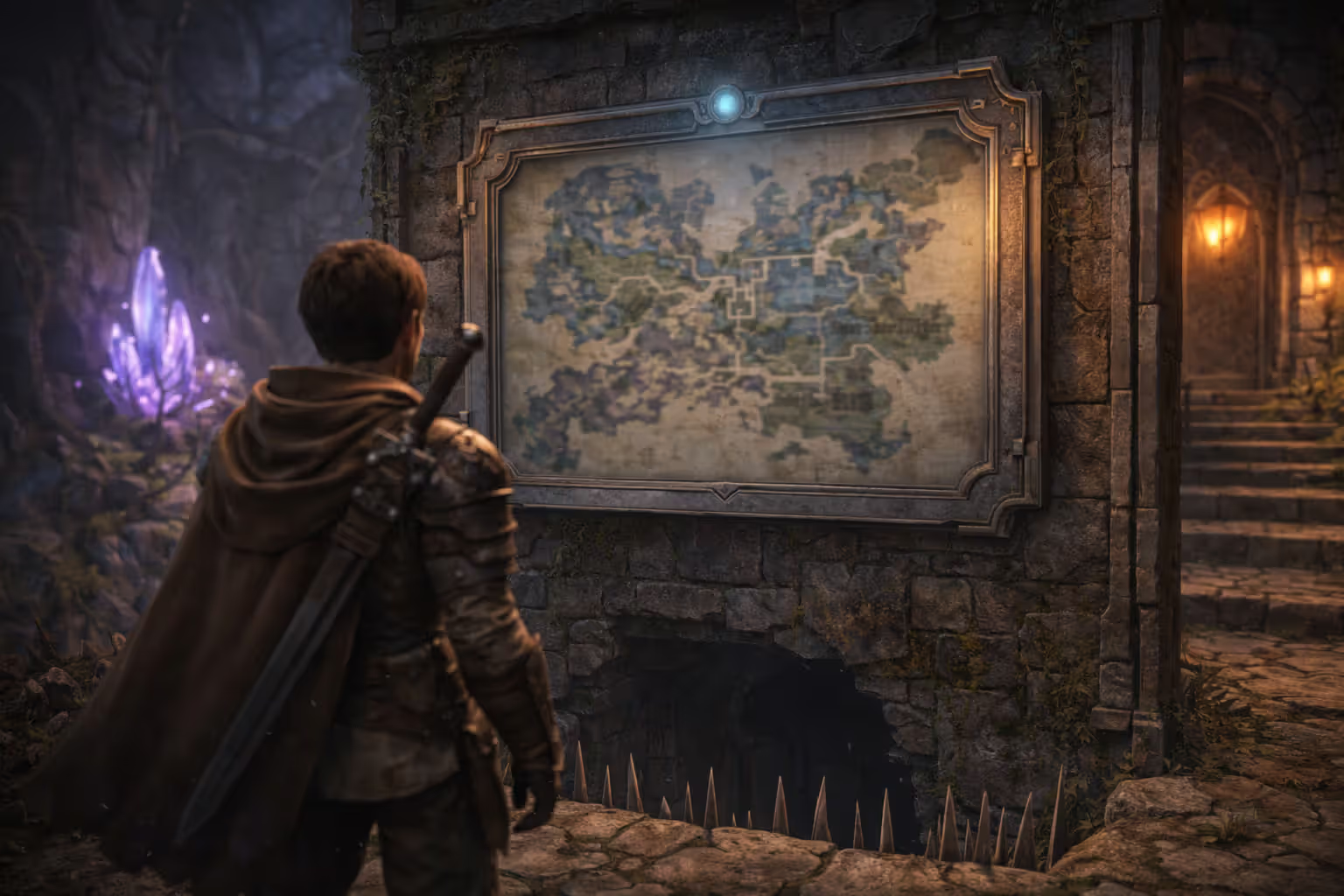
Map clarity issues frustrate even patient players. The genre requires spatial memory, but that doesn't excuse poor cartography. Maps need clear room delineation, save point indicators, and visual distinction between areas. Players should recognize "I'm in the fungal zone" or "This is the industrial sector" at a glance. Some indie titles use overly abstract maps or hide critical information behind upgrades, creating artificial confusion rather than intentional mystery.
Author: Brandon Hayes;
Source: quantumcatanimation.com
Ability redundancy happens when new skills overlap with existing ones without adding meaningful options. If you have a dash that crosses 3-tile gaps, a later glide ability that crosses 4-tile gaps feels incremental. Compare this to Hollow Knight's Monarch Wings (double-jump) versus Crystal Heart (super-dash)—each enables fundamentally different navigation strategies and opens separate map regions.
Poor signposting leaves players stuck without direction. While metroidvanias thrive on exploration, players need subtle guidance toward productive paths. Visual language helps: breakable walls might have subtle cracks, grapple points use consistent design language, and ability-locked doors display clear iconography. Environmental Station Alpha sometimes violates this—critical breakable blocks look identical to decorative ones, leading to pixel-hunting frustration.
The best titles balance challenge with respect for player time. They hide optional content behind obscure secrets but keep critical path progression intuitive through environmental storytelling and visual consistency.
Why Indie Studios Dominate This Genre More Than AAA Publishers
Scan the metroidvania landscape and you'll notice a pattern: most acclaimed recent entries come from small teams. Hollow Knight emerged from a three-person studio. Axiom Verge was a solo project. Even "larger" indie efforts like Ori involved teams under 50 people. Meanwhile, AAA publishers largely abandoned the genre after Metroid's commercial underperformance in the mid-2000s.
Development costs favor smaller teams. Metroidvanias require dense, interconnected worlds rather than expansive open environments. A 20-hour metroidvania might reuse the same map square footage a dozen times as players backtrack with new abilities, making asset costs lower than linear games requiring constant new environments. Small teams can spend years refining a single interconnected map without the budget pressures of AAA production schedules.
Creative freedom matters more in this genre than most. Metroidvania design requires trusting players to explore without constant hand-holding—a philosophy that clashes with AAA risk-aversion. Publishers often demand tutorials, waypoints, and difficulty settings that dilute the core experience. Indie developers can design niche experiences: Environmental Station Alpha intentionally targets hardcore players comfortable with cryptic progression, while Gato Roboto aims for accessibility. Neither compromises to chase broader audiences.
Audience expectations align with indie production values. Metroidvania fans value tight mechanics and clever map design over photorealistic graphics or celebrity voice acting. Pixel art aesthetics—cheaper to produce than 3D models—are celebrated rather than dismissed. This lets small teams compete on equal footing with larger studios in the metrics that matter to the genre's core audience.
The rare AAA metroidvania—like Metroid Dread—succeeds by treating the genre seriously rather than diluting it for mass appeal. Nintendo gave MercurySteam freedom to create a challenging, sequence-break-friendly experience that respects veteran players. Most publishers won't make that bet, leaving the space open for indie innovation.
FAQ: Common Questions About Metroidvania Games
Metroidvania games thrive because they trust players to explore, remember, and return. The genre's core loop—discover barriers, gain abilities, unlock previously inaccessible areas—creates a uniquely satisfying progression curve where the world itself is the puzzle. Whether you're navigating Hollow Knight's sprawling caverns or speedrunning Metroid Dread's tightly designed corridors, the fundamental appeal remains constant: transformation through exploration.
The genre's indie dominance ensures continued innovation. Small teams experiment with hybrid formulas, blending metroidvania exploration with roguelike randomization, souls-like combat, or narrative-driven storytelling. This creative diversity means there's likely a metroidvania tailored to your preferences—whether you want punishing challenge, accessible adventure, or something between.
For newcomers, start with a game matching your difficulty tolerance and aesthetic taste. Pay attention to environmental details; those unreachable platforms aren't decoration. For veterans, the genre's depth rewards replays—sequence-breaking, speedrunning, and self-imposed challenges add hundreds of hours beyond initial completion. The best exploration platformers reveal new secrets on every playthrough, rewarding the spatial mastery you've developed.