
What Are MMO Games and Why Millions Still Play Them
MMO Games Guide

Content
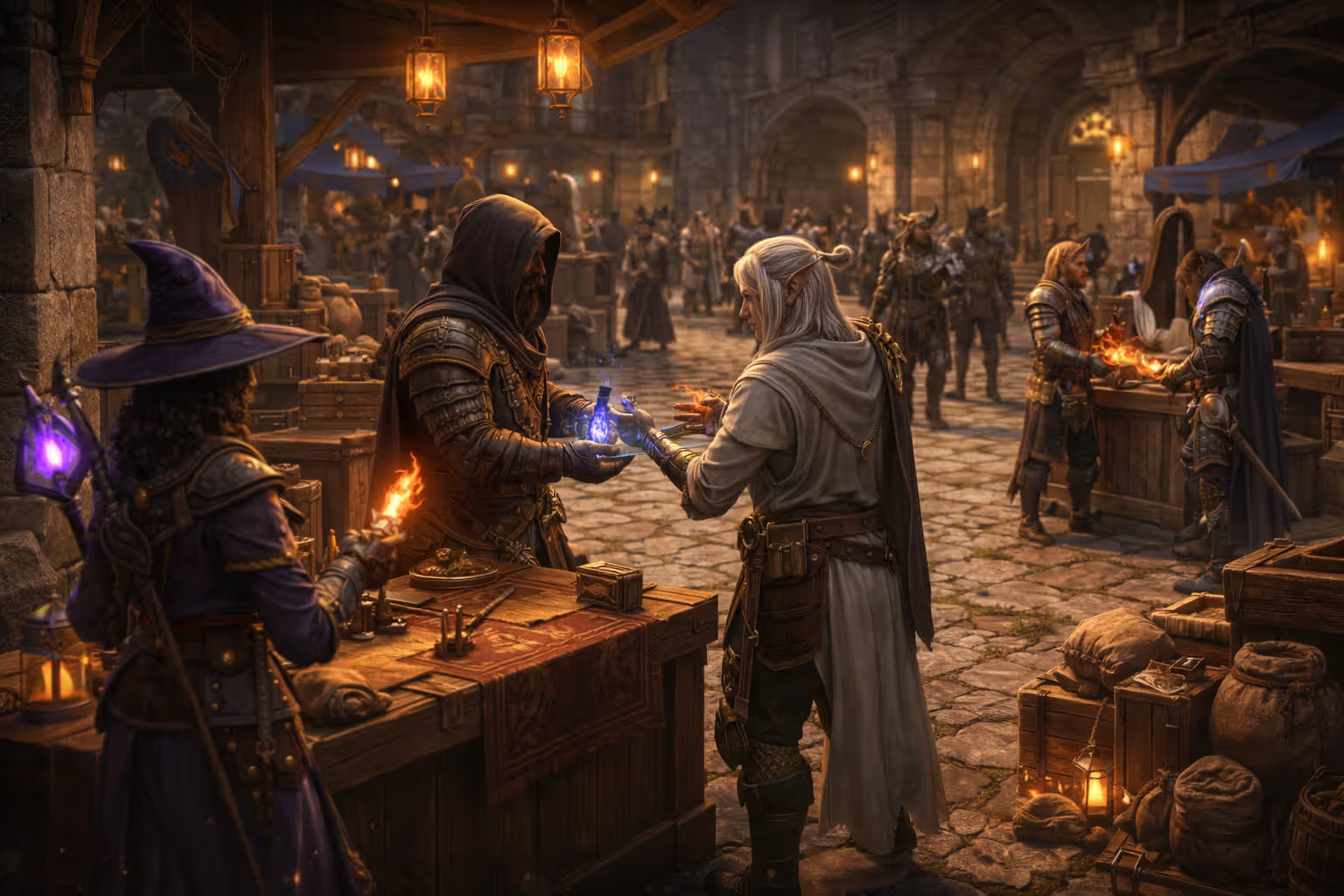
MMO games connect thousands of players simultaneously in shared online environments where your actions, alliances, and achievements exist alongside real people pursuing their own goals. Unlike single-player games that reset when you close them, these worlds continue evolving whether you're logged in or not—guilds rise and fall, economies shift based on player behavior, and territorial control changes hands through coordinated group efforts.
The staying power of MMO games stems from something fundamental: humans crave meaningful social experiences and measurable progress. When you defeat a raid boss with 24 other players after weeks of practice, or when you become known on your server as the go-to crafter for legendary weapons, you've created something that exists beyond the game itself. You've built reputation, relationships, and a sense of place in a community.
Modern MMO games span wildly different experiences. World of Warcraft still dominates with traditional fantasy combat and raiding. Final Fantasy XIV attracts players who value story and cooperative gameplay. EVE Online remains the choice for players seeking genuine risk and player-driven economies. Lost Ark blends ARPG combat with MMO social structures. Each attracts different personality types and time commitments, which explains why the genre hasn't consolidated into a single winner-takes-all game.
How MMO Games Actually Work: Core Mechanics Explained
Server Architecture and Persistent Worlds
Most MMO games run on server clusters where 2,000-5,000 players share the same persistent world. When you log out, your character freezes in place (or disappears), but the world continues. Other players keep farming materials, prices in the auction house fluctuate based on supply and demand, and guilds continue their scheduled activities.
Some games use megaservers (Elder Scrolls Online, Guild Wars 2) where millions of players technically share one world, but you only see 50-150 nearby players through instancing technology. Others maintain distinct servers with separate economies and communities. Server choice matters more than new players realize—a low-population server means fewer trading opportunities and harder times finding groups, while overpopulated servers create login queues and resource competition.
Massively multiplayer worlds require constant data synchronization. When you cast a spell, your client sends that action to the server, which calculates results and broadcasts them to nearby players. This creates the latency you experience—typically 30-150 milliseconds depending on your connection and server location. Games handle this differently: some use action combat where you must manually aim (requiring better servers and connections), while others use tab-targeting where you select enemies and abilities automatically track them (more forgiving for higher latency).
Author: Megan Lewis;
Source: quantumcatanimation.com
Real-Time vs. Turn-Based Combat Models
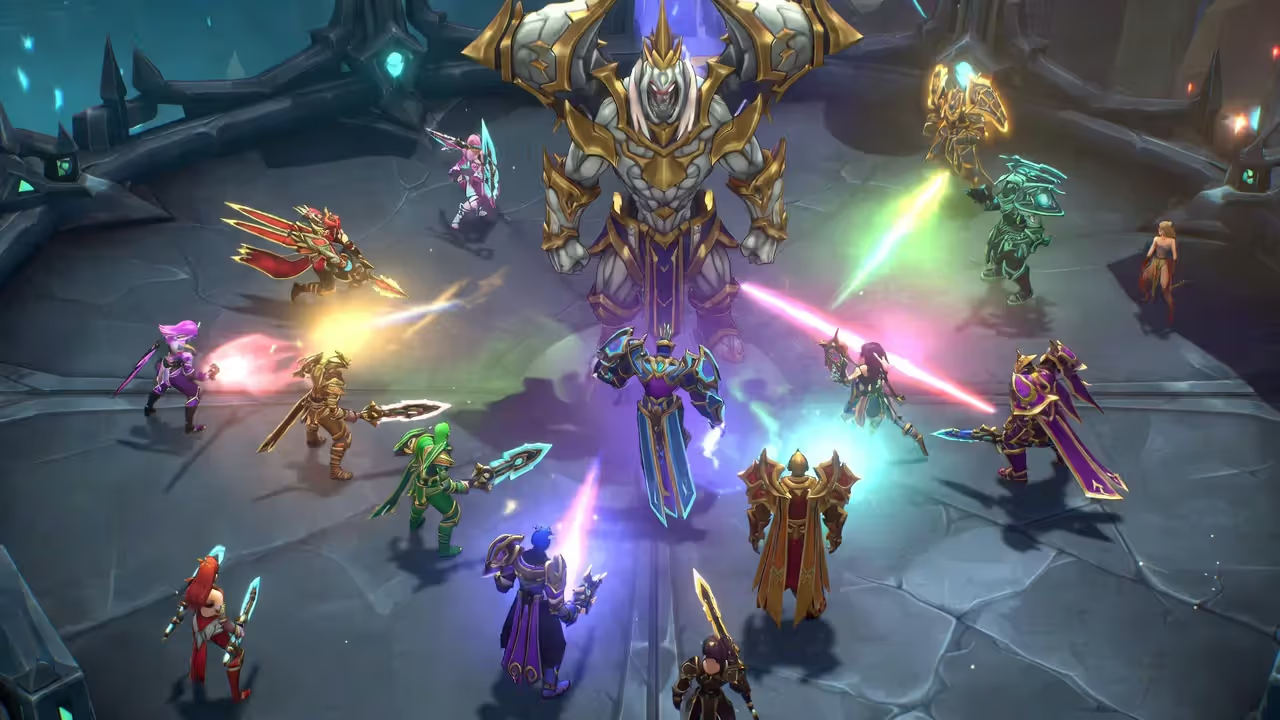
Real-time combat dominates modern MMO games. You control your character directly, dodge enemy attacks by physically moving, and execute ability rotations while managing positioning. Black Desert Online and TERA exemplify action combat where your skill with controls directly impacts performance. Traditional tab-target games like World of Warcraft still require real-time decisions but focus more on ability timing and resource management than mechanical execution.
Turn-based combat appears rarely in modern massively multiplayer worlds, though some games like Dofus and Wakfu maintain dedicated audiences. These games sacrifice the visceral feel of real-time action for deeper tactical planning—you have 30-45 seconds per turn to position characters and select abilities, making each encounter feel like a chess match rather than a reflex test.
The combat model fundamentally shapes community culture. Action combat games attract players who enjoy mechanical skill expression and often feature more competitive PvP scenes. Tab-target games tend toward older demographics who value strategic thinking over reaction speed and often maintain stronger raiding communities focused on coordination rather than individual mechanical prowess.
Types of MMO Progression Systems and What They Mean for Your Playtime
Vertical Progression (Level-Based Systems)
Vertical progression means getting numerically stronger—higher levels, better gear with bigger numbers, increased damage output. World of Warcraft epitomizes this: a level 70 character with current raid gear deals 10x more damage than a fresh level 70 in basic equipment. This creates clear milestones and satisfying power increases, but it also means older content becomes trivial and new players face significant catch-up.
Level-based systems create predictable gameplay loops. You quest or grind to reach max level (20-80 hours for most modern MMO games), then shift focus to endgame gear acquisition through raids, dungeons, or PvP. Each content patch raises the power ceiling, making your previous best-in-slot gear obsolete. This treadmill frustrates some players but provides clear goals for others.
The catch-up problem hits hard in vertical progression games. Starting World of Warcraft or Final Fantasy XIV years after launch means your character is dramatically weaker than established players. Most games implement catch-up mechanics—experience boosts, gear vendors selling near-current equipment, or level-skip tokens—but you still face 40-100 hours before participating in current content at a basic competency level.
Horizontal Progression (Skill-Based Systems)
Horizontal progression emphasizes expanding options rather than raw power. Guild Wars 2 lets you reach max level in 30-40 hours, after which you pursue cosmetic upgrades, new ability combinations, and quality-of-life improvements. A three-year veteran has more build options and better-looking gear, but their damage numbers aren't dramatically higher than a fresh max-level player.
This model reduces the barrier for returning players. Take a six-month break from Guild Wars 2 and you're still competitive in most content immediately. The tradeoff? Some players find horizontal progression less motivating because there's no obvious "I'm 50% stronger than last month" feedback. Progress feels more subtle—you've unlocked a new elite specialization that enables different playstyles, or you've completed a cosmetic set that took 200 hours to acquire.
EVE Online represents extreme horizontal progression. Your character learns skills in real-time (even while offline), but a 10-year veteran pilot in a frigate isn't dramatically more powerful than a 2-month player in the same ship. The veteran has more ship options, more fitting possibilities, and better supporting skills, but smart new players can contribute meaningfully to fleet battles within weeks.
Hybrid Models in Modern MMOs
Most recent MMO games blend vertical and horizontal elements. Lost Ark uses vertical progression for item level (required to access harder content) but horizontal progression for engravings and skill customization. New World combined vertical gear progression with horizontal weapon mastery systems, though its execution faced criticism.
MMO progression systems directly determine time investment requirements. Vertical progression games demand consistent play to avoid falling behind—miss a content patch and you're suddenly 20 item levels below the baseline for current activities. Horizontal systems let you play at your own pace since power gaps remain manageable.
The business model often dictates progression philosophy. Subscription games favor vertical progression because the gear treadmill keeps players subscribed month after month. Buy-to-play games lean horizontal because they can't rely on FOMO to maintain engagement. Free-to-play games use aggressive vertical progression with paid shortcuts, creating the controversial pay-to-win dynamics discussed later.
Author: Megan Lewis;
Source: quantumcatanimation.com
7 Common Mistakes New MMO Players Make (And How to Avoid Them)
Spreading resources across multiple characters too early. New players often create three or four characters in their first week, splitting time and resources. Focus on one character until you understand endgame systems. Your second character will progress 3x faster because you'll know which quests to skip, which systems matter, and how to earn currency efficiently.
Hoarding crafting materials "just in case." That stack of copper ore won't become valuable later—it'll become vendor trash as you outlevel it. Sell materials as you acquire them or use them immediately for skill progression. The gold earned now has more value than materials you'll never use.
Avoiding group content due to anxiety. Dungeons and group activities teach essential mechanics and provide significantly better rewards than solo play. Start with normal difficulty where mistakes rarely cause problems. Most MMO games have vote-kick systems that remove truly disruptive players, but ordinary mistakes in casual content won't get you removed. The toxic horror stories represent maybe 2% of actual experiences.
Buying cosmetics or convenience items before understanding the game. That $25 mount looks appealing, but you don't know yet whether you'll still be playing in two weeks. Invest money only after you've reached endgame and confirmed you enjoy the core loop. Many players buy character boosts, realize they don't understand their abilities, and quit within days.
Ignoring the meta completely or following it blindly. Online guides optimize for top 1% players pushing cutting-edge content. A "bad" build that you understand and enjoy will outperform a "meta" build you find confusing. Learn the fundamentals first, then gradually optimize. Conversely, don't deliberately gimp yourself by ignoring all advice—there's middle ground between blind meta-following and stubborn contrarianism.
Joining the first guild that invites you. Mass-invite guilds spam invitations to anyone without a guild tag, then provide zero actual community. Find a guild through the recruitment forums or in-game channels where you can read their schedule, culture, and expectations. A good guild match matters more than server choice for long-term enjoyment.
Treating MMO games like single-player games with other people nearby. The genre's strength is cooperation and social interaction. Join public events, respond when someone asks for help, participate in zone chat occasionally. You don't need to become a social butterfly, but treating thousands of other players as sophisticated NPCs wastes the core appeal of massively multiplayer worlds.
Comparing Popular MMO Business Models: Which Costs You More?
Author: Megan Lewis;
Source: quantumcatanimation.com
| Model Type | Upfront Cost | Monthly Cost | Pay-to-Win Risk | Best For | Examples |
| Free-to-Play | $0 | $0-200+ | High | Trying before committing; players who can resist paid advantages | Lost Ark, Star Wars: The Old Republic, RuneScape (F2P version) |
| Subscription | $0-60 | $12-15 | Very Low | Players who want fair competition; consistent monthly gaming time | World of Warcraft, Final Fantasy XIV, EVE Online |
| Buy-to-Play | $30-60 | $0 | Low-Medium | Players with unpredictable schedules; dislike of recurring charges | Guild Wars 2, Elder Scrolls Online, New World |
| Hybrid (B2P + Optional Sub) | $30-60 | $0-15 | Low | Players who want flexibility with optional benefits | Elder Scrolls Online (ESO Plus), Guild Wars 2 (optional gem store) |
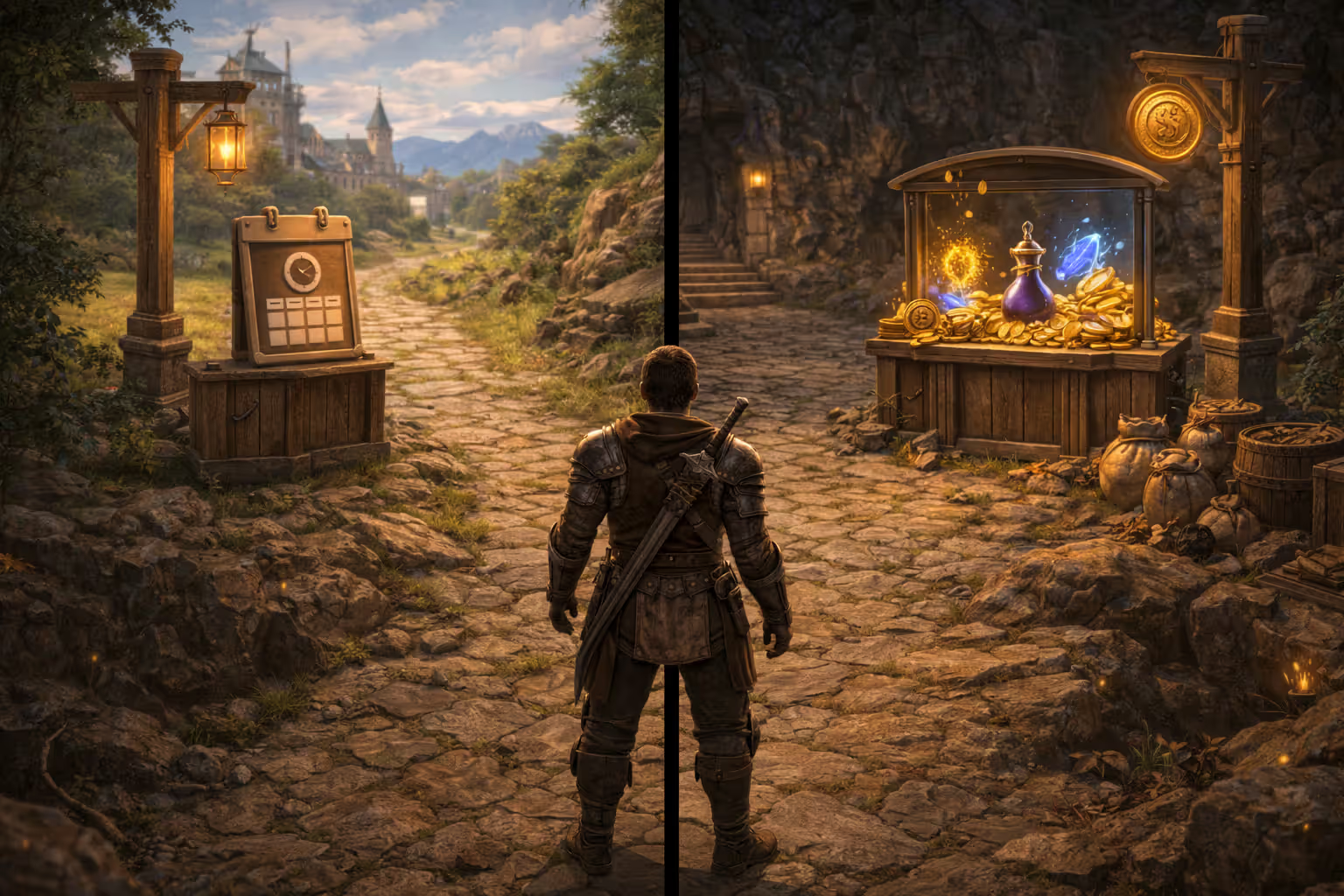
Free-to-play sounds economical but frequently costs more than subscriptions for engaged players. Lost Ark's endgame encourages spending $50-150 monthly on honing materials to progress at reasonable rates. Mobile-influenced MMO games like Black Desert Mobile push even harder, with competitive players spending $200-500 monthly. The "free" model targets whales willing to spend thousands while letting free players provide population.
Subscription games cost $180 annually but include all content and maintain even playing fields. You can't buy power advantages, which creates healthier competitive environments. The commitment feels larger psychologically, but actual cost-per-hour often beats free-to-play for players who log 10+ hours weekly.
Buy-to-play offers the best value for inconsistent schedules. Pay $40 once for Guild Wars 2 and play whenever you want for years without additional required spending. These games monetize through cosmetics and convenience items, which creates temptation but doesn't gate actual content or power.
The hidden cost in all MMO games is time. A free-to-play game that requires 30 hours weekly to remain competitive costs more in opportunity cost than a subscription game you can enjoy in 8 hours weekly. Calculate your hourly wage, estimate realistic playtime, and choose accordingly. A $15 subscription that respects your time beats a "free" game that doesn't.
Time Investment Reality Check: What Different MMOs Actually Require
Final Fantasy XIV respects player time more than most MMO games. Reaching endgame takes 80-120 hours, but the story-focused leveling is the game's main attraction rather than a barrier. Once at max level, you can clear all weekly content in 6-8 hours. Take a break for six months and catch-up takes maybe 10 hours to reach current gear levels.
World of Warcraft demands more consistent engagement. Reaching max level takes 30-50 hours, then you need another 40-60 hours to gear up for current raiding. Mythic+ dungeons and raiding schedules expect 8-15 hours weekly to remain competitive. Miss a content patch and you'll spend 20-30 hours catching up before you can participate in current progression.
Lost Ark requires daily engagement for optimal progression. Daily and weekly activities take 1-2 hours per character, and the game strongly encourages running 3-6 characters. Hardcore players invest 20-30 hours weekly. The game respects your time poorly—missing daily login rewards and limited-attempt content creates FOMO that drives burnout.
Guild Wars 2 lets you play casually forever. Reaching max level takes 30-40 hours, and horizontal progression means you're never behind. Log in once monthly or play 20 hours weekly—both work fine. The tradeoff is less structured endgame progression, which some players find aimless.
EVE Online operates on real-time skill training. Your character improves whether you're logged in or not, so you can play 3 hours weekly and still progress. The catch? Meaningful gameplay requires coordination with other players, so you'll want to participate in scheduled fleet operations (2-4 hours per event) to experience the game's core appeal.
As game designer Raph Koster noted in a 2023 GDC talk:
The most successful massively multiplayer worlds aren't the ones that demand the most time—they're the ones that make every hour feel meaningful. Players don't quit because they're 'done' with content; they quit when their time investment stops producing proportional feelings of accomplishment and social connection.
— Raph Koster
New World tried respecting player time at launch but struggled with endgame retention. Reaching max level took 80-120 hours, but endgame content ran thin quickly. Players who invested 200 hours in the first month found themselves with little to do, demonstrating that too little required time creates its own problems.
The time investment question has no universal answer. Match your available hours to the game's expectations. Trying to play World of Warcraft on 4 hours weekly creates constant frustration from falling behind. Playing Guild Wars 2 when you want 20 hours of structured weekly progression leaves you wanting more direction.
How to Choose Your First MMO Based on Your Gaming Background
| If You Like... | Try This MMO | Why It Fits | Time Commitment |
| Dark Souls, challenging action games | Black Desert Online, TERA | Manual aim, combo systems, mechanical skill emphasis | 10-20 hrs/week |
| Diablo, Path of Exile | Lost Ark | Isometric ARPG combat in MMO structure, similar loot systems | 15-25 hrs/week |
| Skyrim, story-driven RPGs | Final Fantasy XIV, Elder Scrolls Online | Strong narrative focus, extensive solo content, voice acting | 5-15 hrs/week |
| Competitive multiplayer (LoL, Valorant) | Guild Wars 2 (PvP), World of Warcraft (Arena) | Structured competitive modes, ranked systems, esports scenes | 8-15 hrs/week |
| Survival games (Rust, ARK) | EVE Online, Albion Online | Full-loot PvP, player-driven economies, territorial control | 10-20 hrs/week |
| Turn-based strategy | Dofus, Wakfu | Tactical turn-based combat in MMO worlds | 5-10 hrs/week |
Players coming from competitive shooters often struggle with MMO progression systems. You can't jump into competitive content immediately—you need 40-100 hours of preparation first. If that sounds unbearable, avoid vertical progression games entirely and try Guild Wars 2, where you can jump into structured PvP at level 1 with normalized gear.
Story-focused single-player gamers should start with Final Fantasy XIV. The main story quest is mandatory and takes 100+ hours, but it's genuinely well-written and voice-acted. Other MMO games treat story as filler between gameplay systems, which creates narrative whiplash for players expecting Witcher 3-quality writing.
Spreadsheet enthusiasts and economics nerds belong in EVE Online. The learning curve is brutal—expect 20-40 hours before you understand basic systems—but no other MMO game offers comparable economic complexity and player-driven politics. If you've ever enjoyed optimizing trade routes or market manipulation, EVE is your game despite its age.
Social gamers who prioritize community over mechanics should research guild culture before choosing games. Final Fantasy XIV maintains the friendliest general community due to strict moderation and game design that rewards cooperation. World of Warcraft's community varies wildly by server and guild. Lost Ark's community skews competitive and sometimes toxic around optimization.
Players with limited time should avoid daily-login games like Lost Ark or Black Desert. These games punish missed days through limited-attempt content and daily reward systems. Stick with subscription or buy-to-play games that respect irregular schedules.
Frequently Asked Questions About MMO Games
MMO games demand more research before commitment than most genres. The wrong choice costs 40 hours before you realize the progression system doesn't match your schedule, or the community culture doesn't fit your personality, or the business model requires spending you didn't anticipate.
Start by honestly assessing your available time and consistency. Can you commit 10+ hours weekly on a predictable schedule? Subscription games and vertical progression systems work for you. Do you play 3-8 hours weekly with irregular gaps? Horizontal progression games like Guild Wars 2 or Elder Scrolls Online fit better. Want to try before committing money? Free-to-play games let you test at no cost, but research their monetization carefully before getting invested.
Your gaming background matters more than you think. Players coming from competitive games often bounce off story-focused MMO games, while RPG fans struggle with the mechanical demands of action combat systems. Use the comparison table earlier in this article to identify games matching your existing preferences, then watch 30-60 minutes of actual gameplay footage before downloading.
The social element determines long-term retention more than any other factor. You can enjoy single-player RPGs alone, but massively multiplayer worlds lose most of their appeal without social connections. If you're naturally social, prioritize games with friendly communities and active guild systems. If you prefer minimal interaction, choose games with strong solo content and optional group activities.
Most importantly, remember that quitting an MMO game that doesn't fit isn't failure—it's smart time management. The genre's depth means you won't know if a game truly works for you until 30-50 hours in, but don't fall for the sunk cost fallacy. If you're not enjoying the core gameplay loop by max level, you won't suddenly start enjoying it in endgame.
The best MMO game is the one that respects your time, matches your preferred gameplay style, and connects you with people who enhance rather than detract from your experience. That answer looks different for everyone, which explains why dozens of MMO games maintain healthy populations despite serving the same basic premise of massively multiplayer worlds.