
What Are Roguelike Games? A Guide to Gaming's Most Unforgiving Genre
Roguelike Games And Permadeath Gameplay

Content
Every death teaches a lesson. Every run feels different. Every victory tastes sweeter because you've genuinely earned it.
Roguelike games strip away the safety nets modern gaming has built—no checkpoints, no second chances, no predetermined layouts. When your character dies, everything resets. The dungeon reshuffles. You start from scratch with only your knowledge to carry forward.
This brutal philosophy has created one of gaming's most devoted communities. Players spend hundreds of hours mastering systems that actively resist mastery, chasing that perfect run where skill, strategy, and luck align.
The Origins: How Rogue Spawned an Entire Genre
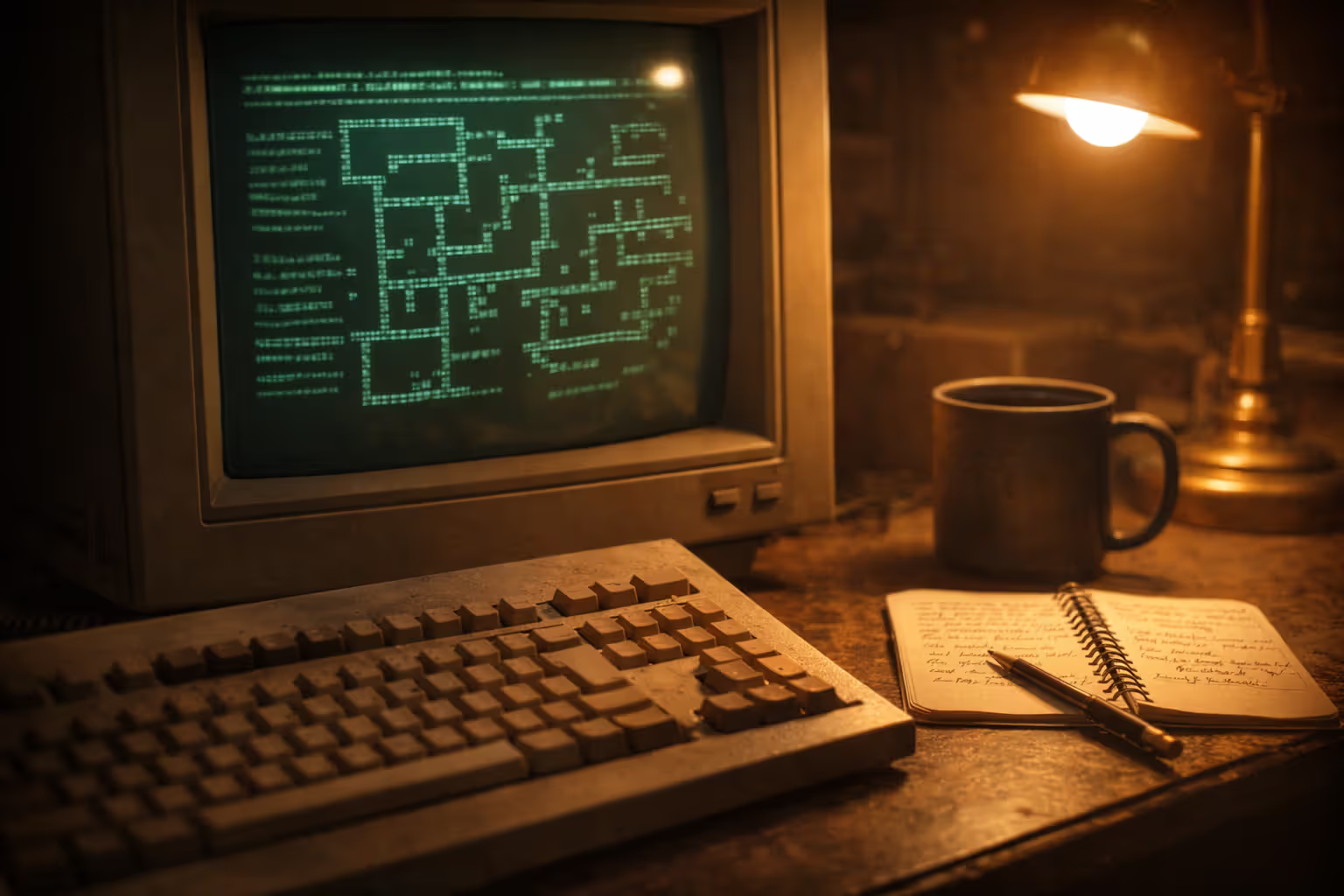
In 1980, college students Michael Toy and Glenn Wichman created Rogue on Unix systems at UC Santa Cruz. The ASCII-based dungeon crawler featured randomly generated levels, permanent death, and turn-based combat. Each playthrough created a unique dungeon layout, represented entirely through keyboard characters—@ for your adventurer, D for dragons, % for staircases.
The game spread through university networks and early internet communities. Players couldn't share maps or walkthroughs because no two dungeons matched. Success required understanding systems rather than memorizing solutions.
By the late 1980s, developers had created spiritual successors like Hack, Moria, and NetHack. These games expanded Rogue's foundation while preserving its core philosophy. The community needed terminology to describe this emerging design approach, leading to the "Berlin Interpretation" at the 2008 International Roguelike Development Conference.
This interpretation identified high-value factors: randomly generated environments, permadeath, turn-based movement, grid-based maps, non-modal gameplay, complexity, resource management, hack-and-slash combat, and exploration focus. Games didn't need every factor, but the more boxes checked, the more "roguelike" the experience.
Author: Tyler Brooks;
Source: quantumcatanimation.com
Modern roguelikes have evolved beyond ASCII graphics while maintaining mechanical DNA. Titles like Caves of Qud and Cogmind prove traditional approaches still thrive, while games like Hades and Dead Cells have introduced the procedural gameplay genre to mainstream audiences.
Core Mechanics That Define Roguelike Games
Three pillars support the roguelike philosophy. Remove any one, and the experience fundamentally changes.
Permadeath: Why Losing Everything Matters
When your character dies in a roguelike, the save file deletes. No loading previous checkpoints. No resurrection items. The run ends completely.
This creates consequence weight absent from most games. That healing potion becomes a tactical decision rather than a resource to hoard. Exploring one more room means genuinely risking your progress. Every action carries permanent stakes.
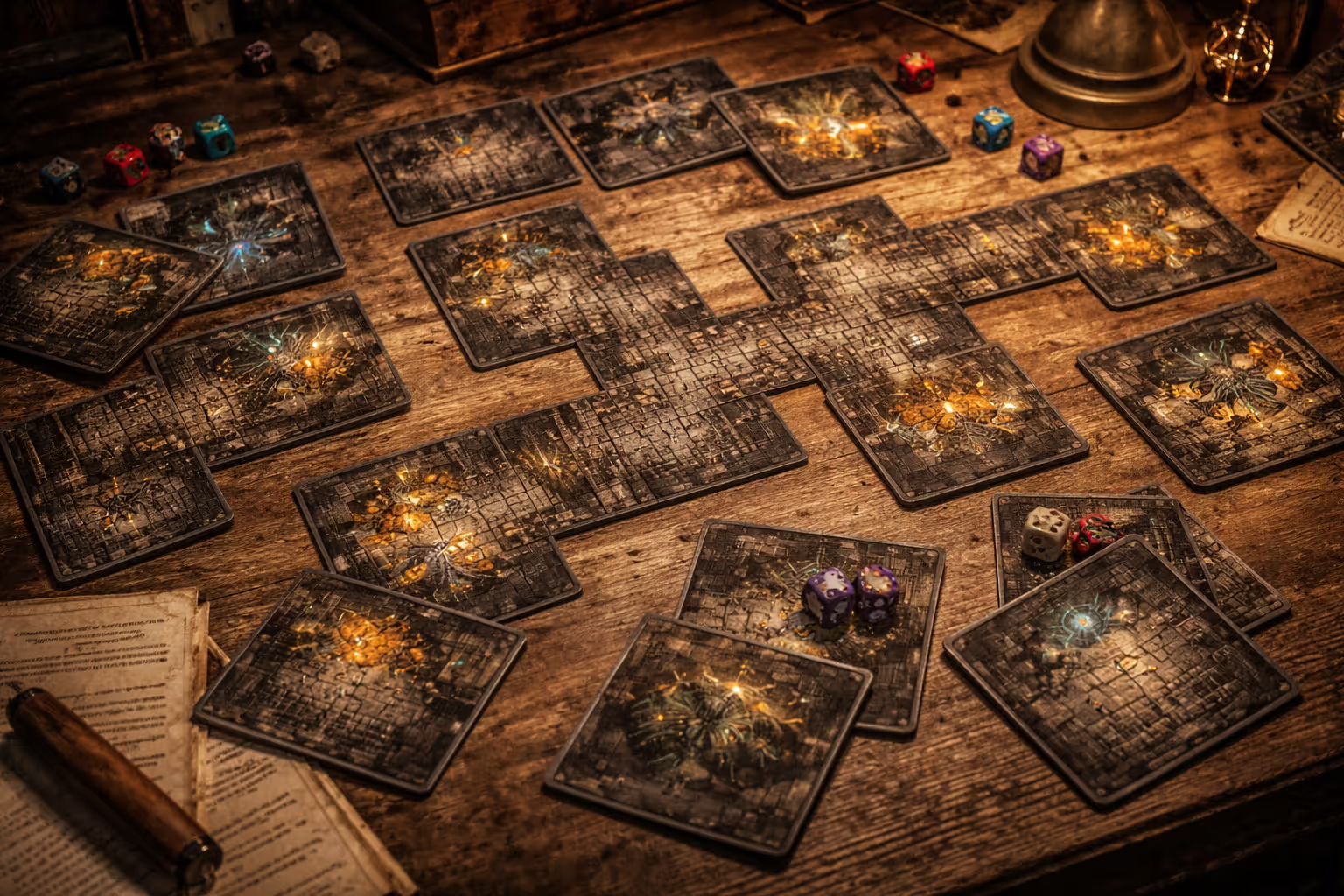
Permadeath mechanics force players to engage with systems deeply. You can't brute-force challenges through repeated attempts at the same encounter. Instead, you must understand enemy behavior, manage resources effectively, and make strategic sacrifices. A player who loses three hours of progress to a preventable mistake learns that lesson permanently.
The mechanic also creates natural story moments. Your warrior who survived twelve floors with 3 HP and no healing items becomes a legend in your personal gaming history. That desperate gamble that paid off feels earned because failure was genuinely possible.
Author: Tyler Brooks;
Source: quantumcatanimation.com
Procedural Generation and Replayability
Every run presents a new dungeon layout, enemy placement, and item distribution. Algorithms generate these elements following specific rules that ensure playability while maintaining unpredictability.
This system serves multiple purposes. Players can't memorize optimal paths or item locations. Speedrunners must adapt strategies on the fly. Content essentially becomes infinite—you'll never exhaust the possible combinations.
Quality procedural generation balances randomness with design intent. Poor implementations create unwinnable scenarios or repetitive patterns. Strong systems ensure fair challenges while surprising veteran players. Spelunky exemplifies this balance—its levels always feel fresh yet consistently fair.
The procedural gameplay genre extends beyond dungeon layouts. Enemy AI might select different ability loadouts. Shops stock random inventory. Quest objectives shift locations. This variability means knowledge transfers between runs while specific tactics constantly change.
Turn-Based Combat and Strategic Depth
Traditional roguelikes pause between actions. The game waits for your input, enemies move when you move, and time exists in discrete turns rather than continuous flow.
This structure transforms combat into a puzzle. You can analyze situations carefully, count enemy movement ranges, and plan multi-turn strategies. A surrounded character isn't doomed by reaction speed—they're challenged to find the tactical solution.
Turn-based systems reward game knowledge over physical skill. Understanding that certain enemies move two spaces per turn while others move one becomes crucial information. Recognizing which threats to eliminate first, which corridors provide tactical advantages, and when to retreat all matter more than aim or timing.
Many modern entries have abandoned turn-based combat for real-time action. These games maintain other roguelike elements but fundamentally alter the skill expression. Neither approach is superior—they simply emphasize different player capabilities.
Roguelikes vs. Roguelites: Understanding the Difference
The gaming community debates these terms constantly. The distinction matters because it sets expectations about what a game demands from players.
Author: Tyler Brooks;
Source: quantumcatanimation.com
| Feature | Roguelikes | Roguelites |
| Permadeath Rules | Complete reset; zero progress carries forward | Character dies, but meta-progression unlocks persist |
| Meta-Progression | Only player knowledge improves between runs | Permanent upgrades, new characters, expanded item pools |
| Difficulty Curve | Steep and unforgiving; expects mastery | Gradually becomes easier through upgrades |
| Run Length | Often 2-6+ hours for complete runs | Typically 20-60 minutes per attempt |
| Notable Examples | Dungeon Crawl Stone Soup, ADOM, Cogmind | Hades, Dead Cells, Slay the Spire |
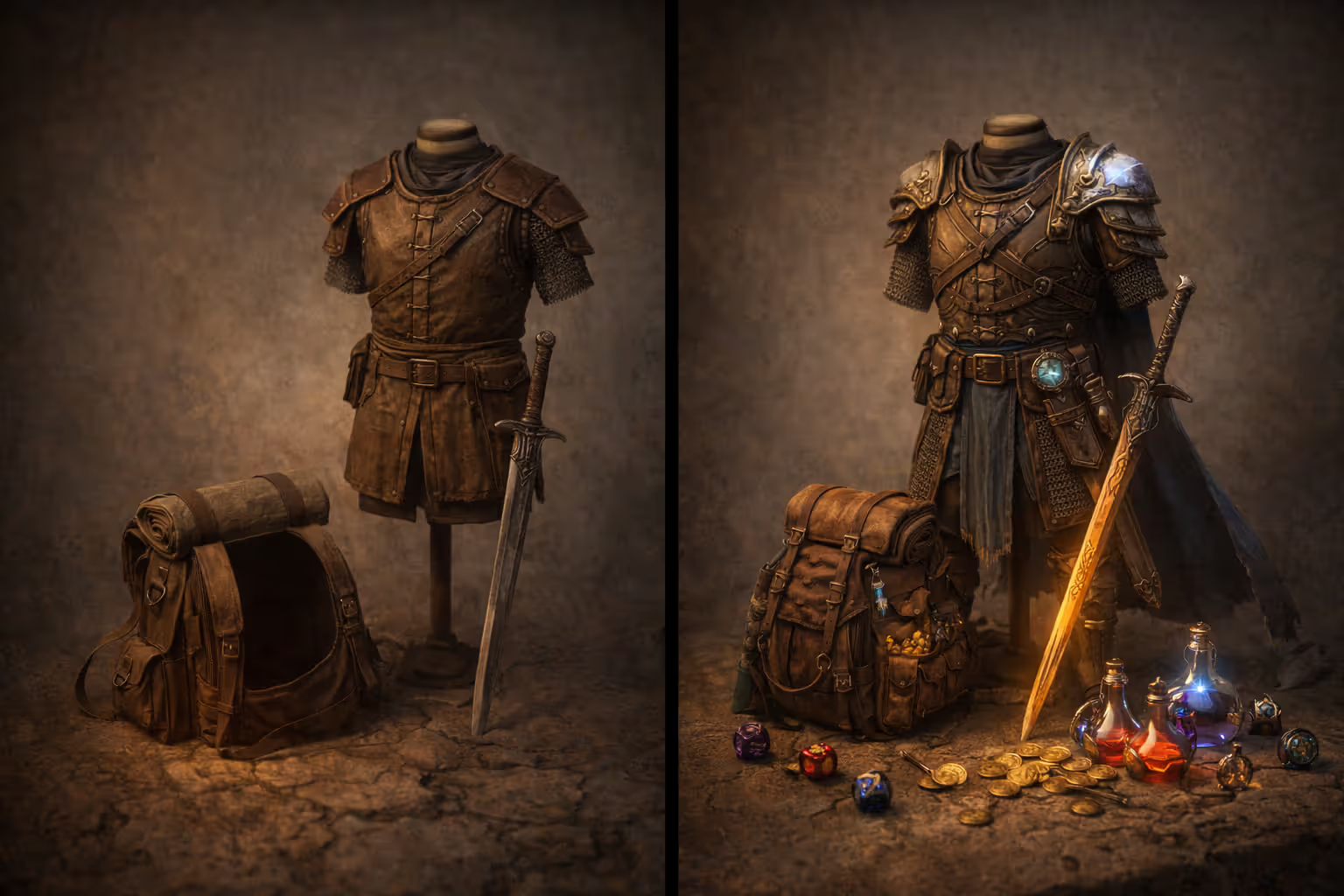
Roguelites introduced persistent progression to broaden appeal. Hades lets players unlock weapon upgrades and character abilities that persist after death. Each failed run provides resources to strengthen future attempts. Eventually, accumulated advantages help players overcome challenges that initially seemed impossible.
Purists argue this dilutes the core philosophy. If you can eventually overpower challenges through grinding rather than skill improvement, the stakes diminish. Losing matters less when you're still progressing toward guaranteed victory.
Pragmatists counter that roguelites have introduced millions to procedural gameplay genre conventions they'd otherwise never experience. Not every player wants to invest 50 hours learning systems before seeing late-game content.
Both perspectives hold merit. The terminology helps players find experiences matching their preferences rather than declaring one approach superior.
Why Permadeath Creates Better Gaming Experiences
Most games teach players they can't truly fail. Death means replaying a section, perhaps with minor penalties. This safety net encourages reckless behavior and reduces decision weight.
Permadeath mechanics invert this relationship. Players approach situations cautiously, weighing risks genuinely, and celebrating victories that felt uncertain. The emotional range expands dramatically.
Psychological research on loss aversion explains part of this appeal. Humans experience loss roughly twice as intensely as equivalent gains. When death means losing hours of progress, the brain engages more deeply with preventing that outcome. Every decision becomes meaningful because consequences are permanent.
This intensity creates flow states more reliably. Players must focus completely, processing information constantly, and adapting strategies in real-time. There's no mental space for distraction when every action matters.
Edmund McMillen, creator of The Binding of Isaac, explained this philosophy in a 2014 interview with PC Gamer:
Permadeath isn't about punishing players—it's about making them care. When you can't save-scum your way through challenges, you actually learn the systems. Every run teaches you something new because you're forced to engage with mechanics you'd otherwise ignore.
— Edmund McMillen
The learning curve steepens, but knowledge retention improves. Players who overcome challenges through understanding rather than repetition develop genuine mastery. That warrior who finally defeated the boss on floor 15 earned that victory through accumulated wisdom from dozens of failed attempts.
Permadeath also eliminates the burden of perfect play. When runs end permanently, you're free to experiment with risky strategies, unusual item combinations, and creative solutions. Failure isn't wasted time—it's research for future attempts.
Author: Tyler Brooks;
Source: quantumcatanimation.com
7 Common Mistakes New Players Make in Roguelike Games
1. Rushing Through Early Floors
New players often sprint through starting areas, assuming early content is trivial. Then a routine enemy encounter ends their run embarrassingly fast. Early floors provide safe spaces to collect resources, identify items, and establish strong foundations. Skipping them means entering difficult areas under-equipped.
2. Hoarding Consumables for "The Right Moment"
That healing potion won't help if you die with it unused. Roguelikes punish excessive caution as harshly as recklessness. Consumables exist to overcome challenges—using them strategically throughout a run beats dying with a full inventory. The "right moment" is whenever using an item prevents death or enables significant progress.
3. Ignoring Enemy Behavior Patterns
Every enemy type follows specific rules. Some always move twice per turn. Others only attack when adjacent. Certain creatures flee at low health while others enrage. Players who treat all threats identically struggle unnecessarily. Spend early runs studying behavior rather than optimizing damage output.
4. Poor Resource Management
Food, ammunition, and durability all deplete. Players who spam powerful abilities early often find themselves helpless later. Effective resource management means using the minimum force necessary for each situation, reserving powerful options for genuine emergencies.
5. Failing to Adapt Strategies
That build guide you memorized assumes specific items appear. Procedural generation guarantees they won't. Strong players adapt to available resources rather than forcing predetermined strategies. The sword-focused character might need to pivot to magic if the game provides spell books instead of weapons.
6. Not Using Information Systems
Most roguelikes provide extensive information—enemy stats, item descriptions, terrain effects. Players who ignore these systems handicap themselves unnecessarily. Reading an enemy's resistances before choosing attack types prevents wasted actions.
7. Treating Every Run as Winnable
Sometimes the game generates unwinnable scenarios. Poor item distribution, unfortunate enemy spawns, or bad luck with procedural generation can doom runs before they start. Recognizing unwinnable situations and restarting quickly is a skill. Don't waste hours on doomed attempts.
Best Roguelike Games by Experience Level
| Experience Level | Game Title | Platform | Hours Per Run | Key Appeal |
| Beginner | Slay the Spire | PC, Switch, Mobile | 45-60 min | Card-based strategy reduces mechanical complexity |
| Beginner | FTL: Faster Than Light | PC, iPad | 60-90 min | Pause-based combat allows careful decision-making |
| Beginner | Into the Breach | PC, Switch | 30-45 min | Puzzle-like combat with perfect information |
| Intermediate | Spelunky 2 | PC, PlayStation, Switch | 20-40 min | Real-time action with fair, learnable systems |
| Intermediate | Hades | PC, Switch, PlayStation | 30-50 min | Roguelite progression eases difficulty curve |
| Intermediate | Dead Cells | PC, Switch, Mobile | 40-70 min | Action-focused with gradual unlock system |
| Advanced | Dungeon Crawl Stone Soup | PC, Browser | 3-6 hours | Deep tactical systems with traditional complexity |
| Advanced | Caves of Qud | PC | 4-8 hours | Extreme depth and emergent storytelling |
| Advanced | Cogmind | PC | 2-4 hours | Sci-fi setting with intricate build possibilities |
Beginners should prioritize games with shorter runs and clearer feedback systems. Losing 30 minutes feels manageable; losing six hours can discourage continued play. Card-based roguelikes like Slay the Spire reduce mechanical execution demands while teaching strategic thinking.
Intermediate players can handle longer runs and more complex systems. These games often blend roguelike elements with other genres—action platformers, twin-stick shooters, tactical strategy. The hybrid approach maintains core permadeath and procedural generation while introducing familiar mechanics.
Advanced roguelikes assume comfort with complexity. These games feature dozens of interacting systems, extensive item pools, and minimal hand-holding. They reward hundreds of hours of investment with nearly infinite depth.
FAQ: Your Roguelike Games Questions Answered
Roguelike games demand more from players than most genres. They expect you to learn from failure, adapt to unpredictable situations, and accept that sometimes you'll lose hours of progress to a single mistake.
This demanding philosophy creates uniquely rewarding experiences. Every victory feels earned. Every run teaches valuable lessons. The genre respects your intelligence enough to let you fail completely.
Start with beginner-friendly entries that match your available time and preferred mechanics. Expect initial frustration—the learning curve exists by design. Focus on understanding systems rather than winning immediately. Knowledge accumulated across failed runs is genuine progression, even without persistent upgrades.
The roguelike community thrives because these games create stories worth sharing. Your improbable victory, creative solution, or devastating defeat all become memorable moments. When every action carries permanent consequences, gaming transforms from passive entertainment into active engagement.
Pick a title from the recommendations above. Accept that your first several runs will end quickly. Pay attention to what kills you. Learn enemy patterns. Experiment with different strategies. Eventually, systems that seemed impossibly complex become intuitive. That's when roguelikes reveal their true appeal—the satisfaction of mastering something genuinely difficult.