

What Are RPG Games and How Do They Work?
RPG Games Guide

Content
You've probably heard friends rave about spending 200 hours in Skyrim or obsessing over character builds in Elden Ring. RPG games dominate sales charts and inspire fanatical communities, but if you're new to gaming, figuring out what actually makes something an "RPG" feels like decoding a foreign language.
Here's the simple version: these games let you inhabit a character whose abilities you customize, making choices that genuinely change how your story unfolds. Unlike shooters where everyone experiences identical campaigns, RPGs adapt to your decisions.
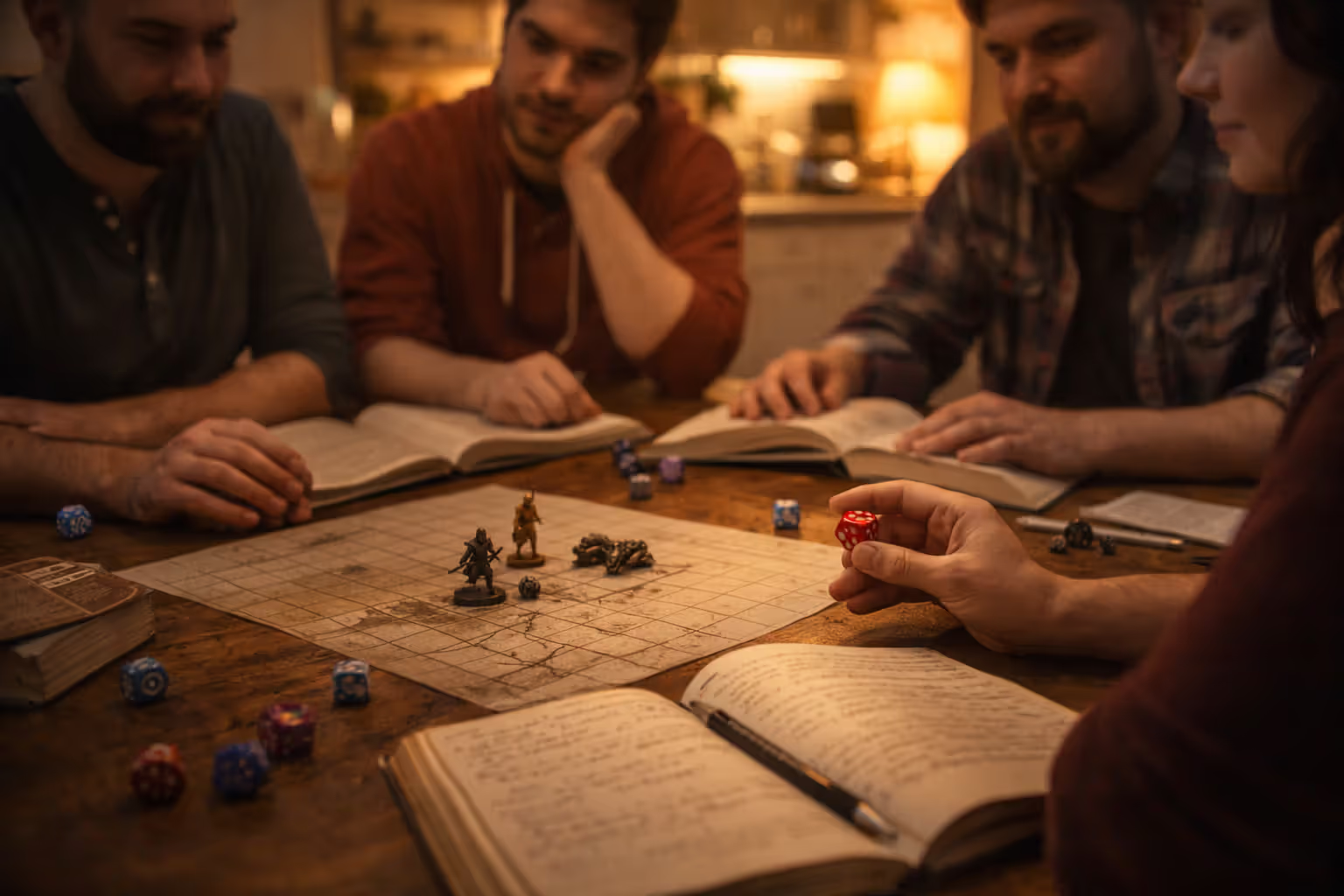
The whole thing started in the 1970s when groups of friends gathered around kitchen tables for Dungeons & Dragons sessions. Someone would narrate a fantasy world, players would describe their characters' actions, and dice rolls determined success or failure. When personal computers arrived, developers like Richard Garriott (Ultima) and Sir-Tech (Wizardry) figured out how to recreate that experience digitally. Japanese studios saw the same games and built their own interpretation—Dragon Quest and Final Fantasy established conventions that still define JRPGs today.
So what actually makes something an RPG instead of just an action game with leveling? Three things separate the genres: your character's stats matter more than your personal reflexes, you make meaningful narrative choices with lasting consequences, and you gradually transform a weak novice into a powerhouse through systematic progression. You're not just playing through a story—you're authoring it through hundreds of small decisions about who your character becomes.
The Core Definition of Role-Playing Games
Think of role playing games explained this way: you're an actor who gets to write their own lines and decide how the story goes. You'll control a character (sometimes a whole party) and make decisions that reshape both their capabilities and the world's response to them.
Author: Brandon Hayes;
Source: quantumcatanimation.com
The "role-playing" part means something specific here. When you meet that suspicious merchant in Act One, will you trust him or report him to guards? Invest your limited skill points in persuasion or intimidation? Romance the knight or the scholar? These aren't cosmetic choices—quality RPGs remember your decisions and weave them into future events.
Real player agency shows up hours after the initial choice. Maybe that merchant you helped shows up during a desperate moment in Act Three with supplies that save your party. Perhaps the faction you supported controls which cities welcome you and which send assassins. The ripple effects make your playthrough uniquely yours.
As legendary designer Chris Avellone once noted:
The best RPGs are about letting players express themselves through their character, not forcing them down a single path. When a player can look at their character and say 'this is mine, this is how I chose to play,' that's when the genre succeeds.
— Chris Avellone
Mechanical expression matters just as much as narrative choices. Your friend might finish the same game as a heavily-armored juggernaut who solved problems by smashing them. You could complete it as a silver-tongued negotiator who avoided 80% of combat encounters through dialogue. Both approaches work because RPGs accommodate wildly different playstyles within their systems.
The genre split into distinct traditions over time. Western developers (creating what we call CRPGs) emphasized open-ended exploration, morally gray choices, and complex dialogue trees. Japanese studios built more linear experiences with predetermined protagonists, turn-based battles, and carefully paced stories. Modern games increasingly blend both philosophies—you'll find Western RPGs with tighter narratives and JRPGs offering meaningful choices.
Essential Mechanics That Define RPG Gameplay
Understanding RPG mechanics means learning the language these games speak. These systems aren't decoration—they're how you communicate with the game world and see your decisions take tangible form.
Character Stats and Attributes
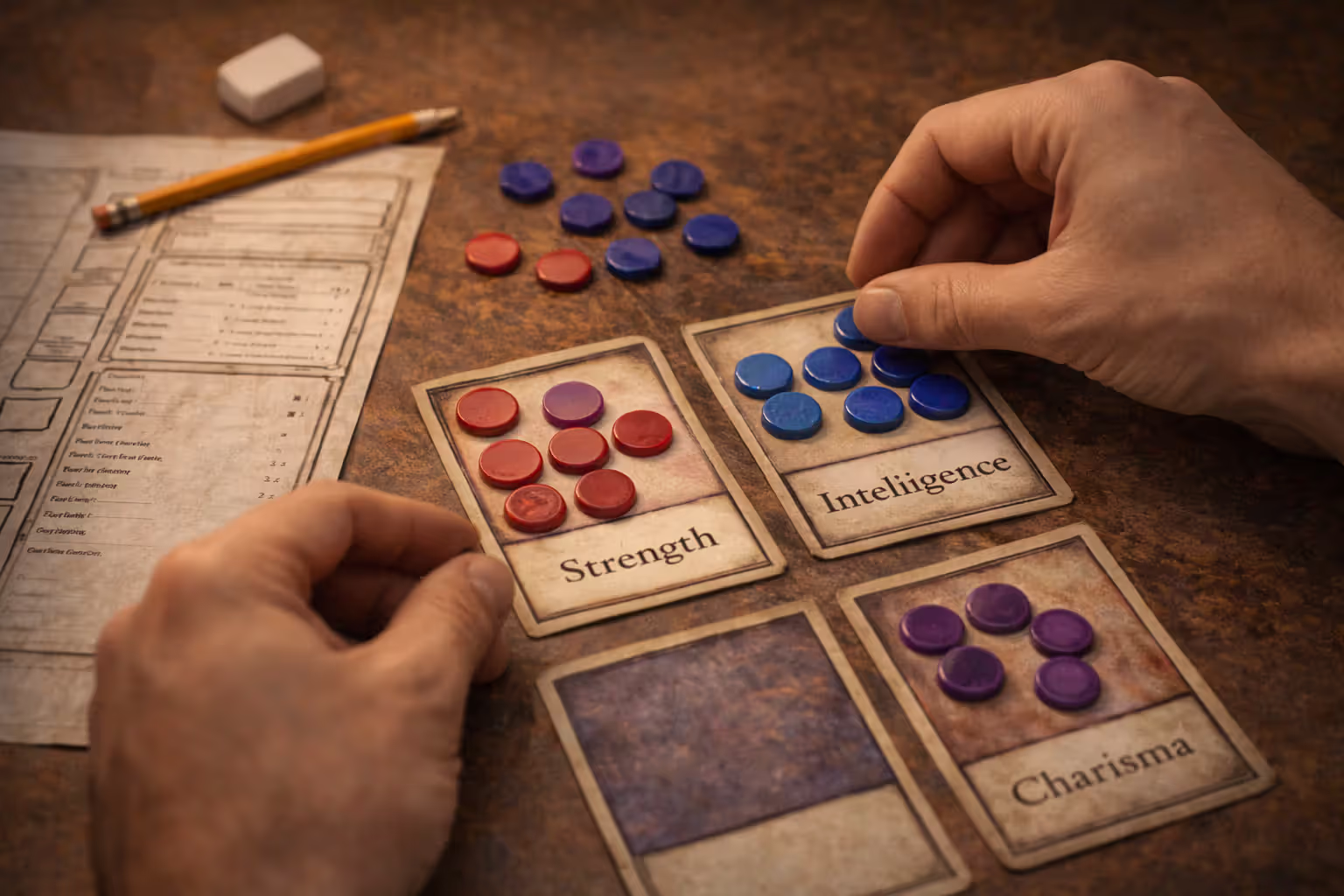
Numbers define your character's capabilities in ways immediately visible during play. Pump points into Strength, and suddenly you're dealing 50% more melee damage while carrying twice the equipment. Invest in Intelligence instead, and your spells hit harder while conversations with scholarly NPCs unlock special dialogue options they'd never offer a dumb brute.
These attributes create genuine trade-offs rather than letting you excel at everything. Maximizing Charisma turns social encounters into walkovers but leaves you fragile when negotiations fail and swords come out. Stacking Constitution makes you nearly unkillable but your damage output disappoints. The restrictions force you to specialize, building a distinct character identity rather than a generic hero who dominates every situation.
Most games layer derived statistics on top of base attributes. Your Strength might show as 15 on the character sheet, but your actual damage calculation includes weapon quality, enchantments on your armor, temporary buffs from consumables, and debuffs from poison effects. This creates depth without complexity—beginners understand "more Strength equals harder hits" while veterans optimize every possible modifier.
Different games handle stat allocation through various methods. Point-buy systems give you a pool during character creation to distribute however you want. Class-based frameworks automatically assign stats when you pick "Mage" or "Rogue." Both work fine as long as those numbers actually affect gameplay instead of just incrementing pointlessly.
Combat Systems: Turn-Based vs. Real-Time
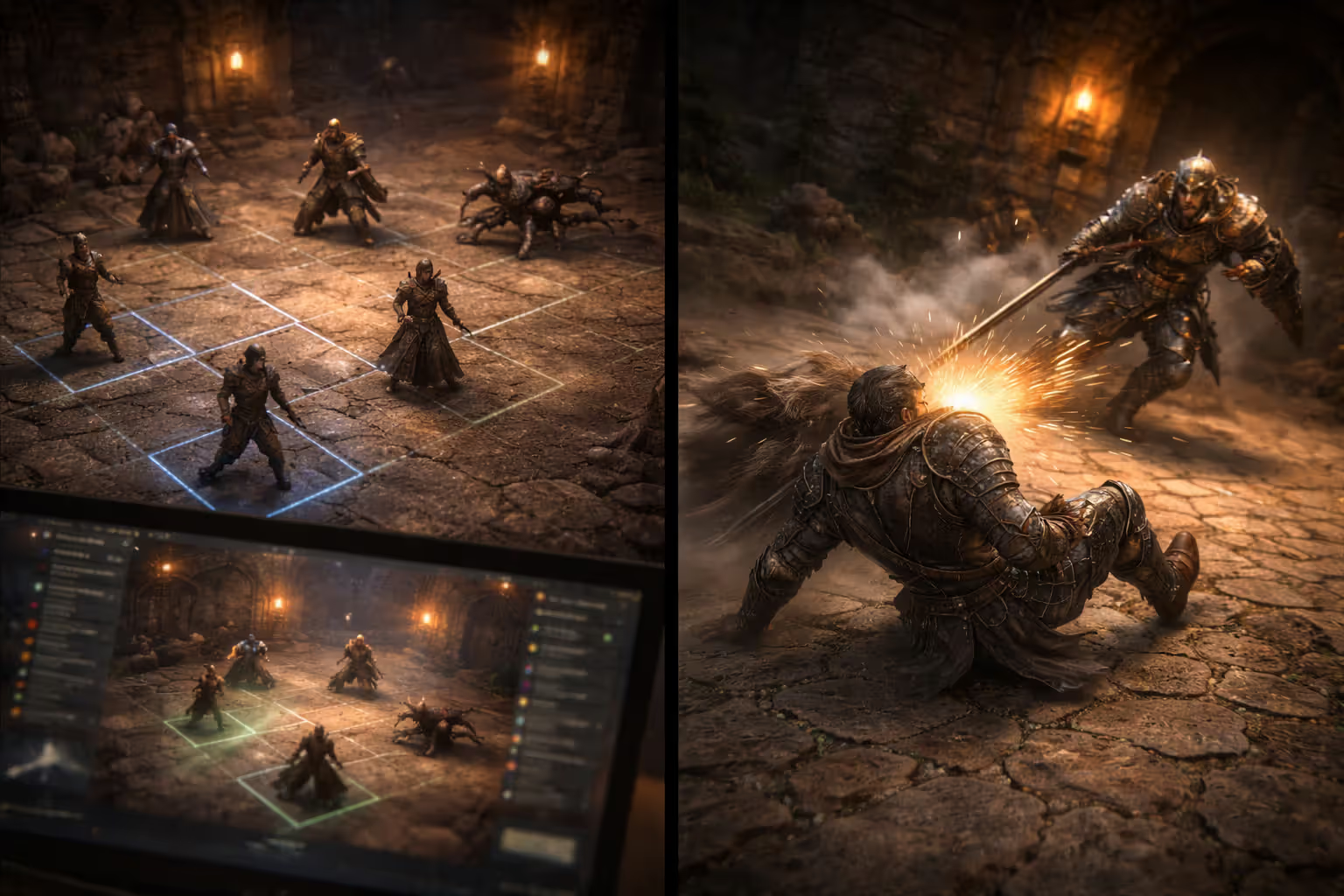
Combat showcases RPG mechanics most visibly, and the genre splits into two competing philosophies.
Author: Brandon Hayes;
Source: quantumcatanimation.com
When combat runs in turns, time freezes while you decide your next move. Baldur's Gate 3 and Persona 5 use this approach to create tactical puzzles where smart planning beats quick fingers. You can spend five minutes analyzing enemy resistances, positioning party members for combo attacks, and setting up devastating synergies. Nobody rushes you—think as long as you need.
Real-time systems never pause the action. The Witcher 3 and Mass Effect keep battles flowing continuously, forcing split-second decisions while you dodge incoming attacks and unleash abilities. Success requires recognizing enemy patterns and reacting faster than they do. Many real-time RPGs include tactical pause features that freeze the action for issuing commands, creating a middle ground between both extremes.
Neither approach wins objectively. Turn-based combat suits players who enjoy deliberate strategy and hate dying because their reflexes aren't fast enough. Real-time systems appeal to those who find turn-based pacing boring or disconnected from the intensity of combat. Hybrid approaches like Final Fantasy 7 Remake's system try satisfying both camps by letting you issue commands in real-time but requiring resource buildup before executing powerful moves.
Dialogue Trees and Player Choice
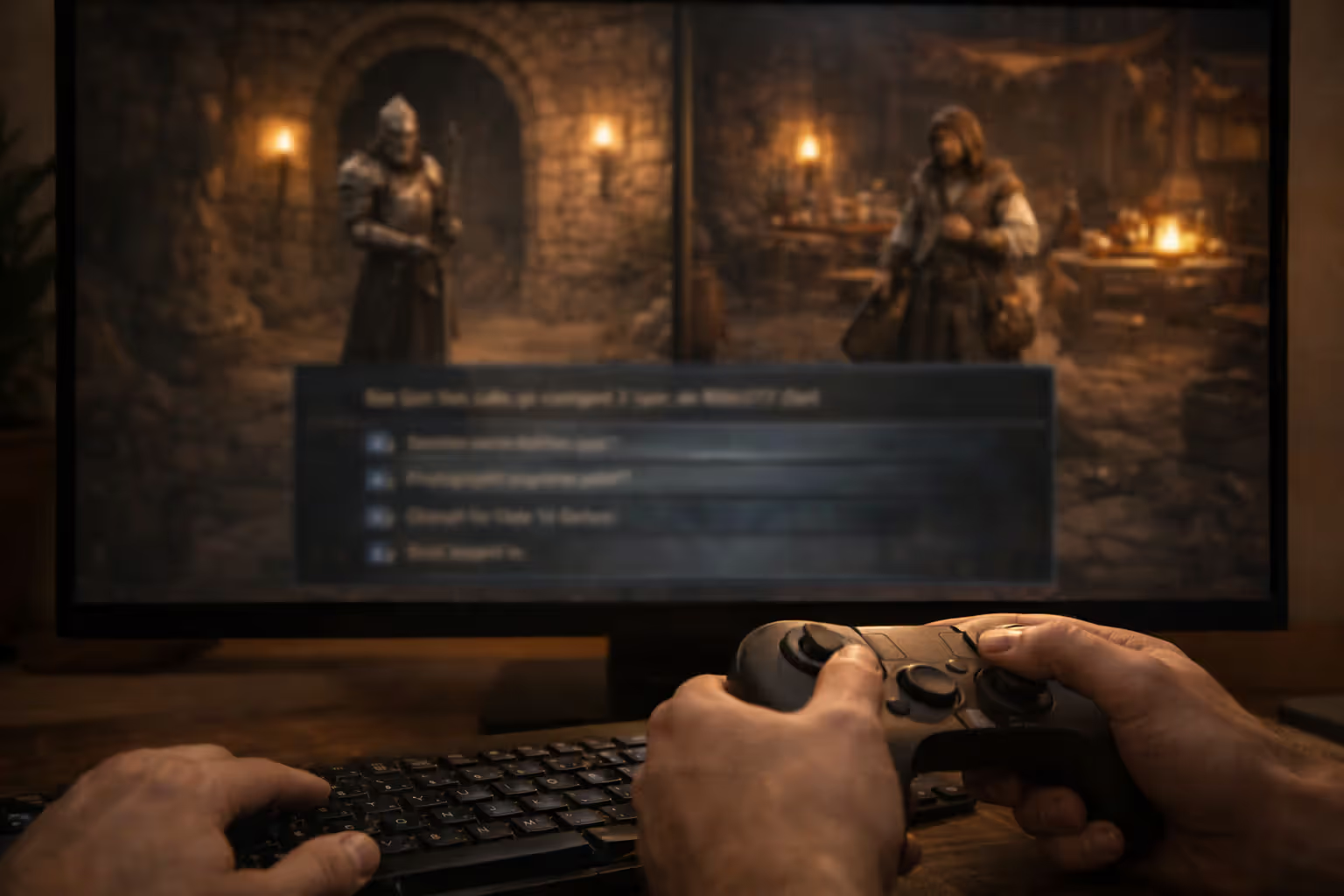
Conversations become gameplay through branching dialogue systems. When you talk to NPCs, you'll pick from multiple responses that steer the conversation in different directions. Choose the diplomatic option and you might negotiate a peaceful solution. Pick the aggressive response to intimidate information from a reluctant witness. Lie convincingly (if your Deception skill passes the check) to access paths honest characters never see.
Good RPGs track everything you say. Promise to help someone then ghost them? They'll remember and treat you like the flake you are when you meet again. Repeatedly side with one faction, and opposing groups notice—they'll charge higher prices, refuse quests, or ambush you on sight.
Skill checks integrate your character build into conversations. That Persuasion skill you invested in determines whether the guard lets you pass without a bribe. High Intelligence reveals technical dialogue options that skip entire quest sections. Low Wisdom might lock you out of noticing obvious lies that other characters spot immediately. Your mechanical choices shape social interactions just like they affect combat effectiveness.
Author: Brandon Hayes;
Source: quantumcatanimation.com
How Character Progression Systems Work in RPGs
Character growth provides the structural foundation everything else builds on. You start weak and gradually become powerful through systems designed to reward time investment and intelligent choices.
Experience Points and Leveling
Experience points quantify your progress numerically. Kill enemies, complete quests, discover hidden locations, or successfully use skills—all award XP. Accumulate enough and you level up, gaining increased stats, new abilities, or points to spend on improvements.
This creates an addictive feedback loop that's fueled countless all-night gaming sessions. Early levels arrive quickly—you might hit level 3 within the first hour. Later levels demand exponentially more XP, slowing progression as you approach the level cap. The curve ensures you're constantly advancing without trivializing content. A level 5 character dramatically outpowers their level 1 self, but climbing from 45 to 50 represents weeks of grinding for marginal improvements.
Different games reward XP through competing philosophies. Combat-focused titles give most experience for killing monsters, encouraging aggressive play. Story-driven RPGs award massive XP chunks for quest completion regardless of your approach, supporting pacifist playthroughs. Some modern games use milestone leveling that grants levels at predetermined story beats, ensuring consistent pacing regardless of whether you fight every enemy or sneak past them.
The leveling moment itself varies wildly. Some games immediately apply bonuses automatically—you level up, your stats increase, done. Others pause and let you manually allocate points in build-defining decisions. A few use hybrid systems where base stats increase automatically but you choose which new abilities to unlock from available options.
Skill Trees vs. Class-Based Advancement
RPGs handle specialization through two competing frameworks that fundamentally shape how you develop your character.
Class-based systems lock you into a predefined role during character creation. Pick Warrior, and you're following a predetermined path of increasingly powerful melee attacks and defensive abilities. Choose Mage, and you'll unlock new spell schools as you level. This structure provides clear direction for newcomers and ensures balanced party composition in multiplayer contexts.
The downside? Inflexibility. Once you've committed to Rogue, you can't suddenly decide you want healing magic or heavy armor proficiency. You're locked in. Some games implement prestige classes or multiclassing that blend abilities from multiple sources, but the foundation remains rigid.
Skill tree systems offer open-ended freedom. Instead of picking a class, you spend points across various skill trees representing different capabilities. Want to combine archery, fire magic, and lockpicking? Go for it. This freedom lets you create weird hybrid builds perfectly tailored to your exact preferences.
The catch is analysis paralysis and trap options. Without class guardrails, newcomers often create terrible characters by spreading points too thin or investing in abilities that don't synergize. Respeccing (resetting your spent points) becomes essential, but some games make it prohibitively expensive or completely impossible, punishing experimentation.
Modern RPGs increasingly blend both philosophies. You might pick a starting class providing a solid foundation, then customize through skill trees that let you dip into other specialties. This guided flexibility helps newcomers while satisfying veterans who want optimization freedom.
Major RPG Subgenres and What Sets Them Apart
The RPG label covers dramatically different experiences. Understanding these subgenres helps you find games matching your actual preferences instead of bouncing off acclaimed titles that don't suit your tastes.
| Subgenre | Definition | Combat Style | Progression Type | Popular Examples | Best For |
| Action RPG (ARPG) | Fast-paced combat blended with RPG character building | Reflex-based with combos and dodging, similar to action games | Loot-focused with randomized gear stats | Diablo IV, Path of Exile, Elden Ring | Players wanting immediate action who still enjoy optimizing builds |
| Japanese RPG (JRPG) | Narrative-driven adventures with linear stories and anime aesthetics | Turn-based or ATB systems emphasizing party synergy | Level-based with mostly predetermined character arcs | Final Fantasy XVI, Persona 5, Dragon Quest XI | Story enthusiasts who don't mind limited freedom |
| Computer RPG (CRPG) | Complex, often isometric games with elaborate systems | Tactical with pausable real-time or pure turn-based | Class and skill-based with massive customization | Baldur's Gate 3, Divinity: Original Sin 2, Pillars of Eternity | Hardcore players craving complexity and choice consequences |
| Massively Multiplayer Online RPG (MMORPG) | Persistent online worlds shared with thousands simultaneously | Varies widely; often hotbar-based ability rotations | Endgame-focused with repeatable content loops | World of Warcraft, Final Fantasy XIV, Guild Wars 2 | Social players wanting ongoing content and communities |
| Tactical RPG (TRPG) | Grid-based strategy battles with permadeath risks | Turn-based on tactical maps where positioning determines outcomes | Character and equipment development between story missions | Fire Emblem, XCOM 2, Triangle Strategy | Strategy enthusiasts who don't mind methodical pacing |
Action RPGs prioritize moment-to-moment gameplay over narrative complexity. You'll spend most time slaughtering enemies for better loot rather than navigating branching dialogue trees. The appeal lies in perfecting your build and mastering combat mechanics that reward skillful play.
JRPGs deliver curated experiences with memorable characters and epic narratives spanning 60+ hours. Expect less freedom in how events unfold but more polish in presentation, music composition, and character arcs. The structure suits players who view games as interactive stories rather than sandboxes.
CRPGs demand patience and lots of reading. These feature novel-length dialogue, complex quest chains with multiple solutions, and systems requiring hours to fully understand. The payoff? Unmatched depth where your choices genuinely reshape major story beats and the world responds to your actions in ways other subgenres can't replicate.
MMORPGs transform RPGs into social experiences where reaching max level is just the beginning. Endgame content like raids and PvP becomes the actual game. You'll join guilds, coordinate with dozens of players in real-time, and chase gear upgrades in never-ending cycles. The social bonds formed often outlast the game itself.
Tactical RPGs merge strategy games with character progression. Combat encounters become puzzles where positioning, terrain advantages, and ability synergies determine victory or total party wipes. One misplaced character can cascade into disaster, making these simultaneously rewarding and occasionally rage-inducing.
Author: Brandon Hayes;
Source: quantumcatanimation.com
Common Mistakes New RPG Players Make
Learning RPG systems takes time, but avoiding these rookie mistakes accelerates your journey from confused newbie to confident veteran.
Over-specializing too early ruins flexibility. Newcomers often dump every point into a single stat, creating one-dimensional characters who dominate one situation but collapse in others. A character with maxed Strength but 10 HP dies to the first enemy spell. Pure mages run out of mana and become useless dead weight. Maintain balance until you understand the game's difficulty curve and enemy variety. Generalists outperform specialists in early game—specialization comes later once you've identified viable builds through experience.
Ignoring side content wastes massive amounts of content. The main story represents maybe 40% of a quality RPG's total content. Side quests provide essential XP, unique gear unavailable elsewhere, and world-building that transforms settings from backdrops into living places. That optional dungeon you skipped? It contained the best weapon for your build. The random NPC you walked past? Their quest chain unlocks a powerful companion. Treat exploration as mandatory.
Hoarding consumables forever is pointless. Players finish games with 200 unused health potions because they "might need them later." Spoiler: later never comes. Use consumables liberally, especially in games that shower you with them constantly. That boss fight you've died to five times becomes trivial with proper buff stacking. Consumables exist to be consumed, not admired in your inventory.
Poor resource management creates constant frustration. Running back to town every ten minutes wastes hours over a full playthrough. Selling valuable crafting materials for pocket change creates regret when you need them later. Spending all your gold on weapons you'll replace two hours later feels terrible. Learn which resources matter in each specific game. Some make gold scarce and meaningful; others throw currency at you constantly.
Not reading ability descriptions breeds weak builds. "This skill sounds cool" isn't sufficient analysis. Does it scale with your primary stat or something you ignored? Does it synergize with your other abilities or work at cross purposes? What's the cooldown? Many underwhelming builds stem from choosing abilities based on flashy names rather than mechanical function. Spend five minutes reading tooltips to save hours of frustration.
Neglecting defensive stats leads to constant deaths. New players stack damage multipliers while ignoring armor, resistances, and health pools. Then they die repeatedly to basic enemies and blame the game for artificial difficulty. Most RPGs expect balanced offense and defense. Even glass cannon builds need sufficient survivability to function. A character dealing 20% more damage who dies twice as often has negative net value to the party.
Ignoring party composition cripples effectiveness. In party-based RPGs, bringing four damage dealers creates a fragile, inefficient team that struggles with basic encounters. You need tanks absorbing hits, healers sustaining the party, and crowd control managing dangerous enemies. Balanced parties clear content faster and safer than min-maxed damage squads. Cover your weaknesses instead of stacking strengths.
Frequently Asked Questions About RPG Games
RPG games deliver something increasingly rare in modern entertainment: worlds genuinely responding to your choices and characters developing according to your vision rather than predetermined scripts. Whether tactical complexity of CRPGs appeals to you, narrative focus of JRPGs draws you in, action-packed gameplay of ARPGs excites you, or social experiences of MMORPGs sound perfect, the genre provides countless hours of engagement.
Start with whichever subgenre matches your preferences. Love strategy? Try tactical RPGs or turn-based CRPGs. Want immediate action? Explore action RPGs. Prioritize story above everything? JRPGs deliver carefully crafted narratives with memorable characters. Want ongoing content with friends? MMORPGs provide endless progression in social contexts.
Don't pressure yourself to optimize perfectly on your first playthrough. Part of the RPG experience involves learning systems, making mistakes, and discovering what works through experimentation. Your "bad" build teaches more than following optimization guides ever could. Subsequent playthroughs let you apply that hard-won knowledge creating focused, powerful characters.
The genre's depth intimidates newcomers, but every veteran started exactly where you are now—confused by stats, overwhelmed by choices, uncertain which path to take. That confusion transforms into mastery through play. Give yourself permission to learn gradually, ask questions in community forums, and most importantly, make choices sounding fun rather than optimal. RPGs reward curiosity and experimentation more than they punish imperfect decisions.
Your character awaits creation. What role will you play?