
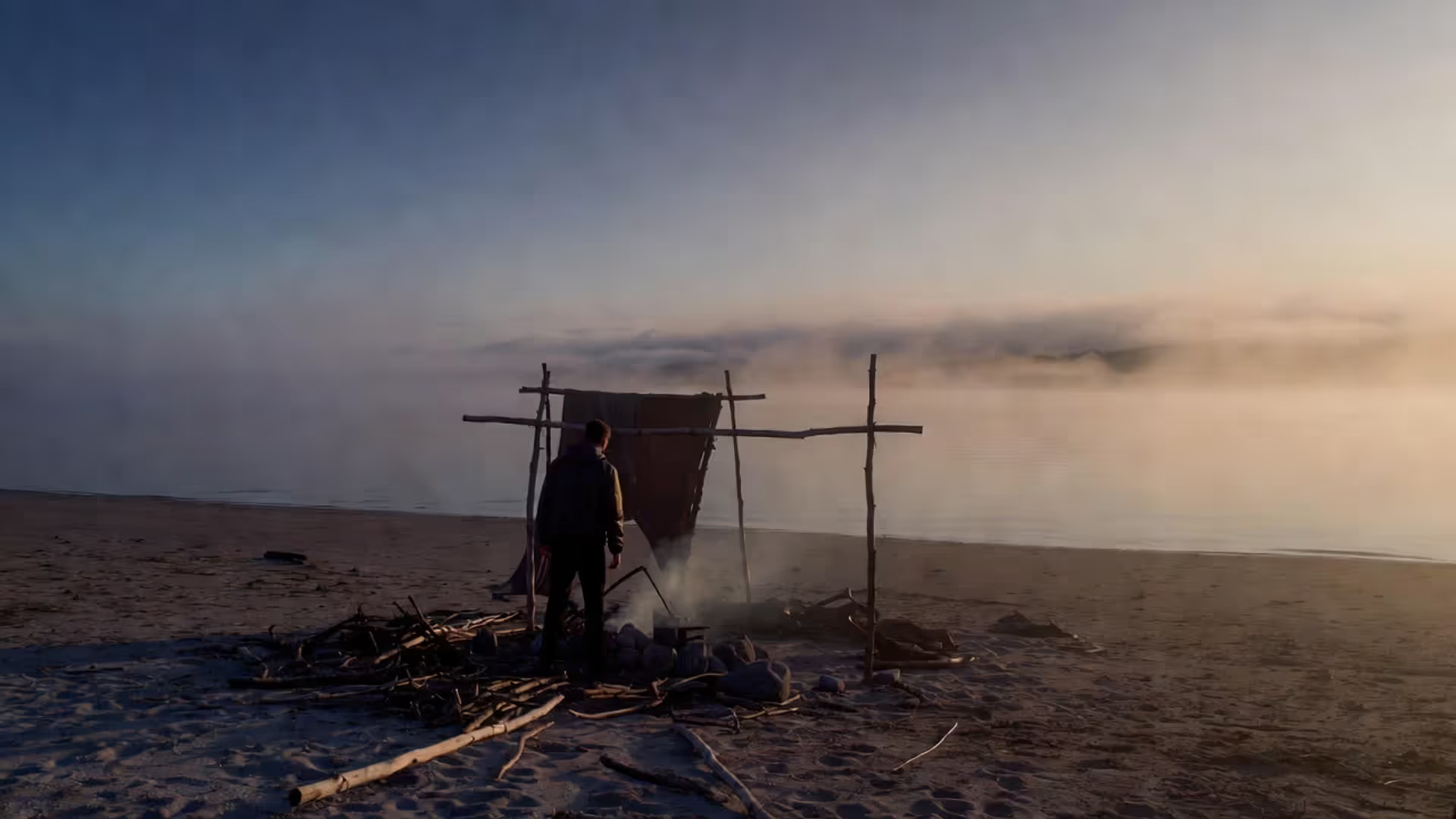
Survival begins with nothing but your hands.
What Are Survival Games?

Content
Survival games strip away the safety nets most video games provide. No quest markers guiding you to the next objective. No guaranteed respawn after death. No invisible walls protecting you from poor decisions. Instead, you wake up on a beach, in a forest, or on an alien planet with nothing but your wits and whatever you can scavenge from the environment.
The genre demands constant attention to interconnected systems that mirror real survival priorities: finding food before you starve, building shelter before nightfall, securing water sources, and defending yourself against threats both environmental and hostile. Unlike action games where combat is the primary challenge or RPGs where story progression drives engagement, survival games create tension through resource scarcity and the perpetual threat of losing everything you've built.
This fundamental shift in design philosophy attracts players who enjoy emergent gameplay—situations that arise organically from interacting systems rather than scripted events. A single mistake in judgment, like exploring too far from your base without proper supplies, can cascade into a desperate scramble for survival that becomes more memorable than any cutscene.
Core Mechanics That Define the Survival Genre
Resource Gathering and Inventory Management
Every survival game begins with punching trees, hitting rocks with improvised tools, or collecting sticks from the ground. This isn't busywork—it's the foundation of the survival gameplay loop. Raw materials transform into tools, which unlock access to better resources, which enable more sophisticated equipment.
Inventory management becomes a strategic puzzle. That extra stack of wood might seem useless now, but you'll need it for fuel when temperatures drop. Carrying too much slows movement or fills precious slots that could hold emergency medical supplies. Weight limits force prioritization: do you haul back building materials or keep space available for rare components you might discover?
The best survival mechanics gaming systems make gathering feel purposeful rather than tedious. Rust requires you to consider radiation levels when looting certain areas. Subnautica turns resource collection into exploration incentive by hiding valuable materials in dangerous biomes. The Forest makes you weigh the noise of chopping trees against attracting hostile attention.
The magic of survival games lies in their ability to make mundane actions feel consequential. Picking up a stone isn't just collecting an item—it's the first step in a chain of decisions that determines whether you'll thrive or barely scrape by.
— Jake Solomon, Game Designer
Health, Hunger, and Environmental Threats
Status bars representing hunger, thirst, temperature, and stamina transform gameplay from simple combat encounters into multifaceted challenges. You can't just fight enemies until your health depletes; you must maintain multiple overlapping systems simultaneously.
Hunger mechanics vary widely in implementation. Some games like Don't Starve make food scarcity the central challenge, with starvation threatening within minutes of gameplay. Others like Minecraft use hunger as a gradual pressure that affects health regeneration. The survival gameplay loop revolves around balancing time between gathering food and pursuing other objectives.
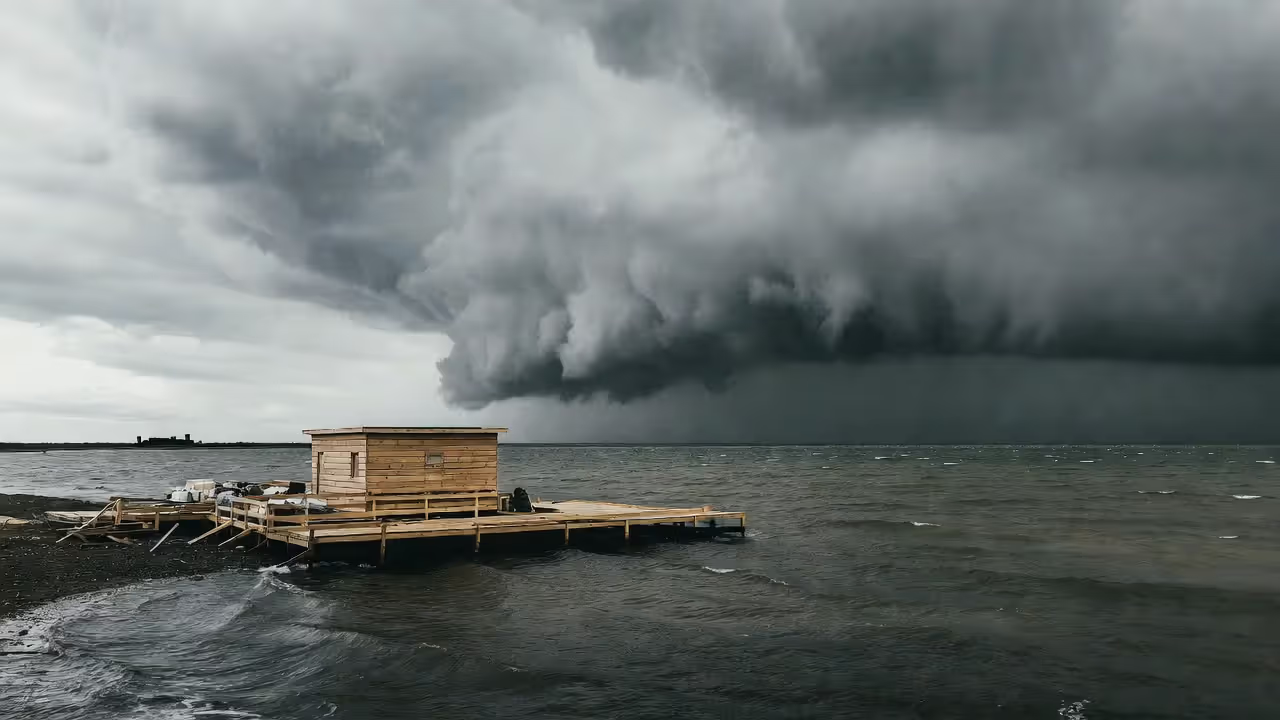
Environmental threats add another layer. Hypothermia kills you in The Long Dark if you don't manage clothing insulation and find shelter during blizzards. Radiation zones in STALKER require protective gear and careful navigation. Dehydration in desert-themed survival games forces you to plan routes around water sources or carry heavy supplies.
These systems work together to create constant low-level anxiety. You're never fully safe, never completely prepared. Even when you've secured food for today, you're already thinking about tomorrow's needs.
Permadeath and Consequence Systems
When death means losing hours of progress, every decision carries weight. Permadeath systems vary in severity, but all aim to make players care deeply about staying alive.
Hardcore permadeath erases your character entirely. One mistake and you start from scratch, though the world you built may persist. Softer implementations let you respawn but drop your inventory at your death location—creating a tense retrieval mission where you must return to claim your items before they disappear or other players loot them.
Some games like Valheim implement a middle ground: you drop items on death and suffer temporary stat penalties, but you keep character progression and skills. This preserves the sting of failure without destroying dozens of hours of advancement.
The threat of loss transforms mundane activities into nail-biting experiences. Crossing a dangerous area with valuable loot becomes a calculated risk. Building defenses shifts from optional to essential. You develop cautious habits—always carrying backup supplies, building multiple stashes, never venturing far without planning an escape route.
How the Crafting System Drives Player Progression
Author: Megan Lewis;
Source: quantumcatanimation.com
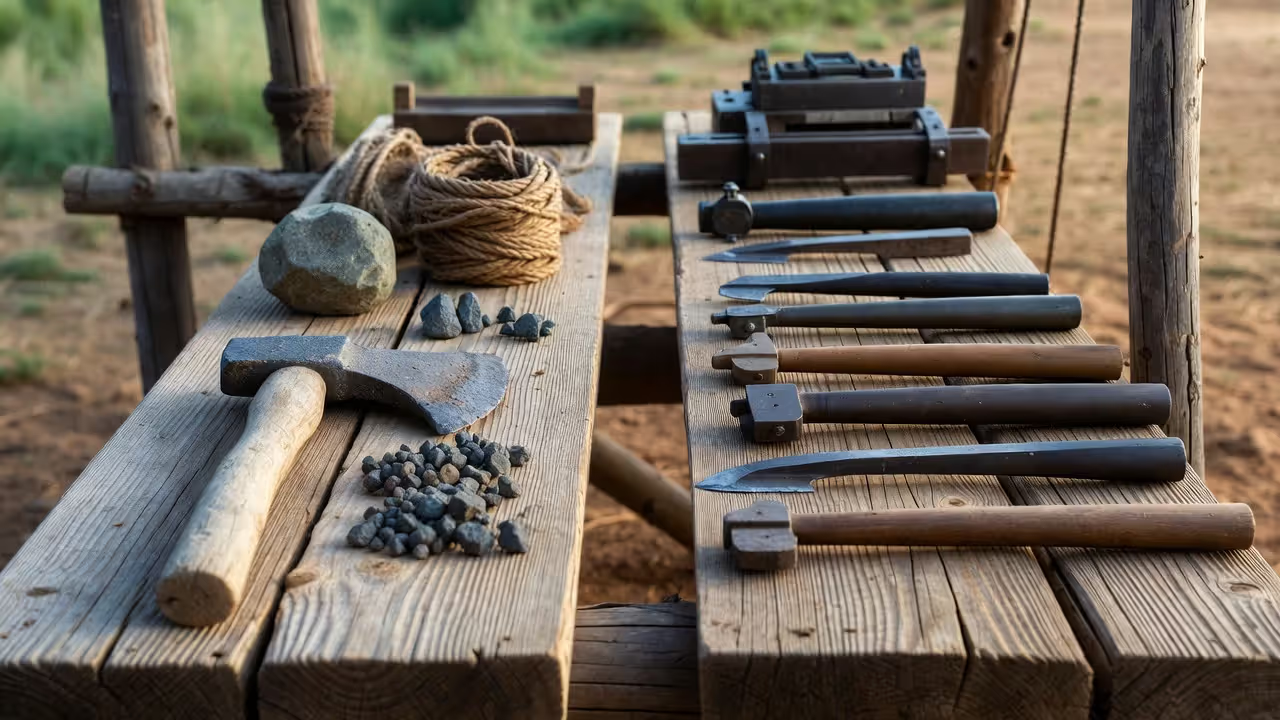
Crafting survival games live or die by how satisfying their crafting systems feel. Unlike RPGs where you find better equipment or action games where you unlock abilities, survival games gate progression behind your knowledge of recipes and access to materials.
Most games organize crafting into tiered progression trees. You start with primitive tools—stone axes, wooden spears, basic campfires. These enable gathering better resources, which unlock intermediate crafting stations like forges or workbenches. Advanced tiers require rare materials from dangerous locations, pushing you into increasingly risky exploration.
Blueprint discovery varies by game. Some hand you recipes automatically as you level up or find specific items. Others require experimentation—combining ingredients to discover new formulas. Ark: Survival Evolved uses engram points earned through leveling, forcing choices about which recipes to unlock first. Conan Exiles hides advanced recipes behind thrall captures, requiring you to enslave NPCs with specialized knowledge.
The survival gameplay loop revolves around this progression: gather resources, craft better tools, access new areas, find rare materials, craft even better equipment. Each tier feels like a meaningful achievement because you've worked for every component.
Crafting depth separates mediocre survival games from exceptional ones. Shallow systems with linear progression get boring quickly. Deep systems with multiple viable paths, situational tools, and meaningful choices keep players engaged for hundreds of hours.
Consider how Satisfactory expands beyond personal crafting into factory automation, or how Grounded scales recipes from backyard improvisation to insect-based technology. The best crafting systems teach you gradually, introducing complexity in digestible chunks while maintaining clear goals.
Time investment matters too. Crafting should feel rewarding without becoming a second job. Instant crafting removes satisfaction; hour-long crafting timers create frustration. The sweet spot varies by game pace, but most successful titles land between five seconds for basic items and several minutes for major constructions.
PvE vs. PvP: Which Survival Experience Fits Your Playstyle?
Survival games split into two distinct experiences based on whether other players are threats or allies. This choice dramatically affects gameplay feel, required time investment, and stress levels.
| Aspect | PvE Survival | PvP Survival |
| Primary Threat | Environment, NPCs, resource scarcity | Other players, plus environmental threats |
| Learning Curve | Moderate; learn at your own pace | Steep; experienced players dominate newcomers |
| Time Investment | Flexible; pause-friendly (single-player) or casual sessions | High; offline raids mean losses while you're away |
| Stress Level | Medium; tension from exploration and resource management | High; constant threat of losing everything to raids |
| Social Requirements | Optional; fully playable solo | Almost essential; solo players face severe disadvantages |
| Base Building | Creative expression, defensive against NPCs | Fortress design, hidden locations, active defense |
| Example Titles | The Long Dark, Subnautica, Valheim (PvE servers) | Rust, Ark (PvP servers), DayZ |
PvE survival games let you focus on mastering survival mechanics gaming without worrying about human opponents destroying your progress while you're offline. You set the pace. Want to spend an evening just building? Go ahead. Feel like exploring that dangerous cave system? You can prepare thoroughly without someone ambushing you mid-expedition.
The trade-off is reduced unpredictability. AI enemies follow patterns you can learn and exploit. Once you've mastered the systems, PvE games can feel solved. The challenge comes from self-imposed goals and exploration rather than external threats.
PvP survival games create stories you'll retell for years. That time you barely escaped a raid with your best loot. The alliance that betrayed you. The revenge raid you spent days planning. Human opponents think creatively, form alliances, and generate emergent drama no AI can match.
But PvP demands commitment. Many games allow offline raiding, meaning your base can be destroyed while you sleep. You need either a large group with rotating schedules or acceptance that you'll occasionally log in to ruins. New players face brutal learning curves as veterans with superior gear and game knowledge dominate.
Some games offer PvE-Conflict or PvP-optional servers that split the difference. Conan Exiles has raid windows limiting when bases can be damaged. Valheim defaults to cooperative PvE but allows consensual PvP. These compromises let you experience both styles without full commitment to either.
Your choice depends on what you find fun. Do you want a challenging but ultimately controllable experience where you're fighting game systems? Pick PvE. Do you crave unpredictable drama and don't mind occasionally losing everything? Choose PvP.
Author: Megan Lewis;
Source: quantumcatanimation.com
7 Survival Games That Master Different Aspects of the Genre
Subnautica — Exploration and Environmental Storytelling
Underwater survival that trades combat focus for exploration and base-building. The crafting system supports gradual depth progression as you build submarines and equipment to reach deeper, more dangerous biomes. Thalassophobia becomes gameplay as the dark ocean depths hide both resources and threats. Story integration feels natural rather than tacked-on.
The Long Dark — Realistic Survival Simulation
Strips away zombies and monsters to focus on surviving Canadian wilderness after a geomagnetic disaster. Temperature management, calorie counting, and gear degradation create authentic survival pressure. Permadeath means mistakes are costly. The quiet tension of deciding whether to risk a blizzard for supplies beats any jump scare.
Valheim — Cooperative Building and Boss Progression
Norse mythology meets survival mechanics with a clear progression path through biomes and boss fights. The building system enables impressive constructions while maintaining survival challenge. Works brilliantly solo but shines in cooperative groups. Difficulty scaling keeps early game manageable while late game provides serious challenges.
Rust — Hardcore PvP and Social Dynamics
The quintessential PvP survival experience. Brutal, unforgiving, and socially complex. You'll be killed repeatedly as a new player. You'll form alliances that might betray you. You'll spend hours building a base that could be raided overnight. When it clicks, the emergent player-driven stories are unmatched. When it doesn't, it's miserably frustrating.
Project Zomboid — Deep Simulation and Long-Term Survival
Isometric zombie survival with absurd mechanical depth. Nutrition affects health differently based on what you eat. Injuries require proper treatment or they worsen. Skills improve through practice. You're not trying to "beat" the game—you're seeing how long you can survive before inevitable death. Supports both single-player and cooperative multiplayer.
Green Hell — Psychological Survival and Sanity Mechanics
Amazonian rainforest survival that adds mental health to physical needs. Isolation, injury, and diet affect your character's sanity, causing hallucinations that blur reality. The survival mechanics gaming implementation is unforgiving—infections from untreated wounds, parasites from contaminated food, and dangerous wildlife require constant vigilance.
Grounded — Accessibility Meets Depth
Honey-I-Shrunk-the-Kids meets survival in your backyard. More approachable than hardcore titles while maintaining meaningful crafting survival games progression. The scale shift makes familiar environments feel alien and dangerous. Excellent for players new to the genre who find games like Rust too punishing.

Author: Megan Lewis;
Source: quantumcatanimation.com
Common Mistakes New Players Make in Survival Games
Building Your First Base in the First Location You Find
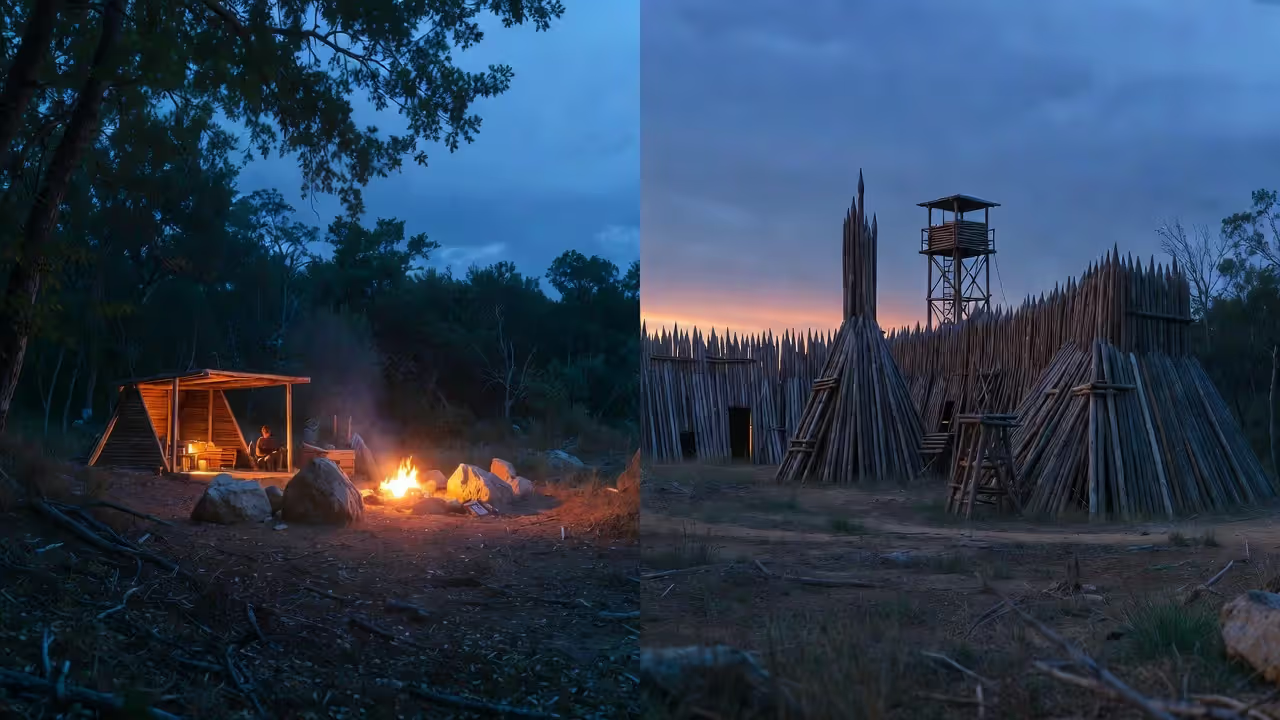
That beach spawn point seems convenient until you realize it's far from important resources, exposed to raids, or in a high-traffic area where other players will constantly harass you. Spend your first session exploring. Look for locations near multiple resource types, defensible terrain, and fresh water. In PvP games, hidden bases survive longer than impressive ones in obvious locations.
Hoarding Everything "Just in Case"
Your storage is full of items you've never used and probably never will. Meanwhile, you're making extra trips because you can't carry the resources you actually need. Learn what's valuable in your specific game. Most survival games have a few resources that seem common early but become bottlenecks later—identify and stockpile these. Everything else can be gathered as needed.
Ignoring Food Sustainability
Gathering berries and hunting animals works initially, but you'll spend all your time searching for food as nearby sources deplete. Establish renewable food sources early—farms in most games, fishing spots in others, or animal pens in games with taming. The upfront investment pays off when you can focus on exploration and building instead of constant hunting.
Overextending Before Establishing a Secure Base
Exploration is tempting, but venturing far without a secure respawn point and supply cache is asking for trouble. Die in an unexplored area and you might not find your corpse before your items despawn. Build a basic secure base with a bed or respawn point first. Then explore in expanding circles, establishing supply caches or outposts as you go.
Neglecting Tool Quality and Durability
Using primitive tools when you can craft better ones wastes time. A stone axe takes three times longer to gather wood than an iron one. Factor in tool durability—carrying backup tools prevents being stranded with broken equipment. Some games let you repair tools; others require crafting replacements. Know which applies and plan accordingly.
Fighting When You Should Run
New players treat survival games like action games, fighting every threat they encounter. Sometimes running is the correct choice. Early game combat is often inefficient—you'll consume resources healing that could be better spent on base development. Fight when necessary or when you're prepared. Otherwise, avoid or evade threats until you have better equipment.
Author: Megan Lewis;
Source: quantumcatanimation.com
Skipping Tutorials or Early-Game Guidance
Survival games rarely hold your hand, but most provide some initial guidance through tutorials, tooltips, or early-game hints. Players who skip these spend hours figuring out mechanics that were explained in the first ten minutes. Read tooltips. Check your crafting menu regularly to see what new recipes unlock. Most games hide depth that only becomes apparent when you understand basic systems.
FAQ: Your Survival Games Questions Answered
Survival games reward patience, planning, and adaptability in ways other genres don't. The genre's appeal lies in creating your own stories through emergent gameplay rather than following scripted narratives. Whether you're building elaborate bases in creative mode, struggling against realistic wilderness conditions, or engaging in complex social dynamics on PvP servers, survival games offer experiences that stick with you long after you've logged off.
Success in survival games comes from understanding interconnected systems and learning from failures. That first night you froze to death teaches you about temperature management. The raid that destroyed your base shows you better defensive positioning. Each death, each mistake, each narrow escape refines your skills and deepens your engagement with the game's mechanics.
The genre continues evolving, with developers experimenting with new settings, mechanics, and ways to balance challenge against accessibility. From realistic simulators to fantastical adventures, from cooperative building to cutthroat competition, survival games provide something for players willing to embrace uncertainty and learn through experience.