Where modern gaming began
Retro Games Guide

Content
Retro games represent more than childhood memories—they're masterclasses in game design that modern titles still reference. Unlike contemporary games that rely on photorealistic graphics or cinematic cutscenes, these classics earned their status through tight mechanics, creative problem-solving, and gameplay loops refined through hardware limitations. Many players discovering Super Metroid or Chrono Trigger for the first time report experiences just as compelling as any current release.
The question isn't whether these games deserve attention, but which ones justify your limited gaming hours and how to experience them without frustration.
What Makes a Retro Game Worth Playing Today
Defining "retro" creates immediate debate. Most enthusiasts place the cutoff somewhere between 1985 and 2005—spanning the NES launch through the PlayStation 2 era. This twenty-year window captured gaming's evolution from simple arcade concepts to complex 3D worlds, establishing nearly every genre convention we recognize today.
Three factors determine whether a legendary retro title deserves modern attention. First, gameplay must remain engaging without nostalgia goggles. Games like Mega Man 2 still challenge players because their core mechanics—precise jumping, pattern recognition, weapon selection—work independently of graphics fidelity. Second, the game should have influenced subsequent titles in meaningful ways. Understanding why developers cite Castlevania: Symphony of the Night or System Shock 2 as inspirations helps you recognize their DNA in current releases. Third, accessibility matters. A brilliant game trapped on expensive, failing hardware without ports or legal alternatives becomes a museum piece rather than a living recommendation.
Timeless video games share common traits: responsive controls, clear feedback systems, and difficulty curves that teach through play rather than tutorials. They respect player intelligence while maintaining challenge. A game like Portal—technically retro by some definitions—demonstrates these principles perfectly, which explains its continued relevance.
Author: Megan Lewis;
Source: quantumcatanimation.com
Platform Breakdown: Where These Classic Games Shine
Console Legends (NES, SNES, Genesis, PlayStation)
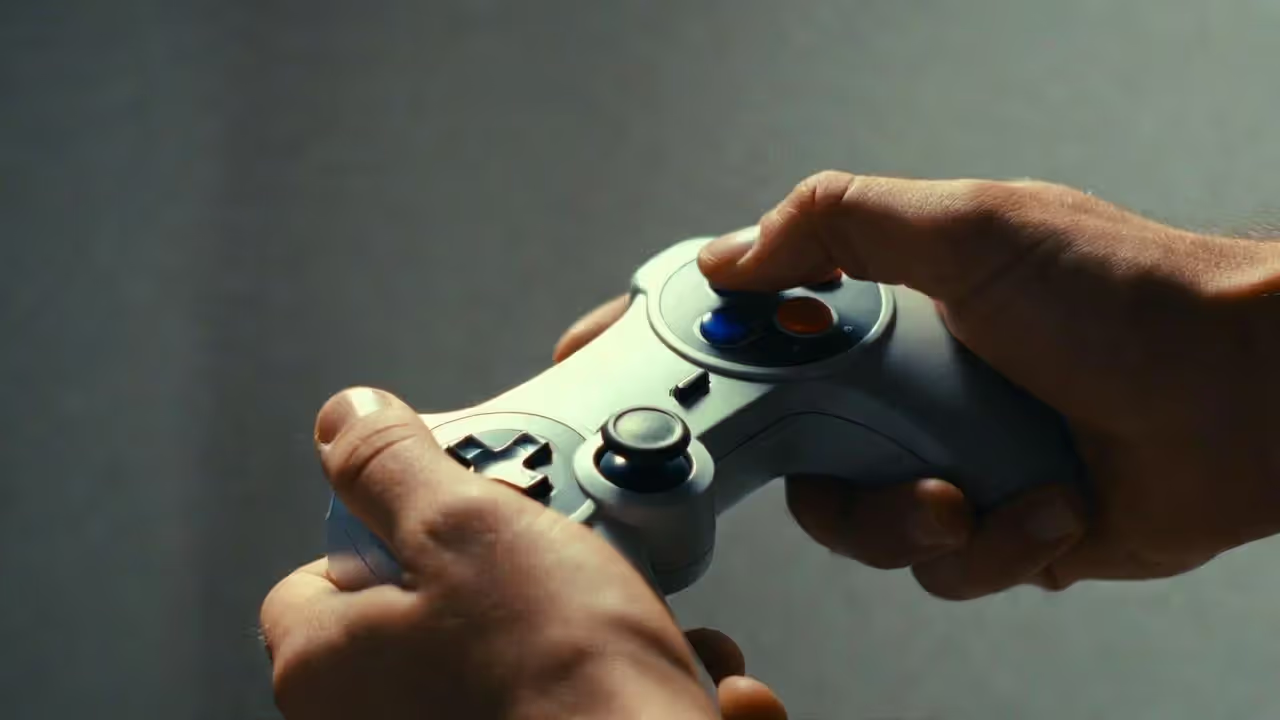
Nintendo's 8-bit and 16-bit consoles established the template for home gaming. The NES rescued the industry after the 1983 crash with titles emphasizing tight design over technical showmanship. Super Mario Bros. 3 remains the gold standard for 2D platformers, introducing mechanics that developers still reference. The SNES pushed boundaries with Mode 7 graphics and sophisticated soundtracks—Super Mario World and The Legend of Zelda: A Link to the Past defined their genres so thoroughly that spiritual successors still emerge decades later.
Sega's Genesis targeted older players with faster gameplay and edgier marketing. Sonic the Hedgehog 2 delivered momentum-based platforming that contrasted with Mario's precision jumping. Streets of Rage 2 showcased how beat-'em-ups could match arcade quality at home.
The original PlayStation legitimized 3D gaming for mainstream audiences. Metal Gear Solid proved games could deliver cinematic storytelling without sacrificing interactivity. Final Fantasy VII introduced millions to Japanese RPGs. These weren't just technical achievements—they established narrative and presentation standards that elevated the entire medium.
Arcade Classics That Defined Gaming
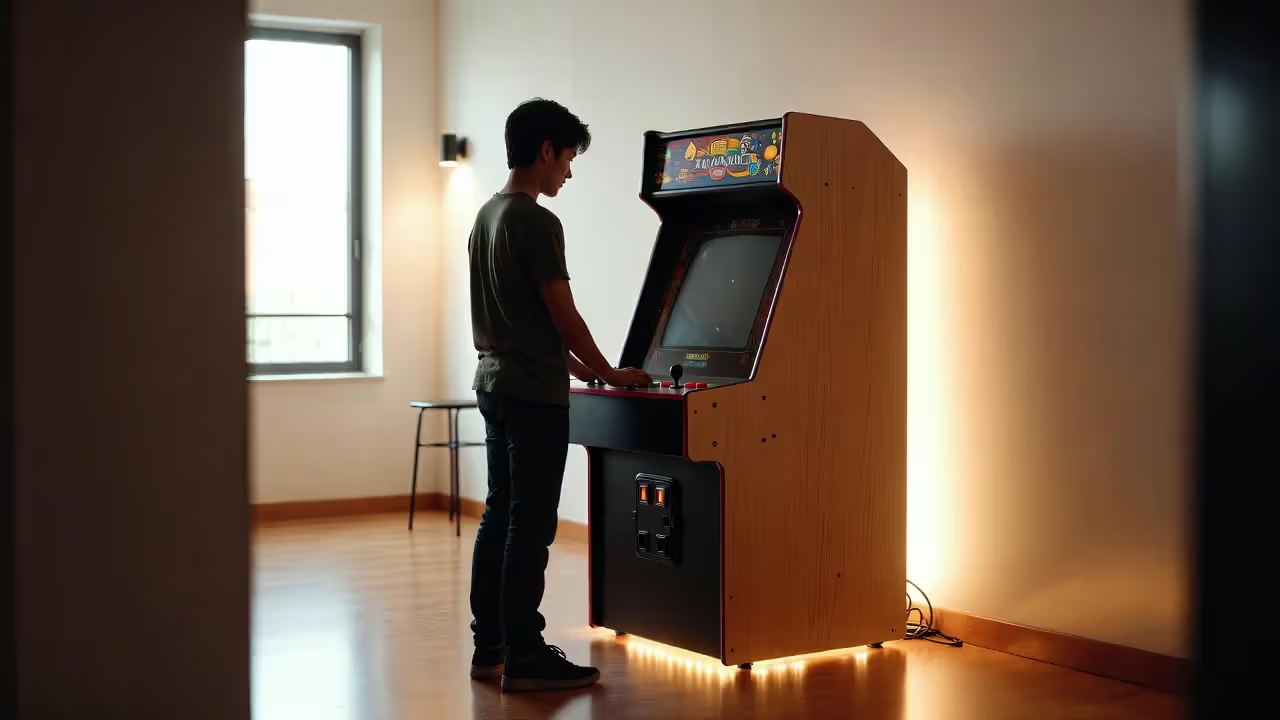
Arcades demanded instant engagement. Players needed to understand mechanics within seconds while quarters drained every few minutes. This economic pressure produced incredibly focused designs.
Street Fighter II created the competitive fighting game template that tournaments still follow. Every modern fighter owes debt to its six-button layout, special move inputs, and character balance philosophy. Pac-Man distilled chase mechanics into pure form—its maze layout and ghost AI patterns remain studied in game design courses.
Donkey Kong introduced Mario and vertical platforming. Galaga refined space shooter mechanics into an addictive loop of risk-reward decisions. These games succeeded because anyone could play, but mastery required genuine skill development.
Author: Megan Lewis;
Source: quantumcatanimation.com
PC Gems from the Golden Era
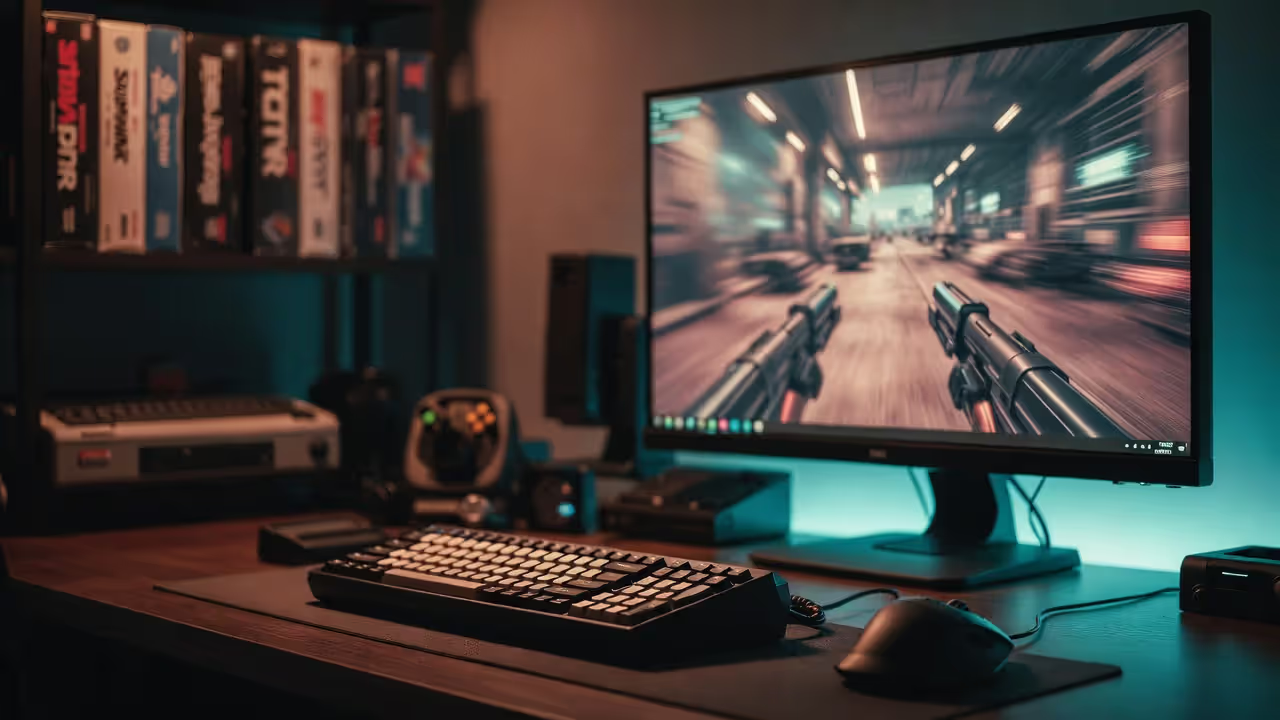
PC gaming evolved differently than consoles, embracing complexity that controllers couldn't accommodate. The mouse-and-keyboard setup enabled strategy games, immersive sims, and first-person experiences that consoles struggled to replicate.
Doom didn't invent first-person shooters, but its speed, level design, and modding support established the genre's foundations. Half-Life proved shooters could tell environmental stories without cutscenes interrupting flow. StarCraft balanced three asymmetric factions so precisely that professional players still compete in it.
Point-and-click adventures like Grim Fandango and The Secret of Monkey Island delivered writing quality that many modern games can't match. These titles succeeded through puzzle design and dialogue rather than reflexes, proving games could engage different cognitive skills.
Author: Megan Lewis;
Source: quantumcatanimation.com
Top 20 Must-Play Retro Games by Genre
Selecting the best retro games from thousands of candidates requires balancing historical importance with current playability. These twenty titles represent essential experiences across genres, chosen because they remain genuinely enjoyable rather than merely influential.
Platformers: Super Mario Bros. 3 perfected 2D movement with power-ups that changed level interaction. Castlevania: Symphony of the Night invented the "Metroidvania" genre by combining exploration with RPG progression. Sonic the Hedgehog 2 delivered speed-based platforming that rewarded momentum and route memorization.
RPGs: Chrono Trigger featured multiple endings, time travel mechanics, and no random encounters—revolutionary choices that improved pacing. Final Fantasy VI (originally released as III in the US) balanced fourteen playable characters with an opera scene that demonstrated games could be art. EarthBound subverted RPG tropes with modern settings and quirky humor that influenced indie developers decades later.
Fighting Games: Street Fighter II established competitive gaming. The Legend of Zelda: Ocarina of Time translated Nintendo's adventure formula into 3D while introducing Z-targeting that countless games copied. Super Smash Bros. Melee remains a tournament staple twenty years later due to its technical depth.
Adventure: The Legend of Zelda: A Link to the Past balanced combat, puzzles, and exploration perfectly across light and dark worlds. Resident Evil created survival horror by limiting resources and emphasizing atmosphere over action. Silent Hill 2 proved horror games could explore psychological themes with artistic maturity.
Shooters: Doom's level design encouraged exploration while maintaining relentless pacing. GoldenEye 007 demonstrated console shooters could work with proper control adaptation. Half-Life merged storytelling with uninterrupted gameplay.

Author: Megan Lewis;
Source: quantumcatanimation.com
Puzzle: Tetris remains the most elegant puzzle game ever created—simple rules producing infinite complexity. Portal combined physics puzzles with dark humor and environmental storytelling in a compact three-hour experience.
Strategy: StarCraft balanced real-time strategy so precisely that small advantages snowballed through skilled play. Civilization II captured "just one more turn" addiction through layered systems that revealed depth gradually.
| Game Title | Release Year | Original Platform | Genre | Where to Play Now | Difficulty Level |
| Super Mario Bros. 3 | 1988 | NES | Platformer | Nintendo Switch Online, Various Collections | Medium |
| Chrono Trigger | 1995 | SNES | RPG | Steam, Nintendo Switch, Mobile | Medium |
| The Legend of Zelda: A Link to the Past | 1991 | SNES | Action-Adventure | Nintendo Switch Online | Medium |
| Street Fighter II | 1991 | Arcade | Fighting | Multiple Collections (Switch, PS4, Xbox) | Hard |
| Castlevania: Symphony of the Night | 1997 | PlayStation | Action-Platformer | PS4/PS5, Xbox (backward compatible) | Medium-Hard |
| Final Fantasy VI | 1994 | SNES | RPG | Steam, Mobile, Pixel Remaster | Medium |
| Doom | 1993 | PC | FPS | Every Platform (Steam, Switch, Xbox, PS) | Medium |
| Metal Gear Solid | 1998 | PlayStation | Stealth-Action | PS4/PS5 (Master Collection) | Medium |
| Resident Evil 2 | 1998 | PlayStation | Survival Horror | Original: PS3/Vita; Remake: Current Platforms | Hard |
| Tetris | 1984 | Multiple | Puzzle | Literally Everywhere | Easy to Learn, Hard to Master |
How to Actually Play These Games
Accessing retro recommendations presents challenges that didn't exist when these games were current. Original hardware fails, cartridges degrade, and CRT televisions that displayed these games properly have become specialty items.
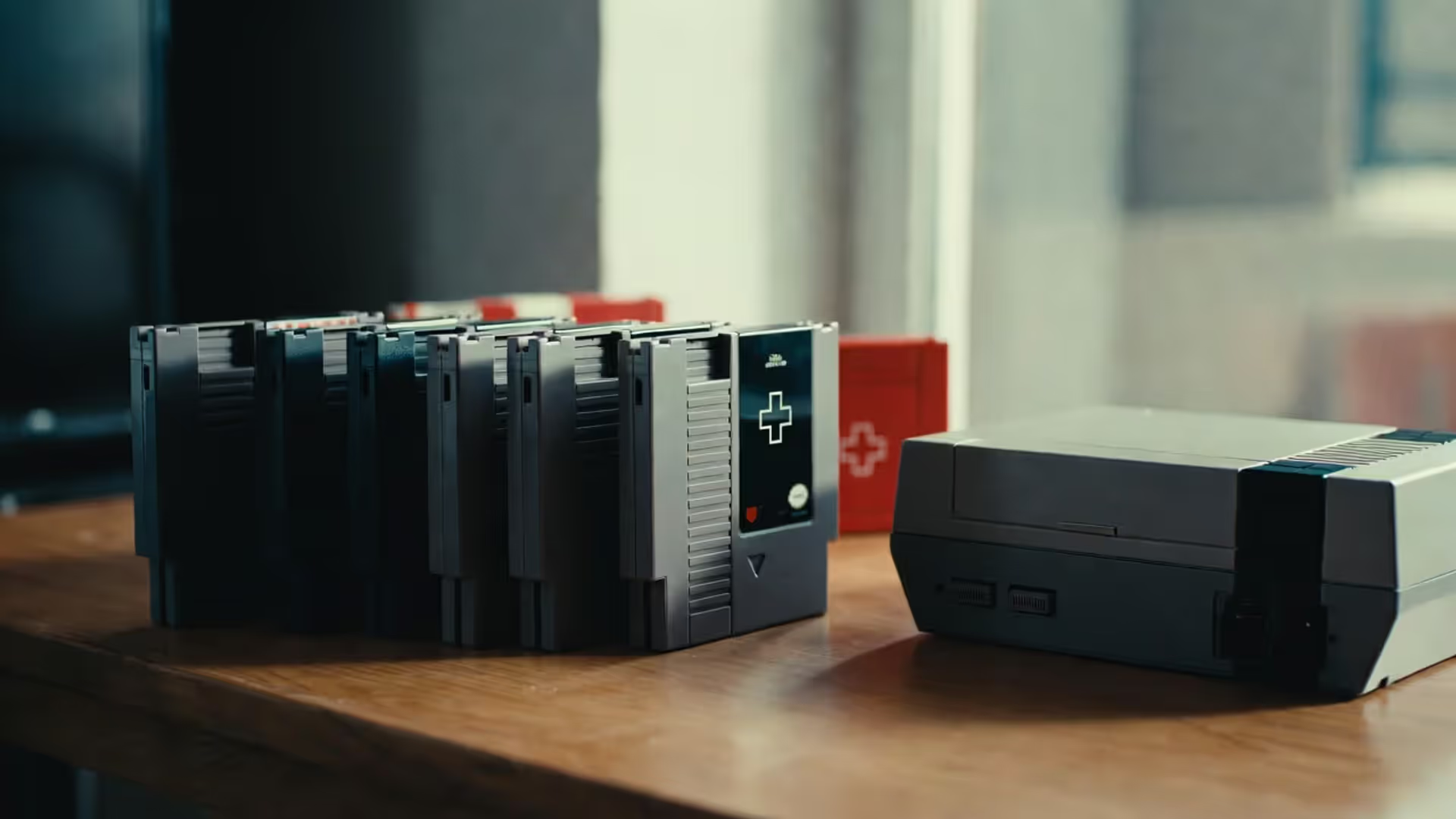
Original hardware provides authentic experiences but requires investment and maintenance. NES consoles need cleaning, cartridge contacts corrode, and replacement parts grow scarce. However, playing on original hardware eliminates input lag and display issues that plague some modern solutions. Expect to spend $100-300 for a working system plus games, with maintenance becoming a hobby itself.
Emulation offers convenience and enhancement options like save states, fast-forward, and graphical filters. Legal concerns complicate this approach—downloading ROMs of games you don't own violates copyright, though enforcement remains inconsistent. Emulators themselves are legal, but sourcing games requires either ripping your own cartridges (technically legal but requiring hardware) or entering gray markets.
Official collections solve legal concerns while providing quality-of-life improvements. Nintendo Switch Online includes growing NES and SNES libraries for $20-50 annually. PlayStation Plus Premium offers PS1 and PS2 classics. Compilations like Capcom Arcade Stadium or SNK 40th Anniversary Collection bundle dozens of titles with save states, rewind features, and online multiplayer for $20-40.
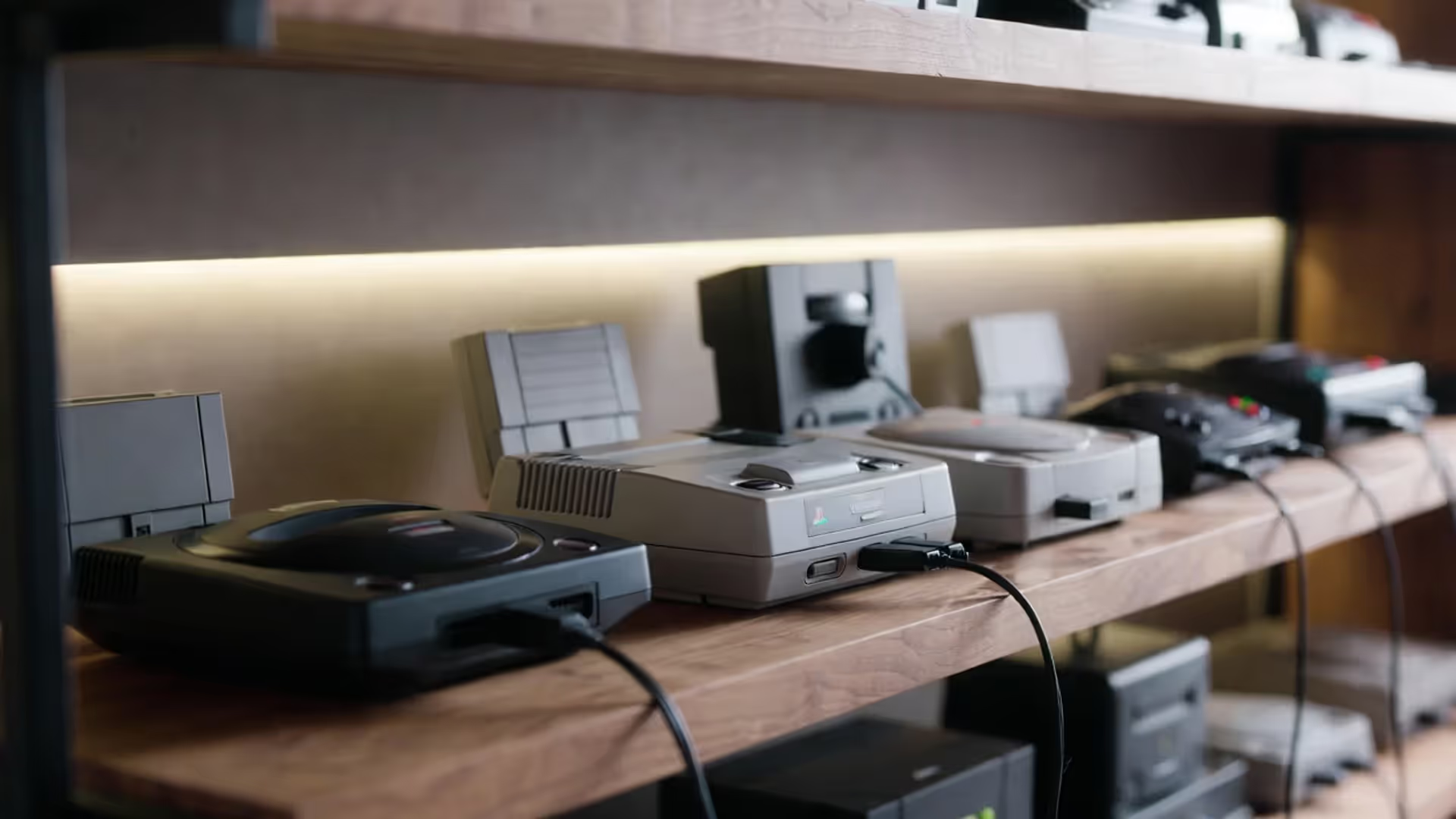
Mini consoles like the NES Classic and Sega Genesis Mini provide plug-and-play solutions with curated game selections. These devices cost $60-100 and include 20-40 games with authentic controllers. They're perfect for casual players wanting hassle-free access to must play retro games without commitment.
Modern retro handhelds from companies like Anbernic and Analogue run emulators or FPGA recreations of original hardware. Prices range from $50 budget devices to $250 premium options. These suit players wanting portable access to entire libraries, though setup requires technical comfort.
The best approach depends on your priorities. Collectors and purists prefer original hardware. Convenience-focused players choose official collections. Enthusiasts wanting maximum flexibility and customization lean toward emulation or FPGA devices.
The best games from the '80s and '90s remain playable because they solved design problems rather than technical ones. When you can't rely on graphics or cutscenes to carry experience, you're forced to make the core loop satisfying. That's why Super Mario Bros. 3 feels better to play than many modern platformers—every jump was refined because it had to be.
— Frank Cifaldi
Common Mistakes When Starting Your Retro Gaming Journey
New retro gamers often expect quality-of-life features that didn't exist in the 1990s. Games lacked autosave, quest markers, or difficulty options. Mega Man games don't checkpoint mid-level—dying means restarting from the beginning. Early RPGs provide minimal guidance about where to go next. These aren't flaws but design philosophies reflecting different player expectations.
Adjust your approach rather than fighting the design. Take notes during adventure games. Accept that some deaths teach through failure. Use save states in collections if frustration outweighs enjoyment—there's no honor in suffering through unfair difficulty spikes caused by limited playtesting budgets.
Regional differences significantly impact experiences. Japanese and Western releases often differ in difficulty, content, and translation quality. Final Fantasy games were renumbered in the US, creating confusion about which version to play. Some Japanese games never received official translations, requiring fan patches. Research which version offers the best experience before committing hours to an inferior port.
Obvious choices dominate top classic games lists for good reasons, but hidden gems often provide fresher experiences. Everyone recommends Super Mario World, but fewer mention Yoshi's Island despite its innovative mechanics and hand-drawn aesthetic. Chrono Trigger appears on every RPG list, but Terranigma—never officially released in the US—offers comparable quality with less familiarity.
Port quality varies wildly. The mobile version of Final Fantasy VI replaced pixel art with ugly smoothed sprites. Some collections introduce input lag or audio issues. Silent Hill's HD Collection botched fog effects that were crucial to atmosphere. Research specific ports before purchasing—the cheapest or most convenient option often provides the worst experience.
Frequently Asked Questions About Retro Gaming
This focus on mechanical purity influences modern development more than players realize. The "Metroidvania" genre wouldn't exist without Castlevania: Symphony of the Night and Super Metroid establishing exploration-based progression. Dark Souls' design philosophy directly descends from challenging NES games that taught through failure. Indie developers regularly cite timeless video games as inspiration because those titles proved games didn't need massive budgets to deliver compelling experiences.
The current industry often prioritizes graphics and cinematic presentation over gameplay refinement. Games ship with bugs, rely on patches, and hide shallow mechanics behind impressive visuals. Retro games couldn't afford these shortcuts—they needed to work perfectly on limited hardware with no updates possible after manufacturing. This constraint produced remarkably polished experiences.
Studying legendary retro titles teaches what makes games actually fun versus what makes them look impressive in trailers. A game like Tetris or Street Fighter II distills complex decision-making into simple interfaces. Modern designers studying these classics learn to focus on core loops, remove unnecessary complexity, and trust players to find depth through mastery rather than feature checklists.
The best retro games earned their status through design excellence that transcends technological limitations. They remain worth playing not despite their age but because their core mechanics were refined to near-perfection through hardware constraints that forced creative problem-solving.
Starting your retro gaming journey doesn't require expensive hardware or technical expertise. Official collections on modern platforms provide legal, convenient access to hundreds of classics. Begin with widely acclaimed titles like Super Mario Bros. 3 or Chrono Trigger to understand why these games influenced decades of subsequent development. Branch into hidden gems and specific genres as you discover what resonates with your preferences.
Approach these games with patience for different design philosophies. Accept that some mechanics will feel dated while others reveal why modern games still borrow their ideas. Use quality-of-life features like save states when frustration outweighs enjoyment—the goal is experiencing great game design, not proving your tolerance for outdated difficulty.
These timeless video games represent gaming's foundation. Understanding them provides context for appreciating how the medium evolved while revealing design principles that remain relevant regardless of graphical fidelity or processing power. Whether you're revisiting childhood favorites or discovering these classics for the first time, you're engaging with the building blocks that made gaming the diverse, creative medium it is today.