
Pixels that shaped a generation
Pixel Art Games Guide

Content
Here's something wild: today's PCs can push 4K ray-traced graphics at 120fps, but if you check Steam's homepage right now, you'll find chunky 32×32 sprites sitting right next to the latest Unreal Engine 5 showcase. And honestly? The pixel art game probably has better user reviews.
This isn't just about people feeling nostalgic for their childhood Game Boys. Something deeper's happening here. Pixel art has evolved into its own legitimate art form—one with specific rules, unique strengths, and ways of communicating ideas that a photorealistic character model simply can't match. Let's dig into why these retro-looking games keep winning.
What Makes a Game "Pixel Art" vs. Low-Resolution Graphics
Not every blocky game counts as pixel art. There's a huge difference between authentic pixel art and just shrinking a regular image until it looks crunchy.
Technical definition: sprite-based rendering and grid constraints
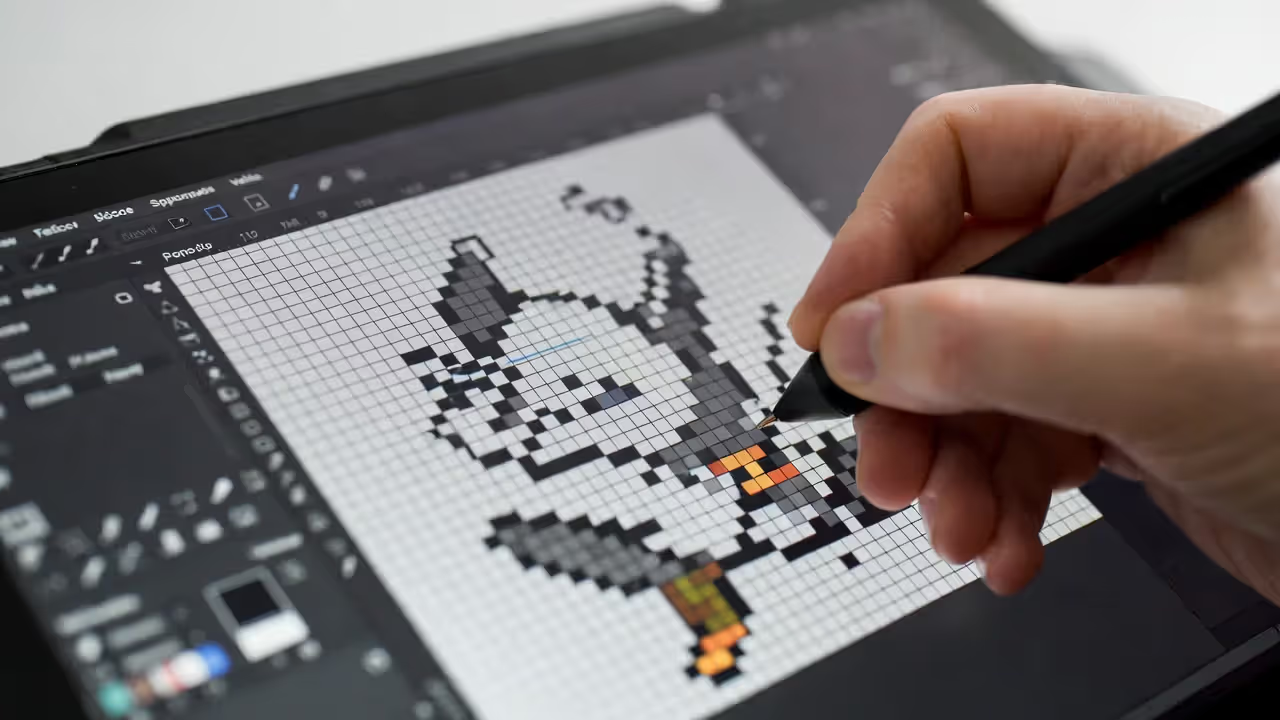
Real pixel art means someone sat down and placed each pixel by hand. Artists work on fixed grids—think of it like digital cross-stitch. They're building sprites (character images, background tiles, item icons) where every single dot matters. Most character sprites clock in around 16×16, 32×32, or maybe 64×64 pixels total.
Here's what separates it from other styles: no anti-aliasing. Those smooth, blurred edges modern graphics use? Gone. Each pixel edge stays sharp. Artists also limit themselves to specific color palettes—sometimes matching what old consoles like the NES could actually display (we're talking 54 colors, with only 25 showing at once).
The really interesting part is pixel clustering. Artists group pixels in specific ways to suggest depth, muscle tone, facial expressions—all with maybe six pixels for an entire face. One pixel out of place and suddenly your hero's walking animation looks drunk instead of determined.
Try scaling pixel art to random sizes and everything falls apart. You'll get blur or weird duplication artifacts. These images only look right at their intended resolution, which is why good pixel games let you scale by exact multiples (2x, 3x, 4x) but nothing in between.
Author: Brandon Hayes;
Source: quantumcatanimation.com
Common misconceptions about pixelated visuals
Lots of players think "blocky graphics = pixel art." Not quite. Take a 3D game, render it at 320×240, slap some chunky textures on it—that's low-res 3D, not pixel art. Or grab a detailed painting and crunch it down to a tiny size. Still not pixel art. Just a compressed image.
Another myth: pixel art always means old-school limitations. Games like Owlboy use hundreds of colors and dynamic lighting effects that would've melted a Super Nintendo. Modern pixel art often ignores vintage hardware constraints entirely, keeping only the hand-placed pixel aesthetic while adding whatever fancy effects the developers want.
| Style Type | Technical Approach | Notable Examples | Common Use Cases |
| Pixel Art | Hand-placed pixels on grids; sprite-based; deliberately limited colors | Celeste, Stardew Valley, Hyper Light Drifter | Platformers, RPGs, roguelikes where you need instant visual clarity |
| Low-Poly 3D | Simple 3D meshes; flat shading; minimal textures | Superhot, Teardown, Lovely Planet | Fast action games needing clean geometry and solid framerates |
| Voxel Art | 3D pixels; everything built from cubes | Minecraft, Teardown, Crossy Road | Sandbox worlds, destructible environments, isometric builders |
| Rotoscoped Graphics | Animation traced from real film footage | Prince of Persia (1989), Flashback | Cinematic platformers needing realistic human movement |
| Limited Color Palette 2D | Vector or high-res art restricted to few colors | Gris, Minit, Return of the Obra Dinn | Atmospheric puzzle games prioritizing mood over detail |
From Necessity to Aesthetic: How Pixel Art Evolved Across Gaming Eras
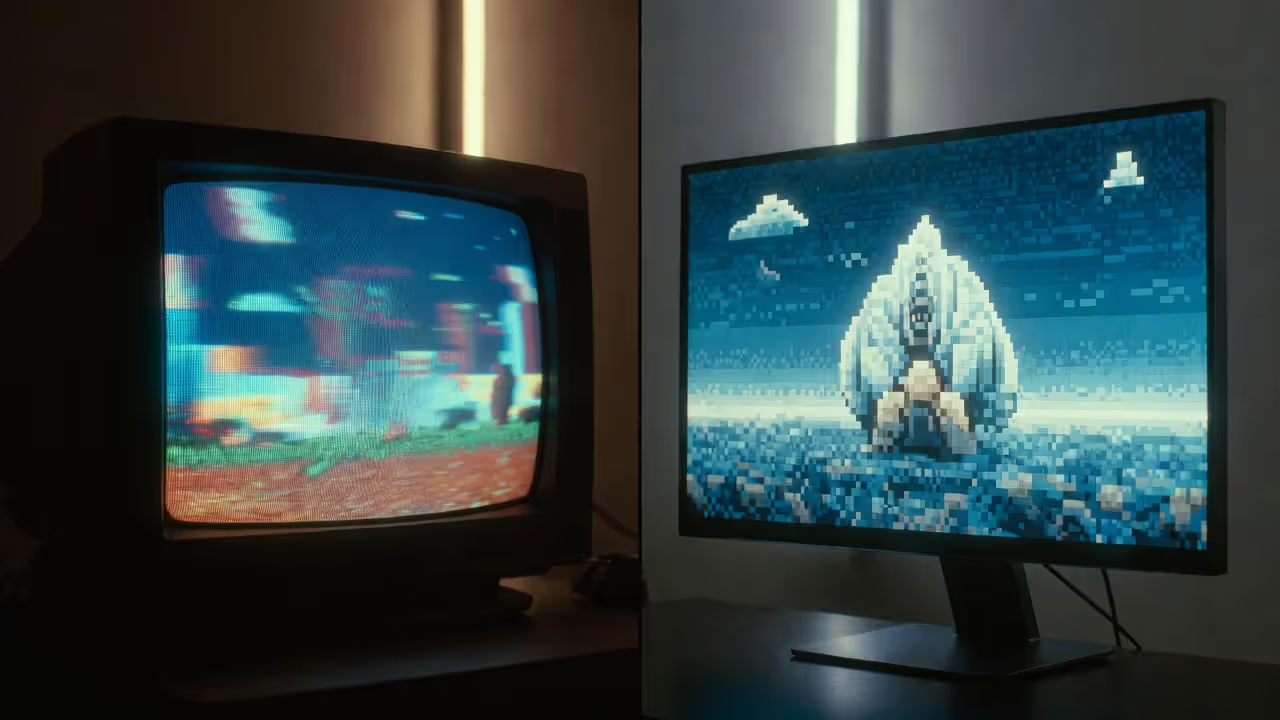
Pixel art style history starts with necessity and ends up as conscious artistic choice—two completely different motivations separated by about 30 years.
Author: Brandon Hayes;
Source: quantumcatanimation.com
1980s–1990s hardware limitations
Early consoles couldn't handle much. The NES gave you 256×240 resolution—that's less than most phone icons today. You got 54 colors to pick from, but only 25 could appear on screen simultaneously. Storage was measured in kilobytes. Artists became absolute wizards at implying detail without actually showing it.
A character's face might use six pixels total: two for eyes, two suggesting a nose shadow, two making a mouth. Players' brains filled in the rest. Your imagination did half the work.
This spawned creative workarounds. Dithering (checkerboard patterns alternating two colors) faked additional shades. Palette swapping created enemy variations without eating memory—red turtle, green turtle, same sprite. Walking animations used three frames. Maybe four if you were fancy. Each frame got obsessively refined because adding more meant deleting something else.
By 1996, 3D polygons arrived. The industry dumped pixel art immediately. Everyone chased Tomb Raider and Final Fantasy VII. Two-dimensional sprite work looked commercially dead—a relic to escape, not preserve.
Pixel art works because it communicates instantly. When every pixel is intentional, nothing is wasted. Players don’t just see the game — they read it.
— Thomas Feichtmeir, pixel artist and game designer
The 2000s revival and indie game movement
Then indie development exploded around 2008. Small teams realized something important: they could make compelling games without hiring 50 3D artists. Cave Story (2004) proved it first. One Japanese developer, Daisuke Amaya, spent five years building the entire game solo. It delivered emotional gut-punches and tight gameplay that competed with any AAA release.
"Pixel art stopped being about limitation and became about communication," Derek Yu (creator of Spelunky) explained in a 2012 interview. "You're not trying to simulate reality—you're distilling a game to its purest visual language. That clarity helps gameplay in ways photorealism often hurts."
The aesthetic clicked with millennials who grew up on 8-bit and 16-bit consoles, sure. But younger players loved it too, completely disconnected from nostalgia. Fez (2012) and Shovel Knight (2014) became legit commercial hits. Retro visuals design shifted from "budget compromise" to "legitimate artistic decision." Publishers started taking it seriously.
Why Indie Developers Choose Pixel Art Over 3D or Hand-Drawn Styles
Beyond the nostalgia angle, pixel art solves specific production problems that small studios face constantly.

Author: Brandon Hayes;
Source: quantumcatanimation.com
Development cost and team size considerations
One skilled pixel artist can create every visual asset for a medium-sized game. Compare that to 3D production: you need modelers, riggers, texture artists, animators, and probably a technical artist keeping everything optimized. High-res hand-drawn animation? Even worse. Cuphead needed a full animation team working for years.
Pixel art's low resolution means fast iteration. An artist can sketch a character sprite, drop it in-engine, test it, and revise—all before lunch. Changing a 3D character model means editing the mesh, re-rigging the skeleton, updating textures, re-exporting... that's a multi-day process. When you're prototyping gameplay ideas quickly, that speed difference matters enormously.
Software costs matter too. Pixel art needs basic image editors—plenty of free options exist. Professional 3D workflows require expensive licenses for Maya, Substance Painter, and various plugins. Even Blender (free) has a brutal learning curve. Getting started with pixel art has way fewer barriers.
Nostalgia factor and target audience appeal
Developers targeting 30-45 year-olds trigger powerful childhood memories through pixel visuals. This demographic has disposable income and actively seeks games that echo their formative gaming years. The indie pixel influence extends beyond just visuals—these games often embrace design philosophies from the 8-bit and 16-bit eras, prioritizing tight mechanics over cinematic spectacle.
Younger audiences surprisingly embrace pixel art too. They grew up with Minecraft and retro-styled mobile games, so pixels don't register as outdated. For Gen Z players, pixel art is just a distinct visual category—not technological regression. It signals "indie game" the same way hand-drawn art signals "artistic game."
Animation efficiency for small studios
Pixel animation gaming leverages the format's natural frame efficiency. Characters might need only four frames for walking, six for jumping, eight for attacks. Smooth animation requires understanding timing and weight distribution, but low frame counts make comprehensive animation libraries actually achievable for small teams.
Hand-drawn animation needs 12-24 frames per second for convincing motion. A character with ten different animations suddenly requires hundreds of individual drawings. Even 3D animation (despite interpolating between poses automatically) needs careful execution to avoid uncanny valley weirdness—problems pixel art completely sidesteps through abstraction.
Good pixel animators use techniques like squash-and-stretch, anticipation frames, and smear frames (intentionally distorted in-between images) to create surprisingly fluid movement with minimal frame counts. Celeste shows how emotionally expressive pixel animation gets when done by experts—Madeline's movements convey anxiety, determination, exhaustion through sprite work alone.
15 Essential Pixel Art Games That Defined the Modern Era
These releases showcase the range and sophistication possible within pixel art, spanning wildly different genres and proving the style's versatility.
Celeste (2018) - Precision platforming that uses pixel art to guarantee instant readability during frame-perfect moments. Every spike, platform edge, and collectible registers immediately. Protagonist Madeline's animation expresses emotional states purely through body language and movement—no dialogue needed for several powerful scenes.
Stardew Valley (2016) - Eric Barone developed this farming sim entirely solo over four years. Hundreds of items, NPCs, and locations maintain visual consistency while staying charming and readable. It proves pixel art enables massive scope for lone developers willing to put in the time.
Hyper Light Drifter (2016) - Demonstrates how pixel art handles modern lighting and atmospheric effects. Environments feel vast and mysterious despite technical simplicity, using color relationships and composition to create genuine depth and mood.
Dead Cells (2018) - This roguelike proves pixel art and sophisticated modern animation can coexist beautifully. Combat animations use dozens of frames per action, showing the style's upper limits when studios dedicate proper resources.
Undertale (2015) - Deliberately simple pixel art serves the narrative's subversive nature. The straightforward visuals let players project onto characters while keeping development feasible for solo creator Toby Fox. Technical polish wasn't required for emotional impact.
Shovel Knight (2014) - A love letter to NES games that adheres strictly to 8-bit technical limitations while incorporating modern quality-of-life improvements. Its commercial success validated pixel art as financially viable for mid-budget indie productions.
Enter the Gungeon (2016) - Combines pixel art with bullet-hell mechanics, leveraging the style's clarity to make impossibly dense projectile patterns readable. Hundreds of weapons and enemies maintain visual consistency through meticulous sprite craftsmanship.
Owlboy (2016) - After nearly a decade in development, this showcases pixel art's artistic ceiling. Layered parallax backgrounds, intricate character sprites, and cinematic framing rival hand-drawn animation in expressive capability.
Katana ZERO (2019) - Uses pixel art for extremely violent action sequences, proving the style can handle mature themes and intense gameplay. Time-manipulation mechanics require precise visual communication, which the pixel aesthetic delivers perfectly.
Eastward (2021) - Blends pixel art with modern lighting and particle systems, creating hybrid aesthetics that feel simultaneously nostalgic and contemporary. Detailed environments reward exploration through environmental storytelling.
Blasphemous (2019) - Shows pixel art's capacity for dark, gothic themes. Grotesque enemy designs and oppressive architecture prove the style isn't limited to cheerful or lighthearted content.
Axiom Verge (2015) - Solo-developed Metroidvania using glitch aesthetics and visual corruption as both art direction and gameplay mechanic, pushing pixel art into experimental territory.
Fez (2012) - Revolutionized perspective-manipulation puzzles through pixel art, using the style's inherent two-dimensionality as a gameplay advantage rather than limitation. Visual communication makes complex spatial puzzles understandable.
Crosscode (2018) - Action RPG with MMO-inspired systems, proving pixel art can support complex interfaces, multiplayer-style mechanics, and extended narrative experiences without feeling dated.
Return of the Obra Dinn (2018) - While using limited color palettes rather than traditional pixel art, this mystery adventure demonstrates how retro visual constraints strengthen rather than weaken atmospheric narrative delivery.
How to Identify Quality Pixel Art: What Separates Great from Generic
Author: Brandon Hayes;
Source: quantumcatanimation.com
Not all pixel art demonstrates equal craftsmanship. Certain technical and artistic markers distinguish professional work from amateur attempts.
Color palette mastery and dithering techniques
Skilled pixel artists work within self-imposed palette restrictions—typically 16-64 colors for entire games. This forces intentional color selection. Each hue must serve multiple purposes across different sprites and environments. Quality pixel art uses colors that harmonize and maintain consistent lighting logic throughout all assets.
Dithering—alternating pixels of different colors to suggest intermediate shades—separates beginners from veterans. Bad dithering creates visual noise that hurts readability. Expert dithering suggests gradients and surface textures while preserving the pixel grid's structural clarity. Hyper Light Drifter uses subtle dithering for atmospheric fog and lighting gradients without sacrificing sharpness.
Color count alone doesn't determine quality. Some exceptional pixel art uses just two colors (Minit), while mediocre work might use hundreds. What matters is intentionality—does every color choice serve the game's visual communication needs?
Animation fluidity and frame economy
Great pixel animation achieves smooth movement with minimal frames through understanding timing and physical weight. A jump animation might use only five frames—crouch, launch, apex, descent, landing—but each frame's composition must clearly communicate the movement phase. Weak animation either uses too few frames (causing jarring jumps) or too many frames (wasting resources without improving clarity).
Watch for "dead frames"—animation frames that don't advance motion understanding. Professional animators ensure every frame progresses the action or communicates character weight. A sword swing should show anticipation, impact, and follow-through, with each frame distinct and purposeful.
Secondary animation separates competent from exceptional work. Does the character's hair react during jumps? Do clothes flutter while running? These details require extra frames but dramatically enhance visual appeal. Celeste includes secondary animation for Madeline's hair that reinforces her momentum and emotional state.
Readability and visual clarity in gameplay
Pixel art games must communicate gameplay information instantly. Players should distinguish platforms from backgrounds, hazards from decoration, interactive objects from static scenery within milliseconds. Quality pixel art uses contrast, color coding, and visual hierarchy to ensure critical gameplay elements stand out.
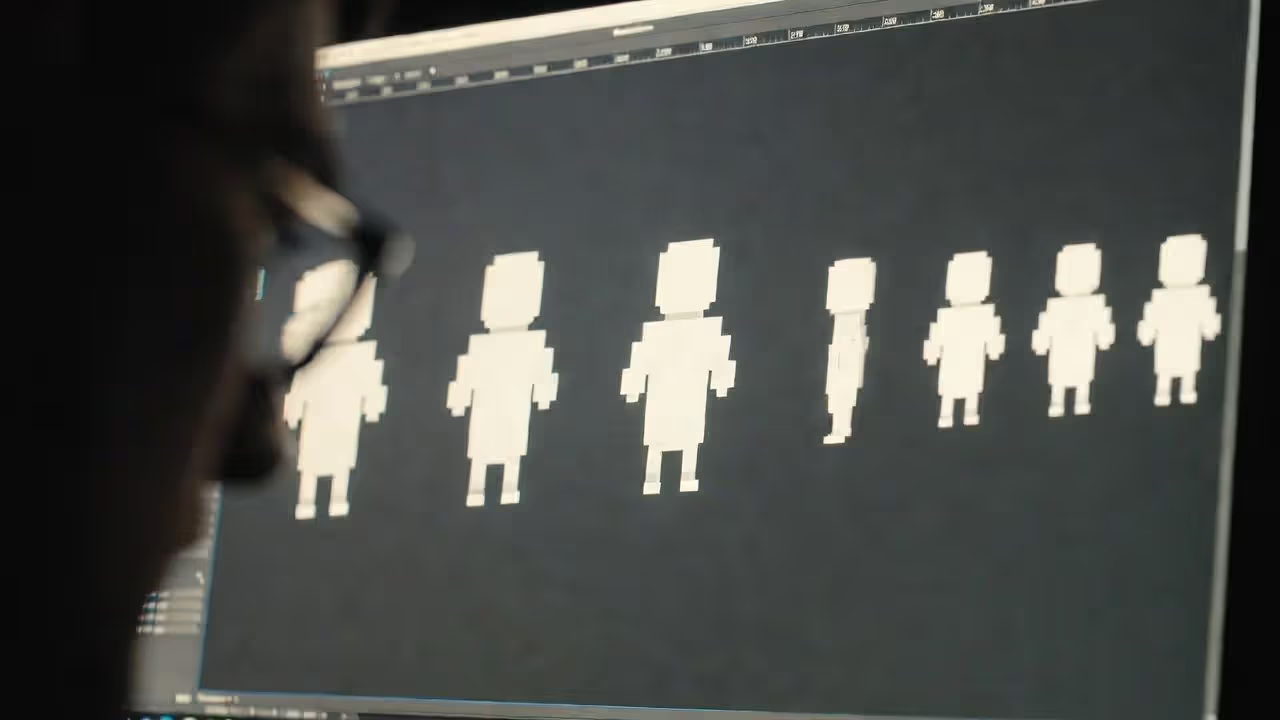
Silhouette testing reveals readability issues—if you can't identify characters or objects from their outlines alone, the sprites need work. Enemies should have distinct silhouettes from each other and from player characters. Hazards should read clearly even when screens fill with particle effects.
Background art should support rather than compete with foreground gameplay. Amateur pixel art often makes backgrounds too detailed or high-contrast, creating visual confusion. Professional work uses muted palettes and reduced detail for background layers, saving saturated colors and sharp contrast for interactive elements.
Common Mistakes Players Make When Judging Pixel Art Games
Many gamers dismiss pixel art titles based on misconceptions or superficial judgments, missing genuinely outstanding experiences in the process.
Assuming pixel art means lazy development is the biggest mistake. Creating quality pixel art requires specialized skills distinct from other artistic disciplines. A talented 3D artist might struggle making readable pixel sprites, just as a pixel artist might produce mediocre 3D models. The medium demands understanding color theory, animation principles, and visual communication within severe constraints.
Treating all pixel art as visually identical ignores massive stylistic diversity. The chunky, high-contrast sprites of Shovel Knight serve different purposes than the intricate, painterly pixels of Owlboy. Comparing them directly makes as much sense as judging all 3D games by identical criteria regardless of art direction. Each game's pixel art deserves evaluation based on how well it serves that specific title's needs.
Author: Brandon Hayes;
Source: quantumcatanimation.com
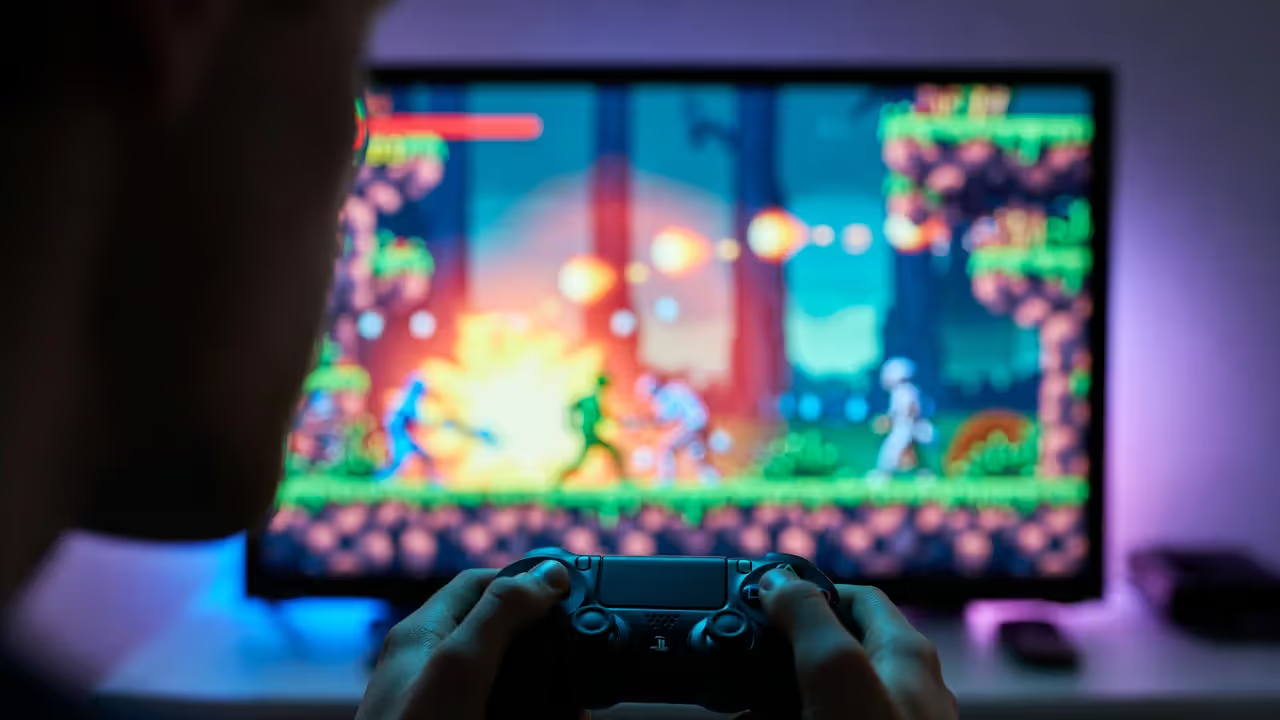
Judging pixel art games purely from screenshots misses how the aesthetic functions during actual play. Static images can't convey animation fluidity, readability during fast action, or how visual elements communicate gameplay mechanics. A game might look simplistic in promotional images but feel perfectly tuned during actual gameplay.
Expecting photorealistic detail or HD complexity from pixel art shows fundamental misunderstanding of the medium's goals. Pixel art abstracts and simplifies to create clear visual communication—it's not attempting realistic rendering. Criticizing it for lacking "realism" completely misses the point, like faulting a haiku for being shorter than a novel.
The indie pixel influence sometimes generates bandwagon dismissal—rejecting pixel art as "overused" in indie games without evaluating individual execution quality. Yes, many indie releases use pixel art, but that alone doesn't make them derivative. Judging games by art style category rather than artistic execution or gameplay substance creates blind spots for outstanding experiences.
Frequently Asked Questions About Pixel Art Games
Pixel art games represent far more than nostalgia-driven throwbacks or budget shortcuts. They've matured into a sophisticated visual medium with unique techniques, recognized masters, and distinct artistic possibilities. The constraints that originally defined pixel art through hardware necessity now function as creative parameters that enable small teams to produce distinctive, memorable gaming experiences.
Understanding what separates quality pixel art from generic execution helps players appreciate the craftsmanship involved and discover outstanding games they might otherwise overlook. The style's continued prominence in indie development stems from practical advantages—production efficiency, gameplay clarity, hardware accessibility—combined with genuine artistic merit. Whether you prefer precise platformers, expansive RPGs, or intense action experiences, pixel art offers qualities that photorealistic graphics fundamentally can't replicate.
Next time you encounter a pixel art game, look past surface-level aesthetics. Notice the color palette choices, the animation smoothness, the ways visual elements guide your attention during active gameplay. You'll find a medium that's evolved dramatically since its hardware-constrained origins, one that continues producing some of gaming's most inventive and mechanically refined experiences.