The consoles that built modern gaming
Retro Games Guide

Content
Picture this: you're eight years old, mashing buttons on a sticky arcade machine, your pockets empty of quarters but your head full of high score dreams. Or maybe you're blowing into a gray plastic cartridge for the third time, convinced this time it'll work. For Gen X and millennials, these aren't just memories—they're muscle memory. The games we played before achievement systems, before patches, before the internet told us where every secret was hidden, created a foundation that still supports modern gaming's entire structure.
What Defines Retro Games and Why the Classification Matters
Here's the thing about defining retro games: everyone thinks their childhood qualifies. Poll a room of gamers and prepare for arguments. The 40-year-old insists nothing after 1990 counts. The 25-year-old swears the PlayStation 2 is vintage. Someone always brings up whether mobile games can ever be retro. Nobody leaves satisfied.
The generational debate: 8-bit to 32-bit era
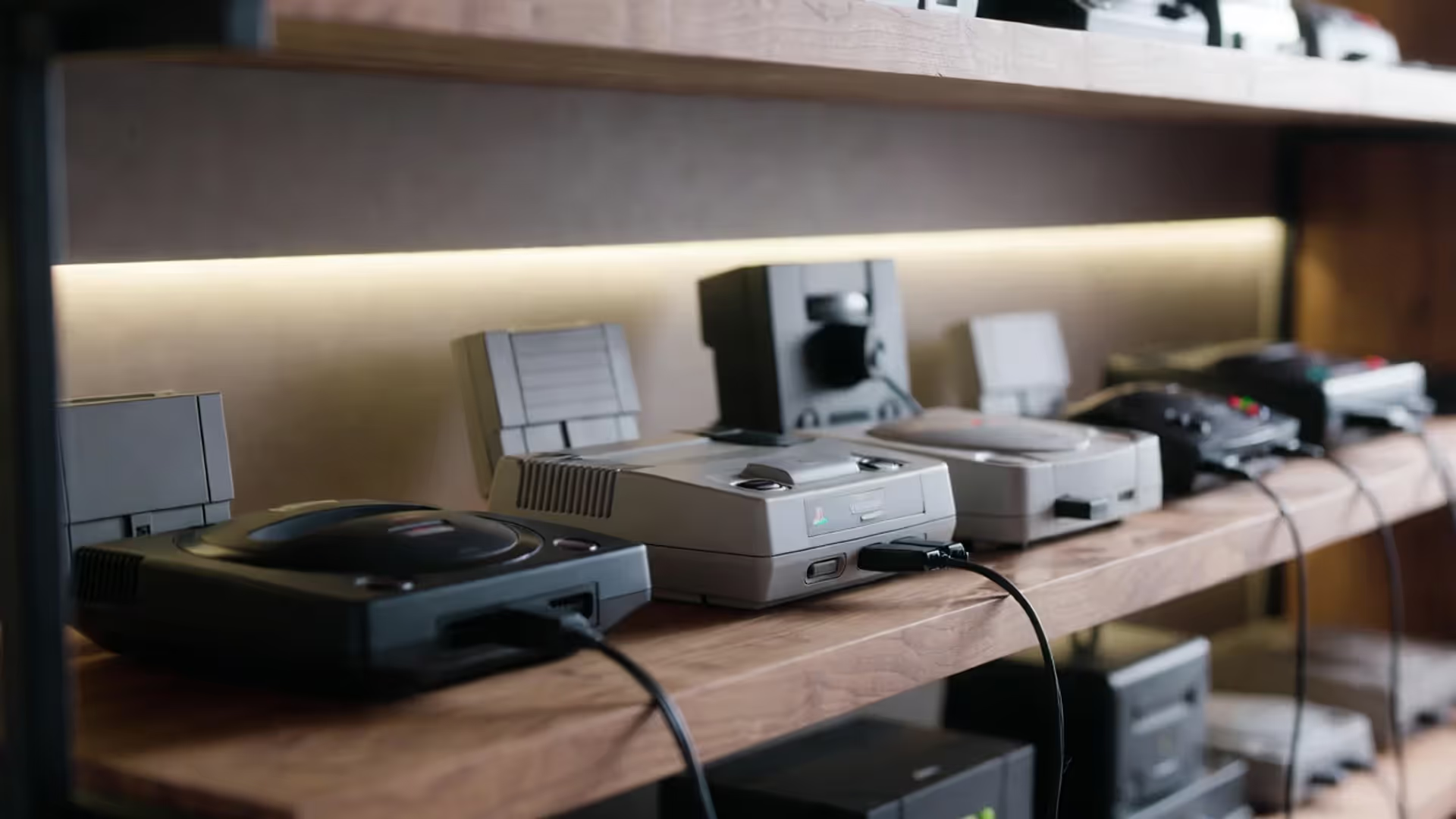
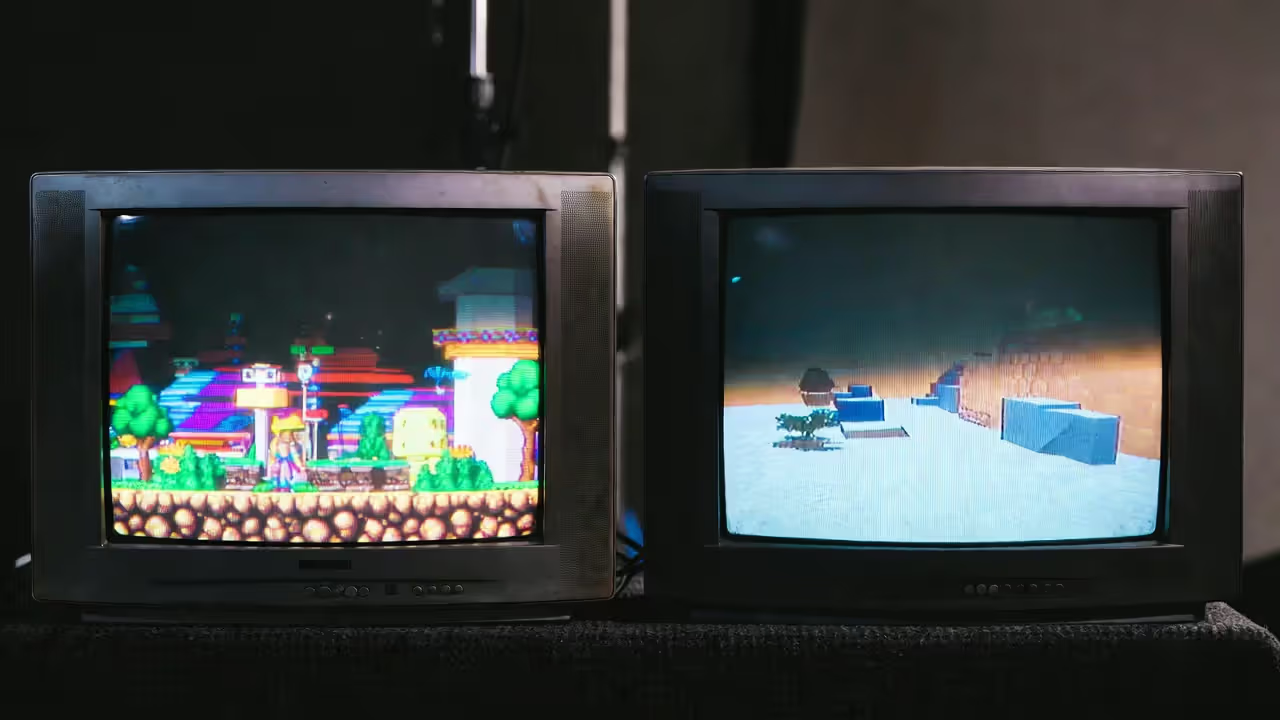
Hardware generations offer our clearest boundary markers. Between the Magnavox Odyssey's debut in 1972 and the PlayStation's dominance ending around 2001, we can map distinct technological eras. Nobody disputes that the NES and Sega Master System define 8-bit gaming—those systems gave us four-color sprites, bleeps and bloops for music, and gameplay measured in kilobytes rather than gigabytes.
The Super Nintendo and Sega Genesis brought 16-bit processing that expanded what developers could imagine. Colors multiplied. Music became melodic. Mode 7 graphics made roads appear to curve. Games grew ambitious—suddenly you're exploring Hyrule in A Link to the Past instead of shuffling through single-screen rooms.
Then we hit the PlayStation era, and things get messy. Sony's console launched in 1995 with CD-ROMs, 32-bit processing, and early 3D graphics that looked revolutionary at the time but aged like milk left in a hot car. Compare blocky polygonal Cloud Strife to pixel-art Chrono—guess which one still looks good? The technical leap toward 3D creates a weird paradox where 32-bit games often feel more dated than their 16-bit ancestors. Kids today can appreciate Super Metroid's art direction. Those early 3D models? They need context.
Author: Megan Lewis;
Source: quantumcatanimation.com
When does "old" become "retro"?
Twenty years. That's the working rule most collectors follow. Two decades provides enough distance for nostalgia to ferment, for hardware to vanish from stores, for a game's cultural context to require explanation. Using that yardstick, the Xbox 360 officially crossed into retro territory in 2025. Let that sink in. Halo 3 is now historic.
But raw age misses something crucial. Retro carries aesthetic weight beyond calendar math. These games embrace limitations—low resolution, simple controls, design philosophies from before broadband internet and YouTube walkthroughs. Metal Gear Solid might be 27 years old, but its cinematic ambitions connect it more to modern games than to Pitfall. Meanwhile, indie developers release brand-new games that channel 1988 better than anything actually made in 1988.
Why split hairs over definitions? Because preservation depends on classification. The Library of Congress can't archive everything. The Video Game History Foundation prioritizes based on historical significance. Collectors need frameworks for building coherent libraries rather than random piles. When we debate whether the Dreamcast is retro (it is) or whether smartphone ports count (they don't), we're really asking which artifacts matter enough to protect from digital decay.
How Retro Gaming Culture Shaped Modern Game Development
Every indie showcase looks like 1992 threw up pixel art and chiptunes. That's not accidental—it's intentional inheritance. The developers making games today were the kids playing them yesterday. Those experiences imprinted hard.
The reason we're seeing so much retro-inspired content isn't just nostalgia—it's that those old games solved design problems elegantly out of necessity. Limited memory meant every pixel mattered. No patches meant games shipped complete. Developers today recognize that constraint breeds creativity.
— Frank Cifaldi, who founded the Video Game History Foundation
Consider how modern roguelikes exist. Rogue itself, running on 1980s hardware, generated random dungeons because developers couldn't store handcrafted levels. That technical limitation became a genre. Celeste's pixel-perfect platforming descends directly from Mega Man's responsive controls. Breath of the Wild reinvented open worlds by studying the original Legend of Zelda's approach to exploration—Nintendo literally made their team play the 1986 game during development.
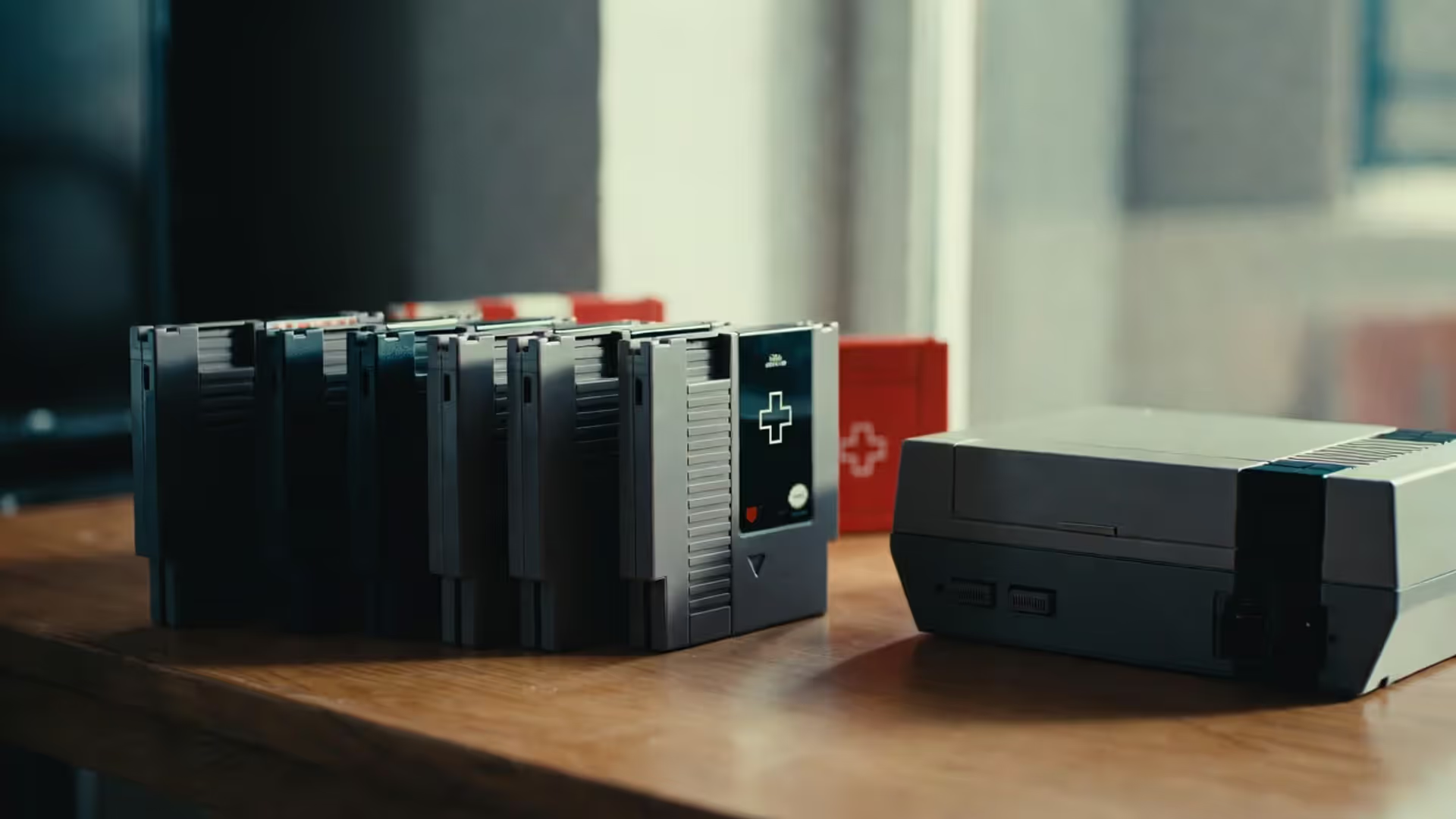
Nintendo proved retro gaming's commercial viability when their NES Classic Edition sold out everywhere in 2016. They crammed 30 games into a cute miniature console and charged $60. Scalpers flipped them for $300. Sony noticed, Microsoft noticed, everyone noticed that old intellectual property isn't worthless—it's underutilized gold.

Author: Megan Lewis;
Source: quantumcatanimation.com
Speedrunners influenced this too. By breaking games in spectacular ways—wall clips, arbitrary code execution, frame-perfect tricks—they revealed depth developers never intended. Modern studios sometimes design exploits into their games deliberately, understanding that emergent gameplay extends relevance. Shovel Knight didn't just look like Mega Man and DuckTales—it internalized why those games worked, then added contemporary quality-of-life features.
Most Influential Retro Gaming Consoles and Their Legacy
Consoles defined gaming generations more than individual titles. Hardware capabilities determined what developers could attempt. Commercial success decided which ideas survived.
| System | Year | Defining Titles | Sales Figures | Collector Interest (1-5) |
| Atari 2600 | 1977 | Pitfall, Adventure, River Raid | 30M units | 3/5 |
| NES | 1985 | Super Mario Bros., Zelda, Contra | 61.9M units | 4/5 |
| Sega Genesis | 1989 | Sonic 2, Streets of Rage, Phantasy Star IV | 30.75M units | 4/5 |
| Super Nintendo | 1991 | Super Metroid, Chrono Trigger, Final Fantasy VI | 49.1M units | 5/5 |
| PlayStation | 1995 | FF VII, Castlevania SOTN, Resident Evil | 102.5M units | 3/5 |
| Nintendo 64 | 1996 | Mario 64, Ocarina of Time, GoldenEye | 32.93M units | 4/5 |
| Dreamcast | 1999 | Shenmue, Jet Set Radio, Phantasy Star Online | 9.13M units | 5/5 |
The SNES gets perfect marks because its games aged beautifully. Hand-drawn sprites and Mode 7 graphics hold up better than the PlayStation's early polygon experiments—compare how Yoshi's Island looks versus Tomb Raider's Lara Croft. Dreamcast's cult following and early death make it catnip for collectors. PlayStation's massive sales flooded the market with common titles, though niche JRPGs still command serious money.
The NES literally saved American gaming after the 1983 crash buried the industry. Nintendo's strict quality controls and the Entertainment System branding (not "console"—that word was poison) convinced retailers to take a chance. The Genesis vs. SNES war created gaming's first major tribal divide—playground arguments about blast processing shaped an entire generation's social dynamics. PlayStation's CD-ROMs enabled FMV cutscenes and orchestral soundtracks, fundamentally expanding what interactive entertainment could attempt.
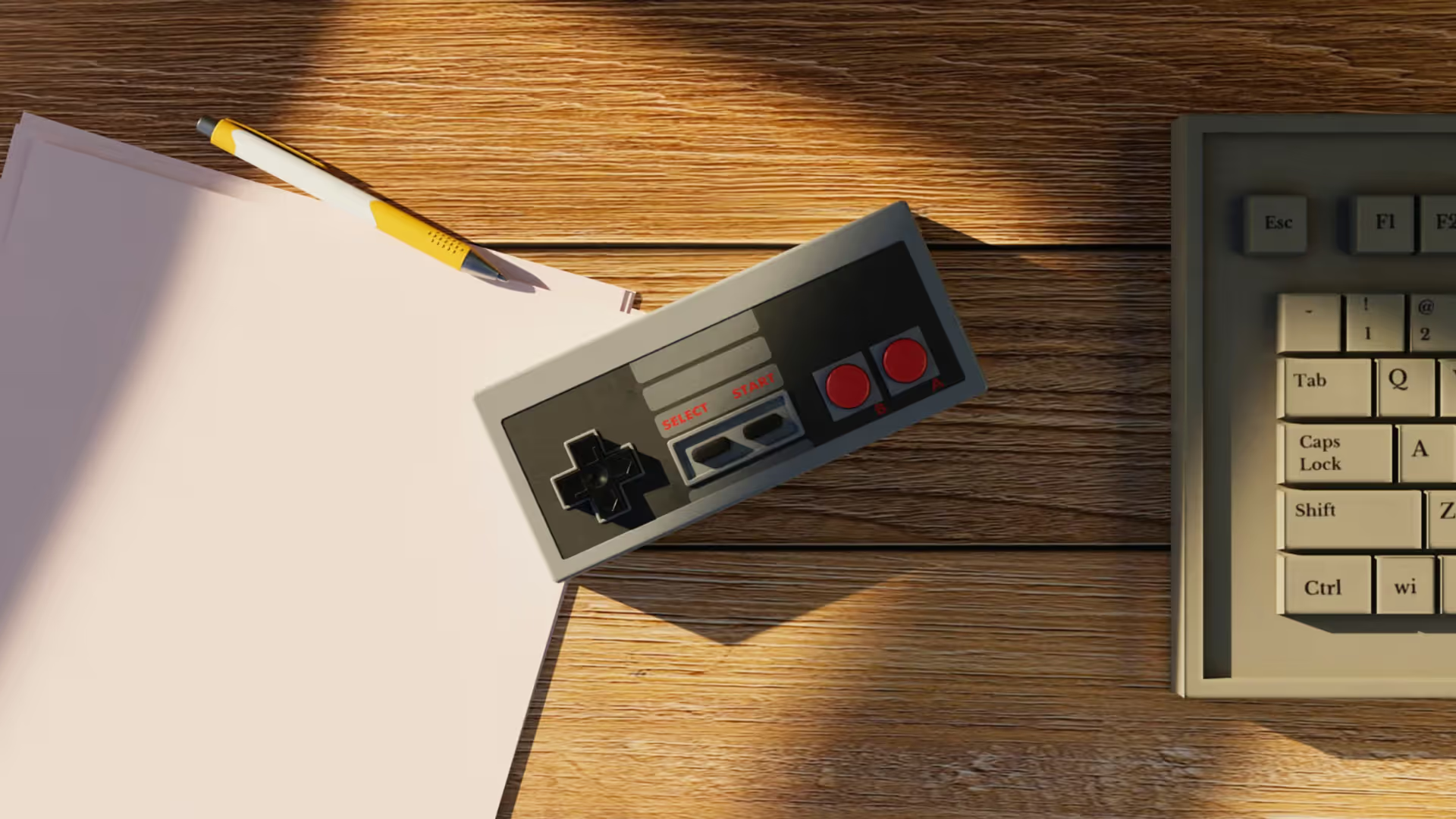
These weren't just game-playing devices. They were cultural artifacts. Controller shapes became iconic—you could recognize a SNES controller's silhouette from across a room. Launch days became events. Console wars fueled magazine sales and internet forum flame wars.
Where to Play Classic Video Games: Legal Options Compared
Original hardware delivers authenticity at the cost of convenience. Modern alternatives prioritize accessibility over purity.
Original hardware vs. modern re-releases
Author: Megan Lewis;
Source: quantumcatanimation.com
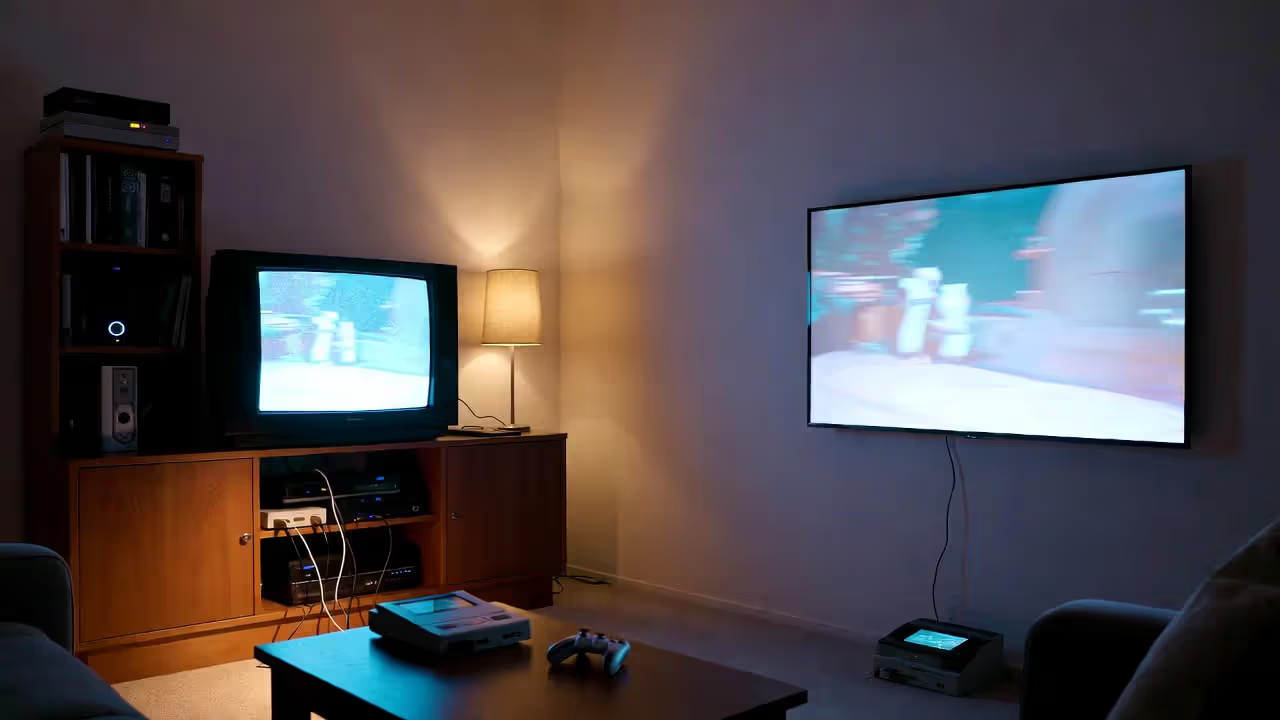
Purists swear by original consoles. They argue (correctly) that emulation introduces inaccuracies—input lag, incorrect sprite flickering, audio differences. Playing Contra on a CRT television through an NES connected via RF adapter isn't just nostalgia theater. It's experiencing the game as developers intended, complete with technical quirks that defined the original experience.
Real hardware comes with real problems. Capacitors fail after 35 years. Disc-read lasers die. Cartridge batteries that preserved your Pokémon Red save file drain dead. Cable standards change—good luck connecting RF output to a 2025 OLED television. Finding working consoles requires patience, technical knowledge, and acceptance that you'll eventually need soldering skills or professional repairs.
Modern re-releases eliminate headaches. Nintendo Switch Online provides NES and SNES libraries for $20-50 yearly. Capcom, Konami, and others bundle their arcade catalogs with save states, rewind features, and achievement tracking. These additions horrify purists but make brutally difficult 1980s games actually finishable for casual players who won't memorize enemy patterns through 40 deaths.
Mini consoles split the difference. The NES Classic and Genesis Mini use emulation internally but package it in replica hardware that feels substantial on your shelf. Curated selections introduce newcomers to each platform's highlights without the overwhelming paradox of choice that comes from browsing 800+ NES titles.
Emulation: legal considerations for US players
Emulation confuses people because the legality splits into two parts. Emulator software itself? Completely legal. Courts consistently ruled that reverse-engineering for compatibility constitutes fair use. Downloading ROM files? That's copyright infringement, full stop.
The "but I own the cartridge" defense holds zero legal weight. Copyright law doesn't grant download rights because you purchased a physical copy. Technically, you'd need to dump your own ROMs using specialized hardware—a process requiring equipment most people won't buy and skills they won't learn. Nintendo shut down major ROM sites and established legal precedent that publishers actively defend back catalogs even for commercially unavailable games.
"Abandonware" also lacks legal standing. Rights holders retain copyright indefinitely regardless of whether they currently sell a product. Companies can and do enforce these rights decades later when they decide to monetize old properties.
Legal options exist. Steam and GOG host licensed classic games. The Internet Archive includes titles whose rights holders explicitly released them or where copyright genuinely lapsed. Some developers open-source their old code, placing it in the public domain. You just need patience finding legal sources.
| Access Method | Cost | Available Games | Legality | Ease of Use (1-5) |
| Original Consoles | $50-300+ | Unlimited (buy separately) | Legal | 2/5 |
| Switch Online | $20-50 annual | 100+ classics | Legal | 5/5 |
| Steam/GOG Bundles | $5-30 each | 1,000+ total | Legal | 5/5 |
| Mini Consoles | $60-100 | 20-40 preloaded | Legal | 5/5 |
| Unauthorized ROMs | Free-$50 (device cost) | Unlimited | Illegal | 3/5 |
| Evercade System | $20-80 per cart | 300+ licensed | Legal | 4/5 |
Evercade deserves spotlight—they secured official licenses for cartridge collections on modern handhelds, combining legal access with collectible physical media. It's a smart solution to digital preservation problems.
Common Mistakes Collectors Make When Buying Vintage Games
Author: Megan Lewis;
Source: quantumcatanimation.com
The retro market matured into serious money territory where Stadium Events carts sell for thousands. That attracted counterfeiters, speculators, and unscrupulous sellers.
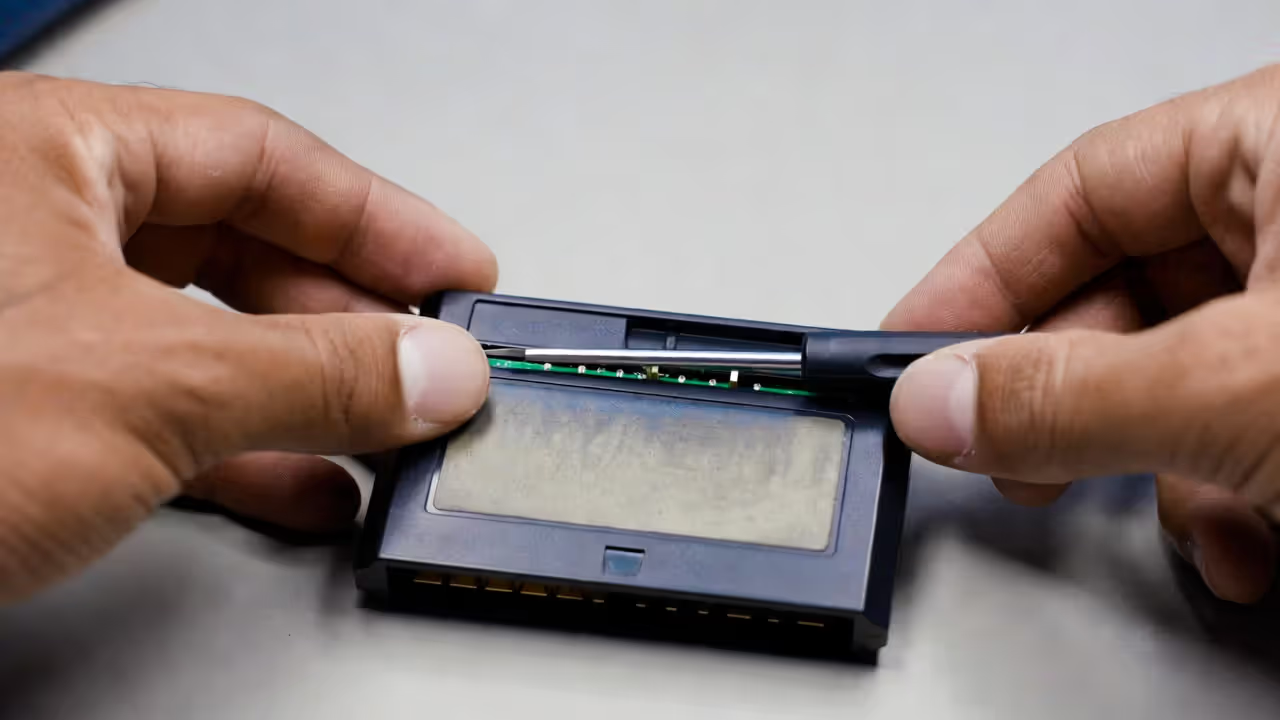
Authentication problems plague expensive cartridges. Reproduction carts look convincing until you know what to check: wrong screw heads (Nintendo used security screws), incorrect label materials, circuit boards that don't match authentic examples. Earthbound reproductions flood eBay because real copies cost $300+. Serious collectors open carts to verify board layouts against known authentic examples. Services like WATA Games authenticate and grade items, sealing them in plastic cases, though debate rages whether their grading inflates values artificially.
Overpaying for common titles happens when nostalgia overrides research. Super Mario Bros. sold 40 million copies—it's not rare. Yet sellers charge $25 for loose carts worth maybe $5 because buyers remember it fondly. PriceCharting.com aggregates actual sales data showing real market values. Personal significance doesn't equal financial value. That 2021 sealed Mario 64 selling for $1.56 million? That bubble burst. Most games lack genuine rarity, and artificial scarcity doesn't create sustainable investment markets.
Storage mistakes destroy both value and playability. Humid basements corrode cartridge contacts. Paper sleeves scratch discs. Sunlight fades label art. Dead batteries erase save files.
Proper preservation requires climate control—consistent 60-70°F temperatures and under 50% humidity. Position cartridges upright to protect labels from pressure damage. House discs in proper jewel cases, touching only edges. For valuable items, archival-quality materials prevent long-term deterioration. Sealed games face their own problems—shrinkwrap contracts over decades, potentially crushing cardboard.
Playing games actually preserves them better than sealed storage. Cartridge contacts benefit from occasional use and cleaning. Console electronics need operation to prevent capacitor degradation. The preservation community emphasizes games exist for playing—treating them purely as investments misses their entire purpose.
How Old School Gaming Communities Keep the Scene Alive
Without passionate communities actively engaging with classic titles, retro gaming would be museum exhibits gathering dust.
Speedrunning and competitive play transformed familiar games into spectator sports. Games Done Quick marathons raise millions for charity while showcasing runners who've mastered Super Metroid, Castlevania, and other classics. These players discover developer-unintended techniques—frame-perfect glitches, sequence breaks, arbitrary code execution that lets them write programs using controller inputs. Watching someone beat Ocarina of Time in 17 minutes by clipping through walls and wrong-warping between areas never stops being wild.
Competitions extend beyond speedrunning. Classic Tetris tournaments draw millions of viewers watching players push NES hardware to "kill screens" developers thought unreachable. Arcade high-score records tracked since the 1980s still see new submissions. These communities prove 40-year-old games offer depth rewarding thousands of hours of practice.
ROM hacking and fan translations give old games new life. Hackers create difficulty adjustments, quality-of-life patches, and entirely new content for decades-old titles. The Super Mario World hacking scene produced thousands of custom levels, some demonstrating professional-grade design skills. Kaizo hacks—brutally difficult modifications requiring frame-perfect inputs—spawned their own genre that influenced mainstream game development.
Fan translations deserve recognition for cultural preservation. Mother 3, Policenauts, Trials of Mana, and dozens of Japan-exclusive games reached Western audiences through volunteer translation teams who spent years reverse-engineering code, translating text, and reprogramming engines to fit English dialogue. These projects occupy legal gray areas but serve preservation when publishers won't.
Annual conventions and meetups provide physical gathering spaces. Portland Retro Gaming Expo, Too Many Games, and Midwest Gaming Classic draw thousands of attendees for buying, selling, trading, and playing. These events feature arcade freeplay areas, tournaments, and panels with industry veterans. Regional game swaps maintain local scenes between major conventions.
Online communities complement physical events. Reddit's retro gaming communities, Discord servers, and specialized forums connect collectors, modders, and enthusiasts globally. These spaces share repair tutorials, discuss preservation techniques, and help newcomers navigate the scene's complexities. Collaborative knowledge-sharing ensures expertise survives as older collectors eventually age out.
FAQ: Your Retro Gaming Questions Answered
Retro games endure because they represent interactive entertainment stripped to its essential core. Without photorealistic graphics, cinematic cutscenes, or always-online services, these titles survived on tight mechanics and clever design. They taught through doing rather than 20-minute tutorials. They respected player intelligence. They shipped complete because developers couldn't patch mistakes later.
The scene thrives because communities actively preserve, modify, and compete with these classics. Whether you're hunting cartridges at flea markets, speedrunning through Zebes, or introducing your kids to games you mastered decades ago, you're participating in living history that continues shaping modern game design.
Starting doesn't require expensive equipment or encyclopedic knowledge. Pick a system that appeals to you, grab a few well-regarded titles, and experience gaming history firsthand. You might discover that games from 30 years ago offer experiences modern releases can't replicate—and understand why millions keep their old consoles connected alongside PlayStation 5s and Xbox Series Xs.