The games that rebuilt an industry
NES Games Guide for Beginners

Content
When Nintendo's gray box showed up in American stores during 1985, most retailers thought the company was insane. Video games? Those were dead. Hadn't they heard about the crash?
Five years later, one in three American homes had an NES plugged into their TV.
How the Nintendo Entertainment System Rescued Gaming in America
The video game industry didn't just stumble in 1983—it face-planted spectacularly. Atari had flooded stores with garbage. Retailers got stuck with unsold inventory. E.T. cartridges literally ended up buried in a New Mexico landfill. Consumer trust evaporated. The market lost roughly $500 million as companies went bankrupt left and right.
Walk into a toy store in 1984, and you'd struggle to find game consoles anywhere. Store managers wanted nothing to do with them.
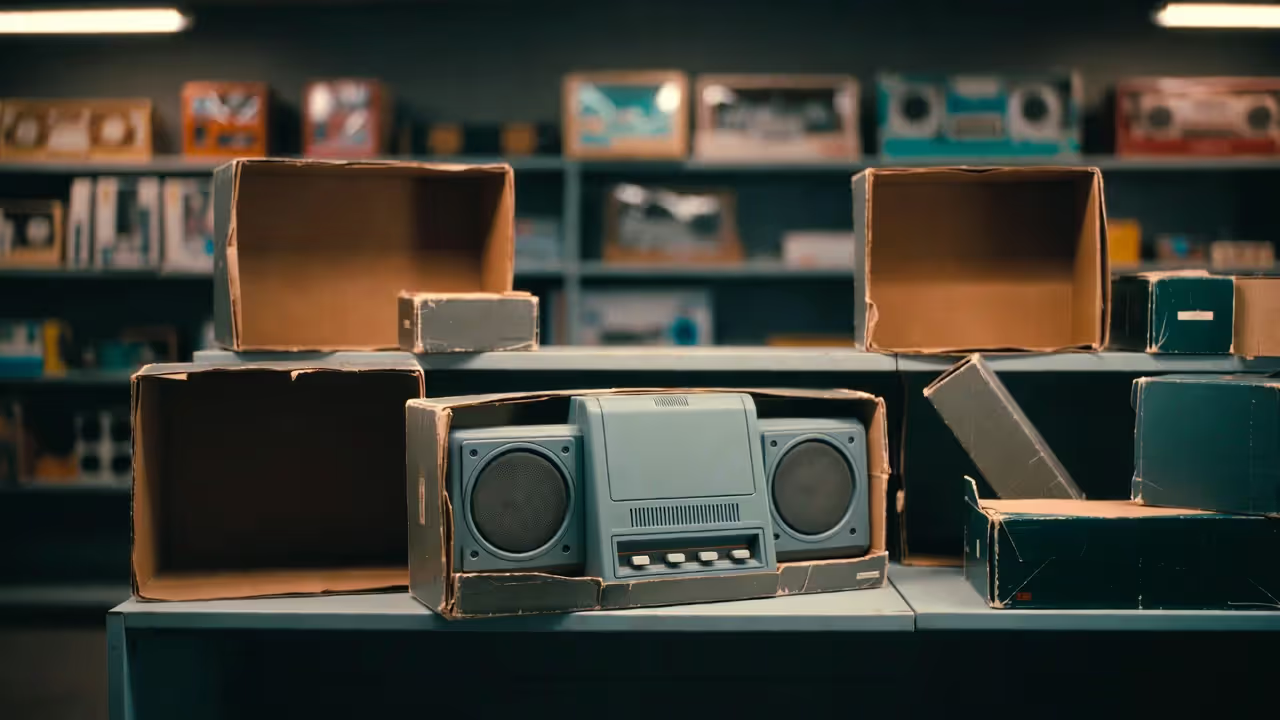
Nintendo's marketing team knew they couldn't just show up with another game machine. So they didn't. They brought an "entertainment system" that looked like a VCR—because everyone understood VCRs. They included R.O.B., a little robot that actually played along with certain games. Suddenly retailers had something physical and novel to demonstrate, not just another Atari competitor gathering dust.
The real genius? Nintendo's quality seal program. Every game submitted to their licensing process underwent actual testing. No more shoveling half-baked software onto store shelves. If a game couldn't meet basic playability standards, it didn't get approved. Period.
This rebuilt consumer confidence brick by brick. By 1990, roughly 30% of households owned the console. The hardware itself deserves credit too—Nintendo's custom Picture Processing Unit handled sprite movement and scrolling that made competitors look primitive. Developers finally had tools that could execute their actual vision instead of compromising at every turn.
Author: Brandon Hayes;
Source: quantumcatanimation.com
15 Famous NES Titles Every Gamer Should Experience
These games aren't museum pieces. They're the foundation underneath modern gaming, and they're still worth your time.
Super Mario Bros. (1985) wrote the rulebook for side-scrolling platformers. Miyamoto's team crafted 32 levels that teach you how to play without a single tutorial prompt. Load up World 1-1 sometime and notice how the first Goomba appears—you learn the core jump mechanic just by reacting to threat.
The Legend of Zelda (1986) proved consoles could handle epic adventures spanning multiple play sessions. The battery-backed save feature was cutting-edge tech then. No more scribbling down 20-character passwords.
Metroid (1986) mashed exploration together with action gameplay, inventing what we'd eventually call Metroidvania. The ending—where you discover Samus is a woman—blindsided players who'd spent 10 hours making assumptions.
Mega Man 2 (1988) nailed the "tackle bosses in any sequence" concept. Beat Metal Man, steal his Metal Blade, use it to wreck other Robot Masters. The web of weapon effectiveness rewarded thinking, not just reflexes.
Castlevania (1986) proved brutal difficulty could still feel fair. Simon Belmont's jump arc frustrated newcomers until something clicked. Master that momentum, and the whole game transforms.
Contra (1988) defined co-op run-and-gun action. Sure, everyone knows the Konami Code for 30 lives. But beating it without cheating? That's a legitimate accomplishment even today.
Punch-Out!! (1987) disguised pattern recognition as boxing. Glass Joe telegraphs his moves. So does Mike Tyson. Learning to read those tells separates winners from button mashers.
Final Fantasy (1987) brought Japanese RPG mechanics to American audiences. The class-based party system and turn-based battles influenced literally hundreds of games afterward.
Ninja Gaiden (1988) used animated cutscenes to tell its story—revolutionary in 1988. The difficulty and constantly respawning enemies still spark arguments about whether it's fair or sadistic.
Kirby's Adventure (1993) landed near the end of the console's life, showing what developers could squeeze out after years of practice. The copy ability system added depth while keeping platforming accessible.
Duck Hunt (1984) came bundled with countless NES consoles, making the Zapper light gun a household item. That laughing dog annoyed an entire generation into gaming.
Excitebike (1984) included a track editor before user-created content was even a concept. You could design courses—though saving them required hardware Nintendo never actually released in America.
Tecmo Bowl (1989) stripped football down to pure arcade fun. Digital Bo Jackson dominated just like the real athlete did on the field.
Battletoads (1991) mixed brawler combat with vehicle stages. The Turbo Tunnel remains one of gaming's most infamous difficulty spikes 30-plus years later.
Dragon Warrior (1986) introduced Americans to turn-based RPG combat. Nintendo Power actually gave away free copies to subscribers because they wanted the genre to catch on.
Genre Performance Breakdown: Top 5 NES Releases
| Title | Category | Year | Challenge Rating (1-5) | Replayability |
| Super Mario Bros. 3 | Platformer | 1990 | 3 | High |
| The Legend of Zelda | Action-Adventure | 1986 | 4 | High |
| Mega Man 2 | Action-Platformer | 1988 | 4 | High |
| Contra | Run-and-Gun | 1988 | 5 | Medium |
| Final Fantasy | RPG | 1990 | 3 | Medium |
Why NES Platformers Set the Standard for Modern Game Design
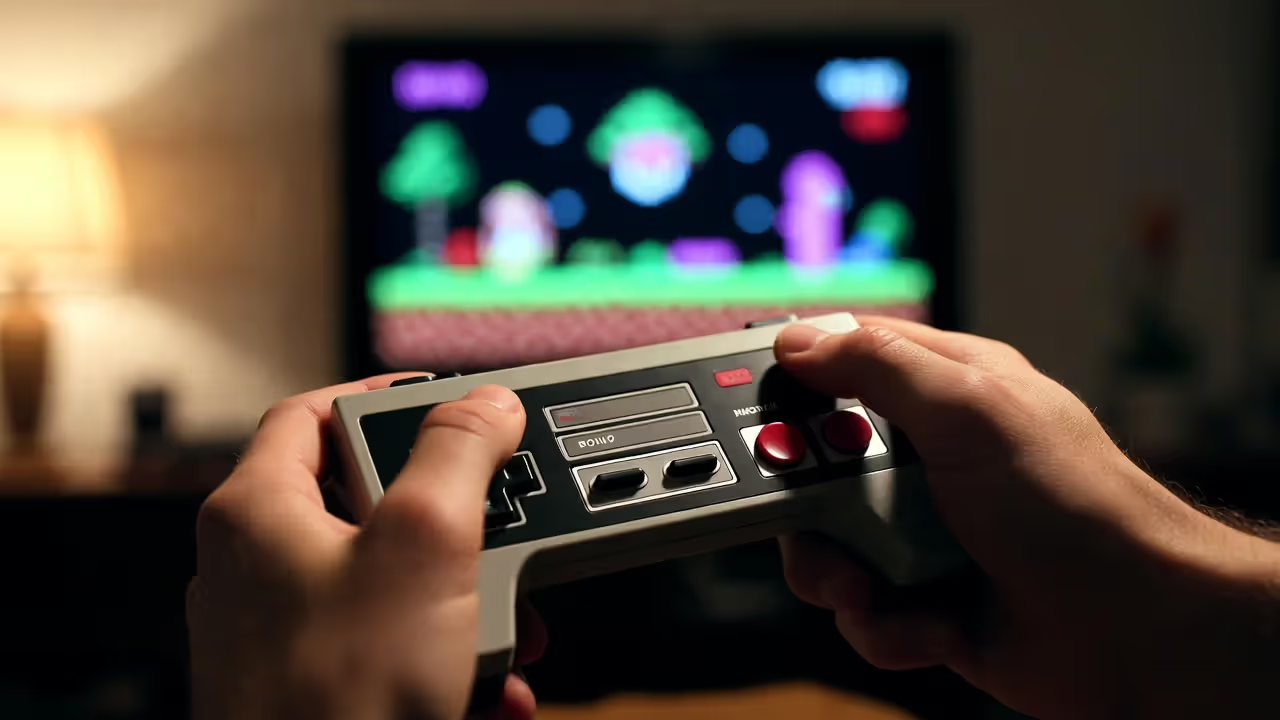
Platformers owned the NES library. The hardware specs and genre demands matched perfectly—smooth scrolling, tight controls, layered sprites creating depth.
Author: Brandon Hayes;
Source: quantumcatanimation.com
Precision Controls and Level Architecture
Super Mario Bros. 3 demonstrates how much Nintendo learned by 1990. Watch Mario accelerate from standstill to full sprint. He doesn't teleport to top speed—there's a curve. That gradual acceleration gives you fine-tuned control over positioning. Sonic borrowed this concept. So did Celeste decades later.
Level designers built entire stages around this movement model. Platform gaps required specific running distances. Enemy patrol patterns forced engagement with the physics system rather than memorization. Check out World 8 sometime—those hand-crafted challenges test every skill the previous worlds taught.
DuckTales (1989) built everything around Scrooge's pogo-cane jump. One mechanic, fully explored. Capcom placed gems and enemies in spots that rewarded mastering the bounce rhythm. Simple concept, deep execution.
Difficulty Curves That Taught Players Mastery
Pop-up tutorials weren't a thing yet. NES platformers taught through level design instead. Mega Man introduces new hazards in safe environments first. You get to experiment, learn the threat, then face that hazard combined with others you've already mastered.
Kirby's Adventure flipped this approach—easier difficulty encouraged testing different copy abilities. You could mess around with powers without constant death penalties. Learning through experimentation instead of tutorial text.
You see this teaching philosophy in acclaimed modern platformers. Hollow Knight and Celeste trace their design ancestry straight back to NES principles: introduce mechanics safely, then layer them in creative combinations.
Hidden Gems in the NES Library Worth Revisiting
Over 700 games hit North American store shelves. Mario and Zelda earned their legendary status, but plenty of excellent titles never found audiences.
Crystalis (1990) blended action-RPG combat with a post-apocalyptic world. Four elemental swords required tactical switching based on enemy weaknesses—Breath of the Wild would explore similar ideas decades later.
Little Samson (1992) released too late to get noticed. Four playable characters with unique abilities, switching between them to solve environmental puzzles. Cartridges fetch hundreds of dollars now, but the gameplay justifies tracking it down somehow.
Shatterhand (1991) delivered satisfying action-platforming with robot companions. Collect power-ups to summon different support bots, adding tactical layers to run-and-gun chaos.
Guardian Legend (1988) somehow merged top-down shooting with Zelda-style exploration. The hybrid design felt experimental in 1988. Still feels unique today.
Power Blade (1991) borrowed Mega Man's boss structure while centering gameplay around a boomerang with incredibly satisfying arc physics. The soundtrack rivals Capcom's best compositions.
Kickle Cubicle (1990) offered puzzle-focused gameplay built around freezing enemies into ice blocks. Brain-teasing level design provided a breather from constant action.
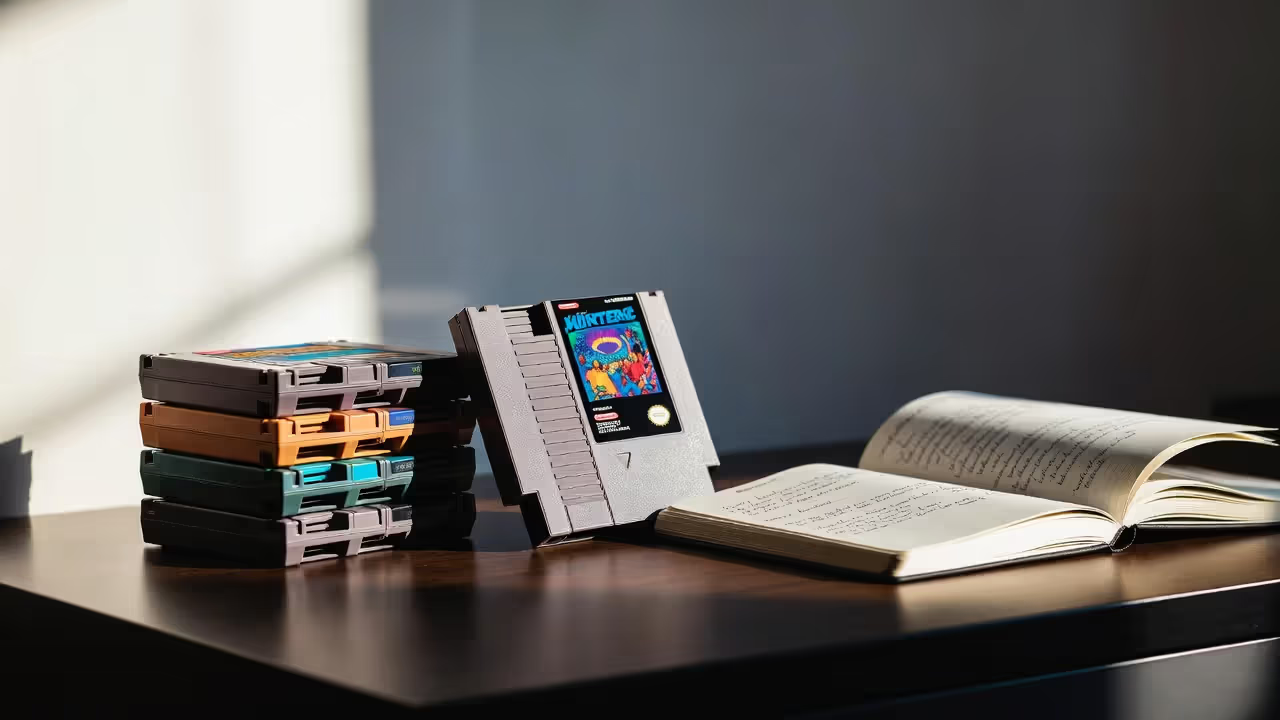
These games didn't flop because they sucked. Bad release timing, tiny marketing budgets, plain old luck—they never found their audience. Emulation and retro collections give them second chances now.
Author: Brandon Hayes;
Source: quantumcatanimation.com
What Made NES Graphics and Sound Memorable Despite Technical Limits
The NES packed an 8-bit processor and 2KB of RAM. Developers couldn't brute-force prettier graphics—they needed clever workarounds.
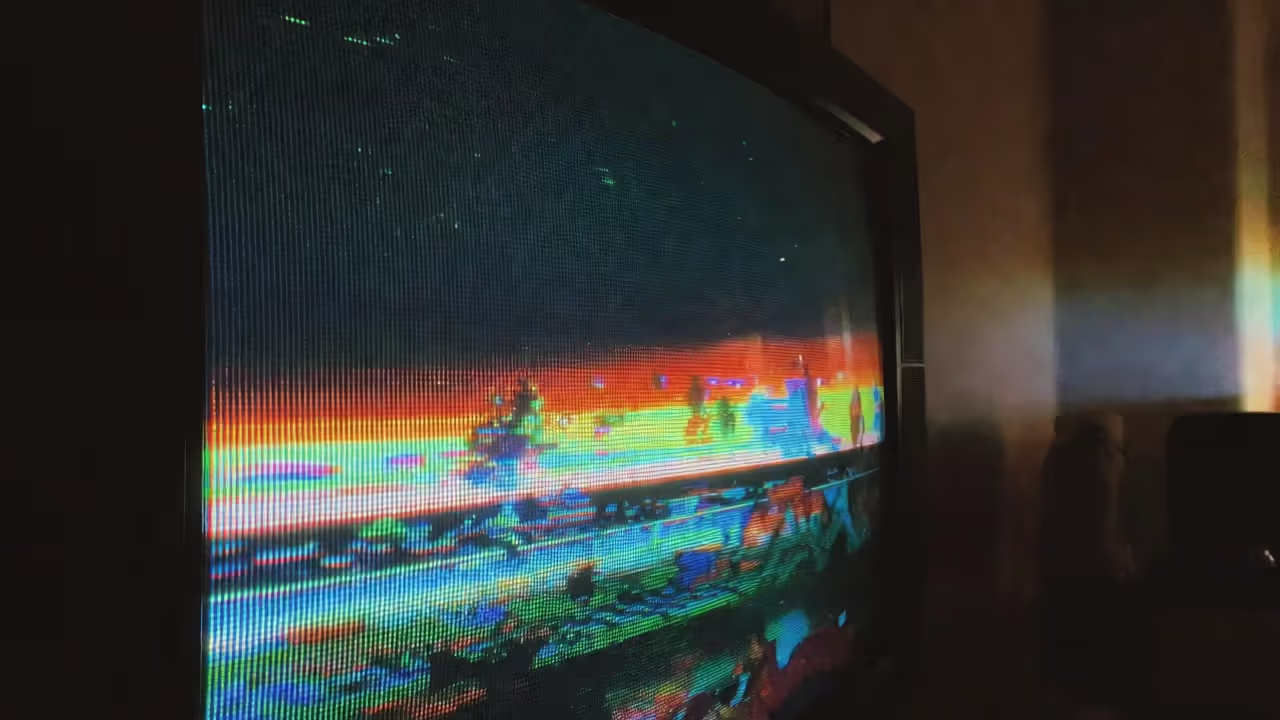
Sprite flickering? That became a feature. When too many objects crowded the screen, the NES rapidly toggled visibility. Contra used this limitation deliberately, making chaotic moments feel even more frantic.
Author: Brandon Hayes;
Source: quantumcatanimation.com
Background artists worked within 54 total colors, though only 25 could display simultaneously. Mega Man stages used color shifts to distinguish areas without building entirely new tile sets. The blue bomber's palette ensured he'd pop against any background.
The Picture Processing Unit's scrolling created parallax effects that seemed impossible given the specs. Ninja Gaiden layered backgrounds to create depth. Developers figured out they could update scroll positions mid-frame, simulating multiple layers through technical trickery.
Music composition faced equally harsh limits. The Audio Processing Unit offered five channels total: two pulse waves, one triangle wave, one noise channel, one sample channel. Koji Kondo (Super Mario Bros.) and Hirokazu Tanaka (Metroid) composed iconic melodies within these constraints.
The NES's limitations forced us to think about what made games fun at their core. We couldn't rely on graphics or voice acting—gameplay had to carry the experience. Those constraints bred creativity that shaped how we approach design even today.
— Tim Rogers, game designer and historian
Chip tune music emerged from necessity but created a distinct aesthetic. Modern indie developers deliberately emulate NES audio because those simple waveforms trigger powerful nostalgia.
How to Start Playing NES Games Today
You don't need vintage hardware to experience the NES library, though purists insist original cartridges hit different.
Original Hardware vs. Modern Options
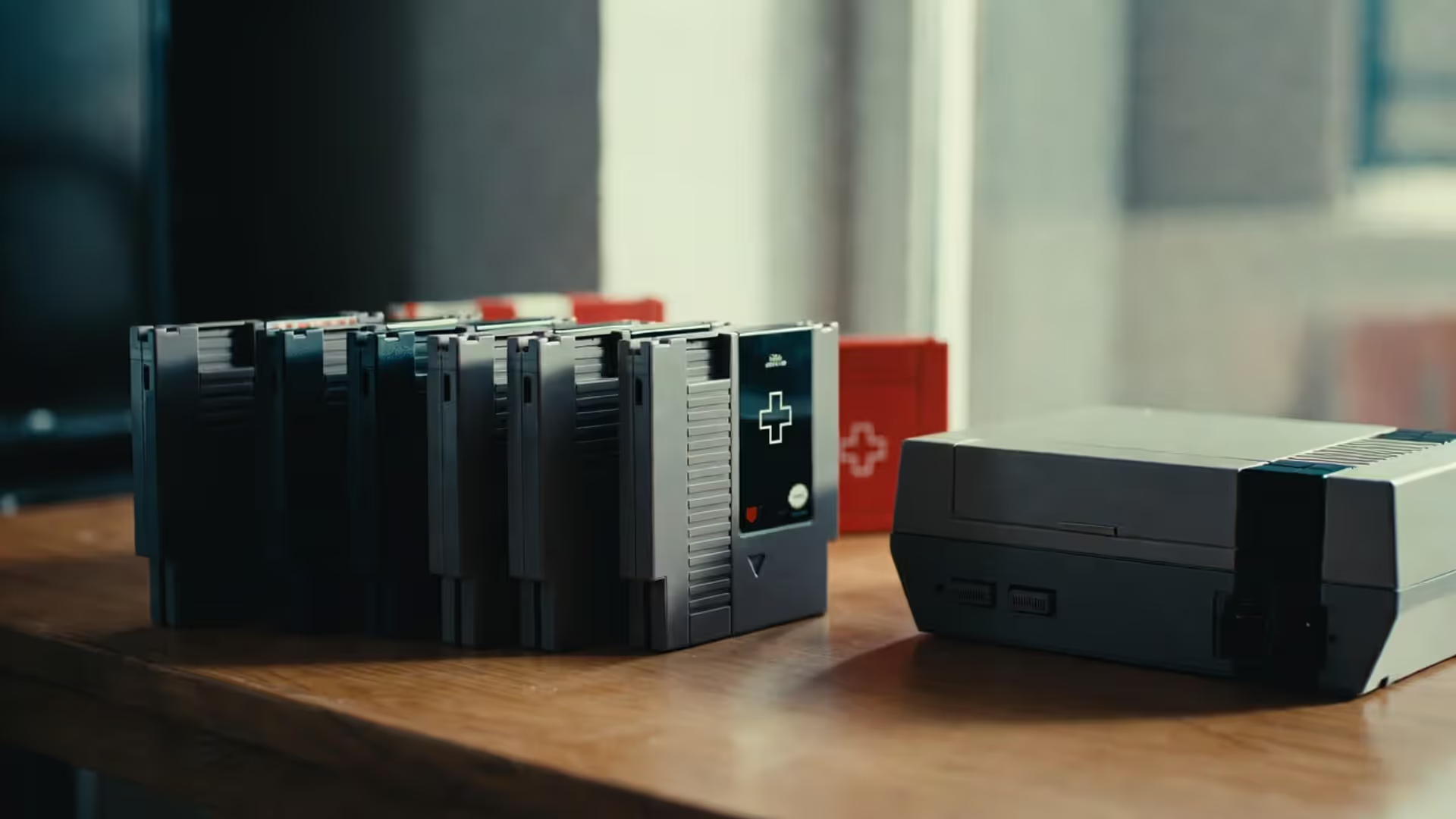
Authentic NES consoles still work if you maintain them properly. Cartridge connector pins oxidize over time—cleaning with isopropyl alcohol usually fixes connectivity problems. The infamous blinking light issue comes from loose 72-pin connectors, which cost under $10 to replace.
Original hardware connects to modern TVs through RF adapters or composite cables. Picture quality won't impress—the NES output 240p video designed for CRT screens. Some players prefer this aesthetic. Others find it too blurry.
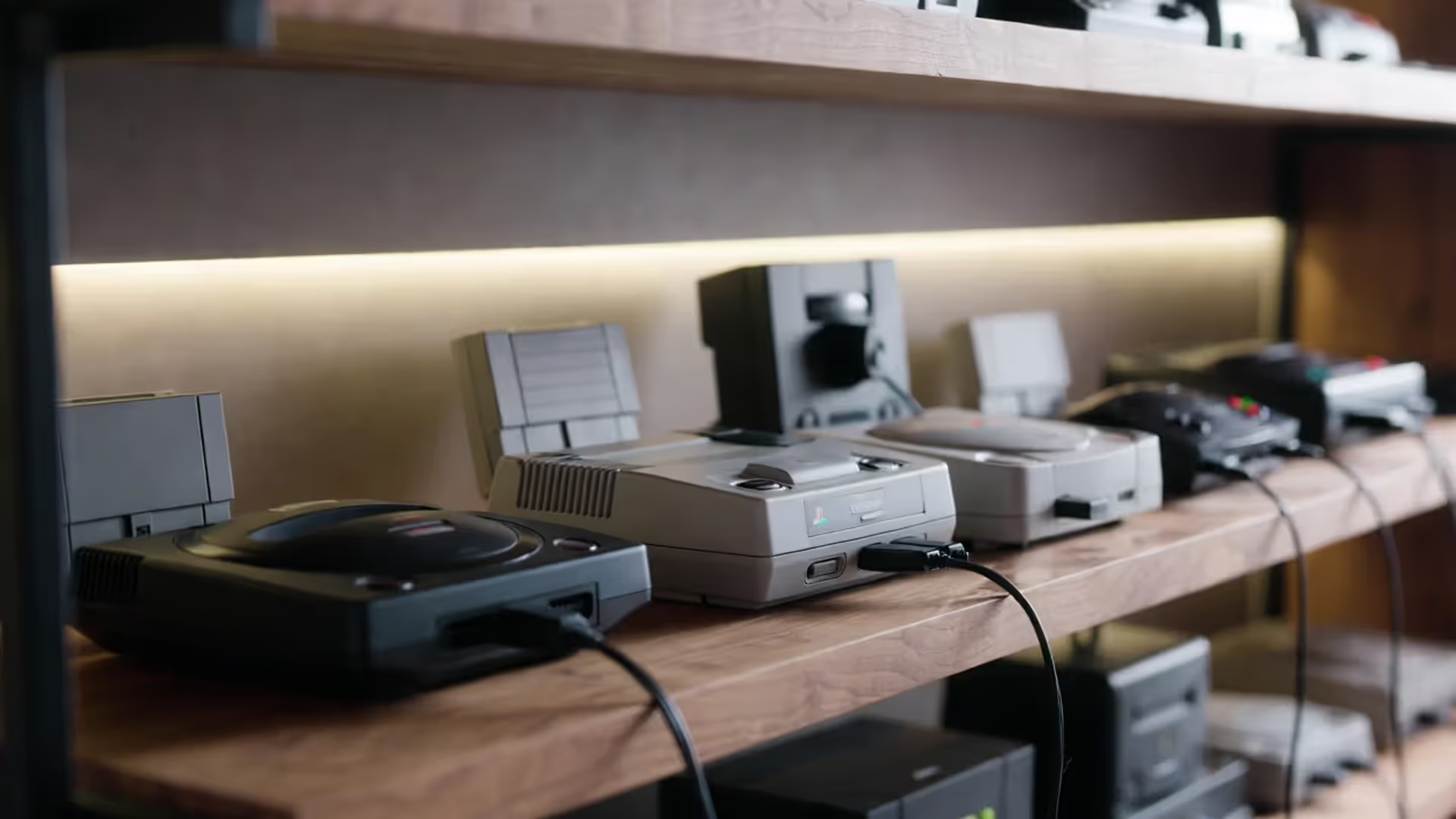
Clone consoles like the Analogue Nt Mini use FPGA technology to recreate NES circuits at the hardware level. HDMI output with original cartridge compatibility—premium pricing for serious collectors.

Author: Brandon Hayes;
Source: quantumcatanimation.com
Legal Ways to Access the NES Library
Nintendo Switch Online subscriptions include a growing NES catalog. Games run through accurate emulation plus modern conveniences like save states and rewind features. The selection emphasizes first-party titles and major third-party releases, with occasional hidden gems appearing.
The NES Classic Edition (2016, reissued 2018) packs 30 games into a miniaturized console. No cartridge swapping, but the included selection covers most essential titles.
Original cartridges remain available through retro shops and online marketplaces. Prices swing wildly—common games like Super Mario Bros. cost a few bucks, while rare titles like Stadium Events command thousands. Reproduction carts offer cheaper alternatives for expensive games, minus collectible value.
ROM downloading occupies murky legal territory. Grabbing ROM files for games you haven't purchased breaks copyright law. Making personal backups of cartridges you own? That's murkier still. Nintendo's position is crystal clear though: they view all ROM distribution as piracy.
FAQ: Common Questions About NES Games
The NES library represents more than nostalgia or retro aesthetics. These games established design languages developers still use. Celeste's precision platforming owes debts to Mega Man. Hollow Knight's environmental storytelling builds on Metroid's foundation. Understanding where these ideas started helps you appreciate how they've evolved.
Original hardware delivers authentic experiences, but accessibility matters more than purity. Nintendo Switch Online, retro compilations, carefully maintained cartridges—multiple paths lead to the same library. These games survived because their core designs transcended technical specifications.
The console that rescued gaming in 1985 still teaches lessons about focused design, creative problem-solving under constraints, and distinguishing difficulty from unfairness. Grab a controller—or its modern equivalent—and discover why these 8-bit adventures resonate decades later.