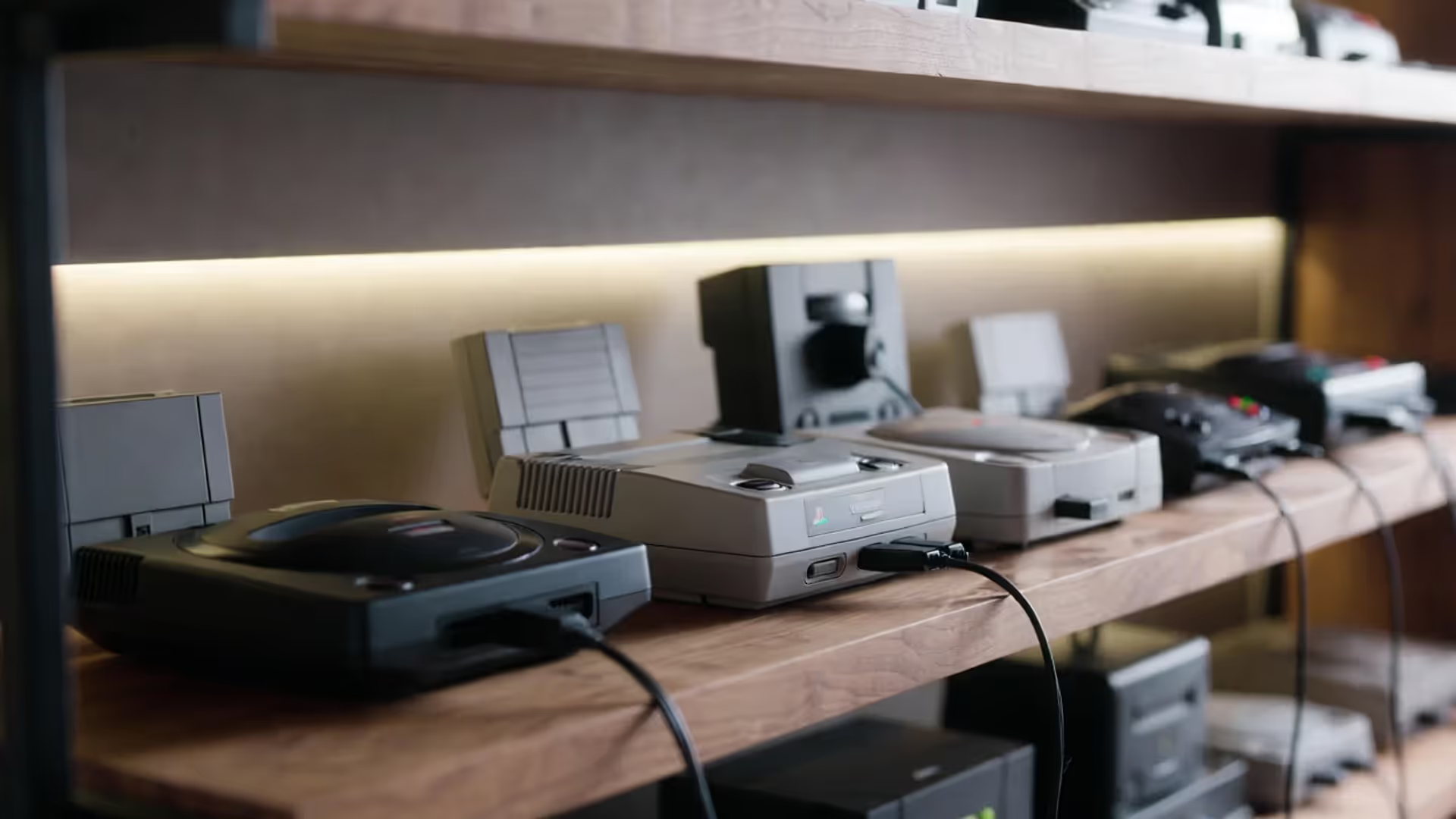

A 90s living room, a CRT glow, and the Genesis era in full swing.
Sega Genesis Games Guide For Beginners

Content
When the Sega Genesis launched in North America during August 1989, Nintendo controlled roughly 90% of the home console market. That dominance seemed unbreakable. Fast forward to 1994, and Sega had clawed its way to nearly 50% market share—a stunning reversal that changed how the industry thought about competition. The Genesis library eventually grew past 900 titles, mixing arcade-perfect ports, experimental original games, and third-party releases that often played better than their Super Nintendo counterparts.
Why the Genesis Became Sega's Most Successful Console
Tom Kalinske took over Sega of America in 1990 and immediately recognized a gap in the market. Nintendo positioned itself as wholesome family entertainment. Meanwhile, teenagers had money to spend and wanted something that didn't treat them like kids. The Genesis became that alternative—a console where blood sprayed in fighting games, sports titles featured real player names, and mascots had attitude instead of cheerfulness.
Technical specs backed up the marketing swagger. That Motorola 68000 processor could push sprites across the screen faster than anything consumers had seen in their living rooms. Parallax scrolling created convincing depth without true 3D hardware. The sound chip had a distinctive "crunchy" quality that worked perfectly for rock soundtracks and synthesized voice samples, even if it couldn't match the SNES's orchestral capabilities.
Timing mattered enormously. Nintendo didn't launch the Super Nintendo in North America until August 1991—two full years after the Genesis arrived. Sega used that window ruthlessly, cutting the price from $189 to $149 and bundling Sonic the Hedgehog with every console sold. When your competitor finally shows up, having millions of installed systems and dozens of quality games already creates serious momentum.
EA Sports chose Genesis as its lead platform for yearly franchises, which told developers where the money was flowing. The whole "Genesis does what Nintendon't" campaign sounds corny now, but it captured something real about 90s console gaming culture. Sega approved games faster, charged lower licensing fees, and didn't police content as strictly. That openness attracted developers who'd grown frustrated with Nintendo's bureaucracy.
Genre-Defining Titles That Put Genesis on the Map
Platformers That Rivaled Mario
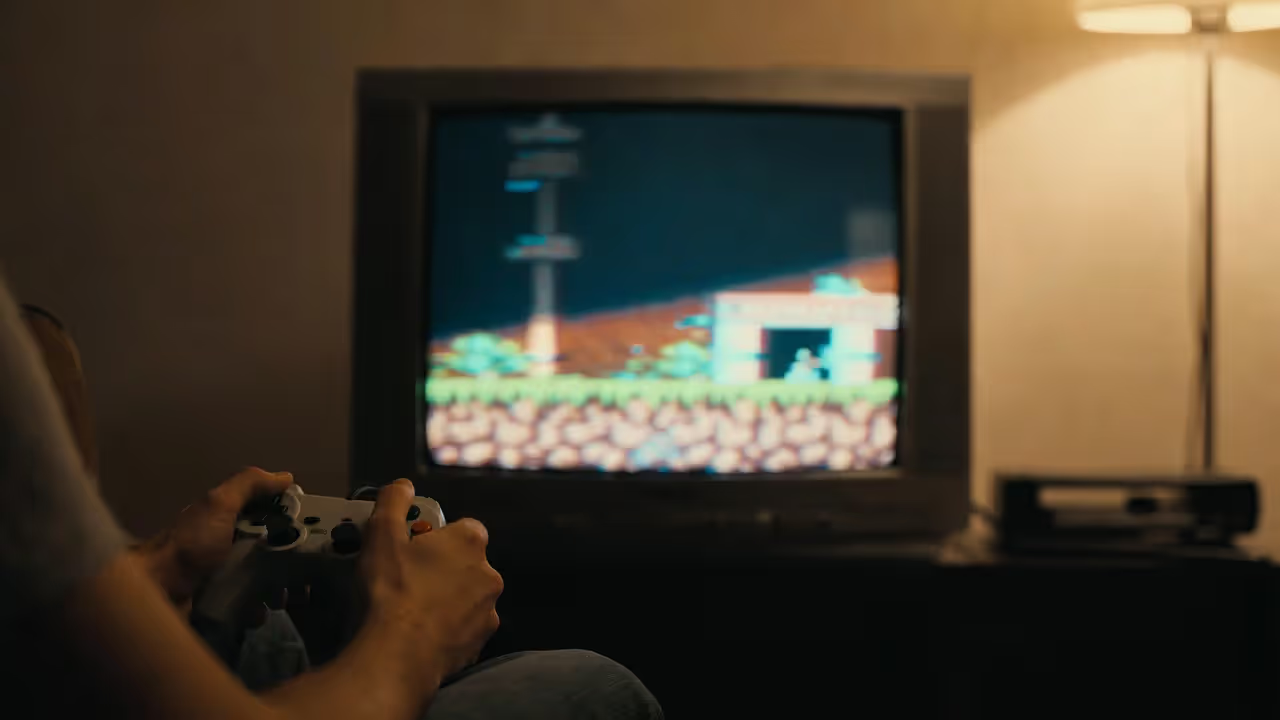
Mario taught players to explore every corner, break every block, and master precise jumping physics. Sonic took the opposite approach—momentum-based design where stopping meant losing your rhythm. You'd blast through Chemical Plant Zone at ridiculous speeds, barely processing what flashed across the screen. The original game moved 15 million copies, but fans still debate whether Sonic 2, Sonic 3, or Sonic & Knuckles represents the peak formula.
Earthworm Jim brought animation-quality sprites and absurdist humor that felt closer to Ren & Stimpy than typical platformer fare. Ristar arrived late in 1995 when most developers had moved on, yet it showcased parallax scrolling techniques that rivaled anything on more powerful hardware. Castle of Illusion Starring Mickey Mouse proved Disney could produce genuinely excellent licensed games when they gave developers adequate time and budget instead of rushing products for movie tie-in deadlines.
Author: Brandon Hayes;
Source: quantumcatanimation.com
Beat 'Em Ups and Fighting Games
Streets of Rage 2 set a standard that side-scrolling brawlers still chase. Yuzo Koshiro's soundtrack blended house music, techno, and industrial sounds that belonged in underground clubs rather than video games. Combat had actual weight—each punch connected with satisfying impact, and the special moves required strategy rather than mindless button mashing. Four distinct characters played completely differently, encouraging multiple playthroughs.
Mortal Kombat on Genesis outsold the SNES version three-to-one because of seven button inputs: A-B-A-C-A-B-B. That code unlocked blood and fatalities while Nintendo's censored version turned blood green and replaced gruesome finishers with tame alternatives. Street Fighter II: Special Champion Edition arrived late but ran faster than the SNES port, which competitive players appreciated.

Author: Brandon Hayes;
Source: quantumcatanimation.com
Sports Simulations That Changed the Game
EA Sports essentially built its empire on Genesis cartridges. Madden NFL '94 introduced the revolutionary passing cone showing receiver routes in real-time—a feature that became industry standard. NHL '94 stripped out unnecessary penalties like offsides and icing, creating arcade-style hockey that's so perfect it still has annual tournaments. NBA Jam's "Boomshakalaka!" announcer and physics-defying dunks became cultural touchstones beyond gaming.
These weren't roster updates with basic gameplay. They attempted to simulate actual sport strategy, momentum shifts, and the feeling of controlling professional athletes. Joe Montana Football competed directly with Madden and pushed both games to improve. The lessons Sega learned here directly influenced NFL 2K on Dreamcast, which many consider the best football sim ever made.

Author: Brandon Hayes;
Source: quantumcatanimation.com
RPGs and Strategy Titles
Genesis never matched SNES's RPG library depth—no Final Fantasy, no Chrono Trigger. But iconic sega games like Phantasy Star IV proved the platform could handle 24-hour epics with complex narratives. Its science-fantasy setting blended swords with spaceships, and manga-style cutscenes advanced the story with visual flair. The combo-based battle system let characters chain attacks together, predating similar mechanics in later RPGs by years.
Shining Force and its sequel brought tactical RPG gameplay to Western audiences who wouldn't see Fire Emblem for another decade. Shadowrun's cyberpunk setting and real-time-with-pause combat felt mature and sophisticated. Landsalker's isometric perspective created spatial puzzles that genuinely challenged players' brains instead of just their reflexes. Sega's RPG library emphasized action and experimentation over traditional turn-based grinding.
20 Must-Play Genesis Games Ranked by Impact and Playability
This sega classics list balances historical importance with how enjoyable these games remain today. Some pioneered techniques the entire industry adopted. Others simply nailed their genre so completely that they're still definitive examples worth studying.
- Sonic the Hedgehog 2 (1992) - Chemical Plant Zone became gaming's most recognizable level thanks to its perfect balance of speed and platforming precision. Tails added cooperative play that actually worked, and the special stages using pseudo-3D effects looked incredible for 1992.
- Streets of Rage 2 (1992) - Four characters with completely different playstyles, branching stage paths, and a soundtrack that transcends its hardware limitations. The combat system rewards positioning and timing over button mashing, which keeps it engaging decades later.
- Phantasy Star IV (1994) - This 24-hour RPG concluded a storyline spanning multiple consoles and generations. Manga-style cutscenes were revolutionary for 1994, and the combo system where characters linked attacks together influenced countless later RPGs.
- Gunstar Heroes (1993) - Treasure's debut established their reputation for technical wizardry and inventive boss design. The weapon-combining system created distinct playstyles, and the run-and-gun action maintained intensity from start to finish without repetition.
- Castlevania: Bloodlines (1994) - The only Genesis entry in Konami's gothic series featured two playable characters with different abilities and European settings rarely explored in Castlevania lore. The Tower of Pisa stage showcased impressive sprite rotation effects.
- Contra: Hard Corps (1994) - Brutally difficult with branching paths leading to multiple endings. Four characters offered wildly different weapons and movement styles. This was Contra at its most experimental, adding RPG-style story choices to the run-and-gun formula.
- Shinobi III: Return of the Ninja Master (1993) - Ninja action evolved beyond the stiff controls of earlier entries. Running sequences, horseback stages, and surfing sections showcased sprite-scaling techniques that pushed the hardware. The combat felt fluid and responsive in ways previous Shinobi games didn't achieve.
- Rocket Knight Adventures (1993) - Momentum-based platforming starring an opossum knight with a jetpack that required careful management. It blended Sonic's speed with traditional platforming precision, creating something that felt familiar yet completely original.
- ToeJam & Earl (1991) - Procedurally generated levels in 1991—basically a roguelike disguised as a funky alien adventure. Split-screen co-op enhanced the experience rather than compromising it, and the chill vibe stood out among hyperactive competitors.
- Earthworm Jim (1994) - Shiny Entertainment's animation background resulted in sprite work that looked hand-drawn. The bizarre humor and creative level design (a submarine made of glass, underwater bungee jumping) made it memorable beyond its excellent controls.
- Comix Zone (1995) - A brawler set inside an evolving comic book where you fight panel-by-panel. The protagonist battles his own creator while rock music blares and paper tears reveal new areas. Unforgiving difficulty kept it from broader success, but the concept was brilliant.
- Beyond Oasis (1994) - Action-RPG combat emphasized timing and positioning over stat grinding. Four elemental spirits provided different abilities, and the animation quality rivaled anything on more powerful hardware.
- Alien Soldier (1995) - Treasure's boss-rush shooter barely received a US release, making it expensive to collect. Transforming weapons and bullet-hell patterns predicted conventions that wouldn't become standard until years later.
- Vectorman (1995) - Pre-rendered sprites created a visual style that looked nothing like other Genesis games. The run-and-gun gameplay incorporated environmental transformations—turning into vehicles, bombs, and other forms to solve puzzles.
- Dynamite Headdy (1994) - Another Treasure masterpiece where your detachable head becomes your weapon. Stage-show aesthetics with curtains and spotlights framed inventive boss mechanics that never repeated themselves.
- Ristar (1995) - Sonic Team's final Genesis project starred a stretchy-armed star using grab-based combat. The parallax scrolling created depth that seemed impossible on aging hardware, and the level variety kept surprising until the credits rolled.
- Sonic 3 & Knuckles (1994) - Lock-on cartridge technology combined two games into the longest 2D Sonic adventure. Save files eliminated the frustration of starting over, and Knuckles' gliding ability opened alternate paths through familiar levels.
- Ecco the Dolphin (1992) - Part nature documentary, part survival horror. Swimming through underwater caverns while managing oxygen created genuine tension, and the story took bizarre sci-fi turns. Beautiful but punishingly difficult.
- Aladdin (1993) - Virgin Games hired actual Disney animators who created fluid character movement that looked like the film. Sword combat and levels expanding beyond movie scenes showed how licensed games could add value instead of just cashing in.
- Micro Machines 2: Turbo Tournament (1994) - Top-down racing across kitchen tables and workshop benches. The J-Cart added two controller ports directly to the cartridge, enabling four-player races without a multitap adapter—simple but genius hardware innovation.
Comparison of Top Performing Genesis Titles by Key Factors
| Title | Category | Year | Studio | How to Play Today | Collector Value |
| Sonic the Hedgehog 2 | Speed platformer | 1992 | Sonic Team | Widely available via compilations & digital stores | Common, under $15 |
| Streets of Rage 2 | Side-scrolling brawler | 1992 | Ancient Corp | Featured in most Sega collections | Common, under $15 |
| Phantasy Star IV | Story-driven RPG | 1994 | Sega | Select compilations only | Rare cartridge, $100+ |
| Gunstar Heroes | Cooperative shooter | 1993 | Treasure | Available in collections | Moderate demand, $30-50 |
| Castlevania: Bloodlines | Gothic action | 1994 | Konami | No modern ports exist | Very rare, $150-300 |
| Contra: Hard Corps | Hardcore action | 1994 | Konami | Included in some compilations | High demand, $80-150 |
| Shinobi III | Ninja platformer | 1993 | Sega | Frequently re-released digitally | Common, under $20 |
| Rocket Knight Adventures | Momentum platformer | 1993 | Konami | Limited modern availability | Sought after, $60-100 |
| ToeJam & Earl | Cooperative roguelike | 1991 | Johnson Voorsanger | Some re-releases, new sequels | Moderate interest, $25-40 |
| Earthworm Jim | Animated platformer | 1994 | Shiny Entertainment | Multiple platform ports | Widely available, under $20 |
How Third-Party Developers Made Genesis a Haven for Innovation
Author: Brandon Hayes;
Source: quantumcatanimation.com
During the genesis era gaming boom, Sega's approach to third-party partnerships created a reinforcing cycle of success. EA Sports committed early with Madden, NHL, and FIFA becoming system sellers that moved hardware. Konami brought arcade expertise with titles like Contra: Hard Corps that maxed out sprite capabilities. Capcom supported the platform with Street Fighter ports and originals like Mega Man: The Wily Wars, showing their investment extended beyond Nintendo exclusivity.
Treasure deserves special attention for using Genesis as their primary creative outlet. Gunstar Heroes, Dynamite Headdy, and Alien Soldier demonstrated techniques other developers hadn't considered—multi-jointed sprite bosses, pseudo-3D rotation, screen-filling explosions without slowdown. These achievements came from developers willing to experiment rather than play it safe.
EA's relationship with Sega proved particularly consequential for both companies. When Nintendo's restrictive licensing terms and cartridge manufacturing requirements became frustrating, EA found a more flexible partner. Those yellow-tabbed EA Sports releases became instantly recognizable branding. Their yearly update model trained consumers to expect regular new versions—a business model that now dominates the entire industry.
Western developers found Genesis more accommodating than Japan-focused Nintendo. Virgin Games published Aladdin, Earthworm Jim, and other titles reflecting American animation sensibilities. Interplay brought cyberpunk RPGs like Shadowrun. Smaller studios could manufacture and distribute cartridges without navigating Nintendo's famously difficult approval bureaucracy.
We knew we couldn't out-Nintendo Nintendo by being cute and cuddly. The Genesis succeeded because we let developers push boundaries and gave gamers experiences they couldn't get anywhere else.
— — Tom Kalinske, former CEO of Sega of America
Collecting and Playing Genesis Games
Original Cartridges vs. Modern Re-releases
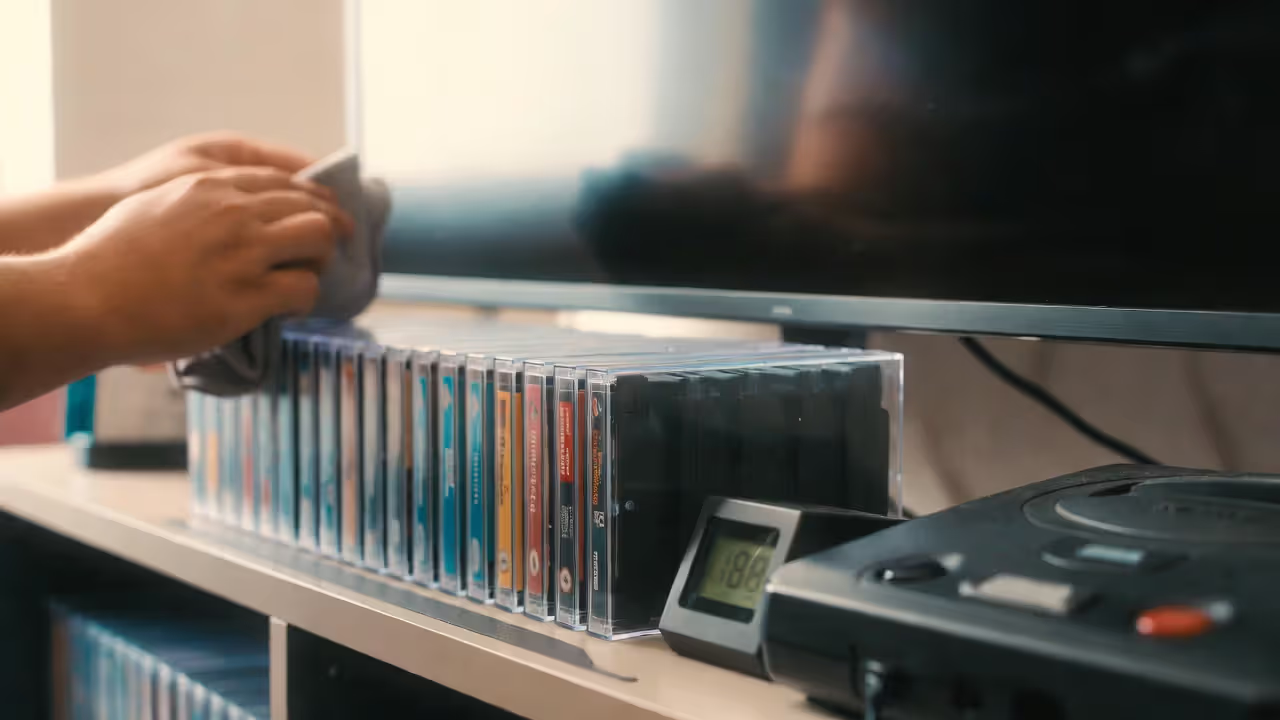
Genesis cartridges remain surprisingly affordable compared to equivalent SNES or NES titles, with most common games costing $8-25. The massive library means many excellent titles never became expensive collector's items. EA Sports games often sell for under $5, making them perfect for testing whether a used console still functions properly.
Certain titles command serious money though. Crusader of Centy regularly hits $400-600 at auction. Mega Man: The Wily Wars never got a US cartridge release, so the European PAL version costs plenty and won't work on American systems without modification. Complete-in-box copies with manuals typically add 50-100% to cartridge-only prices.
Author: Brandon Hayes;
Source: quantumcatanimation.com
Modern re-releases come in several forms. The Sega Genesis Classics collection on Steam, PlayStation, Xbox, and Switch contains over 50 titles with save states, rewind functions, and various display filters. The 2019 Genesis Mini hardware includes 42 games with excellent emulation quality and HDMI output. Individual mobile releases exist too, though touch controls usually compromise the experience significantly.
Emulation and Legal Considerations
Emulation occupies complicated legal territory. Downloading ROMs of games you don't own clearly violates copyright regardless of age. However, ripping cartridges you legally purchased for personal backup falls under fair use according to most legal interpretations. The emulator software itself is completely legal.
Flash cartridges like Everdrive let you load ROM files from SD cards onto real Genesis hardware. This provides authentic hardware gameplay while eliminating wear on aging cartridge contacts. Prices range from $60-180 depending on features like save state support and built-in cheat menus.
Price Ranges for Rare and Common Titles
Under $15: Most sports titles, common platformers including Sonic 1, Disney licenses, bundle games. Perfect for building a collection without breaking budgets.
$15-40: Mid-tier classics—Streets of Rage, Golden Axe, Altered Beast, many Konami/Capcom releases. This sweet spot offers quality games at reasonable costs.
$40-100: Better Treasure releases, Phantasy Star series, Shining Force games, late-lifecycle rarities. Complete boxes command premium prices here.
$100-300: Rare RPGs, limited releases like Pier Solar (a 2010 homebrew that got physical manufacturing), sought-after Japanese imports.
$300+: Crusader of Centy, Mega Man: The Wily Wars (European), sealed copies of major releases, prototype cartridges.
Regional differences affect pricing significantly. Japanese Mega Drive games typically cost less than US Genesis equivalents, and many work on American systems without modification. PAL European releases require region adapters or hardware modifications to run on NTSC systems.
Frequently Asked Questions About Sega Genesis Games
The Sega Genesis library captures a specific moment when hardware constraints forced innovation rather than limiting it, when third-party relationships mattered as much as first-party development, and when competing philosophies about gaming's target audience created genuine alternatives in the marketplace. Whether you explore these games through original cartridges, modern compilations, or carefully considered emulation, the best Genesis titles still deliver tight controls, imaginative design, and pure entertainment value that justified their classic status. The console's legacy extends beyond nostalgia—dozens of indie developers cite Streets of Rage, Gunstar Heroes, and Sonic as direct inspirations for their current projects. That cross-generational influence spreading through genres and decades might represent the Genesis's most impressive achievement.