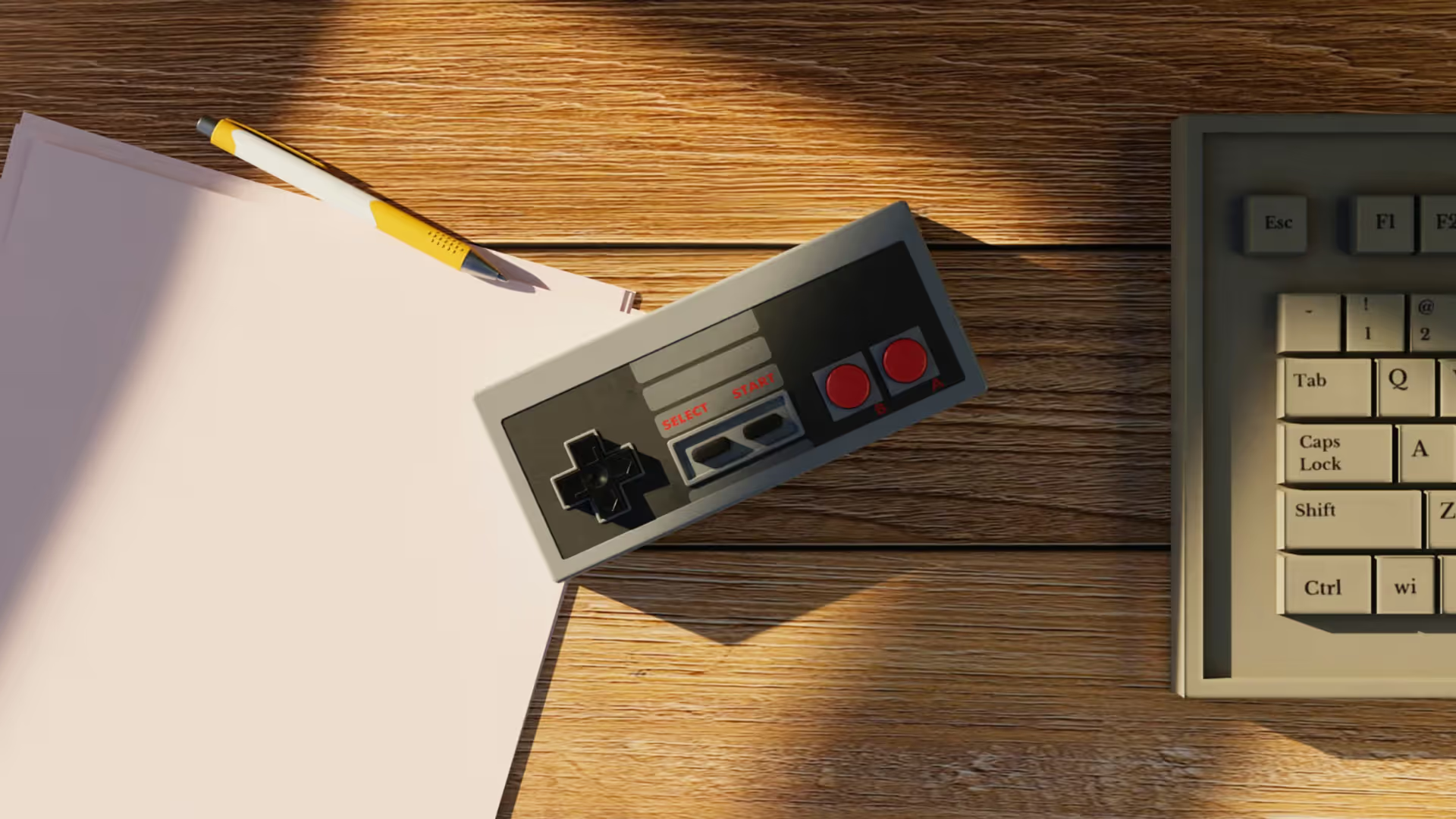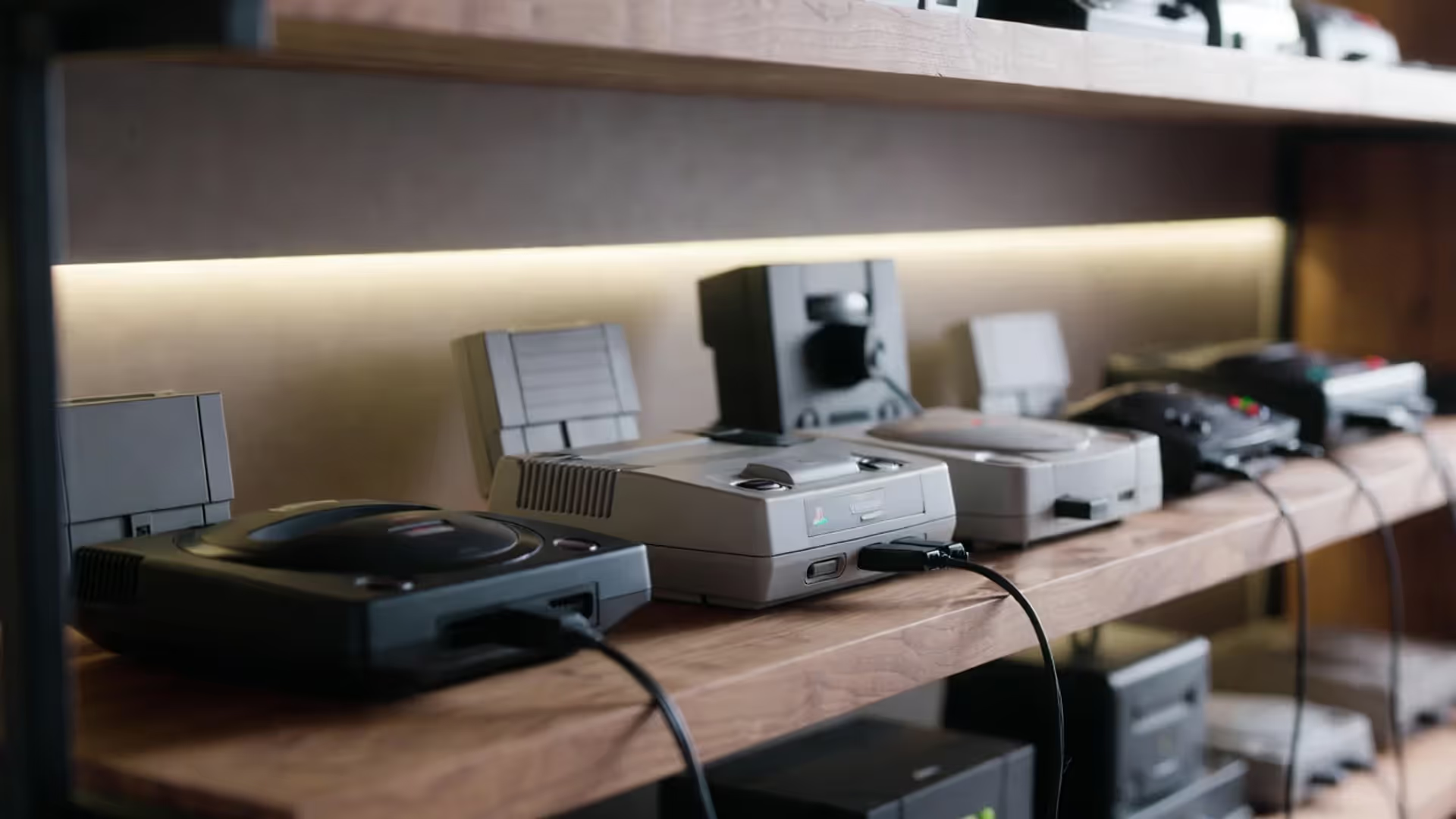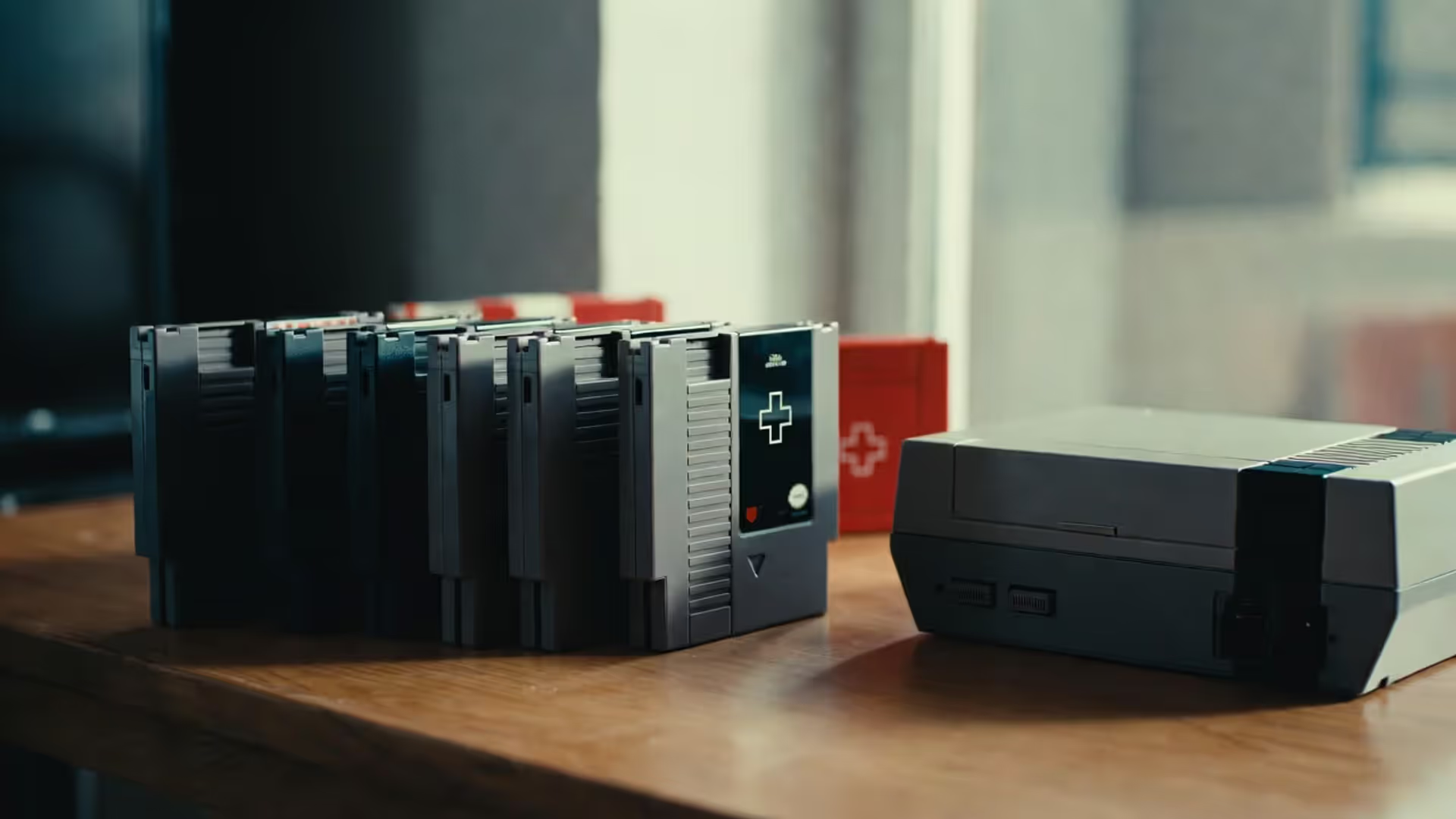
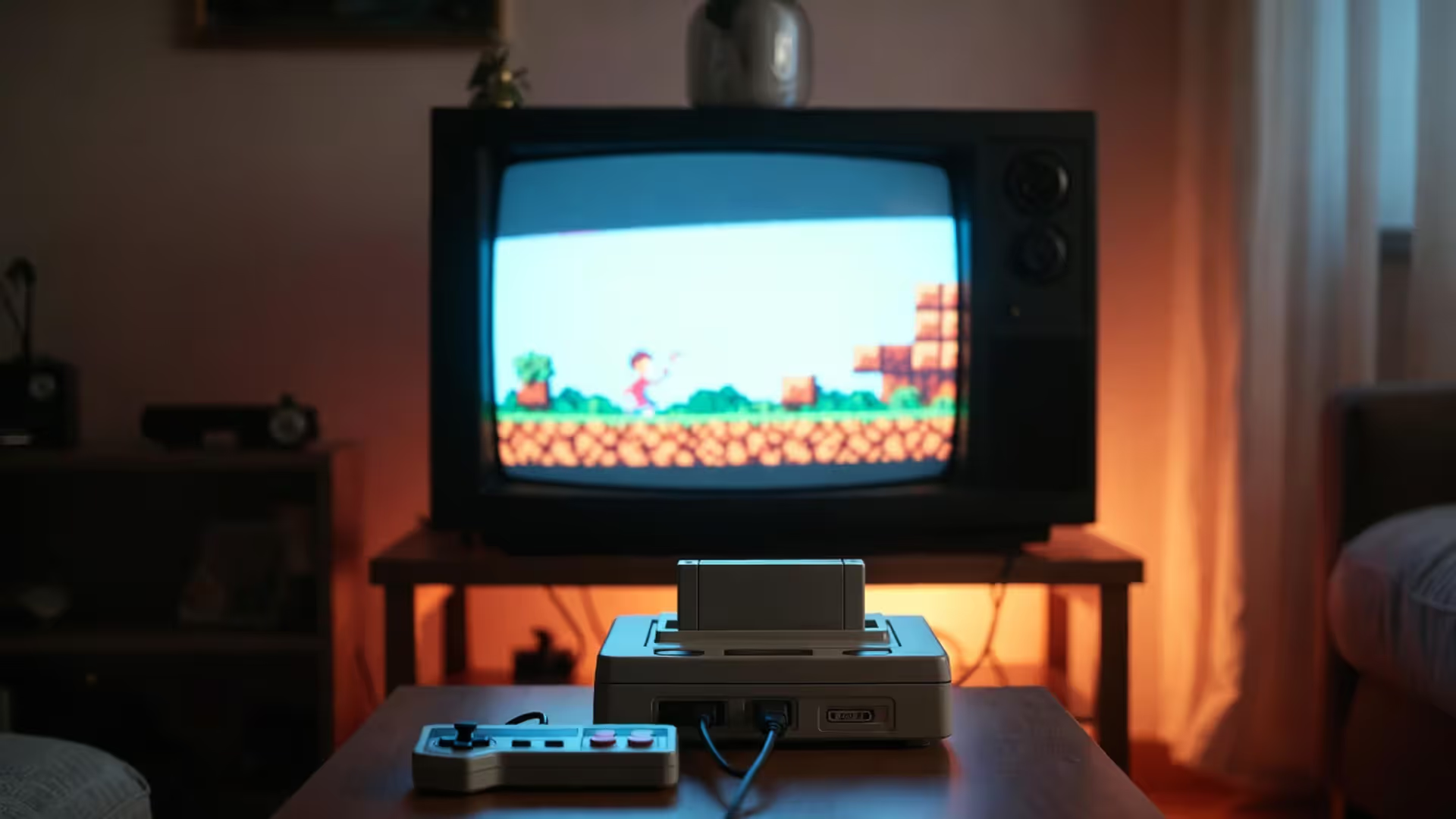
The era when pixels built entire worlds
8 Bit Games Explained

Content
The golden age of video games didn't happen in high-definition 4K resolution. It happened on televisions displaying chunky pixels, limited color palettes, and bleeping soundtracks that somehow captured imaginations worldwide. 8 bit games represent more than nostalgic curiosity—they established the grammar of interactive entertainment that every modern game still speaks.
Between 1983 and 1992, these titles rescued the video game industry from collapse, created billion-dollar franchises, and proved that technical constraints could fuel rather than limit creativity. Understanding this era means understanding why Mario jumps the way he does, why health bars exist, and why game composers still reference chiptune melodies decades later.
The Technical Foundation: Understanding 8 Bit Architecture
The "8 bit" designation refers to the processor's data bus width—the number of binary digits it could process simultaneously. An 8-bit CPU handled information in chunks of 8 binary digits (bits), allowing 256 possible values per operation. This sounds primitive compared to today's 64-bit processors, but it represented a massive leap from the 4-bit systems that preceded it.
How 8 Bit Processors Shaped Game Design
The Nintendo Entertainment System used a modified MOS Technology 6502 processor running at 1.79 MHz. For perspective, your smartphone processor runs roughly 1,500 times faster. This meant developers had to make brutal choices about what their games could do.
Enemy AI couldn't be sophisticated—most adversaries followed simple patrol patterns or reacted to player proximity within limited ranges. Games like Mega Man featured bosses with predictable attack sequences because complex behavior trees would have overwhelmed the processor. Developers turned this limitation into a feature: pattern recognition became a core skill, and mastering enemy routines felt rewarding rather than repetitive.
The processor speed also dictated how many objects could appear onscreen. The NES could display 64 sprites simultaneously, but only eight per horizontal line before flickering occurred. Watch closely during intense moments in Contra or Castlevania—enemies blink in and out of visibility when too many sprites occupy the same vertical space. Smart designers worked around this by spacing enemies vertically or using flickering deliberately to indicate invincibility frames.

Author: Megan Lewis;
Source: quantumcatanimation.com
Memory Limitations That Sparked Creativity
Early cartridges contained as little as 32 kilobytes of program memory—roughly the size of a single low-resolution smartphone photo. The Legend of Zelda, considered massive for its time, shipped with 128KB. Developers couldn't store multiple versions of similar assets, so they reused and recolored everything.
Super Mario Bros. uses the same graphics for bushes and clouds—just different color palettes. Goombas and Koopa Troopas share animation frames. The castle and fortress structures repeat with minor variations. This wasn't laziness; it was engineering brilliance under constraint.
Memory restrictions forced developers to master procedural generation before the term became trendy. Mega Man levels loaded in chunks as you progressed, with the game holding only the current screen and adjacent areas in RAM. Metroid's sprawling map felt enormous because clever door placement and palette swaps made reused room layouts feel distinct.
Author: Megan Lewis;
Source: quantumcatanimation.com
The Visual Language of 8 Bit Graphics Style
The aesthetic people associate with 8 bit games emerged from hardware limitations, not stylistic choice. The NES could display 54 colors simultaneously from a master palette of 64. Sprites could use three colors plus transparency. Backgrounds could use four-color tiles. These restrictions birthed the visual language we now call "8bit graphics style."
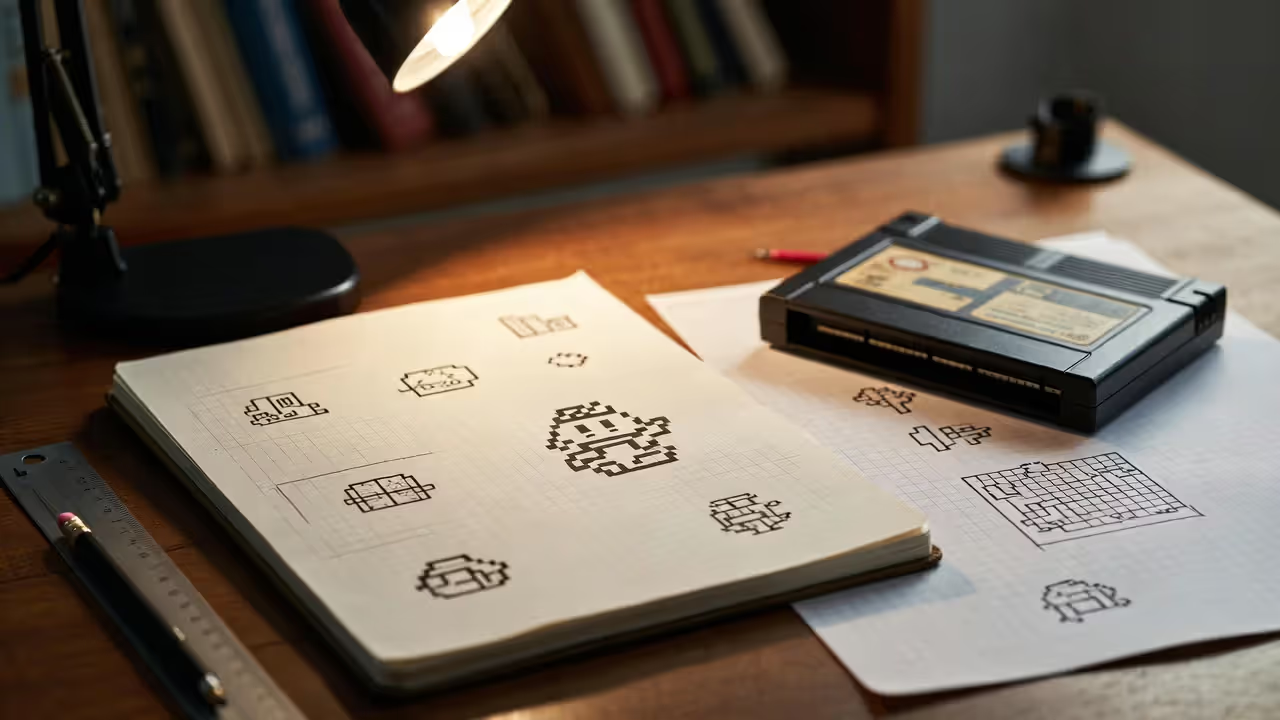
Pixel art wasn't an art movement—it was the only option. Artists worked on grid paper, plotting individual pixels because that's how sprites existed in memory. A single character might occupy a 16x16 or 32x32 grid. Every pixel mattered. Artists learned to suggest detail through clever shading patterns, using dithering (checkerboard patterns alternating two colors) to create the illusion of additional hues.
Character designers developed shorthand visual language that remains influential. Large heads with expressive faces ensured personality read clearly at small sizes. Bright, contrasting colors helped characters stand out against backgrounds. Exaggerated proportions—Mega Man's oversized helmet, Simon Belmont's muscular frame—communicated character traits instantly.
Tile-based backgrounds defined the look of early console games. Rather than storing complete background images, games used small tiles (typically 8x8 pixels) arranged in grids. Super Mario Bros. uses fewer than 50 unique tiles to create its entire first world. Artists became masters of modular design, creating tiles that could combine in multiple configurations while maintaining visual cohesion.
Animation required extreme economy. A walking character might use just three frames. Attacks often had two frames: wind-up and execution. Yet these minimal animations felt dynamic because timing and spacing were perfect. The six-frame run cycle of Mario feels more responsive than many modern animations with dozens of frames because Nintendo's designers understood weight and momentum.
Iconic Soundtracks: How 8 Bit Music Became Legendary
The NES sound chip (Ricoh 2A03) offered five audio channels: two pulse waves, one triangle wave, one noise channel, and one sample channel. Composers couldn't layer dozens of instruments or record live performances. They programmed individual notes into memory, creating music note-by-note like a player piano roll.
Koji Kondo composed the Super Mario Bros. theme in this environment. The melody uses the pulse wave channels, the bassline uses the triangle wave, and percussion uses the noise channel. The sample channel remained mostly silent—it was expensive memory-wise and sounded rough. This five-channel limit meant composers had to choose: harmony or bass? Melody or counter-melody?
Great 8bit soundtracks turned limitations into distinctive voices. Mega Man 2's soundtrack, composed by Takashi Tateishi and others, used rapid arpeggios (cycling quickly through chord notes) to simulate richer harmonies than the hardware could produce simultaneously. The effect created an energetic, almost electric sound that defined the game's personality.
Castlevania's soundtrack demonstrated how mood could transcend technical limits. Composer Kinuya Kikuchi used minor keys, dramatic pauses, and careful channel orchestration to create gothic atmosphere. "Vampire Killer" sounds fuller than many contemporary tracks because every note serves multiple purposes—the bassline provides rhythm and harmony, the melody carries emotional weight, and the sparse percussion emphasizes rather than fills space.

Author: Megan Lewis;
Source: quantumcatanimation.com
Memory constraints meant composers had to loop short phrases. Most 8 bit game music loops every 30-90 seconds. Yet players rarely noticed because good compositions used variation within repetition. The Zelda overworld theme shifts between major and minor modes, creating emotional peaks and valleys within its loop.
Why 8 Bit Soundtracks Still Influence Modern Composers
Chiptune music spawned an entire genre that persists today. Artists use original hardware or software emulators to create new music with vintage sound chips. The aesthetic appeals because those limitations forced melodic and rhythmic creativity—every note had to earn its place.
Modern game composers frequently reference 8 bit techniques. Undertale's soundtrack by Toby Fox deliberately uses chiptune elements alongside modern production, creating nostalgic resonance while maintaining contemporary polish. Shovel Knight's Jake Kaufman composed entirely within NES hardware limitations, proving that constraint-based composition still produces memorable results.
The influence extends beyond deliberate retro styling. Minimalist composition—where every element serves clear purpose—traces directly to 8 bit era necessity. Composers learned that memorable melodies don't require orchestral complexity. Sometimes a perfect five-note phrase loops better than a three-minute progressive composition.
Console Wars and the NES Era: When 8 Bit Gaming Peaked
The video game crash of 1983 nearly destroyed the industry. Atari's collapse, market oversaturation, and poor-quality titles convinced retailers that gaming was a dead fad. When Nintendo released the Famicom in Japan that year, American distributors showed little interest.
Nintendo rebranded the Famicom as the "Nintendo Entertainment System" for Western markets, deliberately avoiding the term "video game console." The company positioned it as an entertainment system, bundled it with R.O.B. (a toy robot), and implemented strict quality control through licensed cartridges. This strategy worked. By 1990, 30% of American households owned an NES.
Sega entered the market in 1986 with the Master System, technically superior in several ways but hampered by Nintendo's aggressive third-party exclusivity contracts. The Master System offered better graphics capabilities and a built-in pause button (NES required games to implement pause in software), yet struggled to gain market share outside Europe and Brazil.
Atari's 7800, released in 1986 after a two-year delay, represented the company's attempt to reclaim relevance. It offered backward compatibility with Atari 2600 cartridges and improved graphics, but arrived too late with too little third-party support to compete meaningfully.
| Console | Release Year (US) | Processor | Resolution | Colors Available | Notable Exclusives | Units Sold (Worldwide) |
| Nintendo Entertainment System | 1985 | 1.79 MHz MOS 6502 | 256×240 | 54 on-screen (64 total) | Super Mario Bros., The Legend of Zelda, Metroid | ~62 million |
| Sega Master System | 1986 | 3.58 MHz Zilog Z80 | 256×192 | 32 on-screen (64 total) | Phantasy Star, Alex Kidd, Wonder Boy | ~13 million |
| Atari 7800 | 1986 | 1.79 MHz 6502C | 320×200 | 256 available | Ninja Golf, Midnight Mutants, Food Fight | ~3.77 million |
The NES era gaming period established practices that define the industry today. Nintendo's seal of quality created the concept of platform holders curating content. Third-party licensing fees became standard business models. Pack-in games (Super Mario Bros. with the NES) proved that bundled software could define platform identity.
This period also established Japan as a gaming superpower. While American and European companies stumbled, Japanese developers—Nintendo, Konami, Capcom, Square—created the franchises that still dominate sales charts. The cultural exchange worked both ways: Japanese developers studied Western fantasy and science fiction, while Western audiences embraced Japanese game design philosophy.
Author: Megan Lewis;
Source: quantumcatanimation.com
15 Essential 8 Bit Games That Defined a Generation
Super Mario Bros. (1985) - The game that rescued the industry. Shigeru Miyamoto's masterpiece taught players through design rather than tutorials, introduced hidden secrets as core gameplay, and established platforming mechanics every subsequent game referenced.
The Legend of Zelda (1986) - Proved games could offer non-linear exploration and save progress via battery backup. Players could tackle dungeons in varying orders, creating personal experiences within a shared world.
Metroid (1986) - Combined exploration, power-up progression, and atmospheric isolation. Revealed its protagonist was female only after completion, challenging player assumptions.
Mega Man 2 (1988) - Perfected the stage-select formula where player choice mattered. Each boss weapon exploited another boss's weakness, creating strategic depth.
Castlevania (1986) - Demonstrated that tight controls and deliberate pacing could create tension. Every jump required commitment; every enemy demanded respect.
Contra (1987) - Two-player co-op action that balanced memorization with reflexes. The Konami Code entered gaming culture through this title.
Final Fantasy (1987) - Square's last-ditch effort became a genre-defining RPG. Class customization, strategic combat, and narrative ambition set new standards.
Dragon Quest III (1988) - So popular in Japan that its release allegedly increased youth absenteeism. Established JRPG conventions still used today.
Punch-Out!! (1987) - Pattern recognition gameplay disguised as boxing. Opponents telegraphed attacks through animation tells, teaching players to read visual cues.
Ninja Gaiden (1988) - Cinematic cutscenes between levels told a coherent story. Brutal difficulty demanded mastery of every mechanic.
Kirby's Adventure (1993) - Released late in the NES lifecycle, it pushed hardware limits with parallax scrolling, large sprites, and vibrant colors. Copy abilities created varied gameplay within a single character.
Tetris (1989) - The Game Boy version became ubiquitous, but the NES release proved puzzle games could compete with action titles for attention and sales.
Battletoads (1991) - Infamous difficulty spikes, particularly the speeder bike level. Showed that late-generation NES games could deliver visual spectacle.
Batman (1989) - Sunsoft's movie tie-in transcended licensed game mediocrity with tight controls, excellent music, and challenging level design.
River City Ransom (1989) - Beat-em-up with RPG elements and open-world structure. Players earned money from defeated enemies to buy stat upgrades and food items.
The Modern Revival: How Pixel Art History Influences Today's Indies
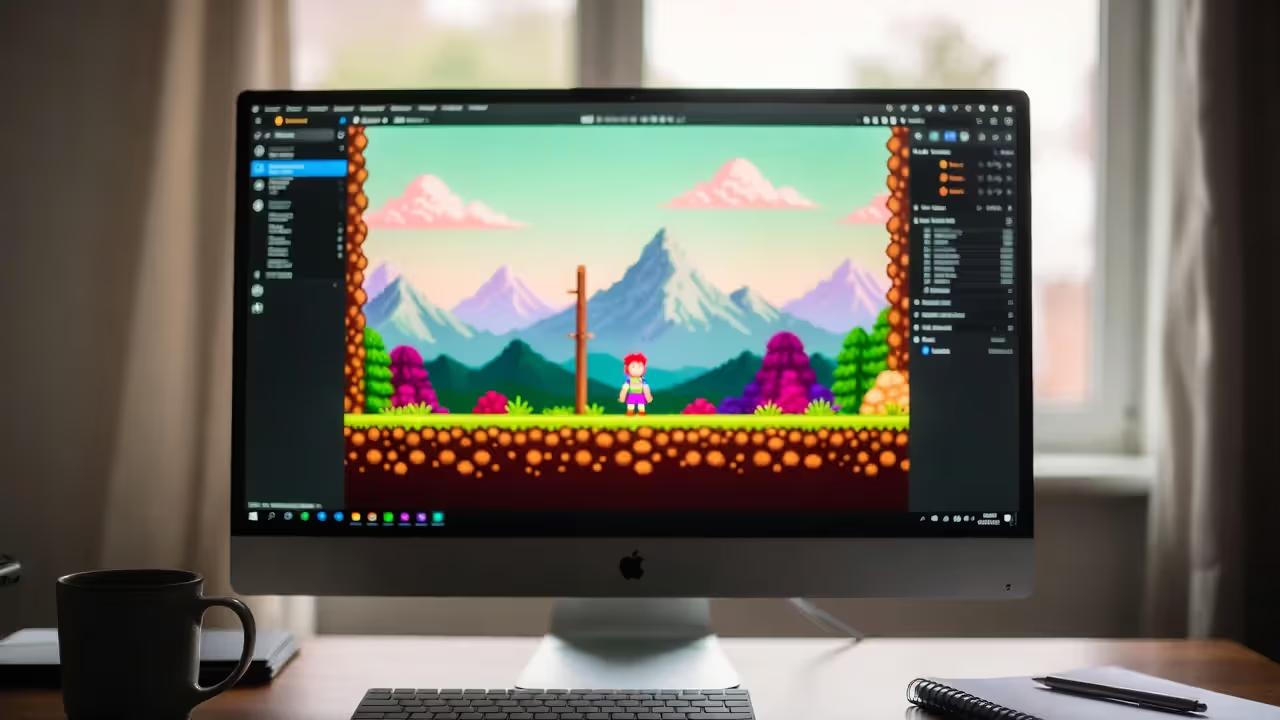
The indie game revolution of the 2010s embraced 8bit graphics style not from laziness but deliberate artistic choice. Developers recognized that pixel art offers clarity, personality, and efficiency—the same benefits that made it essential decades earlier.
Celeste (2018) uses pixel art to deliver precise platforming feedback. Every sprite's hitbox is visually clear. Animation frames communicate momentum and state changes instantly. The aesthetic supports gameplay rather than obscuring it behind visual noise.
Stardew Valley (2016) demonstrates how pixel art enables solo development. Creator Eric Barone could produce hundreds of items, characters, and environments because the art style scaled efficiently. A single artist can create cohesive pixel art worlds that would require entire teams in 3D.
Author: Megan Lewis;
Source: quantumcatanimation.com
Shovel Knight (2014) studied NES limitations so thoroughly that it could have run on original hardware (with minor modifications). Developer Yacht Club Games followed palette restrictions, sprite limits, and scrolling techniques, proving that constraint-based design still produces excellent results.
The aesthetic offers practical advantages beyond nostalgia. Pixel art ages gracefully—games from 2010 look as good today as at release. It scales cleanly to different resolutions without the blurring that affects low-resolution 3D assets. Animation remains readable at any screen size.
Pixel art is a language with established vocabulary. Players immediately understand health bars, item pickups, and environmental hazards because pixel art games established those conventions. You're not fighting against player expectations—you're building on decades of shared visual literacy.
— Derek Yu, creator of Spelunky
The style also signals gameplay priorities. When developers choose pixel art, they're often emphasizing mechanics over spectacle, depth over length, and challenge over hand-holding. Players recognize these signals. A pixel art game promises tight controls, fair difficulty, and respect for player time.
Not every modern pixel art game succeeds, and the aesthetic alone guarantees nothing. Poor examples use the style as camouflage for shallow gameplay or technical limitations. The best modern pixel art games understand what made 8 bit games special: economy of design, clarity of purpose, and mechanics that remain engaging through repeated play.
FAQ: Common Questions About 8 Bit Games
The 8 bit era proved that creativity flourishes within constraints. Developers with 32 kilobytes of memory and five audio channels created experiences that remain engaging forty years later. They established design languages, gameplay conventions, and franchises that define gaming today.
These games matter because they solved fundamental problems: How do you communicate player state clearly? How do you teach mechanics without tutorials? How do you create challenge that feels fair? Modern games still reference these solutions because they work.
The continued influence of pixel art history and 8bit soundtracks in contemporary games isn't mere nostalgia. It's recognition that those constraints forced developers to focus on what made games actually fun. When every byte counted, nothing could be wasted on superficial elements. Gameplay had to carry the experience.
Whether you're exploring these titles for the first time or revisiting childhood favorites, 8 bit games offer lessons in design efficiency that remain relevant. They remind us that technical limitations don't prevent great art—they often enable it.