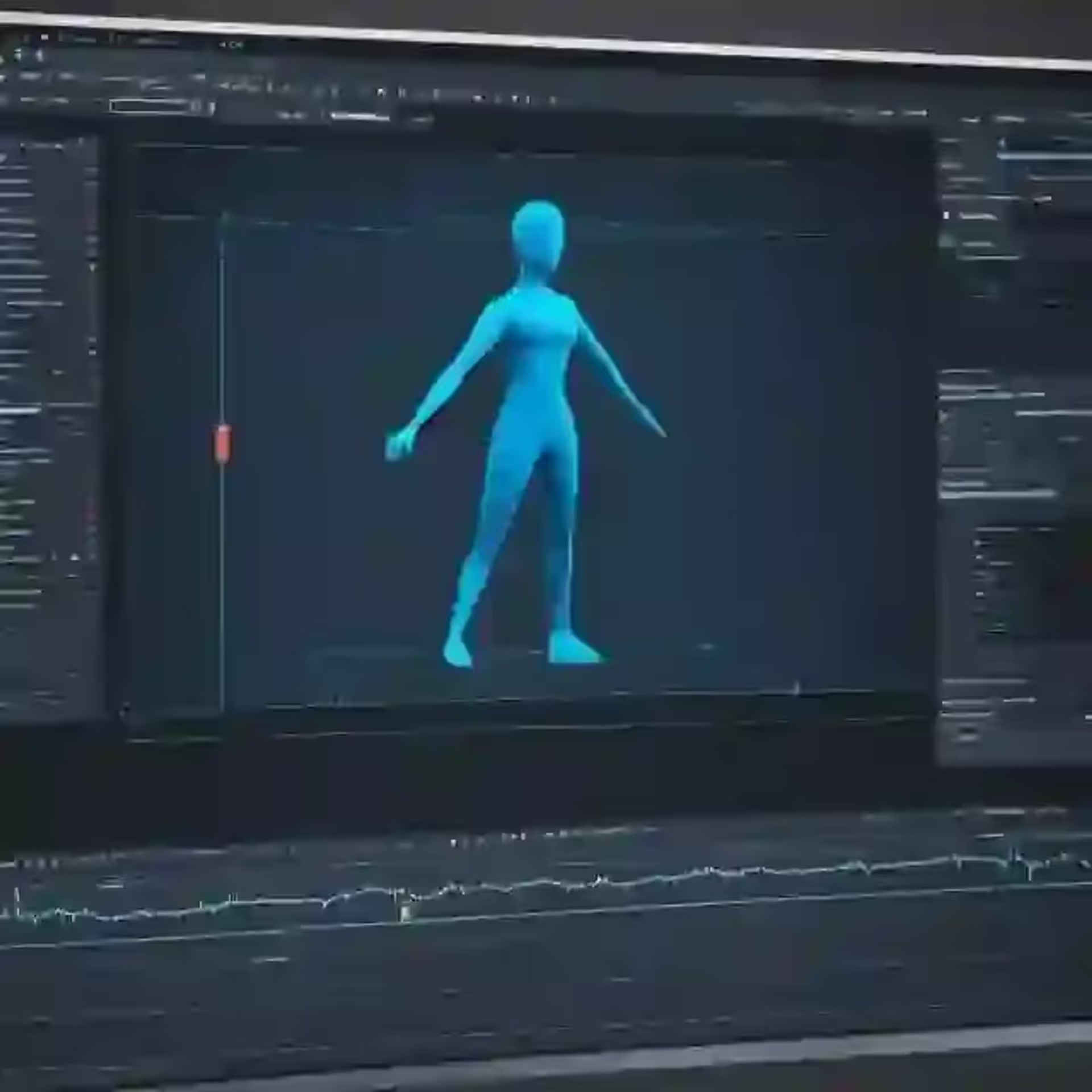
3D Character Animation Guide to Techniques Tools Careers
3D Character Animation Guide

Content
Ah, the magic of bringing characters to life in three dimensions! If you've ever been mesmerized by the fluid movements of characters in films like Toy Story, the lifelike avatars in your favorite video games, or even the intricate animations in VR experiences, you've witnessed the art of 3D character animation. But what exactly goes into this enchanting process?
3D character animation is the art of creating lifelike characters and making them move and interact in a virtual 3D space. It's a blend of artistry and technology, requiring a deep understanding of anatomy, motion, and storytelling, along with a good grasp of complex software.
Beyond mere visuals, 3D animation has become a cornerstone of how we emotionally connect with stories and experiences. A well-animated character isn't just pixels on a screen—it breathes, emotes, and reacts in ways that make audiences forget they're watching something artificial. Animators act as digital puppeteers, channeling human expression and physicality into their creations, whether it's a heroic protagonist, a quirky sidekick, or even a villain we secretly root for. The subtle nuances of facial expressions, body language, and timing are what transform a digital model into a living, believable presence that can move us to laugh, cry, or cheer.
Importance in Various Industries
From Hollywood blockbusters to cutting-edge virtual reality experiences, 3D character animation is everywhere. In the film industry, studios like Pixar and DreamWorks use advanced animation techniques to create unforgettable movies that tug at our heartstrings. In gaming, companies like Naughty Dog and Blizzard Entertainment bring characters to life in immersive worlds that keep us glued to our screens for hours. Advertising agencies use 3D animation to create compelling and memorable ads that capture consumer attention. Even in virtual reality, realistic avatars and characters enhance the sense of immersion, making experiences more engaging and lifelike.
But the influence of 3D character animation doesn't stop there—it's also revolutionizing fields like education and healthcare. Animated characters are increasingly being used in e-learning platforms to make lessons interactive and accessible, especially for younger audiences. In medicine, 3D animations help doctors simulate procedures and allow patients to visualize complex conditions or treatments in an understandable way. This blend of education and visualization not only makes information easier to digest but also builds trust and clarity between professionals and their audiences.
The corporate and social spheres are also embracing 3D avatars and animated characters. Virtual influencers—digital personas created entirely through animation—are gaining popularity on social media, representing brands and building fan communities. In the business world, companies are using realistic avatars for virtual meetings and training programs, making remote interactions feel more personal and engaging. As the metaverse expands, the demand for convincing 3D characters will only grow, highlighting the critical role animation plays in shaping how we work, socialize, and even shop in digital spaces.
Evolution of 3D Character Animation Over the Years
The journey of 3D character animation is a fascinating one. It started with humble beginnings, where early attempts at 3D animation involved basic wireframe models and rudimentary movements. But oh, how far we've come! The introduction of keyframe animation in the 1980s was a game-changer, allowing animators to define critical points of motion and let the computer interpolate the frames in between. This was followed by breakthroughs in rigging and skinning, which enabled more complex and realistic movements.
In the 1990s, the release of movies like Jurassic Park showcased the potential of CGI and 3D animation, pushing the boundaries of what was possible. The advent of sophisticated software like Autodesk Maya and Blender made these techniques more accessible to artists worldwide. And let's not forget the impact of motion capture technology, which revolutionized the way we animate human movements by capturing real-life performances and translating them into digital characters.
As the 2000s rolled in, animation techniques became more refined, with studios like Pixar and DreamWorks pioneering advanced character rigging systems and groundbreaking rendering technologies. The focus shifted not only to realistic movement but also to emotional expressiveness, enabling animated characters to convey subtle feelings that resonated deeply with audiences. This period marked the rise of fully animated feature films that rivaled live-action in terms of storytelling depth and visual appeal.
The 2010s brought real-time rendering into the spotlight, thanks to engines like Unity and Unreal Engine. This allowed animators and game developers to preview scenes instantly, drastically speeding up production pipelines. Real-time technologies also enabled interactive experiences such as VR and AR, where characters could respond dynamically to user actions. This era also saw the blending of animation with other disciplines, including virtual production, which directors like Jon Favreau used to create The Lion King (2019) with unprecedented realism.
Today, the integration of AI and machine learning is opening up entirely new horizons. Algorithms can now automate parts of the animation process, such as generating in-between frames or even predicting realistic character movements. This doesn't replace human creativity but rather enhances it, giving animators powerful tools to focus more on storytelling and artistic expression. The future hints at characters that can adapt in real-time, creating unique interactions for every viewer, and blurring the line between passive media and personalized experiences.
Today, with the rise of real-time rendering engines like Unreal Engine, 3D character animation continues to evolve, offering new possibilities for interactive storytelling and immersive experiences. The future looks even brighter with the integration of AI and machine learning, promising to make the animation process faster and more intuitive.
Fundamentals of 3D Character Animation
So, what exactly is 3D character animation? At its core, it's the process of creating moving, talking, and emoting characters in a three-dimensional space. It's a blend of artistry and technical prowess, where animators breathe life into digital models through meticulous planning and execution. But let's break down the key components that make this magic happen.
Keyframes: Think of keyframes as the backbone of 3D animation. These are specific frames where the animator sets important positions or poses of a character. The software then interpolates the frames between these key poses to create smooth motion. Imagine creating a bouncing ball animation: you'd set a keyframe at the top of the bounce and another at the bottom. The software does the heavy lifting, filling in the rest.
Rigging: Before you can animate, you need a rig. Rigging is like building a skeleton for your character, complete with joints and bones that control its movement. This skeleton is then connected to the 3D model, allowing animators to move the character in realistic ways. Rigging can be quite complex, especially when dealing with characters that need to perform intricate actions.
Skinning: Once the rig is in place, the next step is skinning. This is where the character's mesh (or skin) is attached to the rig. Proper skinning ensures that the mesh deforms correctly as the character moves. For instance, when a character bends an arm, the skin needs to stretch and compress naturally. Poor skinning can lead to unsightly distortions, breaking the illusion of life.
The 12 Principles of Animation: Developed by Disney animators Frank Thomas and Ollie Johnston, the 12 Principles of Animation are the foundation of all great animation. They were initially devised for 2D animation but apply equally well to 3D. Here are a few key principles:
- Squash and Stretch: This principle gives a sense of weight and flexibility to objects. When animating a bouncing ball, it should squash when it hits the ground and stretch when it's in the air, enhancing the sense of motion and impact.
- Anticipation: To make an action feel real, it needs a setup. For instance, before a character jumps, they need to crouch down. This principle helps prepare the audience for what's about to happen, making the movement more believable.
- Staging: This is all about directing the audience's attention to the most important part of the scene. Whether it's through lighting, framing, or positioning, good staging ensures that viewers focus on the right elements.
Other principles include Follow Through and Overlapping Action, Arcs, Exaggeration, and Timing, all contributing to more lifelike and engaging animations. Organizations like SIGGRAPH regularly showcase groundbreaking research and techniques that build upon these foundational principles, pushing the boundaries of what animation can achieve.
Essential Tools and Software

Author: Brandon Hayes;
Source: quantumcatanimation.com
Exploring the landscape of 3D animation software reveals a variety of powerful tools, each catering to different needs and expertise levels. Understanding these options can help you make an informed decision for your project.
Autodesk Maya: As the industry standard for 3D animation, Autodesk Maya is favored by major studios for creating films, TV shows, and video games. Maya's comprehensive toolset includes advanced character rigging systems and realistic fluid simulations, making it perfect for high-end productions. However, its complexity can be intimidating for newcomers.
Blender: A free and open-source alternative, Blender has gained popularity due to its robust features and active community. Blender provides tools for modeling, rigging, animation, simulation, rendering, compositing, and motion tracking. Its user-friendly interface and frequent updates make it accessible for both beginners and seasoned professionals. Additionally, the extensive library of plugins and community-created assets can significantly enhance your workflow.
Cinema 4D: Developed by Maxon, Cinema 4D is renowned for its ease of use and intuitive interface, making it a favorite among motion graphics artists. It excels in creating stunning visual effects and integrates seamlessly with other design tools like Adobe After Effects. While it may not be as feature-rich in certain areas as Maya or Blender, its simplicity and powerful animation tools make it an excellent choice for designers and animators seeking a streamlined workflow.
Houdini: Known for its procedural generation approach, Houdini by SideFX offers incredible flexibility and control over animations. This software is particularly favored in the VFX industry for creating complex simulations like smoke, fire, and fluids. Although Houdini's node-based workflow can be challenging to master, it provides unparalleled power and versatility for advanced users.
Both FMOD and Wwise offer seamless integration with major game development engines, including Unity and Unreal Engine, which are among the most widely used platforms in the industry.
— Brandon Hayes
FMOD: FMOD provides a robust integration with Unity, allowing designers to implement interactive audio directly within the engine. The FMOD Unity plugin makes it easy to link audio events with game events, creating a cohesive audio experience. FMOD's Unreal Engine integration allows for advanced audio functionality within the Unreal Editor. Designers can use FMOD Studio to create complex audio events and control them through Unreal's Blueprint system.
Wwise: Wwise's Unity integration is similarly powerful, offering tools to manage audio assets and real-time audio behaviors. The Wwise Unity Integration (Wwise SDK) enables detailed control over audio settings and dynamic soundscapes. Wwise integrates tightly with Unreal Engine, offering features like spatial audio and real-time parameter control. The Wwise Unreal Integration (WAAPI) provides extensive customization options and supports advanced audio behaviors.
Creating a 3D Character: Step-by-Step Guide
Bringing a 3D character to life involves several intricate steps, each crucial to the overall process. Let's walk through the essential stages, from initial concept to final rendering.
Conceptualization and Storyboarding. Every great character begins with a concept. Conceptualization involves brainstorming ideas, creating sketches, and defining the character's personality, backstory, and role in the project. This stage often includes storyboarding, which helps visualize the character's movements and interactions within different scenes. Storyboards serve as a blueprint, guiding the entire animation process.
Modeling. Modeling is the art of creating the character's 3D shape. This step can be approached in two primary ways: polygonal modeling and sculpting.
Polygonal Modeling: This technique involves creating a mesh of polygons to form the character's basic shape. It's like digital clay, where you start with a simple geometric form and refine it by adding more polygons for detail. This method is highly efficient for creating characters with a lot of angular features and detailed structures.
Sculpting: Sculpting allows for a more organic approach, resembling traditional clay sculpting. Digital sculpting tools like ZBrush let you manipulate a virtual piece of clay with brushes and tools to create intricate details and textures. This method is ideal for characters that require a high level of detail and realism.
Rigging and Skinning. Once the model is ready, it needs a skeleton to move. This is where rigging and skinning come into play.
Creating the Skeleton: Rigging involves building a skeleton for the character, complete with bones and joints. This skeleton will drive the character's movements. Each joint can be manipulated to pose the character in various ways.
Attaching the Skin: Skinning is the process of attaching the character's mesh to the rig. Proper skinning ensures that the mesh deforms naturally when the skeleton moves, preventing unnatural stretching or pinching. This step is crucial for realistic character movements.
Animation. Animating the character involves defining how it moves and interacts with the environment. There are two main techniques: keyframe animation and motion capture.
Keyframe Animation: In keyframe animation, the animator sets key poses for the character at specific points in time. The software then interpolates the frames between these key poses, creating smooth transitions. This method gives animators full control over the character's movements.
Motion Capture: Motion capture, or mocap, involves recording the movements of a live actor and applying those movements to the 3D character. This technique captures realistic human motions and is widely used in film and video game production.
Texturing and Shading. Texturing and shading add color, texture, and material properties to the character's surface. Texturing involves applying images to the 3D model to create details like skin, clothing, and hair. Shading defines how the surfaces interact with light, giving them properties like glossiness, transparency, or roughness.
Lighting and Rendering. The final steps, lighting and rendering, bring the character to life in its virtual environment.
Lighting: Proper lighting is essential to highlight the character's features and set the mood of the scene. Different types of lights and lighting setups can dramatically affect the appearance and emotional tone of the animation.
Rendering: Rendering is the process of generating the final image or animation from the 3D scene. This involves calculating light interactions, shadows, reflections, and textures to produce a photorealistic or stylized output. The rendering process can be time-consuming, but it's where all the hard work comes together to create the final masterpiece.
Advanced Techniques in 3D Animation
Mastering the basics of 3D character animation is just the beginning. To create truly compelling animations, animators need to delve into advanced techniques. These methods enhance realism and bring out the subtleties of a character's performance. Let's explore some of these advanced techniques.
Facial Animation and Lip-Syncing. Facial animation is crucial for conveying emotions and expressions, making characters more relatable and believable. This technique involves animating the intricate movements of a character's face, including the eyes, eyebrows, mouth, and cheeks. Lip-syncing adds another layer, matching mouth movements to spoken dialogue. Advanced tools and techniques, such as blend shapes and bone-based rigs, allow for detailed and nuanced facial animations.
Physics-Based Animation. Physics-based animation relies on the principles of physics to create realistic movements and interactions. This approach is often used for simulating natural phenomena and dynamic effects. Two key areas in physics-based animation are dynamics and particle systems.
Dynamics: Dynamics simulate the physical properties of objects, such as gravity, collisions, and friction. This technique is essential for creating realistic interactions between characters and their environments. For instance, dynamics can be used to animate a character falling, pushing objects, or interacting with fluid surfaces.
Particle Systems: Particle systems are used to create effects like smoke, fire, rain, and explosions. By controlling the behavior of thousands of small particles, animators can simulate complex natural phenomena that react realistically to forces and collisions.
Advanced Rigging Techniques. Advanced rigging techniques provide animators with more control and flexibility over character movements, enhancing the realism and expressiveness of animations.
IK/FK Blending: Inverse Kinematics (IK) and Forward Kinematics (FK) are two approaches to animating joints. FK is useful for natural, flowing movements, while IK is ideal for precise control, like placing a hand on a surface. IK/FK blending allows animators to switch seamlessly between these methods, combining the best of both worlds.
Deformation Rigging: Deformation rigging involves creating rigs that allow for complex, natural-looking deformations of a character's mesh. Techniques like muscle simulations and corrective blend shapes ensure that the character's skin moves convincingly over the underlying skeleton and muscles.
Integrating Motion Capture Data. Motion capture (mocap) data integration involves recording the movements of real actors and applying this data to 3D characters. This technique is invaluable for achieving realistic body mechanics and subtle acting nuances that would be challenging to animate by hand. By capturing detailed motion, animators can focus on refining the performance, enhancing expressiveness, and ensuring that the character's movements are both natural and compelling.
Body Mechanics and Acting. Mastering body mechanics is essential for creating believable animations. This involves understanding how different parts of the body move in relation to each other, maintaining balance, and reacting to forces. Combining body mechanics with strong acting skills allows animators to convey a character's personality and emotions effectively. Programs like Animation Mentor teach these skills through practical exercises and expert feedback, helping animators bring their characters to life with authenticity and depth.
Trends and Innovations
The world of 3D animation is constantly evolving, driven by technological advancements and creative innovations. These trends are shaping the future of animation, offering new possibilities for animators and storytellers alike.
Real-Time Animation and the Impact of Game Engines. Real-time animation, powered by game engines like Unreal Engine, is revolutionizing the way animations are created and experienced. Unlike traditional rendering, which can be time-consuming, real-time animation allows animators to see changes instantly, streamlining the workflow and enabling rapid iterations. This technology is not only transforming video game development but also making waves in film and TV production, where directors and animators can visualize scenes in real-time.
Real-time animation also facilitates interactive storytelling, where viewers can engage with and influence the narrative. This is particularly impactful in virtual reality (VR) and augmented reality (AR) applications, creating immersive experiences that were previously unimaginable.
— Brandon Hayes
AI and Machine Learning in Animation. Artificial Intelligence (AI) and machine learning are increasingly being integrated into the animation pipeline, automating repetitive tasks and enhancing creativity. AI algorithms can assist with various stages of animation, from generating initial sketches and models to animating complex movements.
Machine learning models can analyze vast amounts of motion capture data to create more realistic animations, predict character movements, and even generate new animations based on learned patterns. Tools like DeepMotion leverage AI to simplify the motion capture process, making high-quality animation accessible to a broader range of creators.
Virtual Reality and Immersive Experiences. Virtual reality (VR) and augmented reality (AR) are pushing the boundaries of what's possible in 3D animation, offering entirely new ways to experience and interact with animated content. In VR, users can step into fully realized 3D worlds and interact with characters in a more immersive and engaging manner. This opens up new storytelling possibilities, where the audience is not just a passive viewer but an active participant in the narrative.
AR brings animated characters and objects into the real world, blending digital and physical experiences. This technology is being used in everything from mobile games and educational apps to marketing campaigns, providing new avenues for creativity and engagement.
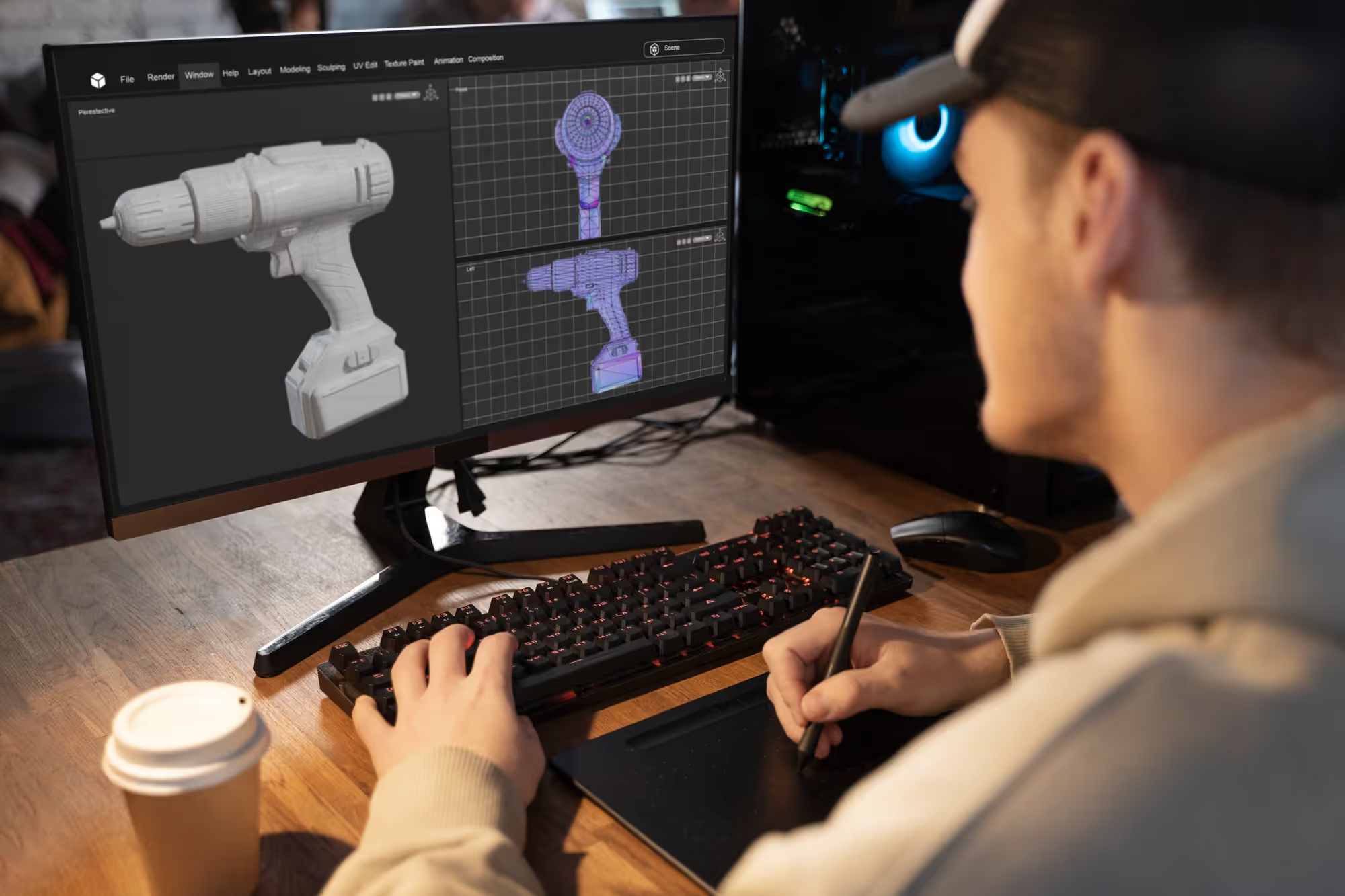
Author: Brandon Hayes;
Source: quantumcatanimation.com
The Future of Animation in the Metaverse
The concept of the metaverse—a collective virtual shared space created by the convergence of virtually enhanced physical reality and physically persistent virtual reality—is gaining massive traction and reshaping how we think about digital interaction. In this evolving ecosystem, animation is not just a tool for entertainment but a cornerstone of the entire experience. Characters, environments, objects, and even subtle gestures all rely on advanced 3D animation to feel authentic and engaging. Without lifelike movement and expression, the illusion of presence in the metaverse simply falls apart.
In this digital frontier, animators are no longer limited to designing stand-alone characters or scenes—they are tasked with building entire living, breathing worlds. Real-time rendering has become essential, allowing users to interact seamlessly with environments that evolve dynamically around them. AI-driven animation is also transforming workflows, enabling avatars and NPCs (non-playable characters) to adapt their movements and expressions in real time based on user interactions. Imagine a shopkeeper in a virtual marketplace who doesn't just repeat pre-scripted lines but reacts naturally to your tone of voice, body language, or even your reputation within that world. This fusion of AI and animation is setting the stage for more believable and personalized experiences.
VR and AR technologies serve as the gateway into these immersive universes, and here, animation plays a dual role—enhancing realism while also providing stylistic flexibility. Some metaverse spaces lean toward hyperrealism, requiring advanced facial capture and motion systems to replicate human interactions flawlessly. Others embrace stylized, cartoon-like animation to create unique identities and fantastical environments that free users from real-world constraints. In both cases, animation defines the visual language of the metaverse and determines how emotionally engaging and comfortable these spaces feel to their inhabitants.
— Brandon Hayes
Companies like Meta, Epic Games, and NVIDIA are investing billions into developing the metaverse, making 3D animation skills more valuable than ever. Tools such as Unreal Engine's MetaHuman Creator already allow artists to design photorealistic characters in minutes, while cloud-based animation pipelines enable collaborative creation on a global scale. As the metaverse expands, the role of animators will evolve from storytellers to world-builders, shaping not just narratives but the very fabric of how people work, play, and socialize in digital spaces.
Looking ahead, the future of animation in the metaverse promises limitless innovation. We are likely to see AI-powered avatars that serve as companions, co-workers, or even mentors, capable of learning and growing alongside users. Virtual economies may depend on custom animations, with users buying and selling unique character emotes, dances, or gestures much like digital fashion. Ultimately, animation in the metaverse won't just be about creating movement—it will be about creating identity, emotion, and connection in a world where the boundaries between physical and digital life are increasingly blurred.
Career Paths in 3D Character Animation
The field of 3D character animation offers a diverse range of career opportunities for those with the right combination of artistic talent and technical skill. Understanding the various roles available can help aspiring animators chart a course toward their ideal position in the industry, whether that means working at a major film studio, contributing to blockbuster video games, or forging an independent path as a freelance artist.
One of the most sought-after positions is that of a character animator, whose primary responsibility is bringing digital characters to life through movement and expression. Character animators work closely with directors and art leads to ensure that every motion aligns with the story being told and the personality of the character being portrayed. This role demands not only technical proficiency with animation software but also a deep understanding of acting, timing, and the emotional beats that make performances resonate with audiences. Many character animators specialize further, focusing on areas like creature animation, where they bring fantastical beasts and monsters to life, or cinematic animation, where they craft the carefully choreographed sequences seen in video game cutscenes and animated films.
Technical artists and riggers occupy a crucial space between the purely artistic and the deeply technical aspects of animation production. Riggers are responsible for building the skeletal systems and control structures that animators use to pose and move characters. A well-designed rig can make the difference between an animation that feels fluid and natural and one that appears stiff or awkward. Technical artists may also develop custom tools and scripts that streamline the animation pipeline, solving problems that arise when standard software features fall short of a project's unique requirements. This hybrid role is ideal for individuals who enjoy both creative problem-solving and the satisfaction of building systems that empower other artists to do their best work.
Beyond individual contributor roles, experienced animators often progress into supervisory and directorial positions. Animation supervisors oversee teams of animators, ensuring consistency and quality across a project while mentoring junior team members and providing feedback on their work. Animation directors take this responsibility further, shaping the overall vision for how characters move and emote throughout an entire production. These leadership roles require not only exceptional animation skills but also strong communication abilities and the capacity to manage complex projects with tight deadlines and evolving creative demands.
The rise of independent content creation and social media has also opened new avenues for animators who prefer to work outside traditional studio structures. Platforms like YouTube, TikTok, and Patreon have enabled talented individuals to build audiences and generate income by producing their own animated shorts, tutorials, and series. Freelance animators can find work on a project-by-project basis, contributing to everything from indie games and advertising campaigns to architectural visualizations and medical animations. This flexibility appeals to those who value creative autonomy and the ability to choose projects that align with their interests and values.
| Career Role | Primary Responsibilities | Key Skills Required | Typical Work Environment |
| Character Animator | Bringing characters to life through movement, expression, and performance | Animation software proficiency, acting knowledge, timing and spacing | Film studios, game studios, animation houses |
| Rigger/Technical Artist | Building skeletal systems, creating control rigs, developing custom tools | Technical problem-solving, scripting (Python, MEL), anatomy knowledge | Film studios, game studios, VFX companies |
| Creature Animator | Specializing in non-human characters, monsters, and fantastical beings | Animal locomotion study, weight and physics understanding, creativity | Film VFX departments, game studios |
| Animation Supervisor | Overseeing animation teams, ensuring quality and consistency, mentoring | Leadership, communication, deep animation expertise | Large studios, production companies |
| Freelance Animator | Working on diverse projects independently, client management | Self-discipline, business skills, versatility across styles | Remote, home studio, contract-based |
| Motion Capture Specialist | Recording and processing live-action performances for digital characters | Mocap technology expertise, data cleanup, performance understanding | Film studios, game studios, mocap facilities |
For those serious about pursuing a career in 3D animation, formal education can provide a strong foundation, though it is not the only path to success. Degree programs in animation, computer graphics, and digital arts offer structured curricula that cover both artistic fundamentals and technical skills. Schools like Gnomon School of Visual Effects have built reputations for producing industry-ready graduates who go on to work at top studios around the world. However, the animation industry also values portfolios and demonstrated ability above credentials, meaning that self-taught artists who build impressive bodies of work can compete effectively for positions alongside those with formal degrees.
Regardless of educational background, continuous learning is essential in a field that evolves as rapidly as 3D animation. New software features, rendering technologies, and artistic techniques emerge constantly, and staying current requires ongoing effort. Many professionals supplement their skills through online courses, workshops, and tutorials, taking advantage of the wealth of educational content available through platforms dedicated to animation instruction. Participating in community events, attending industry conferences, and networking with peers also contribute to professional growth and can lead to opportunities that might not be advertised through traditional job listings.
Challenges Facing Modern Animators
Despite the exciting opportunities available in 3D character animation, professionals in the field face significant challenges that can impact both their work and their well-being. Understanding these obstacles is important for anyone considering a career in animation, as well as for industry leaders seeking to create healthier and more sustainable work environments.
One of the most persistent issues is the demanding nature of production schedules, particularly in film and video game development. Crunch periods—extended stretches of overtime work leading up to project deadlines—remain common despite growing awareness of their negative effects on health and creativity. During crunch, animators may work twelve-hour days or longer for weeks or even months at a time, leading to burnout, strained personal relationships, and diminished quality of life. While some studios have made efforts to reduce crunch through better project planning and more realistic scheduling, the pressure to deliver ambitious projects on tight timelines continues to drive unsustainable work practices in many parts of the industry.
— Brandon Hayes
The technical complexity of modern animation pipelines presents another challenge, particularly for artists who entered the field primarily for its creative aspects. Today's animators must navigate sophisticated software ecosystems, understand rendering technologies, and often collaborate with engineers and technical directors whose expertise lies in areas far removed from artistic expression. Keeping pace with constantly evolving tools and workflows requires ongoing learning and adaptation, which can feel overwhelming for those who would prefer to focus purely on the craft of animation itself. Studios that provide strong technical support and clear documentation can help alleviate this burden, but individual animators must also cultivate a willingness to expand their technical knowledge throughout their careers.
Job security represents a concern for many animation professionals, particularly those working in project-based roles or at studios that experience significant fluctuations in workload. The entertainment industry is inherently cyclical, with periods of intense hiring followed by layoffs as projects conclude and new ones ramp up. Contract and freelance work offers flexibility but lacks the stability of permanent employment, leaving many animators to navigate uncertain income streams and gaps between engagements. Building a strong professional network, maintaining an up-to-date portfolio, and developing skills that remain in demand across different types of projects can help mitigate these risks, but the underlying instability of project-based work remains a reality of the industry.
Creative differences and the challenge of maintaining artistic vision within commercial constraints also affect animators' experiences. While animation is fundamentally a creative endeavor, the realities of budget limitations, client expectations, and committee-driven decision-making can sometimes conflict with an animator's artistic instincts. Learning to navigate these tensions—advocating for creative choices while remaining flexible and collaborative—is an essential skill that develops over time. The most successful animators find ways to express their artistry within the parameters of commercial projects while pursuing personal work that allows for unrestricted creative exploration.
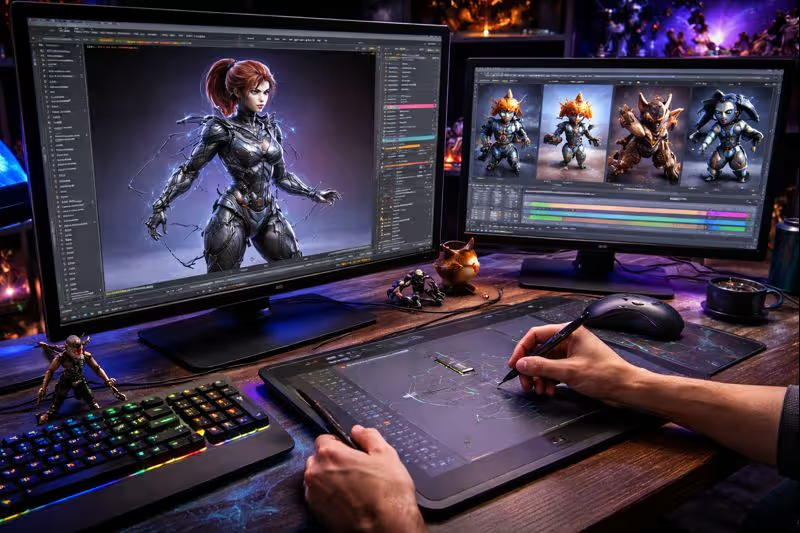
Author: Brandon Hayes;
Source: quantumcatanimation.com
Tips for Aspiring 3D Animators
For those embarking on a journey into 3D character animation, the path from beginner to professional can seem daunting given the breadth of skills required and the competitive nature of the industry. However, with dedication, strategic focus, and a willingness to learn from both successes and failures, aspiring animators can build the foundation necessary to achieve their goals.
The most important advice for beginners is to prioritize fundamentals over flashy techniques. Understanding the principles of animation—timing, spacing, weight, anticipation, and follow-through—matters far more than mastering every feature of a particular software package. Software tools change and evolve, but the core principles that make animation feel alive remain constant. Spending time studying these fundamentals, practicing them through simple exercises, and analyzing how professional animators apply them in their work will yield benefits that compound throughout an entire career. Many aspiring animators make the mistake of rushing toward complex projects before solidifying their grasp of basics, resulting in work that looks technically impressive but feels lifeless or unconvincing.
Building a portfolio that demonstrates both skill and range is essential for anyone seeking employment in the animation industry. Recruiters and hiring managers review countless demo reels and portfolios, so standing out requires not only quality work but also thoughtful presentation. A strong portfolio should showcase the specific type of work an animator wants to do—whether that's stylized character animation, realistic creature work, or cinematic performances—while also demonstrating versatility and the ability to adapt to different styles and requirements. Including a variety of short, polished pieces is generally more effective than presenting a single lengthy project, as it allows reviewers to assess an animator's capabilities across different scenarios and challenges.
Key areas to focus on when developing animation skills include:
- Observation and reference study: Great animators are keen observers of the world around them. Studying how people and animals move, analyzing reference footage frame by frame, and understanding the physics of motion all contribute to more convincing animation. Collecting and organizing reference material for different types of movements becomes an invaluable resource throughout a career.
- Acting and performance: Animation is often described as acting through a different medium. Understanding how emotions manifest physically, how characters telegraph their intentions through subtle gestures, and how timing affects comedic or dramatic impact all require the same sensibilities that inform live-action performance. Taking acting classes, studying films and theater, and developing empathy for the characters being animated can dramatically improve the quality of an animator's work.
- Feedback and iteration: Growth as an animator requires honest feedback and the humility to act on it. Seeking critique from more experienced artists, participating in online animation communities, and revisiting old work with fresh eyes all contribute to improvement. The willingness to iterate—to revise and refine work rather than settling for first attempts—separates professionals from hobbyists.
Networking and community involvement also play important roles in building an animation career. The industry is smaller than it might appear, and personal connections frequently lead to job opportunities that never reach public job boards. Attending industry events, participating in online forums and social media communities, and maintaining relationships with classmates and colleagues can open doors that would otherwise remain closed. Many studios prefer to hire candidates who come recommended by trusted current employees, making a strong professional network a genuine competitive advantage.
Finally, aspiring animators should remember that the journey is long and requires patience. Even exceptionally talented individuals typically spend years developing their skills before landing their first professional positions. Setbacks, rejections, and periods of slow progress are normal parts of the process, not signs of failure. Maintaining passion for the craft, celebrating incremental improvements, and staying connected to the reasons why animation appealed in the first place can sustain motivation through the inevitable challenges along the way.
Conclusion: The Enduring Art of Bringing Characters to Life
3D character animation stands at a remarkable intersection of art, technology, and storytelling, offering practitioners the opportunity to create experiences that move audiences in profound ways. From the earliest experiments with wireframe models to today's AI-enhanced, real-time rendered virtual worlds, the field has undergone continuous transformation while remaining rooted in timeless principles of motion, emotion, and narrative. The characters that emerge from this process—whether they inhabit blockbuster films, beloved video games, or emerging metaverse platforms—have the power to become cultural touchstones that shape how entire generations understand heroism, humor, heartbreak, and hope.
The tools available to modern animators are more powerful and accessible than ever before, democratizing a craft that once required access to expensive equipment and specialized training. Open-source software like Blender has lowered barriers to entry, while online education platforms have made world-class instruction available to anyone with an internet connection. At the same time, cutting-edge technologies like real-time rendering, AI-assisted animation, and virtual production are pushing the boundaries of what's possible, creating new opportunities for innovation and creative expression. These developments ensure that the field will continue to evolve in exciting and unpredictable directions.
Yet for all the technological advancement, the heart of animation remains unchanged. The goal is still to create characters that audiences believe in, care about, and remember long after the screen goes dark. Achieving this requires not only technical skill but also artistic sensitivity, emotional intelligence, and the kind of dedication that comes from genuine passion for the craft. The animators who excel are those who see their work not merely as a job but as a calling—a chance to participate in the ancient human tradition of storytelling through a thoroughly modern medium.
For anyone considering a path into 3D character animation, the journey promises both challenges and rewards. The learning curve is steep, the competition is fierce, and the work is demanding. But for those who persevere, the opportunity to bring characters to life—to give form and motion to ideas that exist only in imagination—offers a creative fulfillment that few other professions can match. As technology continues to advance and new platforms emerge, the demand for skilled animators will only grow, ensuring that this vibrant field remains a vital part of our cultural landscape for generations to come.