Esports Coaching Guide to Costs Results Finding Coaches
Esports Coaching Guide

Content
Six months hardstuck in Platinum. You've played 300 matches this season. Your win rate hovers at 49%.
Sound familiar?
Here's the problem: you're reinforcing the same mistakes every single game. That face-check into an unwarded bush? You've done it 47 times this month. The trade you keep taking that leaves you at 30% HP before the objective spawns? Your brain has automated that bad decision.
Professional esports coaching interrupts this cycle. A skilled coach catches the decision-making errors you've stopped noticing, the positioning habits you think are normal, and the mental loops that make you throw winnable games. Generic YouTube tutorials can't do this. They don't watch your replays or design practice routines around your specific problems.
The coaching landscape has changed dramatically since 2018. What used to be informal advice from friends who ranked higher has transformed into a legitimate industry with specialized training methods, analytics tools, and proven frameworks for improvement. But knowing which coaching situations actually work—and which ones waste your money—makes the difference between breaking your plateau and staying stuck.
What's the Real Job Description for an Esports Coach?
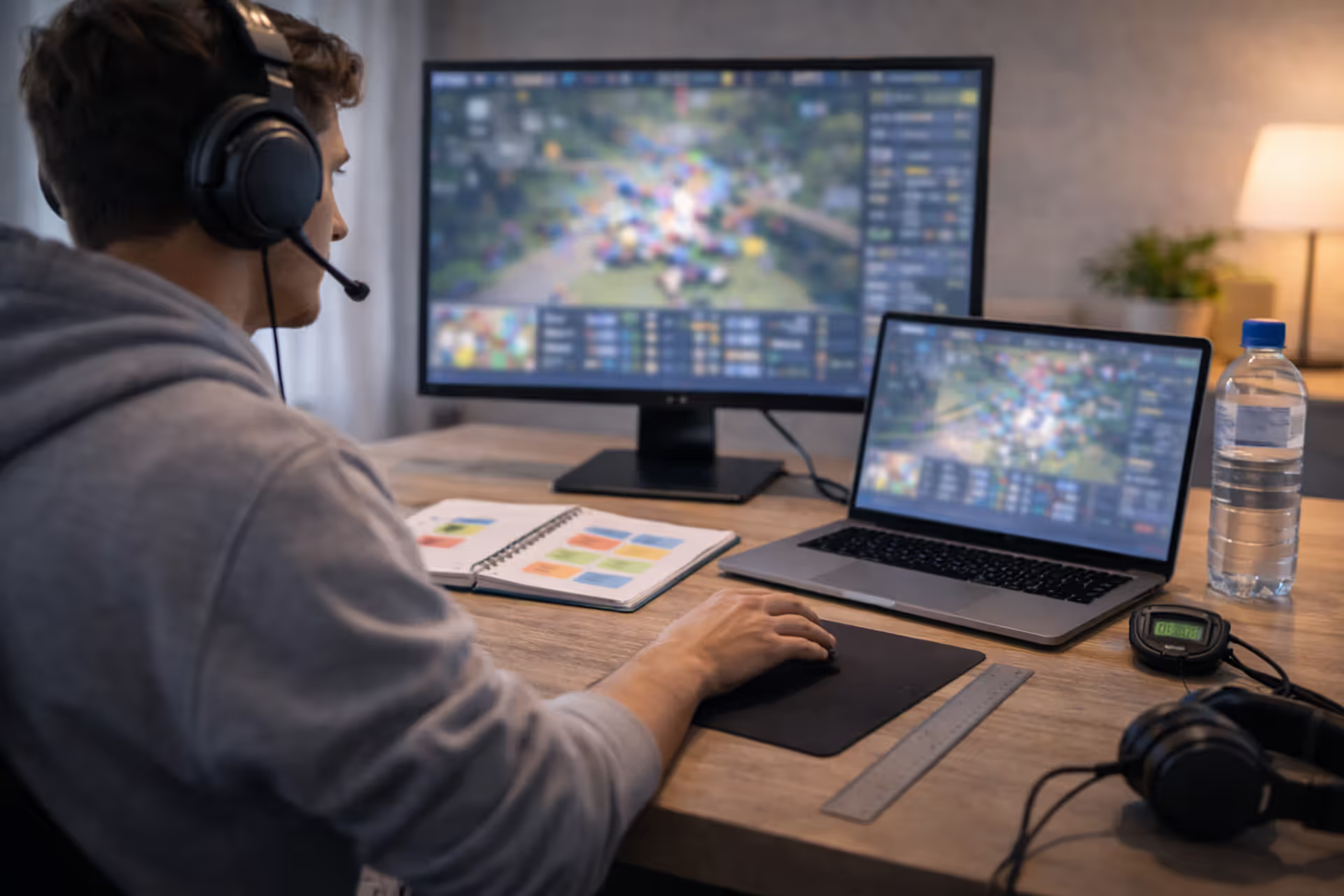
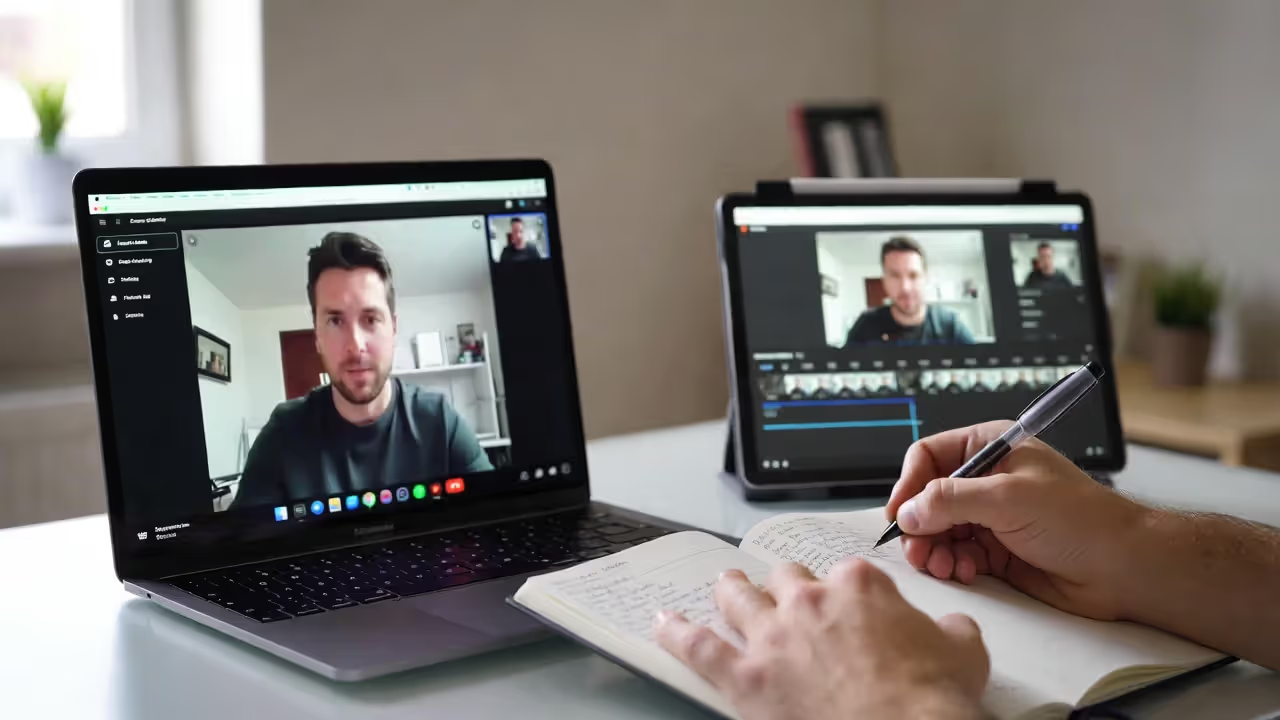
Coaches analyze your matches, find the recurring patterns killing your win rate, and design targeted training plans. This isn't some Discord buddy telling you to "stop dying so much." Real coaching involves detailed VOD analysis (reviewing your recorded games), watching you play live, and assigning focused drills that rebuild your decision-making from the ground up.
Author: Megan Lewis;
Source: quantumcatanimation.com
Here's a typical coaching moment: The coach scrubs through your Ascent game and stops at round 4. "Watch this. You're holding B main with an Operator. Your Cypher already called three A. Why are you still posted here?" You probably said "playing safe" or "holding my site." The coach shows you this happened in six of your last ten losses—you're reliably out of position when the real fight happens. Next, you get a specific assignment: play ten games where you aggressively rotate on info, even if it feels wrong. Track how many times you reach the fight in time versus how many times staying made sense.
That kind of precision targeting produces results. Random grinding doesn't.
Individual Skill Development Versus Team-Level Strategy Work
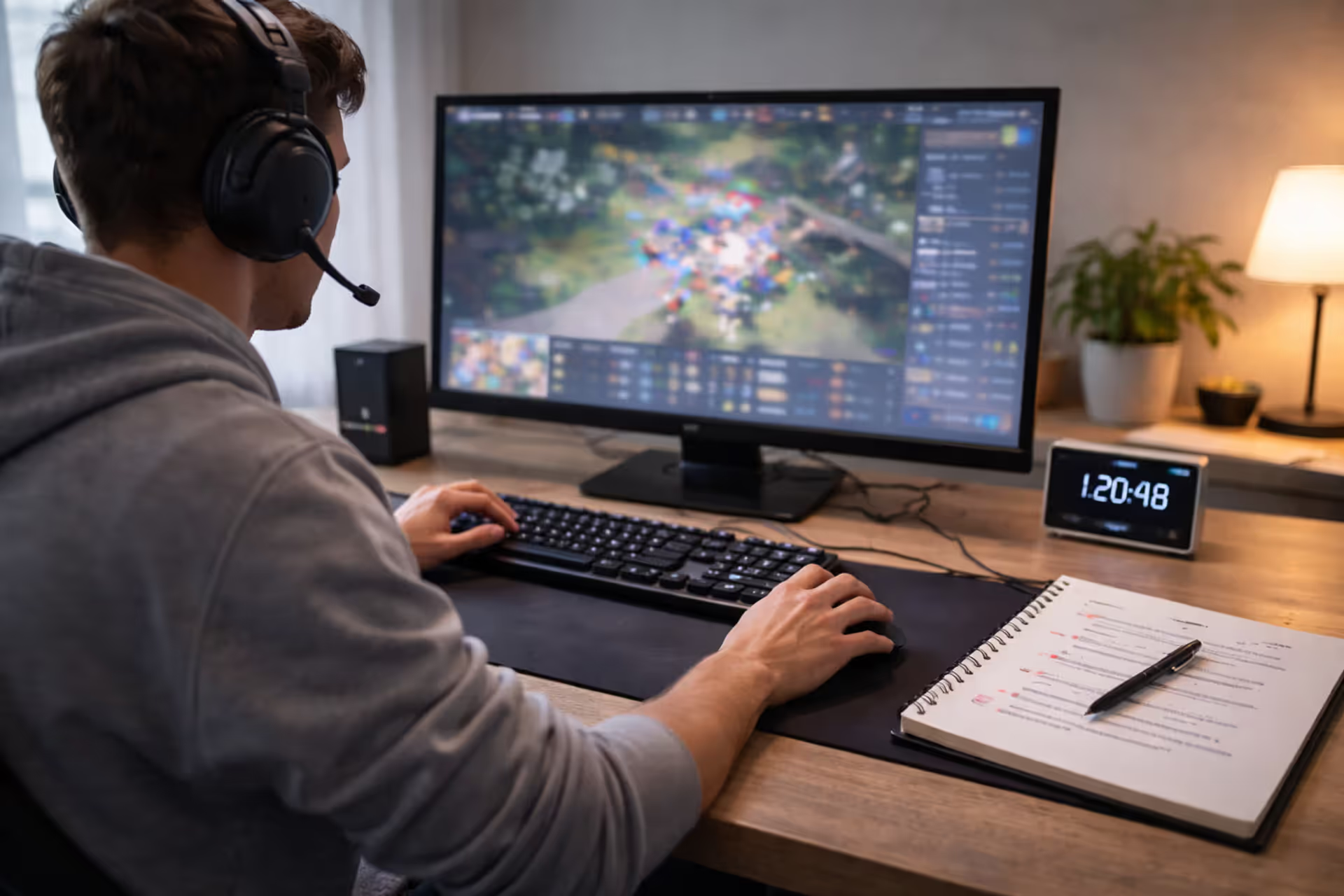
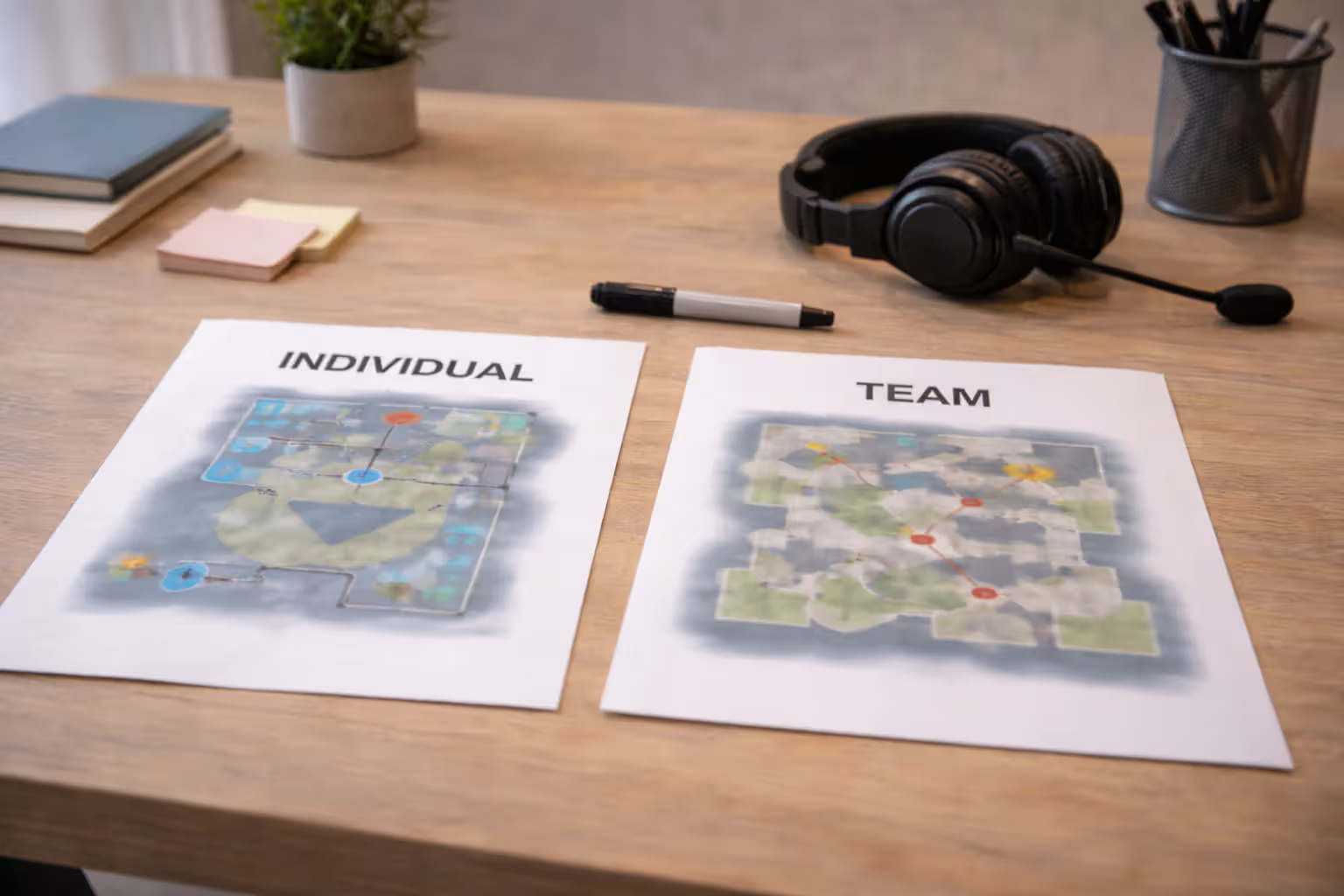
Personal coaching zeroes in on your mechanics, reading ability, and individual choices. Your Valorant coach might spend three sessions just on how you enter sites—crosshair placement around common angles, movement speed through doorways, which util you throw before you peek versus after. Sessions run 60-90 minutes and always include homework. Not the fun kind. The "run this aim drill for 30 minutes before you queue ranked" kind.
Author: Megan Lewis;
Source: quantumcatanimation.com
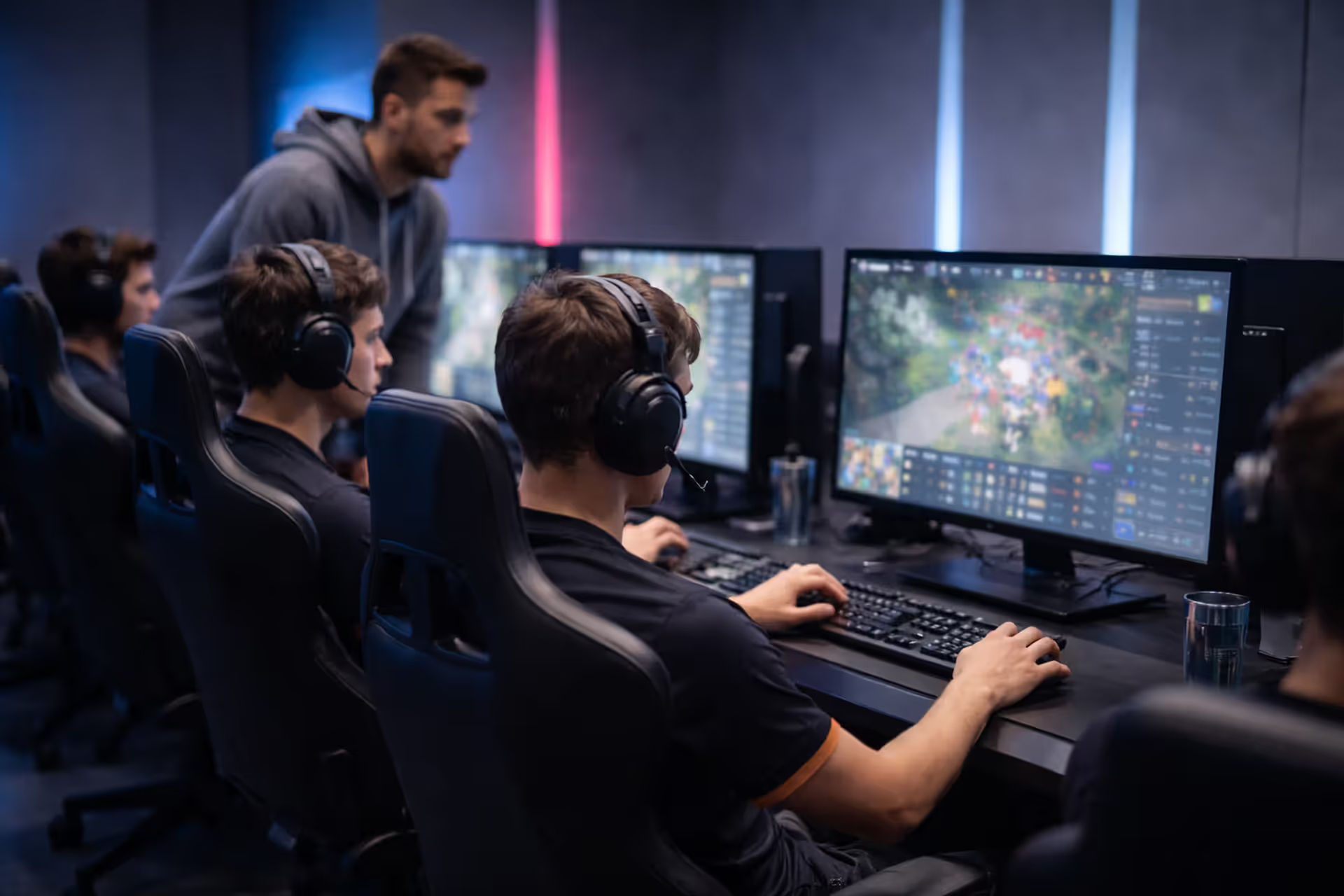
Team coaching works at a completely different scale. You're not fixing one person's aim—you're building communication systems, drafting strategies, objective priority rules, and synchronized rotations. A Dota 2 team coach might create a 20-page document covering ward patterns for each phase of the game, smoke timings for different draft styles, and how to execute a highground siege with your specific hero pool. This requires watching full scrimmage sessions, running team drills, and establishing who makes which calls during matches.
Don't confuse these services. Personal coaching raises your ceiling. Team coaching improves how five players function as a unit. Buying the wrong one guarantees disappointment.
What Makes a Mentor Different from a Regular Coach
Mentors handle the big-picture questions coaches don't address. Should you actually try going pro, or is streaming a better path? How do you manage 40-hour practice weeks without burning out? When does your champion pool need expansion versus deeper specialization?
Mentorship usually grows organically after several months working with the same coach. The relationship extends beyond "here's what you did wrong in game three." Mentors draw on their own competitive experience to help you avoid career mistakes: they've seen players ruin their wrists grinding through pain, watched teammates quit after chasing unrealistic goals, and learned which practice patterns actually sustain long-term performance.
Most players skip this entirely and suffer for it. They practice until they develop RSI. They master flashy mechanics while their fundamentals crumble. They chase rank number without building the consistency needed for team trials. A mentor prevents these expensive detours that cost you months or years.
5 Ways Professional Coaching Speeds Up Your Competitive Progress
You Can't See Your Own Worst Mistakes
The obvious errors—whiffing an easy kill, getting caught alone—you notice those immediately. The subtle problems compounding across 50 matches? Invisible to you.
A CS:GO coach watches your demos and spots that you pre-aim head level in Tetris and Connector on Mirage. Opponents crouch-peek those angles constantly. You've lost the duel 60% of the time over your last 15 games, but you never connected those deaths to one repeating mistake.
Esports improvement tips matter exponentially more when they're extracted from your actual gameplay data, not recycled advice from a generic guide. After reviewing your last 25 Dota 2 games, a coach might reveal you consistently miss your hero's power spike window—farming jungle camps when you should pressure towers with your level advantage. That single insight could gain you 500 MMR.
Focused Practice Destroys Aimless Grinding
Six hours of ranked doesn't automatically make you better. Professional coaching in competitive gaming introduces deliberate practice: targeted drills addressing specific weaknesses. Instead of queuing another match after tilting from a loss, you'll spend 40 minutes in a private server learning lineup smokes, then run eight matches where you only focus on executing those smokes correctly—K/D doesn't matter for these games.
This feels slower at first. You're not ranking up as fast when you're deliberately limiting your focus to one element. But after four weeks, the cumulative skill gains obliterate what mindless grinding would achieve in four months. The coaching benefits become undeniable when complex mechanics run on autopilot, freeing your attention for higher-level strategy.
External Accountability Prevents Backsliding
Motivation disappears. You'll launch an improvement plan with genuine enthusiasm, then skip practice when you're tired or tilted after bad games. Coaches provide outside accountability. You've got a Thursday review scheduled, and you know they'll ask whether you completed your assigned drills. That external obligation keeps you consistent when internal motivation evaporates.
Coaches also maintain the metrics you'd never track solo. They'll build a spreadsheet logging your deaths per game, objective control percentage, or credit efficiency across 60 matches. When you insist you're not improving, they'll demonstrate you've dropped from 7.8 deaths per game to 5.3 over seven weeks. Data defeats the discouragement spiral.
Immediate Feedback Compresses the Learning Timeline
Self-teaching depends on slow trial and error. You attempt a new strategy, lose, wonder if the idea was bad or your execution was flawed, maybe try again in a week. This glacial feedback loop wastes hundreds of hours.
Coaches collapse this timeline. You try a new rotation, and within 20 seconds after the play ends, your coach explains exactly what failed: you rotated at the correct timing but took the long path, arriving seven seconds late. Now you know the fast route and can drill it immediately. What might require 60 solo games to puzzle out gets resolved in one coaching session.

Author: Megan Lewis;
Source: quantumcatanimation.com
Mental Performance Training Unlocks Your Competitive Ceiling
Your practice tool performance and your ranked performance are completely different. Crisp aim in the range. Choked sprays in 1v1 clutches. Coaches address the psychological barriers capping your competitive results: anxiety protocols, tilt recovery systems, and confidence frameworks.
A coach might teach you a between-rounds reset ritual—four deep breaths, shoulder rolls, repeating a focus cue word. Sounds trivial, but applied religiously, it stops the mental cascade where one terrible round ruins your next four. Elite players aren't just mechanically superior; they've trained their mental game as seriously as their crosshair placement.
Breaking Down Esports Coaching Costs by Service Type
Pricing fluctuates wildly based on coach credentials, which game they teach, and how sessions are delivered. Understanding the market prevents overpaying for entry-level coaching or undervaluing high-end services.
| Service Type | Price Range | Session Length | Best For | Typical Package |
| Platform services (Gamer Sensei, Metafy) | $20-$60/hour | 60 minutes | New to intermediate players; structured marketplace protection | 5-session bundles: $90-$250 |
| Independent coaches (Discord, Twitter) | $30-$150/hour | 60-90 minutes | Intermediate to high-level; personalized focus | 10-session packages: $250-$1,200 |
| Ex-professional players | $100-$300/hour | 60 minutes | Advanced players seeking specialized knowledge | Single sessions or monthly retainers |
| Full team coaching | $500-$3,000/month | Multiple weekly sessions | Organized competitive teams; tournament preparation | Monthly contracts including scrim analysis |
Entry-level coaching (Bronze through Gold ranks) typically runs $20-$40 per hour. You're learning fundamentals that apply broadly, so paying for a top 0.1% coach makes no sense. Mid-tier coaching (Platinum through Diamond) costs $40-$80 per hour, since coaches need deeper game knowledge to address nuanced errors. High-level coaching (Master tier and above) commands $80-$150+ per hour because few coaches operate at this rank, and the insights become extremely specialized.
Team strategy coaching costs more per hour because one coach serves five or more players simultaneously. Monthly retainers for serious amateur teams range from $500-$2,000, while professional organizations pay $3,000-$10,000+ monthly for complete coaching infrastructure.
Most platforms offer discounted trial sessions ($15-$25) so you can evaluate coach compatibility before committing to larger packages. Always start with a trial. Personal chemistry matters as much as rank credentials.
Warning Signs That Coaching Won't Help Your Situation
Coaching isn't magic. Certain circumstances make it ineffective or premature, wasting both your money and the coach's time.
You haven't learned basic game mechanics yet. Brand new to the game? Under 50 hours played? Coaching is premature. You need to learn what abilities do, basic map geography, and core mechanics. A coach explaining "crosshair pre-placement angles" means absolutely nothing when you're still figuring out which button switches weapons. Invest your first 100 hours in basic tutorials and casual play before hiring a coach.
You refuse to drill fundamentals. Some players want coaches to reveal secret strategies or hidden exploits. They get irritated when assigned "boring" work like practicing CS for 25 minutes or running the same site execute seven times in a custom lobby. If you won't grind the repetitive work that builds muscle memory, coaching cannot help you. Improvement requires drilling fundamentals, not just discussing advanced tactics.
Your hardware creates the actual bottleneck. Playing on 35 FPS with 120ms ping? No coach can fix that. If your computer stutters during team fights or your internet disconnects mid-match, solve those problems before paying for coaching. You need stable technical conditions to implement what you're learning.
You're seeking validation instead of improvement. Some players hire coaches hoping to hear "your teammates are definitely holding you back, right?" Quality coaches will dissect your footage and highlight your mistakes, not excuse them. If you're not ready to accept you're making exploitable errors every single match, you'll resent the entire coaching experience.
You expect rank gains without time investment. Coaching provides direction, not shortcuts. You'll still need 20-40 hours over multiple weeks to internalize new habits. Players who attend one session, play three matches, then complain they didn't rank up fundamentally misunderstand how skill development works. Budget both money and time for coaching to deliver results.
Author: Megan Lewis;
Source: quantumcatanimation.com
Finding the Right Coach for Your Game and Current Rank
The esports coaching market includes exceptional professionals and opportunistic amateurs charging similar prices. Careful vetting prevents wasting money on unqualified coaches.
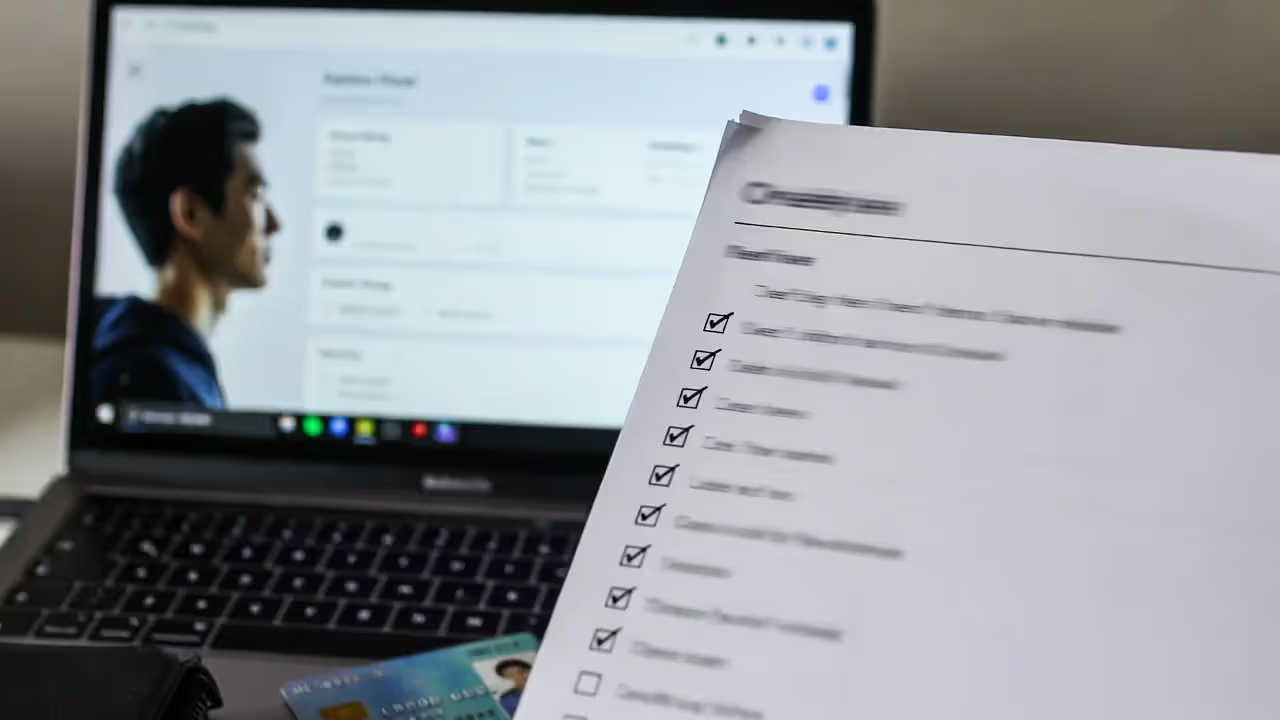
Verify rank and recent competitive history. Coaches should rank substantially higher than you in the game they teach—ideally top 5% minimum. Request their in-game profile or recent rank proof. Be skeptical of coaches who "were high rank two seasons ago" but haven't maintained it. Game metas shift constantly; outdated knowledge actively hurts more than it helps.
Request sample VOD reviews or student testimonials. Legitimate coaches can show previous student feedback or provide sample coaching clips. Watch how they communicate. Do they explain why something is wrong, or just catalog mistakes? Quality coaches teach principles, not just corrections. "You should have rotated here" provides less value than "You rotated late because you didn't track the enemy jungler's clear path based on buff timings—here's how to predict that from minimap information."
Evaluate teaching style during trial sessions. Some coaches are patient and encouraging; others are direct and demanding. Neither approach is wrong, but one will match your personality better. During a trial, notice whether the coach listens to your goals or pushes their own agenda. A coach forcing you to play meta champions when you want to specialize in off-meta picks demonstrates poor alignment.
Check coaching format compatibility. Some coaches primarily offer VOD reviews (you submit recorded games; they provide written or video analysis). Others do live coaching (they watch you play in real-time with immediate feedback). Live coaching costs more but delivers instant corrections. VOD reviews cost less but require waiting for feedback. Match the format to your learning style and budget constraints.
Look for structured improvement frameworks. During your initial conversation, quality coaches should ask about your goals, assess your current level, and sketch a rough improvement roadmap. Red flag: coaches promising specific rank gains ("I'll get you to Diamond in 30 days"). Legitimate coaches focus on skill development, knowing rank follows naturally from improved performance.
An esports mentor relationship might evolve after several months working with the same coach. Not every coach becomes a mentor, and that's perfectly fine. Mentorship requires deeper personal investment and long-term commitment beyond transactional teaching sessions.
Most players practice wrong—they repeat the same mistakes 1,000 times and wonder why they don't improve. Coaching interrupts that cycle. You're forced to confront the gap between how you think you play and how you actually play. That awareness alone can jump someone an entire division, because suddenly they're practicing the right things instead of reinforcing bad habits.
— Nick "LS" De Cesare
Common Questions About Esports Coaching (FAQ)
Thirty days of structured coaching typically produces measurable improvements across multiple performance dimensions. Players report better game sense (understanding why decisions matter), fewer repeated mistakes (breaking automated bad habits), and improved mental resilience (handling losses without performance collapse).
One consistent pattern: players climb 2-4 divisions within the first month, then plateau as they integrate more advanced concepts. The initial jump comes from fixing obvious errors—poor positioning, predictable patterns, mechanical sloppiness. The following plateau isn't failure; it's the natural adjustment period as you practice more sophisticated strategies against stronger opponents who punish different mistakes.
Measurable outcomes vary by game and starting rank, but typical 30-day improvements include:
- Mechanical consistency: Aim accuracy or ability hit rates improve 10-20% as players drill fundamentals instead of just queuing matches.
- Death reduction: Average deaths per game drop 20-30% as players recognize dangerous situations they previously walked into blindly.
- Economy management: CS per minute in MOBAs or credit efficiency in tactical shooters improves 15-25% through better farming patterns and buy discipline.
- Win rate increase: Overall win percentage typically jumps 3-8 points, translating to faster climbing velocity.
These aren't dramatic overnight transformations—you won't jump from Silver to Radiant in 30 days. But compounded over several months, these incremental gains produce significant rank advancement and, more importantly, sustainable skill development that persists after coaching ends.
Players who see the best results treat coaching like formal education: they arrive prepared, complete assigned homework, and actively apply feedback even when it feels uncomfortable. Players who see minimal results treat coaching like a magic wand: they show up, listen passively, then play exactly the same way they always have.
Esports coaching works when you're ready to accept that improvement requires changing how you practice, not just increasing game volume. A qualified coach provides the roadmap, accountability system, and expert analysis that self-teaching cannot replicate. Whether you've been stuck at the same rank for six months or trying to transition from casual to competitive play, coaching compresses the timeline from where you are to where you want to be.
The investment pays off if you're willing to execute the work. Choose a coach whose credentials and teaching approach match your goals, commit to the practice hours between sessions, and track your progress with concrete metrics. Twelve weeks of focused coaching with consistent practice will advance your skills more than a full year of unfocused grinding. The question isn't whether coaching helps—the data proves it does. The question is whether you're ready to take improvement seriously enough to invest both money and sustained effort into structured development.