Gaming Technology Innovations Shaping the Future

Content
The gaming industry has always thrived on innovation, constantly pushing the boundaries of what technology can achieve and redefining the very nature of interactive entertainment. What once began with simple pixels bouncing across cathode ray tube screens has now evolved into fully immersive experiences that rival reality itself, engaging hundreds of millions of players in virtual worlds of unprecedented complexity and beauty. Today, games are no longer just a pastime or casual hobby—they represent a dynamic fusion of technology, art, and storytelling that shapes popular culture, drives new business models worth hundreds of billions of dollars annually, influences architectural visualization and training methodologies, and fundamentally changes the way we interact with the digital world and with each other.
The scale of the global gaming industry has reached remarkable proportions that underscore its significance in the modern entertainment landscape. Industry research indicates that worldwide gaming revenue reached approximately $187.7 billion in 2024, representing continued growth despite economic headwinds affecting traditional entertainment channels. This positions gaming as one of the most resilient entertainment sectors globally, outperforming both filmed entertainment and recorded music in combined annual revenue. The player base has expanded correspondingly, with approximately 3.42 billion people playing video games globally in 2024, representing a 4.5 percent increase from the previous year. This massive audience spans all age groups, geographic regions, and demographic categories, demonstrating that gaming has evolved from a niche hobby into a truly mainstream form of entertainment and social connection.
As technology accelerates at an unprecedented pace, gaming has become a testing ground for some of the most groundbreaking innovations of our time, with advancements developed for games eventually spreading throughout the broader technology landscape. New platforms emerge that change where and how we play, smarter systems powered by artificial intelligence create more responsive and personalized experiences, and immersive tools blur the boundaries between the player and the virtual world in ways that seemed like science fiction just a decade ago. This transformation goes far beyond incremental improvements in graphics quality or processing performance—it represents a fundamental reimagining of the entire experience of play, from how we access games through streaming services to how we connect with other players across platforms, continents, and time zones.
At the heart of this revolution lies a set of key innovations that are already reshaping the industry and pointing toward a future of ever more engaging and immersive experiences. These advancements are opening doors to new possibilities that developers are only beginning to explore, empowering both creators and players with tools and experiences previously unimaginable, and progressively blurring the lines between entertainment, social interaction, education, and reality itself. Exploring these innovations offers not only a glimpse into the future of gaming but also valuable insights into the future of digital culture and human-computer interaction as a whole.
Virtual Reality and Augmented Reality: Redefining Immersion
Key Developments in Immersive Technology
The magic of VR and AR is bringing games to life in ways that seemed impossible until very recently, transforming passive screen-based entertainment into active participation within virtual worlds that respond to the player's physical presence and movements. Imagine stepping into another world where you can interact with your surroundings using your own hands, experience adventures firsthand rather than through an on-screen avatar, and feel genuinely present in environments that exist only as sophisticated data structures rendered in real time. That is the promise and increasingly the reality of VR and AR, two complementary technologies that are revolutionizing gaming and creating unforgettable experiences that stay with players long after they remove their headsets.
The virtual reality gaming market has demonstrated substantial growth as hardware improves and content libraries expand. The global VR gaming market was valued at approximately $22.63 billion in 2024 and is projected to grow dramatically over the coming years, with some analysts forecasting the market could reach nearly $190 billion by 2032. The number of active VR users worldwide continues climbing, with estimates suggesting approximately 216 million active users by the end of 2025, representing significant growth from previous years. While VR remains a smaller segment of the overall gaming market, its growth trajectory indicates increasing mainstream acceptance as hardware becomes more affordable and compelling content attracts new audiences.
Crystal-Clear High-Resolution Displays: The visual quality of modern VR headsets has improved dramatically compared to earlier generations that suffered from visible pixel structures and limited resolution. Today's VR headsets, including devices like the Meta Quest 3 and PlayStation VR2, feature high-resolution displays that offer crystal-clear images with minimal screen-door effect. This advancement makes virtual worlds significantly more realistic and visually engaging, allowing players to focus on experiences rather than technical limitations. Higher refresh rates reduce motion blur and contribute to more comfortable extended sessions, addressing concerns about eye strain and motion sickness that limited earlier VR adoption.
Advanced Motion Tracking for Real-Time Interaction: Motion tracking technology has advanced remarkably, enabling natural physical interaction with virtual environments that responds instantly to player movements without perceptible lag. Modern tracking systems use inside-out cameras, infrared sensors, and sophisticated algorithms to capture hand positions, body movements, and even individual finger gestures with precision sufficient for demanding applications. Systems like those in current-generation headsets allow players to move naturally, with every gesture and movement replicated accurately in the virtual environment. This creates more intuitive and immersive interactions, making players feel like they are truly part of the game rather than controlling an avatar through abstract inputs.
Haptic Feedback for Immersive Sensations: Haptic feedback technology adds crucial tactile dimensions to virtual experiences, providing physical sensations that reinforce visual and audio cues and create a sense of physical presence within virtual spaces. Modern haptic systems range from the rumble motors in standard controllers to sophisticated vests, gloves, and other wearable devices that can simulate impacts, textures, and environmental effects across the body. Advanced haptic devices let players feel punches, shots, impacts, and subtle environmental sensations, bringing unprecedented levels of realism to gaming. This feedback makes virtual worlds feel more tangible, enhancing the emotional and physical connection to gameplay in ways that visual and audio alone cannot achieve.
Impact on Gaming Experience
The combination of high-resolution displays, advanced motion tracking, and haptic feedback creates unprecedented immersive experiences that fundamentally change the relationship between player and game. Players can lose themselves in virtual worlds, experiencing games in ways that traditional screen-based gaming simply cannot replicate regardless of display size or visual quality. The psychological sense of presence—feeling genuinely located within a virtual environment—becomes achievable for sustained periods, enabling emotional engagement and intensity that distinguish VR experiences from their conventional counterparts. The line between reality and the virtual world blurs significantly, making gaming more captivating and memorable than ever before.
VR and AR have given rise to entirely new genres and gameplay mechanics that were not possible or even conceivable with traditional gaming formats and could not be effectively translated to standard screens and controllers. Rhythm games where players swing virtual implements through approaching targets exploit the physicality of VR controllers in ways that button-pressing cannot replicate. Puzzle games require players to physically manipulate objects, examine them from multiple angles, and combine them in three-dimensional space using natural hand movements. Horror games achieve unprecedented intensity by placing players directly within threatening environments rather than showing them through a safe screen. Exercise games transform workouts into engaging adventures that players actually want to repeat. From puzzle-solving experiences that require examining objects from every angle to augmented reality adventure games that overlay digital content onto the physical world, these technologies are expanding the horizons of what games can be.
Several popular games have already demonstrated the transformative potential of VR and AR, establishing templates that future developers continue to build upon while attracting audiences new to immersive gaming. Beat Saber combines rhythm gameplay with physical activity, requiring players to slash through approaching blocks with virtual sabers in time with music, creating an experience that is simultaneously a game and a workout. Half-Life: Alyx demonstrated that full-length, narrative-driven AAA experiences could work brilliantly in VR, with environmental interaction and gameplay designed specifically for the medium. Pokemon GO brought augmented reality gaming to mainstream attention by overlaying the Pokemon universe onto the real world through smartphone cameras, encouraging physical exploration and social interaction in ways that traditional games rarely achieve. These titles highlight the immersive and engaging possibilities of VR and AR while setting high standards for future innovations.
Artificial Intelligence: The Invisible Revolution

Author: Megan Lewis;
Source: quantumcatanimation.com
Key Innovations in Game AI
Artificial intelligence serves as the unsung hero of modern gaming, working behind the scenes to create experiences that feel responsive, unpredictable, and alive in ways that purely scripted systems cannot achieve. While flashy graphics and immersive environments often capture headlines and marketing attention, it is the sophisticated AI behind the scenes that brings games to life, making virtual worlds feel inhabited by entities with their own behaviors, goals, and reactions rather than simple automatons following predetermined scripts. From smarter NPCs that adapt their tactics based on player behavior to procedurally generated worlds that ensure unique experiences with each playthrough, AI is quietly revolutionizing gaming at fundamental levels that affect every aspect of how games play.
The AI in gaming market represents a rapidly growing segment of the broader gaming technology landscape. Industry research values the market at several billion dollars currently, with projections suggesting growth to tens of billions over the coming decade as AI applications in gaming become more sophisticated and widespread. The growth reflects both the increasing complexity of AI implementations and the expanding recognition across the industry that AI-driven systems can address development challenges and enhance player experiences in ways that manual content creation and traditional scripting cannot match.
Smarter, More Lifelike NPCs: Gone are the days of predictable, robotic non-player characters that repeat the same dialogue and follow obviously scripted patrol routes. Modern AI allows for NPCs that exhibit realistic behaviors, learn from player actions, adapt their tactics based on observed patterns, and react in ways that make game worlds feel genuinely alive and populated. Games like The Last of Us Part II feature NPCs with advanced AI that can coordinate with each other using realistic communication, call out specific player actions they observe, adapt their tactics based on how the player approaches encounters, and create a more immersive and challenging experience through emergent behavior rather than scripted sequences. Red Dead Redemption 2 creates an entire ecosystem of wildlife with natural behaviors and NPCs who maintain daily routines independent of player observation, making the world feel like it exists and functions whether or not the protagonist is present.
Endless Worlds Through Procedural Content Generation: AI-driven procedural content generation enables the creation of vast, varied game content that would be impossible to craft manually within any reasonable development timeline or budget, regardless of team size or resources. Rather than hand-designing every location, encounter, or item, developers create algorithms that generate content according to specified rules and parameters, producing unique results each playthrough that still maintain intended design qualities. Titles like No Man's Sky use algorithms to generate entire galaxies with billions of planets, each featuring procedurally created ecosystems, terrain formations, weather patterns, and creatures that no human designer specifically crafted. This technology ensures that no two playthroughs are identical, keeping gameplay fresh and exciting through algorithmic variation while massively extending the content available to players without proportional increases in development costs.
AI-Driven Real-Time Strategy and Decision-Making: In strategy games and competitive titles, AI is essential for creating intelligent opponents that can analyze situations, develop strategies, adapt to player tactics, and provide genuinely challenging adversaries that test player skills rather than simply following predictable patterns. Games like StarCraft II feature AI systems that can analyze the player's strategies in real-time, make tactical and strategic decisions based on observed patterns, adapt their approaches when previous tactics prove unsuccessful, and provide challenging adversaries that test tactical skills across extended matches. This dynamic AI creates more engaging and unpredictable gaming experiences that remain interesting across many hours of play, as the AI opponent continues learning and adapting rather than becoming predictable once players understand its patterns.
Impact on Game Development and Experience
The advancements in AI technology contribute to richer, more complex game worlds that respond meaningfully to player presence and actions rather than simply existing as static environments with scripted triggers. AI allows for environments that change based on player decisions, remember previous interactions, track reputation and relationship states, and present consequences that feel organic rather than arbitrarily assigned. These dynamic worlds are filled with believable characters pursuing their own agendas and intricate systems that interact in emergent ways, enhancing immersion and creating stories that players genuinely discover through exploration and experimentation rather than simply witnessing through predetermined narrative sequences.
AI enables games to adapt to individual players, offering personalized experiences that match playstyle and skill level without requiring explicit difficulty selection or menu configuration. Games like Left 4 Dead pioneered the use of AI directors that adjust difficulty, enemy spawning, item placement, and pacing based on real-time assessment of player performance, ensuring that every playthrough is uniquely tailored to challenge players appropriately without overwhelming or boring them. This adaptability makes games more engaging and enjoyable for wider ranges of players, as the experience adjusts to meet each player where they are rather than forcing players to adapt to fixed difficulty curves.
Several games have pushed the boundaries of what AI can achieve, demonstrating capabilities that seemed decades away just a few years ago. Red Dead Redemption 2 features an incredibly detailed world with AI-driven wildlife that follows natural behavioral patterns and NPCs that go about believable daily routines, reacting to player actions in contextually appropriate ways that create convincing illusions of independent existence. F.E.A.R. remains notable for enemy AI that uses squad tactics, flanking maneuvers, and coordinated suppression fire, making combat encounters intense and unpredictable years after its release. These showcases continue inspiring developers to invest in AI systems that enhance gameplay in ways that scripted content cannot replicate.
Cloud Gaming: Playing Without Boundaries
Key Platforms Transforming Access
The rise of cloud gaming represents a fundamental shift in how games are delivered and experienced, removing hardware barriers that have traditionally defined which games players could access on their devices. Cloud gaming streams games from powerful remote servers to virtually any device with a screen and internet connection, eliminating the need for expensive gaming PCs or dedicated consoles that have historically served as gatekeepers to gaming experiences. Imagine playing your favorite high-end titles on any device, anywhere, without investing in powerful gaming hardware—cloud gaming is making this vision increasingly practical for millions of players.
Xbox Cloud Gaming (Project xCloud): Microsoft's cloud gaming service represents one of the most ambitious entries into the streaming gaming market, integrated with Xbox Game Pass Ultimate to provide subscribers access to a vast library of games playable across Xbox consoles, PCs, tablets, smartphones, and even some smart TVs. The service leverages Microsoft's Azure cloud infrastructure to deliver console-quality gaming to devices that could never run these games locally, making demanding titles accessible on hardware that would otherwise be limited to basic mobile games. Integration with the broader Xbox ecosystem means progress syncs automatically across devices, allowing players to start sessions on console at home and continue on mobile devices while traveling.
NVIDIA GeForce NOW: NVIDIA's cloud gaming service takes a different approach from platform-holder services, allowing players to stream games they already own through stores like Steam, Epic Games Store, and GOG rather than providing a separate subscription library. By tapping into NVIDIA's powerful cloud-based GPUs including current-generation RTX hardware, GeForce NOW delivers stunning graphics, ray tracing support, and fast performance that would require significant local hardware investment to achieve otherwise. This model appeals particularly to players who have already invested in game libraries but lack hardware to play demanding titles at maximum settings, extending the value of previous purchases.
Amazon Luna: Amazon's cloud gaming service offers channel-based subscriptions that provide access to curated game collections, with the Luna+ channel offering a general library and additional channels focusing on specific publishers or genres. Integration with Amazon's ecosystem includes Twitch features and Fire TV support, positioning Luna as an entertainment option within Amazon's broader streaming infrastructure that can leverage existing customer relationships. The service emphasizes accessibility across devices including Fire tablets, Chromebooks, and smart TVs, targeting audiences who might not invest in dedicated gaming hardware.
Benefits and Challenges
Cloud gaming offers unparalleled convenience that traditional gaming hardware cannot match, allowing players to access their favorite games from virtually anywhere with adequate internet connectivity. Whether at home, on the go, traveling for work, or visiting friends, all you need is a stable internet connection to dive into gaming experiences that would otherwise require carrying dedicated hardware. This flexibility is transforming the way people approach video games, breaking down barriers and making gaming more inclusive for those who cannot justify or afford premium hardware investments.
One of cloud gaming's most significant advantages is eliminating the need for expensive hardware purchases that have traditionally gated access to gaming experiences. Game developers and platforms can deliver high-quality experiences without requiring players to invest hundreds or thousands of dollars in powerful gaming PCs or current-generation consoles. This democratizes gaming significantly, making experiences more accessible to broader audiences who might be interested in gaming but unwilling or unable to commit substantial resources to hardware. The reduced barrier to entry potentially increases the addressable market by significant margins.
Key benefits of cloud gaming include:
- Accessibility across devices without hardware investment requirements
- Instant access to games without download or installation waiting periods
- Automatic updates that occur on cloud servers rather than consuming local bandwidth
- Consistent experience regardless of local hardware capabilities
- Lower environmental impact through shared computing resources
- Reduced storage requirements as games run remotely
While cloud gaming holds immense potential, it also faces challenges that currently limit its viability for certain use cases and audiences. Latency—the delay between player input and on-screen response—depends on internet connection quality and distance from data centers, creating responsiveness issues that prove particularly problematic for competitive games or action-heavy titles where precise timing matters. Bandwidth requirements for high-quality streaming can strain data caps and compete with other household internet usage. Image quality, while improving continuously, still shows compression artifacts visible to discerning players compared to local rendering. Moreover, reliance on stable internet connections means that regions with limited broadband infrastructure cannot fully benefit from cloud gaming technology regardless of its theoretical advantages.
The future horizons for cloud gaming remain bright despite current limitations. As technology continues evolving, with 5G networks expanding coverage and edge computing reducing latency, the challenges that currently constrain cloud gaming will diminish for increasing portions of the global player base. Advancements in video compression, AI-assisted prediction of player inputs, and continued infrastructure investment promise more seamless experiences that approach local quality. The ongoing development suggests that cloud and local gaming will likely coexist as complementary options rather than cloud entirely replacing local hardware.
Graphics and Performance Enhancements
Key Innovations Driving Visual Excellence
The gaming world is witnessing visual and performance advancements that fundamentally redefine what real-time graphics can achieve, creating experiences that increasingly approach pre-rendered quality while maintaining full interactivity. Powered by dedicated hardware features and AI-enhanced algorithms, modern games can simulate light behavior with physical accuracy, render complex environments with unprecedented detail, and display intricate visual effects at levels that seemed impossible just a few years ago. These technologies not only make games more beautiful but also more immersive, as visual fidelity contributes significantly to the sense of presence within virtual worlds. For comprehensive technical analysis of how these technologies perform across different games and hardware configurations, resources like Digital Foundry (https://www.eurogamer.net/digital-foundry) provide detailed breakdowns and comparisons.
Stunning Realism with Ray Tracing: Ray tracing represents a fundamental advancement in how games simulate light, calculating how rays bounce, reflect, refract, and create shadows as they would in physical reality rather than relying on approximations and pre-computed lighting. This technology simulates the actual behavior of light interacting with surfaces, creating incredibly realistic lighting, accurate reflections in mirrors, windows, and wet surfaces, and natural shadows that respond dynamically to light source positions and sizes. NVIDIA's RTX series GPUs brought dedicated ray tracing hardware to consumer gaming, making real-time ray tracing viable for mainstream use. Whether it is the flickering light of a torch reflecting off dungeon walls, the glint of sunlight on polished car surfaces, or the subtle ambient lighting of a cloudy day, ray tracing adds immersion that traditional rendering techniques cannot match.
DLSS and FSR for Enhanced Performance: DLSS (Deep Learning Super Sampling) from NVIDIA and FSR (FidelityFX Super Resolution) from AMD leverage AI algorithms to boost game performance while maintaining or exceeding native image quality. These technologies render games at lower internal resolutions, which dramatically improves performance, then use deep learning to upscale images to higher output resolutions with quality that matches or approaches native rendering. The latest versions can also generate intermediate frames, effectively multiplying frame rates beyond what raw GPU power could otherwise achieve. Games like Cyberpunk 2077, with its demanding ray tracing implementation, showcase how these upscaling technologies can transform unplayable performance into smooth experiences with stunning visual fidelity even on mid-range hardware.
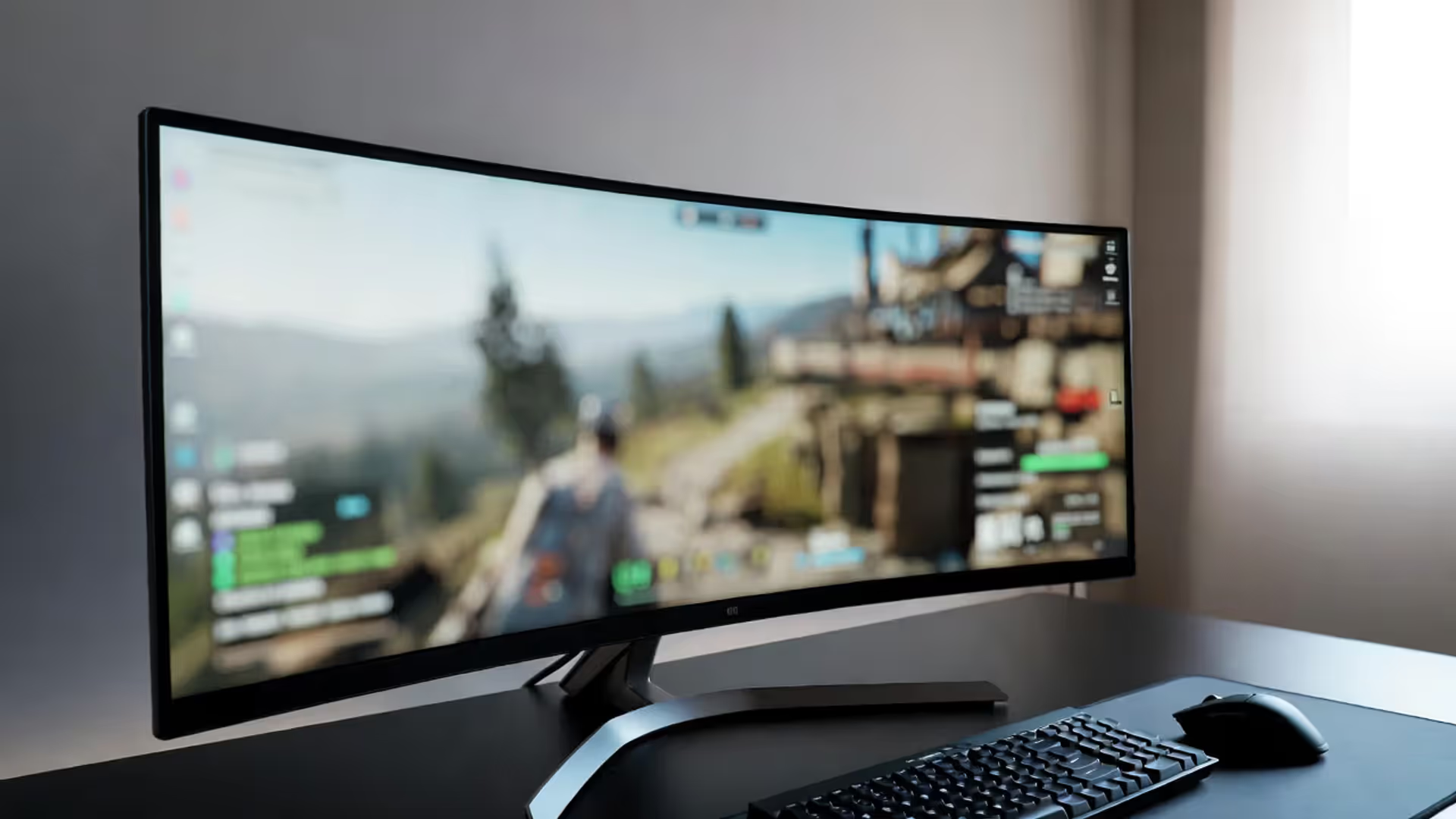
4K and 8K Resolution Support: As display technology advances with higher resolution panels becoming more affordable and widely available, 4K (3840x2160) has become standard for high-end gaming while 8K (7680x4320) emerges in premium displays. These ultra-high resolutions offer breathtaking detail, making every texture and object in game worlds crisp and clear at typical viewing distances. Current generation consoles including PlayStation 5 and Xbox Series X are designed to support these resolutions, providing gamers with visual experiences that showcase their displays' full capabilities. High refresh rate displays operating at 120Hz, 144Hz, or higher complement resolution improvements by providing smoother motion that enhances both visual quality and gameplay responsiveness.
Performance Impact and Visual Standards
| Technology | Primary Benefit | Performance Impact | Example Games |
| Ray Tracing | Realistic lighting, reflections, shadows | Significant GPU demand, offset by DLSS/FSR | Control, Cyberpunk 2077, Metro Exodus |
| DLSS/FSR | AI upscaling for better performance | Enables higher settings and resolutions | Most modern AAA titles |
| 4K/8K Resolution | Maximum visual clarity and detail | Scales with GPU capability | All current-gen console and PC titles |
| High Refresh Rate | Smoother motion, reduced input lag | Requires adequate GPU horsepower | Competitive shooters, racing games |
| HDR | Enhanced contrast and color range | Minimal performance impact | Horizon Forbidden West, Forza Horizon 5 |
The advancements in ray tracing, AI upscaling, and high-resolution support have resulted in unmatched visual fidelity that transforms how players perceive and experience game worlds. Players can now enjoy environments that are not only more realistic in their lighting and reflections but also more visually cohesive and believable in their overall presentation. The fine details visible at high resolutions, realistic lighting that responds naturally to environmental changes, and high-resolution textures that remain sharp even under close examination combine to make gaming experiences more immersive and engaging than previous technological generations could achieve.
These technological innovations improve more than just how games look—they also enhance how games feel during play through improved frame rates and reduced input latency. AI upscaling technologies particularly allow games to run at higher frame rates without sacrificing visual quality, providing smoother, more responsive gameplay that benefits both casual players enjoying the improved feel and competitive players seeking every possible advantage. The combination of stunning visuals and consistent high performance creates more enjoyable and responsive gaming experiences that were previously available only to those with the most expensive hardware configurations.
Several games have set new visual standards by effectively combining these innovations into cohesive visual presentations. Control by Remedy Entertainment uses ray tracing to create a visually stunning and atmospherically eerie environment where reflections and lighting contribute substantially to mood and storytelling. Metro Exodus showcases the power of high-resolution textures, realistic lighting, and atmospheric effects to create an immersive post-apocalyptic world. Cyberpunk 2077, particularly with ray tracing and DLSS enabled, transforms its futuristic Night City into one of gaming's most visually impressive urban environments, demonstrating what becomes possible when cutting-edge rendering technologies converge.
Esports and Competitive Gaming
The Rise of Professional Gaming
The explosive growth of esports represents one of gaming's most significant cultural developments, transforming competitive play from small gatherings of enthusiasts into a global phenomenon attracting hundreds of millions of viewers and legitimizing gaming as a career path comparable to traditional athletics. What once started as informal tournaments in internet cafes and convention halls has evolved into a structured industry with professional leagues, international competitions, celebrity players, and media coverage that reaches massive global audiences. The esports audience reached an estimated 318 million enthusiasts worldwide in 2025, demonstrating the substantial scale of engagement that competitive gaming now commands.
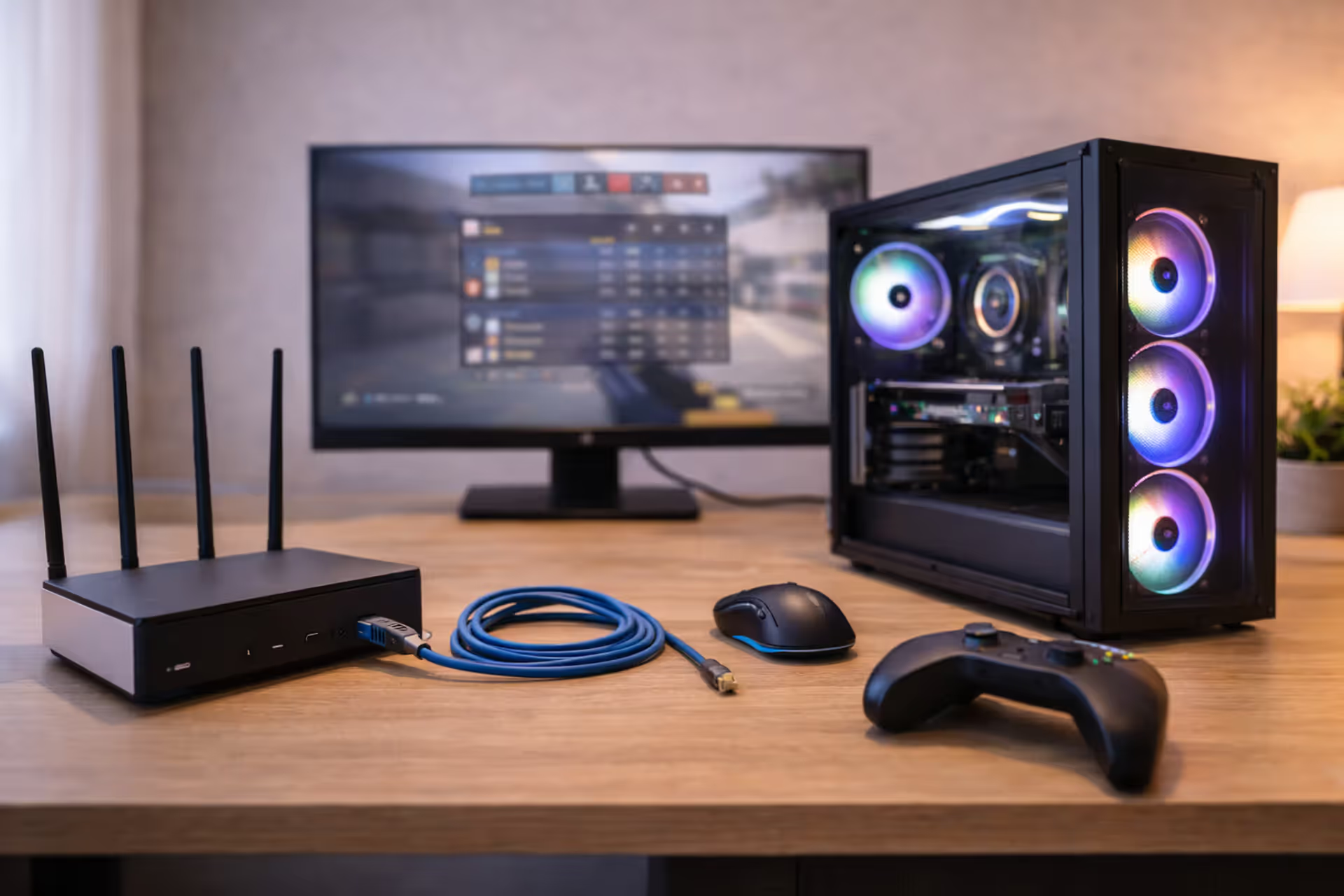
High-Speed Internet and Low-Latency Networks: One of the critical factors driving esports growth is the availability of reliable, high-speed internet connections with minimal latency that competitive gaming demands. In competitive play, milliseconds can determine outcomes, making network quality essential infrastructure for both players and viewers. Services and infrastructure investments providing speed and reliability ensure that players can compete at the highest levels without network-related disadvantages, while viewers can watch live competitions with minimal delay. The ongoing expansion of fiber networks and 5G connectivity continues improving conditions for competitive gaming.
Advanced Streaming Technologies: Streaming technologies have revolutionized how esports are consumed and distributed, enabling fans worldwide to watch live competitions from anywhere with internet access. Platforms like Twitch (https://www.twitch.tv/), YouTube Gaming, and other services allow millions of viewers to follow their favorite teams and players in real-time with interactive chat features and community engagement. Advanced streaming technology ensures high-quality video feeds with minimal delay, creating shared viewing experiences that rival traditional sports broadcasting while offering interactivity that traditional media cannot match.
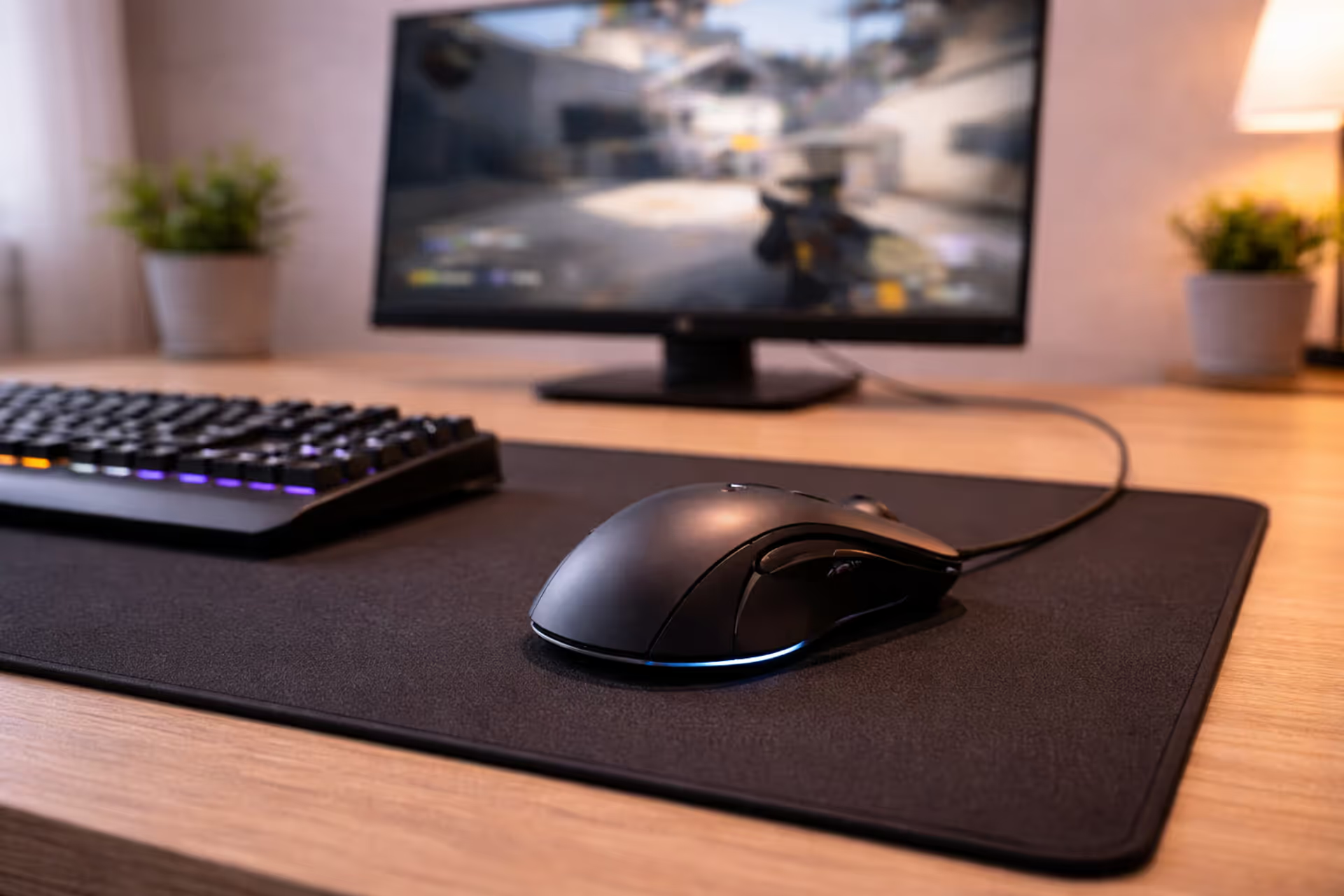
Esports-Specific Hardware: Hardware specifically designed for competitive gaming has become a substantial market segment, with products providing the precision, speed, and reliability that professional play demands. Gaming peripherals from companies like Razer, Logitech, SteelSeries, and HyperX offer mice with high polling rates, keyboards with minimal input latency, and headsets with precise positional audio that provides competitive information. High refresh rate monitors with fast response times reduce the delay between player action and visible result. These products filter from professional use to enthusiast markets, improving experience for competitive players at all skill levels.

Author: Megan Lewis;
Source: quantumcatanimation.com
Economic and Cultural Influence
The rise of professional gaming leagues has brought esports into mainstream consciousness with organizational structures borrowed from traditional sports. Leagues like the Overwatch League, League of Legends Championship Series, and Call of Duty League feature structured seasons, regular competition schedules, playoff tournaments, and substantial prize pools. These leagues attract top talent from around the world, providing platforms for players to showcase skills and pursue careers in esports while teams invest in facilities, coaching staff, and player development comparable to traditional sports organizations.
Esports engages massive global audiences that rival traditional sports viewership for major events. Tournaments like The International for Dota 2, the League of Legends World Championship, and major Counter-Strike events draw millions of concurrent viewers, with some events offering prize pools exceeding $30 million. This widespread engagement has transformed esports into a major entertainment industry segment, attracting sponsors, advertisers, and media coverage from organizations that historically focused exclusively on traditional sports. The economic impact extends through sponsorships, advertising revenue, merchandise sales, ticket sales for live events, and media rights deals.
The cultural influence of esports extends beyond direct economic impact into broader social acceptance of gaming as legitimate competition and career. Gaming as a profession has gained significant legitimacy as audiences observe professional players achieving financial success and celebrity status. Universities offer esports scholarships and competitive programs, validating gaming as a skill worthy of institutional investment and development. Mainstream media coverage of major esports events exposes non-gaming audiences to competitive play, gradually normalizing what previous generations viewed as purely recreational activity. This visibility has fundamentally changed how society perceives gaming and gamers.
Cross-Platform Play and Integration
Breaking Down Platform Barriers
Cross-platform play represents a fundamental shift in how multiplayer gaming works, removing barriers that previously divided player communities based on hardware choices made for reasons often unrelated to specific games. For decades, players on PlayStation could not compete with Xbox owners, PC gamers were separated from console communities, and mobile players existed in entirely distinct ecosystems regardless of whether they were playing the same titles. Cross-platform play unifies these populations into single communities where hardware becomes personal preference rather than a social barrier, ensuring players can connect with friends regardless of which devices they own or prefer.
Unified Player Bases Across Devices: One of the most significant innovations in cross-platform play is the unification of player bases across different devices into single, cohesive communities. Games like Fortnite and Minecraft have successfully brought together players from consoles, PCs, and mobile devices into shared experiences where platform choice becomes invisible during play. This unity creates larger, more diverse player bases that ensure healthy matchmaking regardless of platform, with sufficient players available at all times across all skill levels and geographic regions.
Seamless Transitions Between Devices: Beyond competing across platforms, modern games increasingly support continuing play across devices with maintained progression and account status. Services like Xbox Play Anywhere and games like Genshin Impact enable players to switch from console to PC to mobile without losing progress, carrying achievements, inventory, and advancement across all their devices. This flexibility ensures players can continue adventures and compete with friends regardless of current location or available hardware, fitting gaming into diverse lifestyles rather than demanding dedicated gaming sessions on specific devices.
Cross-Platform Multiplayer and Progression: Unified multiplayer and progression systems are central to the cross-platform experience, ensuring consistent experiences regardless of device choice. Games supporting these features, such as Call of Duty: Warzone, Rocket League, and Apex Legends, allow players to compete and collaborate across different platforms while maintaining progress and in-game achievements in unified accounts. This consistency provides rewarding experiences regardless of device, as players never lose investment or feel disadvantaged by hardware choices.
Enhanced Connectivity and Accessibility
Cross-platform play significantly enhances community and social connectivity by removing walls between different gaming ecosystems. Players can connect with wider ranges of friends and fellow gamers without needing to coordinate hardware purchases or maintain accounts across multiple platforms. This connectivity fosters stronger communities and makes organizing multiplayer sessions, joining clans or guilds, and participating in large-scale events substantially easier. The social dimension of gaming strengthens when platform barriers fall.
Cross-platform integration promotes greater accessibility, ensuring more people can participate in gaming communities regardless of their hardware situations. Players who may not have access to high-end gaming PCs or current-generation consoles can still enjoy popular games on mobile devices or older hardware while connecting with friends on more powerful systems. This inclusivity expands the gaming community significantly, making gaming more universal and widespread while ensuring that economic constraints do not isolate players from social gaming experiences.
— Megan Lewis
Several successful cross-platform games demonstrate the benefits of this integration approach. Fortnite pioneered mainstream cross-platform play by connecting players across every major platform including consoles, PC, mobile, and even Nintendo Switch. Apex Legends enables competitive battle royale experiences across platforms while maintaining ranking systems that account for input differences. Among Us achieved viral success partly because friends could play together regardless of platform, from PC to mobile to consoles. These titles set standards that players now expect from new multiplayer releases, making cross-platform support increasingly mandatory rather than optional.
The Convergence of Innovation
How Technologies Interact and Amplify
The gaming innovations explored throughout this guide do not exist in isolation—they interact, amplify each other, and create combined effects greater than their individual contributions would suggest. AI powers cloud gaming services that make VR accessible without expensive local hardware. Ray tracing makes VR environments more convincing through realistic lighting while DLSS makes demanding ray traced scenes playable on broader hardware ranges. Cross-platform play ensures cloud gamers can compete alongside console and PC players seamlessly. Esports drives hardware development that eventually reaches mainstream consumers at lower price points. These interconnections create innovation ecosystems where advancement in any area accelerates progress across the entire industry.
The convergence of AI and VR particularly promises transformative future experiences as both technologies continue maturing. AI can create responsive virtual characters that react naturally to player presence and behavior, making social VR spaces feel populated by intelligent entities rather than obviously scripted automatons. Procedural generation can create varied VR environments without the prohibitive content production costs that currently limit VR title depth and scope. Adaptive systems can adjust VR experiences based on individual player comfort levels, gradually building tolerance for more intense experiences while respecting differences in motion sensitivity and VR readiness.
Cloud gaming and VR convergence addresses one of virtual reality's persistent barriers: the cost and complexity of hardware capable of driving demanding VR experiences at quality levels users expect. Cloud rendering could theoretically deliver high-quality VR to lightweight, affordable headsets that handle only display and tracking locally, with computationally intensive rendering performed in cloud data centers. While latency challenges make this vision technically demanding, continued progress in edge computing and wireless technology brings cloud VR closer to viability. Such development would dramatically expand VR accessibility by removing needs for gaming-capable computers or expensive standalone headset processing.
Looking Toward the Future
The pace of gaming innovation shows no signs of slowing, with each advancement enabling subsequent developments and player expectations rising to match expanded possibilities. Hardware capabilities continue improving according to trajectories that have held remarkably steady across decades, suggesting that computing power available for games will continue growing substantially in coming years. AI techniques are advancing rapidly across the broader technology industry, with gaming applications benefiting from research investment that extends far beyond entertainment applications. Network infrastructure continues improving globally, gradually enabling experiences that require consistent high-bandwidth, low-latency connectivity.
Predicting specific future developments remains speculative, but certain trajectories seem likely based on current momentum and investment patterns. VR and AR will continue converging into mixed reality experiences that blend virtual and physical elements seamlessly, with lighter and more practical hardware enabling extended use. AI will become increasingly central to both game development processes and in-game experiences, raising important questions about creativity, authorship, and player relationships with synthetic characters and generated content. Cloud gaming will expand its viable use cases as infrastructure improves, though local hardware will likely remain preferable for latency-sensitive competitive applications. Social and competitive gaming will continue growing in cultural significance, with new platforms and formats emerging to serve evolving player preferences and attention patterns.
Conclusion: The Future is Now
The innovations shaping the future of gaming are no longer distant possibilities confined to research laboratories or science fiction speculation—they are present realities transforming how we play, create, and connect through interactive entertainment today. From the immersive realms of VR and AR that transport players into impossible worlds to the boundless potential of AI-driven systems that create living, responsive game environments, from the accessibility revolution of cloud gaming that removes hardware barriers to the cultural explosion of esports that has elevated gaming to legitimate competition, these technologies are fundamentally changing what games are and what they mean to the billions of people who engage with them worldwide.
For developers, this technological moment presents unprecedented opportunities to create experiences that would have been impossible within any previous generation. Tools for creation are more powerful and accessible than ever before. Platforms for distribution reach global audiences instantly without traditional gatekeepers. Player bases span hardware ecosystems that no longer fragment communities along platform lines. The challenges of modern game development are substantial, but so are the possibilities for those who master current technologies and anticipate future developments.
For players, this represents the richest period in gaming history, offering more immersive experiences, deeper connections with other players, and greater accessibility than any previous era. Games look better, play smoother, adapt to individual preferences and skill levels, and enable social interaction across traditional boundaries of platform and geography. The variety of experiences available continues expanding as new technologies enable new genres while established formats find fresh expressions through technological enhancement.
The line between the digital and physical is blurring progressively, and gaming sits at the center of this transformation—shaping not just the entertainment industry but the very ways we experience stories, competition, creativity, and social connection in increasingly digital lives. The technologies explored in this guide are not endpoints but stepping stones toward possibilities we cannot yet fully imagine. As technology continues evolving at remarkable speed, one thing remains certain: the gaming industry will remain at the forefront of innovation, pushing boundaries and redefining what is possible in interactive entertainment. The future of gaming is not merely on the horizon—it is unfolding before our eyes, one innovation at a time.
Frequently Asked Questions About Gaming Technology Innovations